Why a Cattery Charges Extra to Comb a Himalayan Daily
It can feel a bit jarring, can't it? You’re looking into boarding your beloved Himalayan while you're away, and suddenly you see an extra line item for "daily combing." For many new Himalayan parents, this comes as a bit of a surprise, maybe even a little baffling. After all, you comb your cat at home, and it doesn't seem like that big of a deal. But the truth is, a Himalayan's magnificent coat demands a level of care that goes far beyond a quick brush, and catteries understand the critical difference daily attention makes. This guide will delve into why that daily comb isn't just an optional extra, but a fundamental necessity that justifies every penny.
Understanding the Himalayan's Luxurious and Demanding Coat
Let’s be honest, one of the biggest draws of a Himalayan cat is that absolutely stunning, flowing coat. It’s like a cloud of soft, luxurious fur. But that very beauty is also its biggest care challenge. It's not just long; it’s complex, and understanding this complexity is the first step to truly appreciating why daily grooming is non-negotiable, whether you’re doing it yourself or paying someone else to.
The Double Coat Dilemma: Undercoat vs. Topcoat
Your Himalayan isn’t just sporting a single layer of fur. Oh no, they’ve got a full-on winter wardrobe, even when it’s 90 degrees outside. This is a double coat, meaning there’s a softer, dense undercoat that provides insulation, and a longer, coarser topcoat that gives the fur its flow and protects the undercoat. The problem arises because these two layers, while designed to work together, also love to get intertwined. The fine, downy undercoat sheds constantly, and if it’s not meticulously combed out, it gets trapped by the guard hairs of the topcoat.
Imagine trying to brush out a tangled mess of silk and wool all at once. That's essentially what you're dealing with. This isn't like a short-haired cat where a few strokes remove loose fur. For a Himalayan, you have to systematically work through both layers, separating them to ensure all the loose undercoat is removed before it has a chance to bind with the longer hair. It’s a process that demands time and thoroughness, hitting every single inch of that magnificent floof.
The Persian Legacy: Density and Texture
The Himalayan, at its heart, is a colorpoint Persian. This means it inherits the Persian’s signature coat – dense, long, and with a fine, cottony texture that is incredibly prone to matting. Other long-haired breeds might have a silky, less dense coat that sheds more easily, or perhaps a coarser texture that's less inclined to form tight knots. Not so with the Himalayan. Their Persian heritage gives them a coat that feels wonderful to bury your hands in, but it's also a magnet for tangles.
This density is a double-edged sword. It’s what gives them that regal, plush appearance, but it also creates numerous hiding spots for tiny knots to form. These tiny knots, if left alone for even a day, can quickly escalate into full-blown mats that pull on the skin, causing discomfort and pain. It's a constant battle against the natural inclination of their fur to clump and tangle, especially in high-friction areas. You can really see How Much Undercoat a Himalayan Carries Under Its Points when you start to comb them thoroughly.
Static and Mats: The Perpetual Battle
Beyond the sheer volume and texture, environmental factors play a huge role in the matting problem. Dry air, especially in heated homes during winter, can lead to static electricity. This static causes individual hairs to stand up and literally cling to each other, accelerating the matting process. It’s not just about shedding; it’s about the hair fibers physically attracting and wrapping around one another, creating an ever-tightening knot.
Think about how easily your own hair might get static in dry weather, and then imagine that effect multiplied by a dense, foot-long coat. Every time your Himalayan moves, rubs against furniture, or even just shifts in its sleep, it creates friction that encourages tangles. A small knot might form under their armpit, behind an ear, or in their "britches" area, and within hours, if not addressed, it can become a tight, painful mat that pulls at their delicate skin. This constant, almost invisible process is why Why a Missed Day Costs a Himalayan a Mat isn't an exaggeration – it's a reality.
The Time Investment: Why "Daily" Really Means Daily
When a cattery talks about "daily combing," they're not just throwing around a buzzword. They mean a dedicated, thorough session every single day. For the uninitiated, it might sound excessive, but for anyone who has lived with a Himalayan, they know it's the bare minimum required to keep their cat comfortable and mat-free. This isn't a five-minute job; it's a significant time commitment that requires both physical effort and patience.
The Sheer Volume of Hair to Cover
A Himalayan is a moderately sized cat, but its coat makes it seem much larger. To effectively groom a Himalayan, you can’t just skim the surface. You have to systematically comb through every single section of their body, from the tips of their ears down to their tail and britches. This means lifting sections of hair, much like a hairdresser would, and combing from the skin outwards. Imagine doing that over an entire cat – it takes time.
If even a small patch is missed – perhaps an often-neglected spot like the armpits, the insides of the hind legs, or directly behind the ears – a mat will form. And it won't just stay small. It will grow, drawing in more loose fur and tightening against the skin. This isn't about cosmetic fluff; it's about maintaining skin health and preventing painful tugging that can restrict movement and cause irritation. Catteries are meticulous because they know the consequences of overlooking even one small area. How Long a Himalayan's Daily Comb Takes can vary, but it's never quick.
Precision and Patience: It's Not Just Brushing
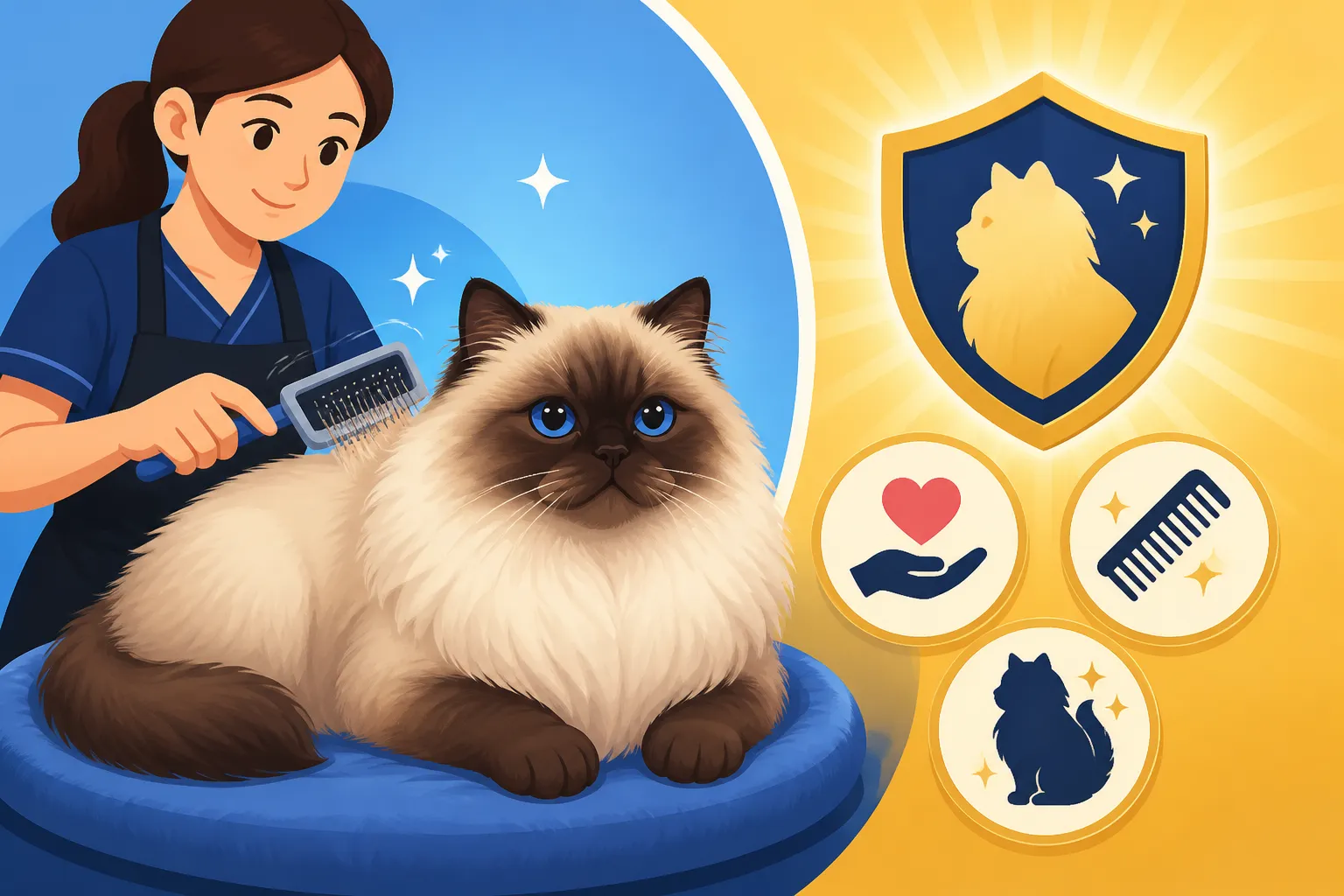
Combing a Himalayan isn't simply running a brush over their fur. It requires precision and a gentle touch. The technique, often called "line combing," involves parting the fur down to the skin and working in small sections, ensuring the comb goes through all layers of the coat. This isn't a quick sweep; it's a careful, deliberate process. If you hit a snag, you can't just pull through it; you have to gently work it out, often with your fingers or a detangling tool, to avoid hurting the cat or breaking the hair.
Furthermore, Himalayans are creatures of comfort and routine. They need to be accustomed to grooming from a young age, and even then, their patience has limits. A good groomer, whether an owner or a cattery staff member, needs to be attuned to the cat's mood, knowing when to pause, offer reassurance, and make the experience as positive as possible. Rushing or being rough can make a cat resistant to future grooming sessions, turning a necessary routine into a stressful ordeal for everyone involved. This patience and gentle handling are part of the "extra" service.
Preventing the "Medical Mat" Scenario
This might sound dramatic, but neglected mats are genuinely a medical concern. When mats form, they pull tightly on the cat's skin, causing pain and discomfort. The skin underneath the mat can't breathe properly, creating a warm, damp environment where bacterial or fungal infections can flourish. Parasites like fleas can also hide deep within mats, making them incredibly difficult to detect and treat. In severe cases, mats can restrict a cat’s movement, making it hard for them to walk, jump, or even use the litter box comfortably.
If mats become too severe, they can only be removed by shaving the cat. This often requires sedation at a veterinary clinic, which is not only expensive but also carries risks, especially for a brachycephalic breed like the Himalayan. Why a Himalayan Is a Harder Anesthetic Than a Siamese due to their flat faces and potential breathing issues. A cattery's daily combing is a preventative measure, an investment that avoids far more serious and costly interventions down the line. It ensures the cat remains comfortable and healthy, rather than ending up with painful skin issues or needing a costly vet visit for mat removal. In essence, it prevents Why a Matted Himalayan Becomes a Medical Case.
The Specialized Tools and Techniques Required
You wouldn't use a butter knife to cut a steak, right? The same logic applies to grooming a Himalayan. Their unique coat demands specific tools and a skilled hand. A generic pet brush picked up from the grocery store just won't cut it, and a cattery knows this well, investing in the right equipment and training for their staff.
Beyond the Basic Brush: The Essential Grooming Arsenal
To effectively maintain a Himalayan's coat, you need more than just a simple brush. A good quality metal comb, ideally with both wide and narrow teeth, is absolutely essential for line combing and getting down to the skin. This is your primary tool. You might also need a slicker brush for fluffing and finishing, but it's the comb that does the heavy lifting of detangling the undercoat. Detangling sprays can also be incredibly helpful to ease out knots without causing pain or hair breakage.
These aren't always cheap, and they certainly aren't used for five minutes and then put away. They are tools that see daily use, require cleaning, and occasionally need replacing. Knowing which tools to use for different areas of the cat's body – a finer comb for the face, a wider one for the body – is also part of the expertise. Which Grooming Tools a Himalayan Owner Cannot Skip include a good quality steel comb and gentle detangling spray. Many owners find a wide variety of excellent options for these tools on sites like Chewy, making it easier to stock up on essentials.
Skill and Experience: The Groomer's Art
Anyone can pick up a brush and run it over a cat's fur, but effective Himalayan grooming is an art form that requires skill and experience. A trained eye can spot a tiny knot forming before it becomes a major problem. An experienced hand knows how much pressure to apply, how to work through a tangle without causing discomfort, and how to handle a cat that might be a little resistant. They understand feline body language, knowing when a cat is starting to get stressed and needs a break, or when a particular area is sensitive.
This kind of intuitive understanding doesn't come overnight. It's developed through practice and a deep respect for the animal. Catteries employ staff who either have this expertise or are trained to acquire it, and that training and skill are part of what you're paying for. It's the difference between a quick, superficial brushing that leaves mats untouched, and a thorough grooming that leaves your cat genuinely comfortable and mat-free.
Maintaining Hygiene Around the Face and Britches
The Himalayan's distinctive flat face, while adorable, comes with specific grooming challenges. Their large, round eyes can often tear, leading to tear stains that collect on the delicate fur around their nose and muzzle. If not cleaned daily, these stains can become discolored, harden, and even lead to skin irritation or infection in the folds around their nose. Cleaning the Fold Beside a Himalayan's Flattened Nose is a delicate but crucial task. This involves gentle wiping with specialized pet-safe wipes or a damp cloth, followed by careful drying. The Morning Face Routine Every Himalayan Needs is more than just cosmetic; it's preventative health care.
Similarly, their long fur extends to their "britches" – the fur around their hindquarters. This area is notoriously prone to collecting litter, fecal matter, and urine, leading to unsanitary conditions, mats, and potential skin infections. Regular trimming and meticulous combing of this area are essential. This isn’t pleasant work, and it requires careful handling to ensure the cat remains calm and cooperative. These delicate, high-maintenance areas add significant time and care to the daily grooming routine.
The Impact of Environment and Lifestyle on Coat Care
It's easy to assume that if your Himalayan just lies around the house all day, their coat won't get messy. But even the most sedentary lifestyle and controlled environment still present grooming challenges. Their coat is a living, breathing part of them, and it reacts to everything from the air quality to how much they decide to wiggle in their favorite sunbeam.
Indoor vs. Outdoor: The Myth of a "Tougher" Coat
Let's get one thing straight right away: Why a Himalayan Must Never Be an Outdoor Cat. Their long, dense coat is simply not built for the outdoors. It collects debris, burrs, twigs, and dirt almost instantly, turning into a matted mess. Not to mention, they are terrible at regulating their body temperature in heat, and their flat faces make them vulnerable to respiratory issues and predators. So, while we aren't talking about "outdoor tough" coats, even the pristine environment of an indoor home isn't immune to matting.
Indoors, the coat is still susceptible to loose fur, static electricity, and the natural shedding cycle. Carpets, blankets, and even your own clothes can contribute to static and tangles as your cat rubs against them. The belief that an indoor cat requires less grooming is a dangerous misconception when it comes to a Himalayan. In fact, precisely because they are indoor pets, their fur often grows even longer and finer, requiring more diligent daily care to prevent it from becoming a problem.
Climate Considerations: Humidity and Dryness
The air around us plays a significant role in how well a Himalayan's coat behaves. In very dry environments, particularly during winter months when indoor heating is on full blast, static electricity becomes a major culprit in mat formation. As we discussed, static causes individual hairs to literally cling to each other, accelerating the matting process. This dryness can also make the skin a bit flakier, adding more dead cells to the fur, which contributes to tangles.
Conversely, very high humidity can also be a challenge. While it might reduce static, it can make the coat feel heavy and prone to clumping, especially if the cat gets warm and a little damp (perhaps from leaning against a window or even just from its own body heat). The natural oils in their fur, combined with environmental moisture, can create a sticky texture that leads to knots. Seasonal changes also bring increased shedding, meaning periods where daily combing is even more critical to manage the influx of loose undercoat.
Activity Levels and Play Styles
You might think a less active cat would mean less matting, but it's not always that straightforward. Himalayans are generally more sedate than some other breeds, preferring a comfy perch or lap to high-octane acrobatics. While this means they might not be rolling in leaves or battling imaginary prey in ways that tangle their fur, their very stillness can lead to specific matting patterns. For example, pressure points where they frequently lie – on their hips, shoulders, or tummy – can become compressed, and the fur can knot there.
Additionally, their flat faces mean that sometimes food, especially wet food, can get caught in the fur around their chin and mouth. If this isn't wiped away promptly, it can create sticky, matted patches. Even their docile nature means they might tolerate small tangles for longer without complaint, making it even more important for their human caregivers to be vigilant. So, whether they're a couch potato or enjoy a moderate play session, the daily comb remains an indispensable part of their care. Even simple acts like drinking water can soak their ruff, creating a damp environment for mats if not dried and combed.
Why a Cattery Charges Extra for Daily Combing
So, with all this talk of coats, time, tools, and technique, it becomes clearer why a cattery charges extra for daily combing. It's not a frivolous charge; it's a reflection of the dedicated labor, specialized skill, and preventative care required to keep a Himalayan healthy and happy during their stay.
Labor Costs: Paying for Expertise and Time
Simply put, time is money, and daily combing a Himalayan takes a significant amount of time. We’re talking about potentially 30-60 minutes or more per cat, every single day, depending on the coat’s condition and the cat’s cooperation. This isn't just someone quickly running a brush over the cat while simultaneously doing other tasks. This is a dedicated grooming session, one-on-one, with a staff member who is trained and experienced in handling long-haired, sometimes finicky, cats.
Catteries have to pay their staff for this specialized labor. It’s a skilled job, requiring patience, a gentle hand, and an understanding of feline behavior. The "extra" charge covers not just the physical act of combing, but also the staff's expertise, the time taken away from other duties, and the commitment to consistency. This consistent, daily attention is crucial, especially because cats are creatures of habit and thrive on routine. A good cattery understands that for a Himalayan, this consistent attention is paramount.
Preventing Bigger Problems and Bills
Think of the daily combing charge as an insurance policy. By proactively addressing potential mats every day, the cattery is preventing much larger, more expensive problems down the road. If a Himalayan goes even a couple of days without proper combing, particularly in a new or slightly stressful environment, mats can form rapidly. As we discussed, severe mats can lead to skin infections, discomfort, and eventually require sedation and professional shaving by a vet.
The cost of a veterinary visit for mat removal, including sedation, is often significantly higher than weeks or even months of daily grooming charges. By paying for daily combing, you're investing in your cat's comfort and health, ensuring they don't develop painful conditions that would require medical intervention and potentially expose them to the risks of anesthesia. It’s a classic case of an ounce of prevention being worth a pound of cure, and a responsible cattery recognizes this value.
The "Peace of Mind" Factor for Owners
Beyond the practicalities, there’s a significant emotional benefit to knowing your Himalayan is receiving meticulous daily care while you're away. As a pet parent, leaving your beloved companion can be stressful. Worrying about their well-being, especially with a breed as high-maintenance as a Himalayan, can detract from your own trip or engagement.
The extra charge for daily combing brings peace of mind. It means you can rest assured that your cat is not only being fed and given attention but also that their unique grooming needs are being met by experienced hands. You won't return to a cat covered in painful mats, nor will you have to immediately book a vet appointment for a medical shave. This allows you to truly relax, knowing your cherished feline friend is in the best possible hands, maintained to their usual standard of comfort and beauty.
Budgeting for Your Himalayan's Grooming Needs
When you welcome a Himalayan into your home, you're not just getting a pet; you're adopting a lifestyle. Their grooming needs are central to that, and it's essential to budget for them, whether you're tackling it yourself or relying on professionals. Understanding the costs involved helps you make informed decisions for your furry family member.
DIY vs. Professional: A Cost-Benefit Analysis
Deciding between daily DIY grooming and professional help is a personal choice, often balancing time, skill, and budget.
- DIY Grooming: The upfront cost is lower, primarily involving the purchase of quality tools. However, the investment in time is considerable – potentially 30-60 minutes every single day, without fail. You also need to acquire the skill and patience, which can take practice. For many, this daily ritual becomes a bonding experience.
- Professional Grooming: This can range from regular salon appointments (often every 4-6 weeks for full grooming, plus daily at-home combing in between) to specialized cattery services that include daily attention during boarding. The monetary cost is higher, but it saves you immense time and ensures expert care. If you have a busy schedule or struggle with the technique, it might be worth every penny.
Many owners opt for a hybrid approach: daily combing at home, but periodic professional grooming for thorough baths, sanitary trims, and dealing with any stubborn areas they find challenging. Ultimately, the "best" option is the one that consistently keeps your Himalayan mat-free and comfortable. A good Himalayan breeder will be upfront about Why a Himalayan Breeder Asks How Much Time You Have to dedicate to grooming.
Essential Grooming Products and Their Lifespan
Even if you choose to do all the grooming yourself, there are recurring costs for products. Here’s a quick rundown:
| Product Type | Purpose | Estimated Lifespan / Frequency |
|---|---|---|
| Steel Comb | Detangling, line combing, mat removal | Years, with proper care |
| Slicker Brush | Fluffing, removing loose surface hair | 6-12 months |
| Detangling Spray | Easing out knots, reducing static | 1-3 months, depending on use |
| Eye Wipes / Cleaner | Daily tear stain removal, hygiene | Monthly |
| Nail Clippers | Trimming claws | Years |
| Cat-specific Shampoo | Occasional bathing (rarely needed) | 6-12 months |
| Small Scissors | Sanitary trims, careful mat snipping | Years |
You'll find many of these essential supplies readily available from pet supply retailers like Chewy. Making sure you have good quality tools is an investment that pays off in effectiveness and comfort for your cat. Don't skimp on these; cheap tools can hurt your cat or be ineffective. This budget for grooming essentials is often a significant line item, reinforcing Why a Himalayan Budget Is Mostly Comb and Cotton.
Veterinary Costs Associated with Neglected Coats
The most compelling argument for consistent grooming, whether DIY or professional, is the avoidance of hefty vet bills. Neglected coats can lead to a cascade of medical issues:
- Skin Infections: Mats trap moisture and prevent air circulation, creating a breeding ground for bacteria and fungi. Treating these requires vet visits, medications, and sometimes even medicated baths.
- Pain and Discomfort: Constant pulling on the skin can cause your cat to become withdrawn, irritable, and less active. This pain is real and can affect their quality of life.
- Sedated Grooming: If mats become too severe, your vet may recommend sedation to safely remove them. This is an expensive procedure, often involving pre-anesthetic blood work, the anesthesia itself, the shaving, and recovery monitoring.
- Ingested Hairballs: While not directly related to mats, a cat with an uncombed coat will swallow more loose fur while attempting to self-groom, leading to more hairballs and potential gastrointestinal issues.
Consider pet insurance from providers like Healthy Paws. While routine grooming isn't usually covered, unexpected vet visits for mat-related infections or emergency sedated shaves might be, offering a financial safety net. A healthy diet can also contribute to overall coat health and skin resilience, indirectly supporting easier grooming and reducing potential health issues. Prioritizing your Himalayan’s grooming is not just about aesthetics; it's a critical component of their long-term health and well-being.
Disclaimer
This article is for general informational purposes only and does not constitute professional advice. Laws, prices and regulations vary by location and change over time. Consult a qualified professional for guidance on your specific situation.