Why a Flat Faced Himalayan’s Carrier Needs More Air
Bringing your beautiful Himalayan along for a journey, whether it's just to the vet or a longer trip to visit family, can be a really lovely experience, but for those of us with flat-faced darlings, the choice of carrier isn't just about comfort—it's absolutely critical for their safety and ability to breathe comfortably. This guide will walk you through exactly why a flat-faced Himalayan's carrier needs significantly more air than your average cat's, and how to choose one that truly supports their unique respiratory needs.
The Unique Respiratory Challenges of a Flat-Faced Himalayan
If you've ever listened to your Himalayan purr, you've probably also heard a little snuffle, a soft snore, or a heavier breath than you might expect from a cat. It's not just a cute quirk; it's a direct consequence of their charming, flattened facial structure, known as brachycephaly. While it's what gives them that sweet, innocent "Peke Face" or "Doll Face" appeal, it also means their respiratory system is built a little differently, and sometimes, a little more fragilely.
Anatomy of a Compressed Airway
Imagine trying to breathe through a straw all day, every day. That's a bit like what a flat-faced Himalayan's anatomy presents. Their shortened skull means everything inside the muzzle area is compressed. This isn't just about the nose; it affects the entire upper respiratory tract. Their nostrils can be narrowed (stenotic nares), making the initial intake of air harder. Inside, their soft palate, which is the fleshy part at the back of the roof of their mouth, can be elongated. This means it might protrude too far back into their throat, partially obstructing the airway. It's why you often hear them Why a Himalayan Snores Louder Than Its Siamese Ancestors – that sound is literally the air struggling to get past.
This anatomical setup means that any increase in respiratory demand, whether from stress, excitement, heat, or even just mild exercise, can quickly become a significant challenge. They don't have the long, open nasal passages that other breeds do to filter, warm, and humidify air, nor do they have the clear path to their lungs. Every breath is more of an effort, and in a stressful situation like travel, that effort compounds rapidly.
The Risk of Overheating and Stress
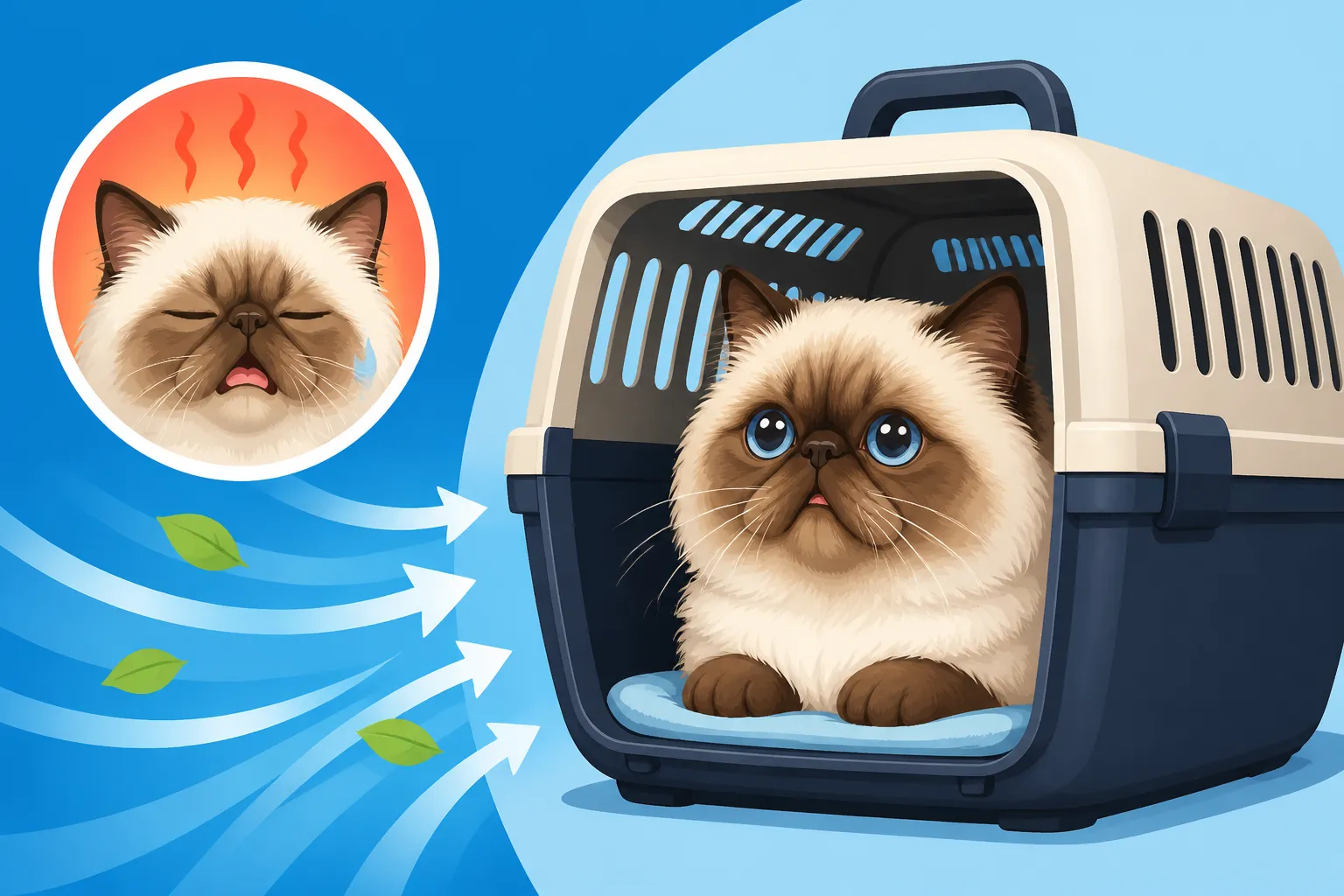
One of the biggest, and often underestimated, dangers for flat-faced Himalayans is overheating. Cats don't sweat like humans do; their primary way of cooling down is through panting, which is much less efficient than our sweating. For a Himalayan, whose breathing is already compromised by their facial structure, panting effectively becomes incredibly difficult. If they can't move enough air efficiently, they can't cool their bodies down. This is why a Himalayan will Why a Himalayan Overheats Twice as Fast as a Siamese compared to its more long-nosed counterparts.
Stress, even mild stress from an unfamiliar environment or the movement of a car, can trigger faster breathing and an elevated heart rate. This physiological response increases their core body temperature. If they're in a confined space with poor ventilation, that heat has nowhere to go. It builds up quickly, turning a simple car ride into a dangerous situation where heatstroke can become a real and immediate threat. We've all seen those pictures of adorable Himalayans lounging, and it's easy to forget they aren't built for high activity or prolonged heat exposure.
Why Standard Pet Carriers Fall Short
When you walk into a pet store or browse online, you'll see a dizzying array of pet carriers. Most of them are designed with the average cat in mind—a cat with an unobstructed airway and a more efficient cooling system. For our flat-faced Himalayans, these standard carriers, while seemingly adequate, can quickly become a literal suffocating hazard. It's not usually malicious design; it's just a lack of understanding of the unique needs of brachycephalic breeds.
Insufficient Ventilation Points
Many common carriers feature a single mesh door and perhaps a small mesh window on one or two sides. The other sides are solid plastic or fabric. While this might seem like enough for a cat that's mostly sleeping during travel, it's utterly insufficient for a flat-faced Himalayan. Airflow needs to be truly cross-ventilated to dissipate heat and bring in fresh air. If there's only one main opening or mesh on opposing sides but the top and bottom are solid, the air inside can become stagnant and hot very quickly.
Imagine a small, enclosed room with just one tiny window. It gets stuffy fast, doesn't it? Now imagine that when you breathe, it takes a lot more effort. That's the reality for your Himalayan in a carrier with poor ventilation. The solid sides block any natural breeze, and without multiple, large mesh panels, the hot, stale air just sits there, slowly robbing your cat of the oxygen it needs and allowing its body temperature to rise. Which Carrier Gives a Himalayan Enough Air is a question that needs a very specific answer, not a generic one.
Material Choices and Heat Retention
The materials used in standard carriers also play a huge role. Hard-sided plastic carriers, while durable and easy to clean, can absorb and radiate heat, especially if exposed to sunlight, even indirectly. Soft-sided carriers, often made of nylon or polyester, can feel cozy, but many fabrics aren't breathable. If the mesh panels are small and the fabric is thick, it acts like an insulated box, trapping your cat's body heat inside.
Even the color of the carrier can matter. Dark colors absorb more heat. If you're traveling in a car that's heating up, a dark carrier made of heat-retaining materials with minimal mesh can quickly turn into a tiny oven. This makes an already stressful situation for your Himalayan exponentially worse, as they struggle harder and harder to get a decent breath in. Brands like Chewy offer a wide variety of carriers, so it's important to sift through them with your Himalayan's specific needs in mind, rather than just grabbing the first one that looks "cat-sized."
Essential Carrier Features for Optimal Airflow
Choosing the right carrier for your flat-faced Himalayan isn't just about finding one that looks nice or fits your car. It's about making a deliberate choice that prioritizes their respiratory health and comfort above all else. Think of it as investing in a mobile safe haven rather than just a box for transport.
Prioritizing Mesh and Open Design
The absolute most critical feature is maximum ventilation. Look for carriers that have large, robust mesh panels on at least three, but ideally all four, sides, as well as the top. This allows for genuine cross-ventilation, ensuring a constant flow of fresh air. The mesh itself should be strong and claw-resistant, but also finely woven enough to prevent paws from getting caught.
Some excellent carriers feature zippered openings on multiple sides, which means you can open them up to create even more airflow once you've reached your destination or if you're stationary for a short period in a safe environment. Remember, the more open the design, the better. You want to see the world through the carrier, not just have small peepholes. This also helps reduce their anxiety, as they can see out more easily.
Size Matters for Internal Air Circulation
It might seem counterintuitive to get a larger carrier for a cat that often loves to curl up in a tiny ball, but for a flat-faced Himalayan, space isn't just about comfort—it's about air circulation. A carrier that is just big enough for them to lie down comfortably might not have enough internal volume for air to move around them effectively.
Choose a carrier that allows your Himalayan to:
- Stand up and turn around completely without crouching.
- Lie down stretched out, not just curled up.
- Have a few inches of space between their body and all sides of the carrier when lying down.
This extra space isn't wasted; it's a buffer zone of air that helps prevent heat buildup and ensures there's always a pocket of fresh air around them. A generously sized carrier, even for a short trip, can make a monumental difference in their stress levels and ability to breathe. Think of it as giving them their own little "personal space bubble" of air.
Beyond Air: Considering Comfort and Safety
While airflow is paramount, other features contribute to a safe and comfortable journey.
| Feature | Standard Carrier Approach | Ideal for Flat-Faced Himalayan |
|---|---|---|
| Ventilation | 1-2 small mesh panels | Large, robust mesh on 3-4 sides + top for cross-ventilation |
| Size | Snug fit, just enough to curl | Allows standing, turning, stretching, with inches of buffer space |
| Material | Solid plastic, thick fabric | Breathable fabrics, light colors; minimal heat absorption |
| Structure | Collapsible, flexible | Rigid frame to prevent collapsing, maintain air volume |
| Bedding | Thin pad | Cooling mat or light, breathable blanket for comfort |
| Access | Single front door | Multiple large openings for easy access and air circulation |
| Security | Basic latches | Secure, pet-proof zippers/latches; seatbelt loops |
Look for carriers with a rigid frame. Soft-sided carriers are convenient for storage, but if they sag or collapse, they reduce the internal air volume, negating the benefit of a larger size. A sturdy frame maintains the carrier's shape, ensuring consistent airflow.
Consider an internal liner or small cooling mat, especially for warmer weather. A light, absorbent blanket or towel can also help wick away moisture. Ensure there's a secure way to fasten the carrier in your car, such as seatbelt loops, to prevent it from sliding around and causing further stress. And of course, easy cleaning is always a plus, as accidents can happen when a cat is stressed. Sometimes, even with the best intentions, a flat-faced cat might struggle with motion sickness, which can result in unexpected messes.
Traveling Safely with Your Flat-Faced Himalayan
Having the right carrier is a huge step, but safe travel with your flat-faced Himalayan involves a bit more planning and attentiveness. Their unique needs mean we, as their guardians, have to be extra vigilant and prepared for any situation.
Pre-Travel Prep for Respiratory Health
Before any significant travel, especially if it's a new experience for your cat, a vet check-up is a smart move. Your vet can assess their overall respiratory health and provide specific advice. They might even recommend mild sedatives for particularly anxious travelers, though these should always be used under veterinary guidance and never for airline travel in the cargo hold due to increased risks for brachycephalic breeds. It's an important conversation to have, particularly for breeds that are Why a Himalayan Is a Harder Anesthetic Than a Siamese.
Acclimate your Himalayan to the carrier well in advance. Leave it open in a favorite room, toss in some treats they already love, and let them explore it on their own terms. Positive associations are key. Short, frequent car rides in the carrier before a long trip can also help them get used to the movement and sounds, reducing stress on the big day. A calm cat breathes easier than a stressed one.
During the Journey: Monitoring and Breaks
Even with the best carrier, constant monitoring is crucial. Never leave your Himalayan unattended in a car, even for a moment, as temperatures can rise incredibly fast. During the journey, periodically check on them. Look for signs of distress:
- Excessive panting or open-mouth breathing When a Himalayan's Open Mouth Breathing Needs a Vet
- Restlessness, pacing, or trying to escape
- Lethargy or unresponsiveness
- Drooling
- Blue-tinged gums or tongue (this is an emergency!)
Offer water breaks if it's a longer journey. A small, shallow dish that won't tip easily, or even water offered from a syringe, can help keep them hydrated. Avoid feeding a large meal just before or during travel, as an upset stomach can exacerbate stress and breathing difficulties.
Consider your travel timing. Avoid the hottest parts of the day, especially in summer. If you live in a warmer climate, traveling early in the morning or late in the evening might be best. How to Cool a Long Coated Himalayan in Summer extends beyond just the carrier, so think about your entire vehicle environment.
Emergency Readiness
Despite all precautions, emergencies can happen. Always have your vet's number, as well as the number of an emergency vet clinic along your route, saved on your phone. If you notice severe signs of distress, pull over immediately in a safe location. Offer cool water, gently wipe their paws and ears with a damp cloth, and seek veterinary attention without delay. Pet insurance, such as through Healthy Paws, can be incredibly helpful in these unexpected situations, ensuring you can prioritize your cat's health without added financial stress.
It’s also important to understand that Why Airlines Refuse a Flat Faced Himalayan in cargo. These cats should never fly in the cargo hold due to the inherent risks of temperature fluctuations and lack of monitoring. If air travel is unavoidable, they must travel in the cabin with you, under the seat, in an airline-approved carrier that still provides superior ventilation. Even then, the stress of flying can be significant, so discuss it thoroughly with your vet. Your Himalayan's health and comfort are worth every bit of extra planning and care.
Disclaimer
This article is for general informational purposes only and does not constitute professional advice. Laws, prices and regulations vary by location and change over time. Consult a qualified professional for guidance on your specific situation.