Why a Himalayan Advertised as a Rare Point Is a Warning
Bringing a new Himalayan kitten into your home is such an exciting time! You're likely scrolling through countless pictures, dreaming of those striking blue eyes and luxurious coat. But in your search, you might stumble upon breeders advertising "rare point colors" for their kittens, often with a steeper price tag attached. While the idea of owning a truly unique cat can be tempting, a "rare point" advertisement is almost always a serious red flag that should make you pause and dig deeper, as it often signals a breeder who might be cutting corners where it really counts: your future cat's health and well-being. This guide will help you understand why these claims are usually misleading and what truly matters when choosing your new companion.
The Allure of "Rare" Point Colors and What It Really Means
It's completely understandable to be drawn to something distinctive. We all want our pets to be special! However, when it comes to Himalayan cats, the term "rare point color" often doesn't hold the weight or value that a breeder might imply. It's more of a marketing tactic than a genuine indicator of exceptional genetics or rarity within the established breed standard. Understanding the basics of Himalayan genetics and breed standards is key to cutting through the noise.
Understanding Himalayan Point Genetics
Himalayans are famous for their "pointed" coats, meaning their extremities (face mask, ears, paws, and tail) are darker than their body. This distinctive pattern comes from a specific gene that's temperature-sensitive; cooler body parts develop pigment, while warmer areas remain lighter. This is why all Himalayan kittens are born nearly white, and their points gradually develop as they grow and are exposed to cooler environments. The actual colors of these points – like seal, blue, chocolate, lilac, flame (red), and cream – are all well-established within the breed. They're determined by a fairly limited set of genetic possibilities inherited from their Persian and Siamese ancestors.
The truth is, there aren't many "rare" point colors in Himalayans in the way a breeder might suggest. What might be less common is a specific color due to the recessive nature of its genetics, making it harder for a breeder to consistently produce. For instance, chocolate and lilac points require specific genetic combinations from both parents, so you might see them less frequently than seal or blue points. But "less common" isn't the same as "rare" in a way that should drive up the price due to some unique, unheard-of quality. When someone claims a point color is "rare," it's worth questioning if they're simply trying to capitalize on a buyer's desire for uniqueness, potentially glossing over more important aspects of breeding.
Standard Point Colors Versus Exotic Claims
Reputable cat registries, such as the Cat Fanciers' Association (CFA) or The International Cat Association (TICA), have very clear and defined standards for what constitutes a Himalayan cat and what point colors are recognized. These standards are in place to preserve the health, conformation, and temperament of the breed. The recognized point colors include Seal, Blue, Chocolate, Lilac, Flame (Red), Cream, Tortie (often combined with another point color), and Lynx (Tabby) Points in various combinations. If a breeder is advertising a "silver point," "lavender point," or some other fanciful name not on the official list, it should immediately raise an eyebrow. You can delve deeper into this by reading Which Point Colors the Standard Lists for a Himalayan.
Often, these "exotic" claims might be:
- Misnamed standard colors: A breeder might use a more glamorous name for a common color to make it sound special. For example, calling a blue point a "platinum point."
- Non-standard mixes: The "rare" color might be the result of breeding a Himalayan with another non-standard breed, or even a domestic cat, to introduce a color that isn't naturally part of the Himalayan genetic pool. While the resulting cat might be pretty, it isn't a purebred Himalayan, and its health and temperament may be unpredictable.
- Poor quality or poorly defined points: Sometimes, a "rare" claim can mask points that are simply not well-defined or clear according to the breed standard, making them appear unusual rather than genuinely rare and desirable.
It's crucial to understand that reputable breeders dedicate themselves to improving the breed within established standards, which includes health, temperament, and appearance. They don't typically chase "rare" colors outside the recognized spectrum because their focus is on breed integrity and the long-term well-being of their cats.
Why "Rare Point" Claims Are a Red Flag for Your Future Kitten's Health
When a breeder focuses heavily on marketing "rare point" colors, it's often a distraction from something far more important: the health of their breeding lines. True rarity in a breed like the Himalayan usually comes from diligent, selective breeding that prioritizes genetic health and conformation, not just a flashy coat color. Unscrupulous breeders often use such buzzwords to command higher prices while skimping on crucial health screenings and proper care.
The Hidden Health Risks of Non-Standard Breeding
One of the biggest concerns with breeders who push "rare point" claims is the potential for neglected health testing. Himalayan cats, like many purebreds, are prone to certain genetic conditions that can significantly impact their lifespan and quality of life. The two most prominent are Polycystic Kidney Disease (PKD) and Progressive Retinal Atrophy (PRA). Reputable breeders will rigorously test their breeding cats for these conditions to ensure they are not passing them down to their kittens. Knowing that Every Himalayan Inherits Two Disease Lists, Not One is vital.
For instance, PKD is a devastating disease that causes cysts to grow on the kidneys, eventually leading to kidney failure. It's a genetic condition inherited from the Persian side of the Himalayan lineage, and you can read more about how PKD1 Came Down the Persian Side of a Himalayan. A simple DNA test can determine if a cat is clear, a carrier, or affected. A breeder who is obsessed with a "rare" point color might not bother with these tests, or worse, they might breed affected cats to achieve a certain look, knowingly passing on serious health problems. The same goes for PRA, which can cause blindness. Skipping these foundational health screenings to chase a superficial color trait is a huge ethical problem and a massive financial and emotional risk for you as a buyer.
Compromised Conformation and Temperament
Beyond genetic diseases, a fixation on "rare" colors often means other vital aspects of the breed are overlooked. This includes conformation, which is the physical structure and appearance of the cat, and temperament, which is their inherent personality and disposition. Himalayans are known for their distinctive flat faces (brachycephalic), but an extreme flat face can lead to severe breathing difficulties, tear staining, and dental problems. Breeders focused on "rare" colors might inadvertently (or deliberately) breed for extreme features that compromise the cat's ability to breathe, eat, or even groom itself properly. Understanding What a Peke Face Himalayan's Profile Measures and How a Vet Grades a Himalayan's Nostrils can highlight these issues.
A Himalayan should have wide-set nostrils, a clear airway, and a mouth that allows for comfortable eating. If a breeder isn't paying attention to these structural elements because they're too busy trying to produce a "strawberry ripple point," you could end up with a cat that requires expensive surgeries or lifelong medical management just to breathe comfortably. Similarly, temperament is a cornerstone of the Himalayan breed; they are known for being sweet, docile, and affectionate lap cats. If a breeder isn't carefully selecting for these traits, you might end up with a cat that doesn't fit the expected loving and calm Himalayan disposition, which can be disheartening and challenging to manage.
What to Look for Instead of "Rare Points"
Okay, so if "rare points" are a trap, what should you be looking for? The answer lies in focusing on the fundamentals: health, temperament, and ethical breeding practices. These are the cornerstones of a truly valuable and cherished companion, far more so than any novelty color. When you invest in a Himalayan, you're investing in a relationship that could last 15 years or more, and you want that relationship to be as healthy and happy as possible.
Prioritizing Reputable Breeders and Health Guarantees
A reputable breeder will never lead with claims of "rare colors." Instead, they will proudly highlight their commitment to the health and well-being of their cats. Here’s what to prioritize:
- Health Testing: Insist on seeing documented proof of genetic testing for PKD and PRA for both parent cats. A transparent breeder will have these results readily available and be happy to discuss them. They understand the importance of passing on healthy genes.
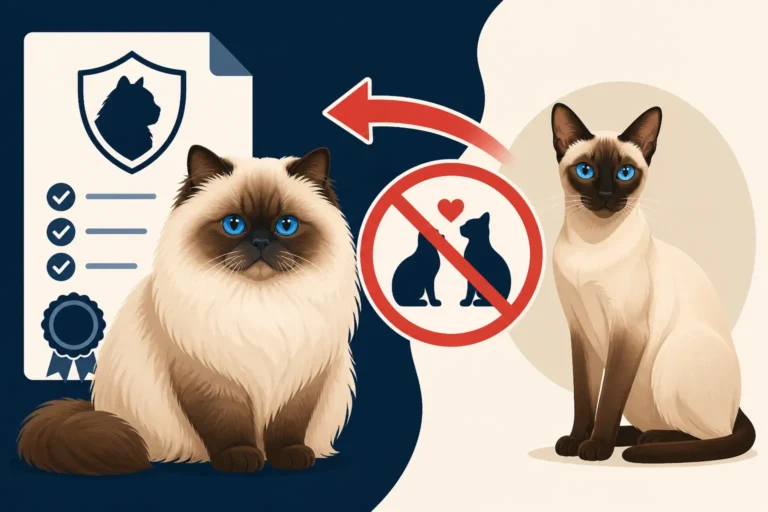
- Clear Pedigrees: A pedigree isn't just a piece of paper; it's a record of your kitten's ancestry, showing generations of breeding. It demonstrates the breeder's dedication to maintaining the breed line and ensuring no inbreeding or undesirable traits. Ask to see the parents' pedigrees.
- Clean and Loving Environment: When you visit a cattery (or do a virtual tour), observe the conditions. Are the cats healthy, clean, and well-socialized? Do they appear happy and well-fed? A good breeder provides an environment that nurtures their cats, physically and emotionally.
- Health Guarantee and Contract: A strong health guarantee in a written contract is non-negotiable. This should cover genetic defects and common illnesses for a reasonable period after purchase. A breeder who offers How Long a Himalayan Breeder Guarantees the Kidneys or other such assurances is demonstrating confidence in their breeding practices. You should also demand Which Two Certificates a Himalayan Breeder Owes You to confirm parentage and health testing.
- Transparency and Open Communication: A good breeder will welcome your questions and ask you plenty in return to ensure their kitten is going to a suitable home. They won't rush you or pressure you into a sale.
Understanding True Point Color Variations and What They Cost
While some point colors might be genuinely less common to produce, they aren't "rare" in a way that suggests a unique, mythical quality. For instance, Chocolate and Lilac points are recessive traits, meaning both parents must carry the gene to produce them. This makes them less frequently seen than Seal or Blue points, but they are still recognized and desirable colors within the breed standard, simply requiring specific breeding choices. A breeder might charge slightly more for these because of the effort and specific lineage required to consistently produce them, but it's not about "rarity" as a marketing gimmick.
The actual cost of a Himalayan kitten is influenced by several factors, none of which should be a "rare point" claim. These factors include:
- Breeding Quality: Whether the parents are show champions, the strength of the pedigree, and the breeder's reputation.
- Health Testing and Care: The significant investment a breeder makes in genetic testing, veterinary care for the breeding cats, and proper nutrition for the mother and kittens.
- Type and Conformation: Kittens bred to meet or exceed the breed standard in terms of physical features (head shape, eye set, coat quality, etc.) will command a higher price. This is detailed in Why Point Color Sets a Himalayan's Price More Than Type, and generally, Why a Himalayan From a Tested Persian Line Costs more because of the breeder's investment.
- Supply and Demand: Certain colors might be more popular at a given time, affecting demand.
Here's a quick comparison of what influences true value versus a misleading "rare" claim:
| Factor | Sign of Reputable Breeder & True Value | Sign of Red Flag / Misleading "Rare" Claim |
|---|---|---|
| Price Driver | Health testing, champion lines, breed conformity, temperament | "Rare" color, exotic sounding name (e.g., "Silver Mist Point"), uniqueness |
| Transparency | Provides full health records, pedigrees, vet references, answers questions | Vague about health testing, no visible parents, focuses only on color |
| Focus | Overall health, temperament, breed standard, longevity | Superficial appearance, quick sale, high price for "exclusive" color |
| Aftercare | Offers lifetime support, takes kitten back if needed, comprehensive contract | Minimal to no after-sale support, strict "no returns" policy, short guarantee |
| Kitten Health | Robust, well-socialized, clear eyes/nose, good breathing | May show signs of neglect, poor socialization, breathing issues, eye discharge |
Empowering Yourself as a Prospective Himalayan Owner
Choosing a Himalayan cat is a commitment to a delightful companion, and arming yourself with knowledge is the best way to ensure you make a responsible choice. Don't let the allure of something "rare" overshadow the importance of sound breeding practices and the long-term health of your new family member. Your diligence now will pay dividends in joy for years to come.
Asking the Right Questions and Doing Your Homework
When you're speaking with a potential breeder, be prepared to ask a lot of questions – and a reputable breeder will welcome them! Here are some key inquiries:
- "Can I see the health clearances for the parents, particularly for PKD and PRA?" Look for official certificates from veterinary genetic labs, not just a breeder's word.
- "What kind of vet checks do the kittens receive before going to their new homes, and can I see the vet records?" Kittens should have multiple vet visits, vaccinations, and deworming.
- "Can you tell me about the temperament of the parents? How are the kittens socialized?" A good breeder will spend time ensuring kittens are exposed to household sounds, people, and gentle handling.
- "What is your health guarantee, and what does it cover?" Understand the terms of the contract thoroughly.
- "What is your policy if I can no longer keep the cat?" A responsible breeder will always want their cats returned to them if circumstances change, rather than having them end up in a shelter.
- "What kind of food are the kittens eating?" This helps ensure a smooth transition to your home. You can also gain insights into Which Kibble a Himalayan's Shortened Jaw Can Lift.
Beyond questions, do your own research. Check breeder reviews, look for their involvement in cat fancy organizations, and ask for references from previous buyers. If a breeder is evasive, pressuring, or unwilling to provide information, it's a clear sign to walk away.
Considering the Long-Term Care and Costs
The initial price of a kitten is just the beginning of your financial commitment. A "rare point" kitten that was cheaply bred often comes with significant hidden costs down the line. Veterinary bills for inherited conditions like kidney disease or respiratory issues can quickly dwarf any initial savings. Think about what What a Himalayan Costs From Kitten to Fifteen really entails. These can include:
- Specialized Diets: If your Himalayan develops kidney issues, they'll need a prescription renal diet. Many retailers carry a wide selection of specialized pet foods, and fresh options can be beneficial for sensitive cats, though they may require vet approval for specific health conditions.
- Medications and Treatments: Lifelong medication for chronic conditions can be expensive.
- Surgeries: Corrective surgeries for extreme brachycephaly or dental issues are costly procedures.
- Pet Insurance: This can be a lifesaver for unexpected health problems. Companies like Healthy Paws offer various plans, but be sure to read the fine print, as some policies might have exclusions for pre-existing conditions or breed-specific issues that are common in Himalayans. It's always best to get insurance early.
Beyond medical costs, remember that Himalayans require consistent daily care. Their long, luxurious coats need daily combing to prevent mats, which can be both painful and lead to skin infections. You can read more about What Daily Combing Costs a Himalayan Owner in Time and The Morning Face Routine Every Himalayan Needs to get a clearer picture. Their unique facial structure also necessitates daily wiping to manage tear stains and keep their nose folds clean and dry. Investing in a healthy kitten from the outset minimizes these potential future burdens and allows you to focus on enjoying your beautiful companion.
Disclaimer
This article is for general informational purposes only and does not constitute professional advice. Laws, prices and regulations vary by location and change over time. Consult a qualified professional for guidance on your specific situation.