What a Peke Face Himalayan’s Profile Measures
It's incredibly easy to fall head over heels for the distinctive, charming look of a Peke Face Himalayan cat. However, many aspiring owners often find themselves wondering exactly what goes into that unique facial structure and, more importantly, what it means for the cat's long-term health and daily care. This comprehensive guide will meticulously break down the specific measurements and defining characteristics that make a Peke Face Himalayan truly unique, offering clear insights into its profile and the vital considerations for its well-being.
Understanding the Himalayan Face Type Spectrum
When you first start looking at Himalayans, you quickly realize there isn't just one "look." These beautiful felines come with a range of facial profiles, from the more traditional, slightly longer-nosed "Doll Face" to the dramatically flat "Peke Face." This spectrum is crucial to understand, as it directly impacts their health and the kind of care they'll need throughout their lives. It's truly a case where Doll Face or Peke Face Is the Himalayan Buyer's Real Decision even before you pick a color.
The Range of Himalayan Profiles
The terms "Doll Face" and "Peke Face" aren't just cute nicknames; they describe a distinct morphological difference that has been shaped by decades of selective breeding. On one end, you have the Doll Face, which retains a more classic cat-like appearance with a slightly longer muzzle and a gentle slope to the nose. This profile often appeals to those who appreciate the Himalayan's luxurious coat and striking blue eyes without the more extreme facial features. They might still have a short nose, but it's noticeably longer than their Peke Face counterparts.
Moving along the spectrum, you encounter the Peke Face, characterized by its significantly flattened face, a deeply indented "stop" between the eyes, and a nose that appears almost pressed into the face. This look, while undeniably striking and often highly sought after, is the result of breeding for increasingly extreme features over generations. The aesthetic appeal of the Peke Face is undeniable for many, yet it introduces a unique set of physiological challenges that prospective owners must be prepared to address. Understanding this range helps set realistic expectations for care.
The Origins of the Peke Face
The development of the Peke Face Himalayan is deeply intertwined with the history of the Persian breed, from which Himalayans inherit their long, luxurious coats and much of their physical conformation. Early Persian breeders began to select for flatter faces, and this trend intensified over time. The Peke Face style, with its extreme brachycephalic (short-nosed) features, became particularly prominent in the show ring, driven by specific breed standards that favored these characteristics.
This selective breeding, aimed at achieving a very specific aesthetic, inadvertently intensified certain physical traits that could have health implications. The look became so popular that it set a standard, even if some of the consequences weren't fully understood at the time. It's a prime example of Why Show Himalayans Drifted Toward the Flatter Face, pushing the boundaries of what was considered beautiful. While the Peke Face is stunning, it's a human-made aesthetic that demands a greater understanding of care from owners.
Key Measurements Defining the Peke Face Profile
When we talk about a Peke Face Himalayan, we're not just using a general description. There are very specific measurements and structural elements that contribute to this unique profile. These aren't just arbitrary points; they define the core physical characteristics that make a Peke Face so distinct, and they are what veterinarians and breeders will often assess when discussing the cat's conformation and potential health.
The Stop and Nose Placement
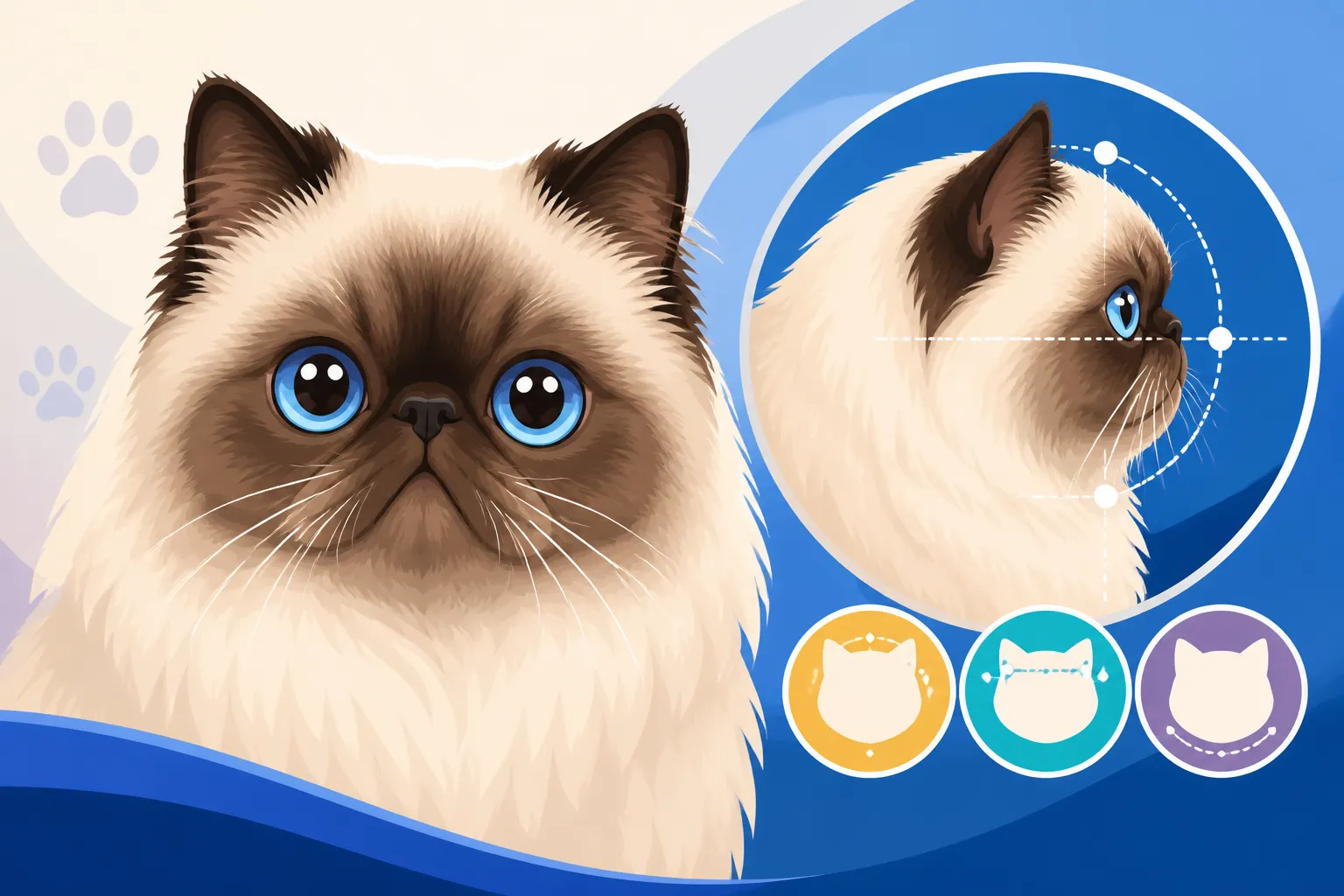
One of the most defining features of a Peke Face Himalayan is the "stop." This isn't just a slight indentation; it's a deep, dramatic recess that occurs where the forehead meets the nose. In an ideal Peke Face, this stop is very pronounced, almost creating a distinct angle rather than a gentle curve. Imagine drawing a line from the top of the head down to the muzzle – in a Doll Face, it's a smooth slope, but in a Peke Face, there's a distinct "wall" where the nose begins.
What often accompanies this deep stop is the positioning of the nose leather itself. In Peke Face Himalayans, the tip of the nose is typically set very high, often aligned with the lower eyelids, or even higher. This creates a very short, almost absent nasal bridge. This is a stark contrast to What a Doll Face Himalayan's Profile Measures, where the nose will extend further from the face, and the stop will be far less pronounced. This high, recessed nose placement is a key indicator of the extreme brachycephalic nature of the Peke Face.
Skull and Eye Characteristics
Beyond the nose, the Peke Face profile extends to the overall shape of the skull and the presentation of the eyes. Peke Face Himalayans typically have a very broad, rounded skull that contributes to their "cobby" appearance. This roundness isn't just an aesthetic detail; it affects how the other facial features are positioned and perceived. The face appears wide and full, further emphasizing the flattened muzzle.
Complementing this rounded skull are the eyes. Peke Face Himalayans are known for their large, round, full eyes that are set far apart. These eyes are often a brilliant blue, a hallmark of the Himalayan breed, and they contribute significantly to the cat's expressive face. However, the prominent and wide-set nature of these eyes, combined with the extreme flatness of the face, can leave them more exposed to environmental irritants and tear staining. The standard dictates How Large and Round a Himalayan's Blue Eyes Should Be, and this often means a lot of visible eye.
Jaw and Muzzle Structure
The shortened skull of a Peke Face Himalayan has profound implications for its jaw and muzzle structure. The muzzle itself is extremely short and broad, giving the cat a very "flat" appearance from the front. This compressed facial structure means that the bones of the face, including the upper and lower jaws, are also significantly shortened and often misaligned. It's a major reason why their entire mouth area looks different.
A common characteristic in Peke Face Himalayans is an undershot jaw, where the lower jaw protrudes beyond the upper jaw. This can lead to a malocclusion, meaning the teeth don't meet correctly. This crowded and misaligned dental structure can cause a host of issues, from difficulty chewing to increased plaque and tartar buildup. Understanding How Crowded a Himalayan's Lower Jaw Gets is essential for managing their dental health and ensuring they can eat comfortably.
The Veterinary Perspective on Peke Face Measurements
While the Peke Face is beloved for its distinctive look, it's crucial to acknowledge that these very features can present significant health challenges. Veterinarians play a vital role in assessing and managing the well-being of Peke Face Himalayans, focusing on specific measurements and observations related to their brachycephalic syndrome. It's not just about aesthetics for them; it's about functionality and comfort. This is where a robust pet insurance plan, like one from Healthy Paws, can really make a difference, helping cover the costs of these specialized veterinary needs.
Grading Nasal Openings and Airway Health
One of the primary concerns for Peke Face Himalayans is their respiratory health. The extremely short nose means that the nostrils themselves can be very narrow or even pinched, a condition known as stenotic nares. Vets will often assess and grade a Himalayan's nostrils during a routine examination, and this grading system helps determine the severity of the constriction. A higher grade indicates more significant narrowing, which directly impacts the cat's ability to breathe efficiently. This is precisely How a Vet Grades a Himalayan's Nostrils, using a standardized approach.
Beyond the external nostrils, the entire airway can be affected. The soft palate, the fleshy part at the back of the roof of the mouth, can be elongated, meaning it extends too far into the throat and can obstruct the airway. Additionally, the trachea (windpipe) can be hypoplastic, or unusually narrow. These internal issues, combined with constricted nostrils, contribute to what's known as Brachycephalic Airway Obstruction Syndrome (BAOS). Symptoms like noisy breathing, snoring, and even panting after minimal exertion are common. Owners need to be vigilant and understand that these aren't just cute quirks, but indicators of potential struggle.
Ocular Health and Eye Set
The prominent, round, and wide-set eyes of the Peke Face Himalayan, while beautiful, are often more susceptible to various ocular problems. The flattened facial structure means that the eye sockets can be shallower, leaving the eyes more exposed. This exposure can lead to chronic irritation, especially from dust, debris, and even their own long fur. Excessive tearing, or epiphora, is also very common because the tear ducts can be compressed or kinked due to the facial conformation, preventing proper drainage.
Furthermore, Peke Face Himalayans are prone to conditions like entropion, where the eyelids roll inward, causing the eyelashes and fur to rub against the cornea. This constant irritation can be incredibly painful and, if left untreated, can lead to corneal ulcers and even vision impairment. Understanding What Entropion Does to a Himalayan's Blue Eye highlights the importance of regular eye checks and proactive care. Given the potential for ongoing eye issues, having pet insurance like Healthy Paws can provide much-needed financial support for diagnostics and treatments, from special eye drops to surgical corrections.
Dental Challenges and Jaw Conformation
The shortened and often misaligned jaw of a Peke Face Himalayan creates a significant challenge for dental health. While cats have 30 teeth, the compressed oral cavity simply doesn't have enough space for them to erupt and align properly. This overcrowding leads to teeth growing at odd angles, rotating, or even impacting each other. Such misalignment creates crevices and difficult-to-reach areas where food particles and bacteria can easily accumulate, accelerating the development of plaque and tartar.
This increased risk of dental disease means Peke Face Himalayans often require more frequent and intensive dental care than other breeds. They are more prone to gingivitis, periodontal disease, and tooth resorption, where the body's own cells break down tooth structure. Owners often find themselves facing dental extractions earlier in their cat's life. It's why Why a Himalayan Needs Dentals Earlier Than a Siamese is a well-known fact in the veterinary community for this breed. Regular veterinary dental cleanings under anesthesia are often necessary to maintain their oral health, which, as any cat owner knows, can become a significant expense over time.
Living with a Peke Face Himalayan: Daily Care and Considerations
Owning a Peke Face Himalayan is a truly rewarding experience, but it comes with a commitment to specialized daily care. Their unique facial structure, while endearing, means they need a little extra help with things that other cats might manage effortlessly. Embracing these routines isn't a chore; it's a fundamental part of ensuring your cherished companion lives a comfortable and happy life.
Managing Breathing and Heat Sensitivity
Due to their brachycephalic airway, Peke Face Himalayans are inherently more prone to respiratory distress and heatstroke. Their shortened nasal passages and often narrowed nostrils make it harder for them to cool themselves through panting, which is a cat's primary method of thermoregulation. This means they can overheat twice as fast as other cats. Even moderate temperatures can be a struggle; The Temperature a Himalayan Starts to Struggle At can be surprisingly low, sometimes as mild as 75-80°F (24-27°C) with humidity.
Owners must be hyper-vigilant about their cat's environment. Keep your home cool, especially during warmer months. Avoid strenuous play that might lead to heavy panting or labored breathing. Signs of respiratory distress include excessive open-mouth breathing, loud snoring or snorting, coughing, gagging, or a blue tint to their gums. If you notice any of these, especially if they are sudden or severe, it's a veterinary emergency. Regular check-ups are also crucial to monitor their airway health, and having pet insurance from Healthy Paws can help manage the costs if they ever need specialized breathing treatments or surgery.
Eye and Face Cleaning Routines
The deep facial folds and prominent eyes of a Peke Face Himalayan create a perfect storm for tear staining and skin irritation. Those beautiful, large eyes often produce excess tears that cannot drain properly, leading to dark, damp streaks on their pale fur. If left unchecked, this moisture can lead to a condition called fold dermatitis, where bacteria and yeast thrive in the damp, warm skin folds, causing itching, redness, and even infection. This is why The Morning Face Routine Every Himalayan Needs is non-negotiable.
This routine usually involves gently wiping their face and around their eyes daily, sometimes even twice a day, using a soft, damp cloth or veterinary-approved eye wipes. It's crucial to thoroughly dry the area, especially within any facial folds, to prevent moisture accumulation. Some owners use specific tear stain removers, but always consult your vet before applying any products near your cat's eyes. Consistent cleaning not only keeps them looking pristine but, more importantly, prevents painful skin and eye infections, ensuring their comfort.
Specialized Feeding and Water Access
The extremely flattened face and often undershot jaw of a Peke Face Himalayan can make eating and drinking surprisingly challenging. They struggle to scoop up food from deep bowls without bending their sensitive whiskers or pushing food out. Imagine trying to eat your dinner with your nose flat against the plate – that's somewhat what it's like for them. This means traditional pet bowls just won't cut it.
The best solution is to provide wide, shallow bowls or flat dishes that allow them to access their food and water without discomfort. Elevated bowls can also be beneficial, as they prevent the cat from having to bend its neck excessively, making mealtime more comfortable and reducing strain. It’s important to understand Which Bowl Shape a Flat Faced Himalayan Can Use to avoid frustration at meal times. Some Peke Face Himalayans even prefer to eat wet food from the floor or from a plate with their paws, pushing the food towards their mouth. Ensuring they have easy access to fresh water in a suitable bowl is also paramount, as dehydration can exacerbate other health issues.
Choosing a Healthy Peke Face Himalayan
Deciding to bring a Peke Face Himalayan into your home is a big step, and making sure you choose a healthy kitten is paramount. It’s not just about finding the cutest face, but about finding a cat whose breeders have prioritized health and well-being over extreme aesthetics. This diligent approach at the outset can save you and your future feline companion a lot of heartache and vet bills down the line.
Breeder Responsibility and Health Screening
The journey to a healthy Peke Face Himalayan begins with selecting a responsible and ethical breeder. A reputable breeder will always prioritize the health of their cats above all else, ensuring their breeding stock is free from genetic diseases common in the breed. This includes screening for Polycystic Kidney Disease (PKD), a hereditary condition prevalent in Persians and, by extension, Himalayans. Which Two Certificates a Himalayan Breeder Owes You usually includes proof of PKD negative status for both parents.
A good breeder will also be transparent about the potential health implications of the Peke Face conformation, discussing possible respiratory, ocular, and dental issues. They should be able to provide detailed health records, answer all your questions patiently, and allow you to visit their cattery to see the living conditions of the cats. They won't shy away from discussing the challenges or recommending a sturdy pet insurance policy from a provider like Healthy Paws. Avoid breeders who seem evasive, cannot provide health clearances, or who have multiple litters available at all times.
Observing Kittens for Health Indicators
When you visit a breeder to choose your kitten, keen observation can tell you a lot. Look for kittens that are bright-eyed, active, and curious. Pay close attention to their breathing: it should be quiet and effortless, without any snorting, wheezing, or open-mouth panting, especially at rest. If a kitten is consistently making loud respiratory noises or struggling for breath, this could be a red flag for significant airway issues.
Examine their eyes, which should be clear and free from excessive tearing or discharge. Check their nose for obvious signs of severe stenosis – are the nostrils open and symmetrical, or do they look significantly pinched? While How to Judge a Himalayan Kitten's Nostrils at Twelve Weeks can be tricky for an untrained eye, any obvious constriction should give you pause. Feel around their jaw for any obvious malformations. Ask to see how they eat and drink; do they struggle or eat comfortably from a shallow dish? A healthy kitten will be playful and social, exhibiting good energy levels and a well-maintained coat, free from mats or dirt, indicating proper care from the breeder.
Common Peke Face Himalayan Profile Measurements
Understanding the specific measurements can help you visualize the Peke Face profile and appreciate the nuances that define it. Here’s a simplified look at what these measurements typically indicate:
| Feature | Peke Face Himalayan Measurement/Characteristic | Implication for Health & Care |
|---|---|---|
| Stop Depth | Deep, pronounced indentation, almost 90-degree angle. | Indicates significant facial compression, often linked to BAOS. |
| Nose Placement | Nose leather set high, often level with or above lower eyelids. | Short nasal passages, risk of stenotic nares and breathing difficulty. |
| Muzzle Length | Extremely short, almost flush with the rest of the face. | Crowded teeth, malocclusion, potential for dental disease. |
| Eye Prominence | Large, round, prominent eyes, wide-set. | Increased exposure, prone to irritation, tearing, and entropion. |
| Skull Shape | Very broad and rounded. | Contributes to overall brachycephalic structure. |
| Jaw Alignment | Often undershot jaw (lower jaw protrudes). | Chewing difficulties, accelerated dental issues. |
| Nostril Opening | Often narrowed (stenotic nares), may require grading. | Restricts airflow, leading to noisy breathing and heat sensitivity. |
Disclaimer
This guide is intended for informational purposes only and should not be taken as professional veterinary advice. Always consult with a qualified veterinarian for any health concerns or before making any decisions regarding your pet's medical care. Individual cats may vary, and a professional examination is always recommended.