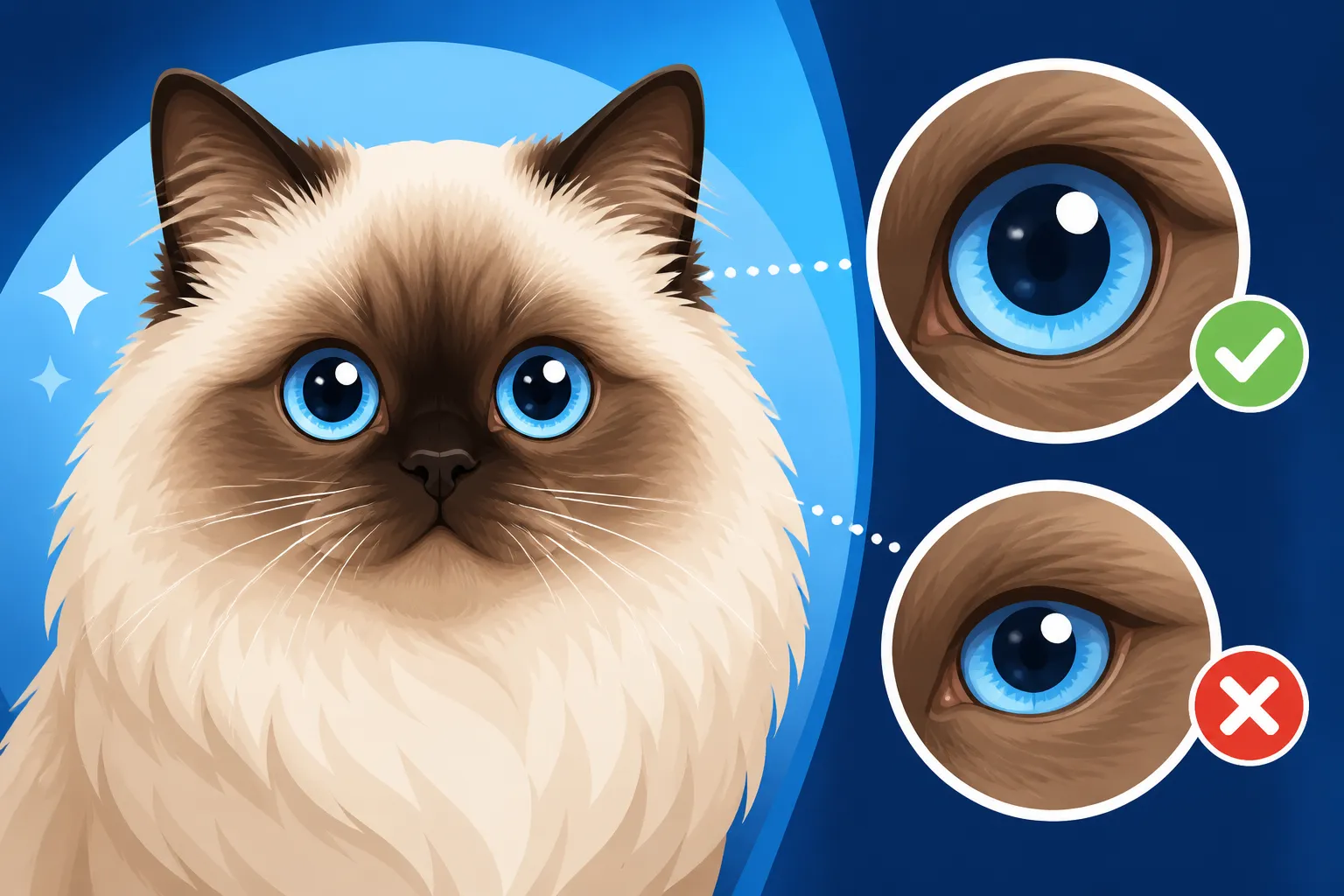
How Large and Round a Himalayan’s Blue Eyes Should Be
A Himalayan’s blue eyes should look large, round, bright, and balanced with its broad, rounded face—not simply oversized. But owners often struggle to tell normal breed features from watering, squinting, or irritation, especially when a flat muzzle changes how the eyes look. This guide explains the expected appearance, what can vary, and which changes deserve a veterinary check.
The Himalayan’s expected eye shape and placement
Large, round eyes without a fixed measurement
Himalayan eyes are meant to be noticeably large and round, contributing to the breed’s soft, open expression. “Large” is judged in proportion to the head, rather than by a standard diameter that every cat must meet. A pair of eyes can look prominent on one Himalayan and more moderate on another because head width, facial profile, and overall build differ.
The shape matters as much as the apparent size. A round eye has a curved outline rather than a narrow, almond-like one. When a Himalayan is relaxed and alert, the eyes should generally appear open and full, not persistently narrowed or partly closed. A sleepy cat may naturally have a softer expression, so judge the eyes when your cat is awake and comfortable rather than just after a nap.
Breed standards and registry wording can vary, but the familiar ideal is a large, round, brilliant-blue eye that supports a sweet, balanced expression. The standard does not mean every pet Himalayan will look identical, or that one small difference automatically signals a problem. For a broader look at how the breed’s features are described, see What the Himalayan Standard Weights Most.
Placement and the overall expression
The eyes should sit in a balanced position on the face, generally level and set well apart. Their placement works together with the broad head, rounded cheeks, and short muzzle. When you look at your cat from the front, the eyes should feel like a matched pair rather than one appearing dramatically higher, narrower, or more prominent than the other.
A useful way to assess balance is to look at your cat from a few angles. From the front, notice whether both eyes appear similarly open and whether the space between them seems natural for the width of the face. From the side, consider how the muzzle profile affects the impression of eye prominence. A phone photo can help you compare changes over time, but it should not be used to diagnose a problem.
| Feature | Typical appearance to look for | When to pay closer attention |
|---|---|---|
| Shape | Rounded and full when the cat is alert | Persistent squinting, a narrowed opening, or a new difference between eyes |
| Size | Prominent in proportion to the broad head | Sudden bulging or a visible change in one eye |
| Placement | Balanced and generally level on the face | New asymmetry, swelling, or one eye seeming displaced |
| Color | Blue, with shade varying among individuals | Cloudiness, a sudden color change, or a visible mark on the eye |
| Surface | Clear and comfortable-looking | Redness, heavy discharge, pawing, or light sensitivity |
The breed’s blue eyes are part of its characteristic look, not a flaw. The color is associated with the pointed coat pattern, and the expected eye color is blue rather than copper or green. More on that distinction is covered in Why Only Blue Eyes Are Allowed on a Himalayan and Why a Himalayan’s Required Blue Eyes Carry No Penalty.
Blue color and normal variation
Blue does not mean one exact shade
Himalayan eyes can differ in how deep or vivid their blue appears. Lighting, the color of the coat around the face, and the camera’s exposure can all change how the eyes look in a photograph. A bright window may make blue eyes appear pale or silvery, while indoor lighting can make them seem darker. For a fair comparison, view your cat in even, indirect daylight rather than relying on flash photos.
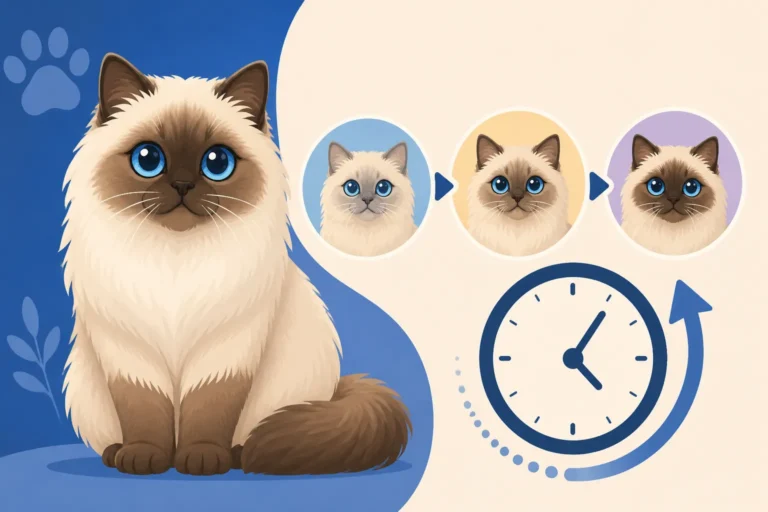
A kitten’s appearance also changes as it grows. Eye color and facial features develop over time, and a young cat may not yet have the same finished expression as an adult. That does not mean a gradual change in appearance is automatically a concern. What matters is whether the eyes remain clear and comfortable, and whether both eyes develop in a broadly similar way.
Among adult cats, a deeper and more vivid blue may be preferred in show descriptions, but pet owners should not mistake a subtle shade difference for illness. If you want to understand the range of blue shades and how they are described, How Deep a Himalayan’s Blue Should Be is a useful related read.
Eye color cannot confirm eye health
A vivid blue eye does not prove that the eye is healthy, and a lighter-looking blue does not by itself show that something is wrong. Eye health is assessed through signs such as clarity, comfort, symmetry, and normal function—not color alone. A Himalayan can have the expected blue eyes and still develop irritation, an eyelid issue, or an injury.
Notice what is typical for your own cat. If both eyes are usually open and clear, but one suddenly begins to water or close more than the other, that change matters more than whether its blue looks slightly different in one room. Keep an eye out for cloudiness, redness, a visible film, thick discharge, or repeated rubbing.
Himalayans can be prone to eye watering because of their facial structure, but ongoing tearing should not be dismissed as “just the breed” if it changes suddenly or comes with discomfort. Telling Ordinary Himalayan Tear Staining From an Infection explains why discharge, redness, and irritation need to be considered alongside the familiar tear tracks.
How the Himalayan face affects what you see
A flatter profile can make eyes look more prominent
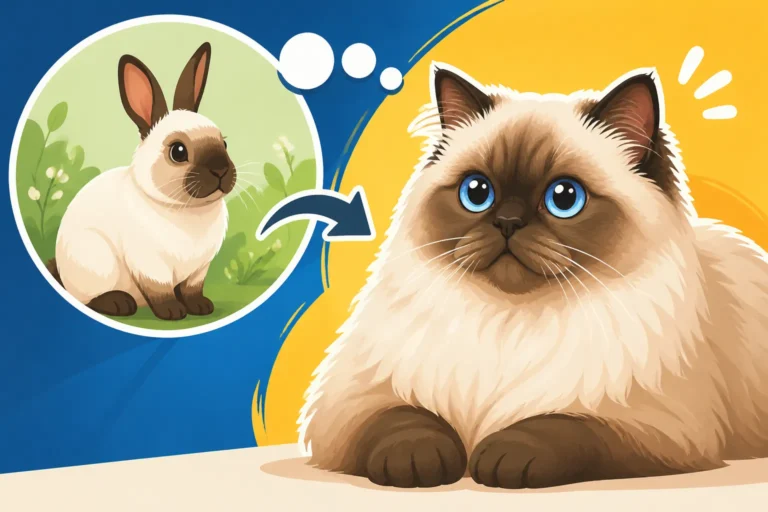
Himalayans have Persian ancestry and can have a range of facial profiles. On a flatter-faced cat, the eyes may seem especially prominent because the muzzle is shortened and the face is more compact. This changes the overall impression, but it does not necessarily mean the eyes themselves are unusually large.
The profile can also affect how tears drain and where moisture collects. Some cats develop visible tear tracks beneath the eyes, and pale fur can make staining stand out. That appearance is separate from the blue iris itself. A damp face or stained coat does not tell you whether the eye surface is healthy, so check for comfort and clarity as well as appearance.
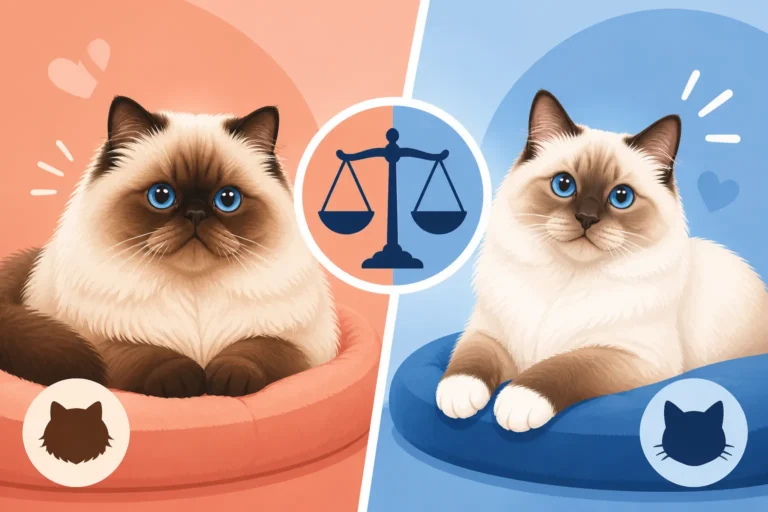
When comparing cats, avoid judging eye size in isolation. Look at the whole face: the width of the head, the eye spacing, the muzzle profile, and whether both eyes look similarly open. The differences between face types are explored in Doll Face or Peke Face Is the Himalayan Buyer’s Real Decision and Why a Flatter Face Shows More on a Pale Himalayan.
Check the eyes gently at home
You do not need to hold your cat still for a long inspection. Choose a calm moment, such as when your Himalayan is sitting beside you, and look at both eyes in ordinary light. Notice whether the eyes appear equally open, whether the surface looks clear, and whether there is new redness, swelling, or discharge. A brief, familiar check is less stressful than turning eye care into a wrestling match.
If you see moisture on the fur, clean only the surrounding area gently with a soft, clean, damp cloth or material recommended by your veterinarian. Use a separate clean section for each eye, and avoid rubbing the eyeball itself. Do not use human eye drops, leftover medication, whitening products, or home remedies unless a veterinarian specifically directs you to do so.
If you are assembling basic face-cleaning supplies, read the labels carefully whether shopping at a local store or Chewy. Choose products intended for use around pets’ eyes, and ask your veterinary clinic before trying a new wipe or solution. Chewy is one possible place to compare pet-care supplies, but the label and your veterinarian’s advice matter more than the retailer. If an eye problem is suspected, buying a cleaning product is not a substitute for an examination.
When an eye change needs veterinary attention
Warning signs that should not be brushed off
A Himalayan that keeps one eye partly closed, squints in ordinary light, or repeatedly paws at its face may be uncomfortable. Other concerns include sudden redness, swelling, thick or yellowish discharge, a cloudy-looking surface, or a visible scratch or spot. A sudden difference between the two eyes deserves attention even if the cat otherwise seems calm.
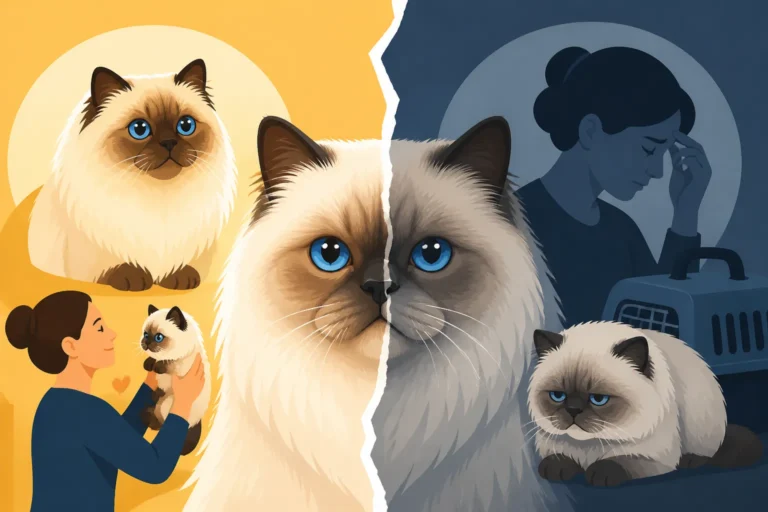
Eye problems can become painful quickly, and cats do not always show discomfort in an obvious way. If your cat’s eye suddenly looks injured or painful, contact a veterinarian promptly rather than waiting to see whether it settles over several days. A cloudy area, persistent squinting, or marked sensitivity to light should be treated as a reason to seek prompt advice. What a Corneal Ulcer Looks Like on a Blue Eyed Himalayan and Why One of a Himalayan’s Blue Eyes Half Closes cover two changes owners may find especially worrying.
A vet can examine the eye surface, eyelids, and surrounding tissues and determine whether treatment is needed. The appropriate next step depends on what is causing the sign; watering alone, for instance, does not identify a specific problem. Avoid putting medication in the eye before an examination unless your vet has instructed you to use it.
Make routine observation part of care
A quick, gentle look during your Himalayan’s regular face care can help you notice changes early. Keep track of what is normal for your cat: whether both eyes tend to water a little, whether one side has more staining, and whether your cat is comfortable being touched around the face. A dated photo taken in similar lighting can help you describe a gradual change at a veterinary visit.
Routine examinations matter even when the eyes look fine at home. Your veterinarian can assess the eye surface and eyelids more closely than a casual owner check, and can advise how often your cat should be examined based on age, history, and any existing concerns. See How Often a Himalayan’s Eyes Should Be Examined for more on making eye checks part of ongoing care.
When ordering everyday supplies through Chewy, or any other retailer, keep the routine simple: use only products suitable for the area around the eyes, store them cleanly, and stop using anything that seems to irritate your cat. If watering increases, the eye becomes red, or your Himalayan starts squinting, arrange veterinary guidance rather than switching between products in search of a quick fix.
A healthy-looking Himalayan eye is typically round, open, clear, and blue, with size and placement that suit the cat’s broad face. There is no single measurement that defines the perfect eye, and normal variation in shade or prominence is expected. The most useful distinction is between your cat’s usual appearance and a new change in comfort, clarity, or symmetry.
Disclaimer
This article is for general informational purposes only and does not constitute professional advice. Laws, prices and regulations vary by location and change over time. Consult a qualified professional for guidance on your specific situation.