How Small a Himalayan’s Ears Should Be
A Himalayan’s ears should look small, rounded at the tips, and set low on a broad, rounded head—not oversized, sharply pointed, or perched high like a rabbit’s. But “small” is a visual breed-standard description, not a fixed measurement. This guide explains how to judge ear size and placement, what variation is normal, and when an ear change may need a veterinarian’s attention.
What Small Ears Look Like on a Himalayan
Look at the whole head, not the ears alone
A Himalayan’s ears are judged in proportion to its head. The breed has a broad, rounded skull, full cheeks, and a short nose, so ears that might look ordinary on another cat can appear small on a Himalayan. They should contribute to a soft, rounded outline rather than interrupting it with a tall, pointed silhouette.
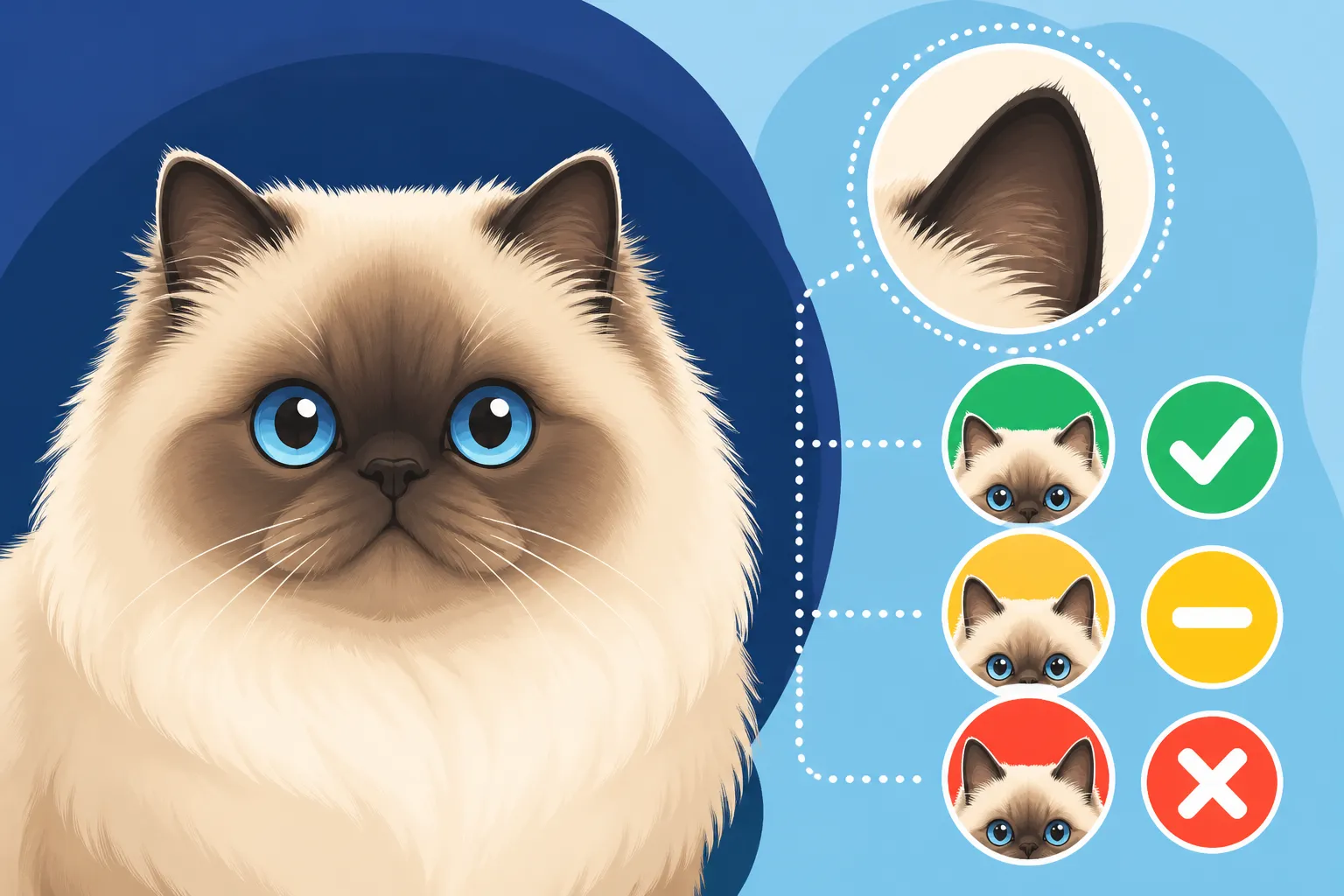
The ears are generally small, with rounded tips and a low, wide-set placement. They should not dominate the face or appear close together at the top of the head. When you look at your cat from the front, the ears should sit comfortably within the head’s overall shape, leaving the face as the main feature.
That proportion is part of the Persian-type appearance. If you’re comparing your cat with a written breed description, What the Persian Standard Asks of a Himalayan offers useful context for why the head and ears are considered together. The ears are one feature in a rounded, balanced whole—not a standalone test of whether a cat “looks right.”
Placement matters as much as size
An ear can be small but still look out of place if it sits too high or too close to the other ear. Himalayan ears are expected to be low-set and well apart, following the broad shape of the head. This positioning helps keep the outline soft instead of creating a narrow, peaked look.
A practical way to assess the placement is to view your cat from the front while it is relaxed and looking straight ahead. Avoid judging from a photo taken at an angle: perspective can make one ear look larger, higher, or closer than it really is. A side view can help you see the ear’s profile, but it does not show spacing as clearly as a straight-on view.
The breed’s head shape carries a lot of visual weight, so a small difference in placement can change the impression. For a closer look at the profile, see What a Himalayan’s Profile Should Look Like Side On. And because Himalayan breed standards draw heavily on Persian type, Why a Himalayan’s Head Is Judged as a Persian’s helps explain why head shape, ear position, and facial balance are often considered together.
There is no universal ear measurement
People sometimes want a ruler-based answer: a certain number of centimeters, or an ear size that every Himalayan should match. In practice, “small” is a breed-standard description interpreted in relation to the cat’s head and overall type. A number alone would not tell you whether the ears are proportionate, correctly placed, or balanced with the rest of the face.
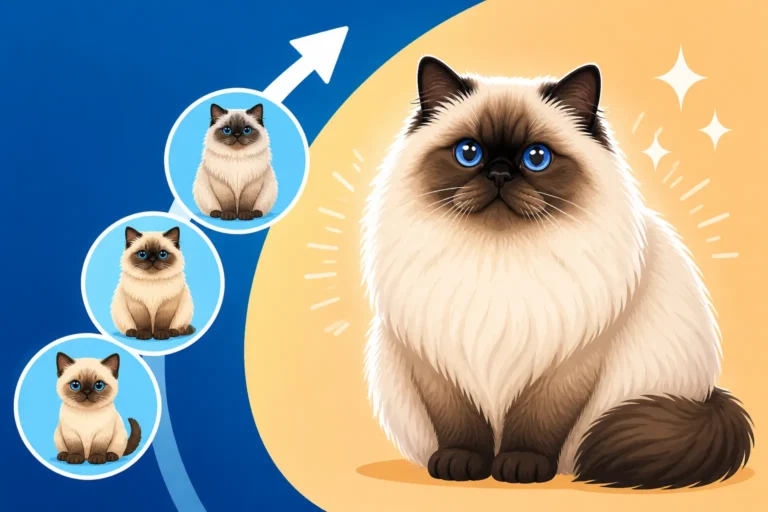
Age matters, too. A young kitten’s head and ears can look different as its face develops, and coat length can change how large the ears seem. A thick ruff may visually frame the face and make the ears appear more noticeable; a close-up photo may exaggerate them further. Those appearances are not, by themselves, evidence of a health problem.
For a pet owner, the most useful question is not whether the ears match an imagined exact measurement. Ask whether they look small and rounded in proportion to the head, whether they sit low and apart, and whether they are comfortable and healthy. Show-ring evaluation is a separate matter, and a breeder or experienced judge can explain how a particular cat compares with the relevant standard.
How to Judge Ear Size Without Being Misled
Compare from a consistent angle
Photos can make ear proportions surprisingly difficult to judge. A camera held close to the face exaggerates features nearest the lens, while an angled view can make the far ear seem smaller or more tightly placed. A cat that has turned its head may also hold one ear forward and the other slightly sideways, changing the apparent shape.
If you want a useful comparison, take a front-facing photo from a little distance, at the cat’s eye level, with the head relaxed. Keep both ears visible and avoid pulling them into position. Then look at the outline of the entire head: do the ears seem modest in size, rounded at the tips, and spaced apart, or do they draw attention away from the face?
Don’t stretch, fold, or press your cat’s ears to get a better view. That can be uncomfortable and does not provide a fair picture of their natural position. For a broader breed comparison, How to Tell a Himalayan From a Persian can help put the Himalayan’s features into context. The two are closely related in type, so subtle differences may be less obvious than dramatic internet comparisons suggest.
Separate breed shape from individual variation
Not every Himalayan has an identical head, coat, or ear outline. Individual cats vary, and the appearance of the ears can be influenced by age, facial structure, coat fullness, and the angle from which you view them. A Himalayan can have ears that look slightly more noticeable than another cat’s without that difference indicating poor health.
It also helps to distinguish a pet’s appearance from show-ring expectations. A show judge evaluates how features fit a standard and how the cat’s overall type comes together. A family cat does not need to meet every show preference to be a healthy, loved Himalayan. If you are choosing a kitten and the ears are important to you, ask the breeder to show the kitten’s head from the front and side, and ask how the kitten’s features may change as it grows.
For the same reason, be wary of online claims that a particular ear shape proves a cat is or is not a “real” Himalayan. Registration, pedigree, and breed appearance involve more than one feature. A photograph of large-looking ears, especially one taken close to the face, is not enough to settle those questions.
Use this simple visual checklist
The table below is a practical guide for looking at ear appearance. It is not a medical diagnostic tool or a substitute for a breed judge’s assessment.
| Feature | Typical Himalayan impression | What can distort the impression |
|---|---|---|
| Size | Small relative to the broad head | Close-up photos or a narrow-looking head angle |
| Tip shape | Rounded rather than sharply pointed | Ear position, fur, or a partially turned head |
| Placement | Low-set and spaced apart | Looking down from above or viewing from an angle |
| Overall balance | Ears do not dominate the rounded face | A full ruff, kitten proportions, or grooming changes |
| Comfort and condition | No persistent redness, discharge, or obvious irritation | Dirt, wax, scratching, or an ear held differently |
Use the checklist gently. If one feature seems different in a photo but your cat’s ears look comfortable and unchanged in person, it may simply be perspective or individual variation. If the ear’s appearance has changed suddenly, or your cat seems bothered, shift from judging conformation to checking for a health concern.
Small Ears and Everyday Ear Health
A small ear is not automatically a problem
Small, low-set ears are part of the Himalayan’s appearance, but size alone does not tell you whether an ear is healthy. Check what you can see without forcing the ear open: the visible skin should not be persistently red, swollen, or sore, and there should not be a strong odor or unusual discharge. A little ordinary wax can occur, but changes in amount, color, smell, or texture deserve attention.
Pay attention to behavior as well. Repeated head shaking, frequent scratching at one ear, tenderness when the area is touched, or holding the head at an unusual angle can signal discomfort. Some cats are simply fussy about handling, so one moment of pulling away does not confirm a problem. A pattern that continues or worsens is more informative.
If you’re unsure what is normal inside the ear, What a Himalayan’s Ear Should Look Like Inside can help you know what to observe. For breed-specific concerns, Whether a Himalayan’s Small Persian Ears Get Infected explores the difference between small ear shape and signs that warrant veterinary attention. Avoid putting cotton swabs or unapproved drops into the ear canal; a veterinarian can advise what is appropriate for your cat.
Keep cleaning gentle and limited to what is visible
Many owners feel they should clean a cat’s ears on a strict schedule. In reality, routine deep cleaning is not automatically needed for every cat, and excessive wiping can irritate delicate skin. If the outer ear is visibly dirty, gently wipe only the accessible area with a soft pad. Stop if your cat resists, cries, or appears painful.
Do not use household cleaners, essential oils, hydrogen peroxide, or leftover medication. Products intended for people may irritate a cat’s ear or be unsafe if the eardrum is damaged. If your veterinarian recommends a particular ear-cleaning product, follow the clinic’s directions about how much to use and how often. A veterinarian may also recommend leaving the ears alone when they are clean and comfortable.
For basic supplies, you might use a soft cotton pad from a local shop or a retailer such as Chewy, but the product used inside the ear should be chosen with veterinary guidance. If you already have a vet-approved cleaner, keep its label and instructions together so no one in the household accidentally substitutes a different product. How to Clean a Himalayan’s Small Low Set Ears covers the practical details of gentle care.
Know when to book a veterinary check
A sudden change deserves more attention than a long-standing feature. Contact your veterinarian if your Himalayan develops persistent scratching, frequent head shaking, redness, swelling, discharge, an unpleasant smell, or apparent pain. A cat that suddenly holds one ear differently may be reacting to discomfort rather than showing a change in breed type.
Seek prompt veterinary advice if the ear is bleeding, very swollen, badly painful, or accompanied by loss of balance or other concerning changes. Don’t wait for the ears to look “large enough” to justify an appointment. A health concern is about symptoms and behavior, not whether the ear matches the breed’s ideal shape.
When you call the clinic, describe what changed and when you first noticed it. A photo can help show the outside of the ear, but it cannot replace an examination of the ear canal. For nervous cats, a familiar carrier and calm handling can make the visit less stressful. Chewy or another pet-supply retailer may be convenient for ordinary carrier accessories, but medical decisions and ear treatment belong with your veterinarian.
What Ear Size Means When Choosing or Caring for a Himalayan
Ask breeders about health and development, not just appearance
If you are choosing a Himalayan kitten, it is reasonable to ask how the kitten’s head and ears are developing. Ask for clear photos in natural positions, and, if possible, meet the kitten rather than relying only on a tightly cropped portrait. A breeder should be able to discuss the kitten’s overall health, temperament, and care needs—not just whether its ears look especially small.
A kitten’s proportions change as it grows, so avoid treating a very young cat’s appearance as a final adult outline. Ask what features are likely to mature and which are harder to predict. If you are comparing kittens, use the same viewing angle and look at each cat’s whole head rather than zooming in on one feature.
Ear size should not distract from more important questions about responsible breeding, veterinary care, and the kitten’s daily needs. The ears may contribute to the familiar Himalayan expression, but a healthy, comfortable cat matters far more than an exact visual ideal.
Care for the ears without overhandling the face
Himalayans often need regular face care, but the eyes, nose folds, and ears are separate areas with different needs. A cat may tolerate one kind of handling and dislike another. Introduce brief, gentle checks gradually, reward calm behavior, and stop before the session becomes a struggle.
If you’re already ordering routine supplies through Chewy, you can keep soft pads with your grooming items, but don’t assume that a product marketed for general pet cleaning is suitable for the ear canal. Use only what your veterinarian has recommended. If a cat reacts strongly to ear handling, ask your clinic to demonstrate a safe technique rather than trying to hold the cat down.
For a broader picture of the breed’s head and facial care, What Nobody Tells You Before Buying a Himalayan is a useful related read. Understanding the full grooming routine can prevent a common frustration: discovering that daily coat and face care takes more time than expected after the kitten comes home.
The best answer is balance, comfort, and context
A Himalayan’s ears should generally look small, rounded, low-set, and well apart on a broad head. That description helps you understand the breed’s appearance, but it is not a rigid ruler test. A cat’s age, coat, head shape, and photo angle can all affect what you see.
For an adult pet, focus on whether the ears look proportionate and whether they are healthy and comfortable. For a show prospect, ask a knowledgeable breeder or judge to assess the whole cat against the relevant standard. For sudden changes or signs of irritation, contact a veterinarian instead of trying to solve the issue by comparing photos.
If you are building a simple care kit, Chewy may be one place to find general grooming supplies, alongside local pet stores and veterinary clinics. Keep medical products separate from routine supplies, and follow your veterinarian’s instructions for anything applied to the ears. A gentle check and a clear distinction between appearance and health will serve your Himalayan better than frequent measuring or unnecessary cleaning.
Disclaimer
This article is for general informational purposes only and does not constitute professional advice. Laws, prices and regulations vary by location and change over time. Consult a qualified professional for guidance on your specific situation.