Why a Himalayan Is Judged as a Persian in CFA
In a CFA show, a Himalayan is not treated as an entirely separate breed from the Persian. CFA places it in the Persian breed group, where judges look for Persian structure alongside the Himalayan’s pointed coat pattern and blue eyes. That can feel confusing when the cat’s everyday name, registration paperwork, and show entry do not all use “Himalayan” in the same way. Here’s how the system fits together.
Why CFA Judges a Himalayan as a Persian
CFA’s breed classification is the key
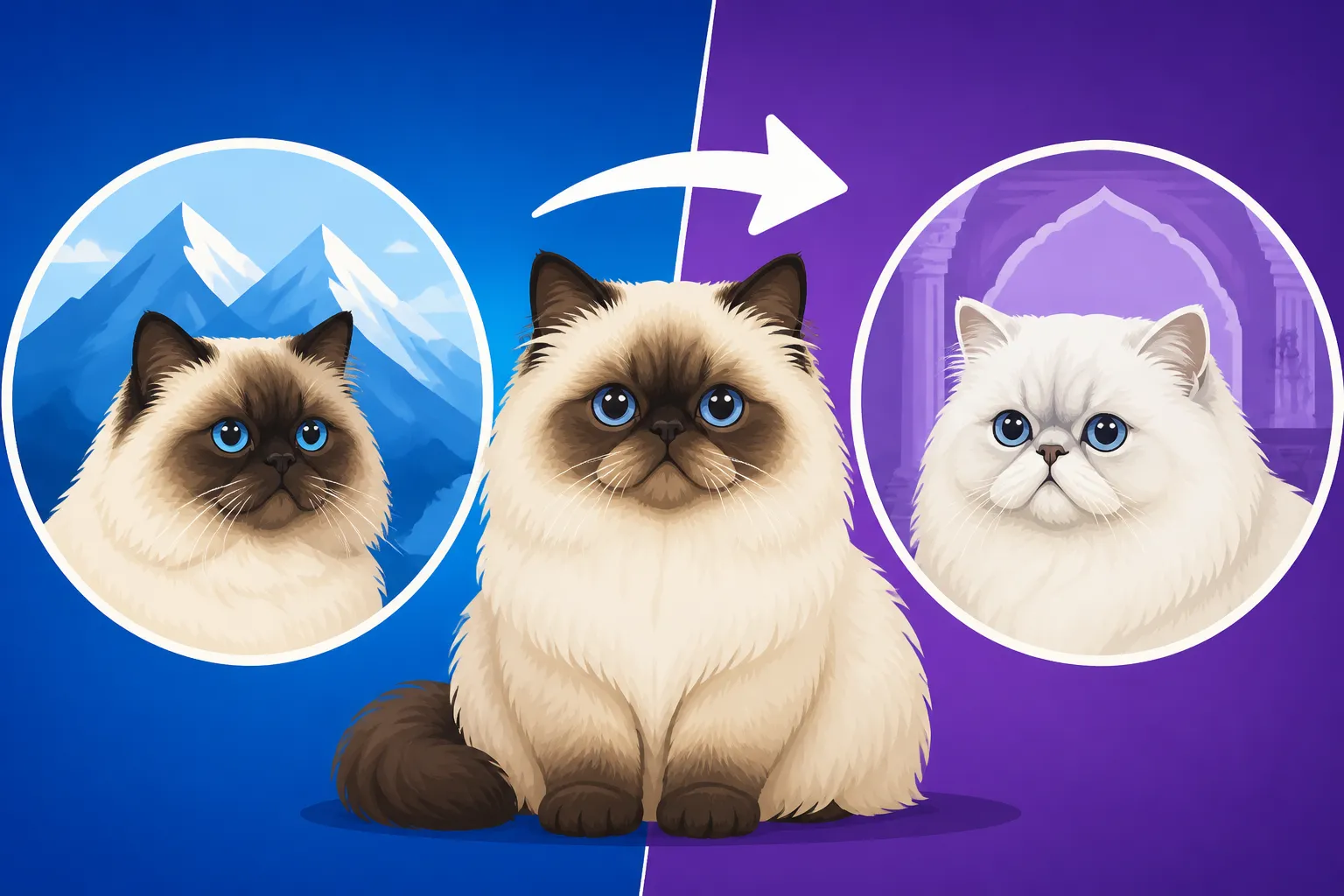
CFA treats the Himalayan as a colorpoint division of the Persian breed, rather than as a separate breed in its show classification. That means a Himalayan is assessed using Persian type: the broad, rounded head; short nose; full cheeks; compact body; and long, luxurious coat are part of the picture. The Himalayan’s points—the darker coloring on the face, ears, legs, and tail—identify its color pattern, but do not replace the Persian foundation of the standard.
This is why you may hear someone say, “CFA registers a Himalayan as a Persian.” They are referring to CFA’s classification and paperwork, not claiming the cat lacks its familiar Himalayan identity. Owners, breeders, and other registries may continue using “Himalayan” as the breed name in everyday conversation. For more background on how the paperwork reflects the classification, see How the Himalayan Is Registered by CFA Today and What Your Himalayan’s Certificate Actually Says.
The classification has a history. CFA made the Himalayan a Persian division in 1984, a decision that still catches new owners off guard when they look at registration forms or show listings. It helps to separate three things that often get blended together: the cat’s common name, the wording used by a registry, and the standard a particular show organization applies. CFA’s answer is Persian classification; that does not mean every registry organizes the breed in the same way.
What “judged as a Persian” means in practice
Judging a Himalayan as a Persian does not mean the judge ignores the Himalayan’s distinctive pattern. It means the cat is considered through the Persian standard, with the appropriate colorpoint requirements also taken into account. The judge considers the whole cat: structure, coat, condition, presentation, and whether its features fit the variety it is entered in.
A Himalayan with striking points but a narrow head or a coat in poor condition would not automatically outrank a cat with stronger overall Persian type. In the other direction, a beautifully built Persian-type cat still needs the expected Himalayan coloring and eye color to meet the relevant colorpoint description. The point pattern is important, but it is one part of the evaluation rather than a substitute for type.
The exact show format and award groupings can depend on CFA’s rules and the particular show. So, if you are planning to enter a cat, check the current entry information and ask the show secretary how the cat should be listed. The classification itself is clear, but practical details such as entry wording and competition group are best confirmed for the specific show.
What a Judge Looks For in a Himalayan
Persian type remains central
A judge assessing a Himalayan pays close attention to the same broad Persian features that define the breed group. The head is expected to look round, with a short nose and a balanced expression. The body should appear compact and sturdy rather than long and rangy. A dense, flowing coat contributes to the characteristic outline, although coat volume should not hide the cat’s underlying shape.
That can be surprising to people who assume the Himalayan’s Siamese ancestry would make its body more like a Siamese. The Himalayan does carry the colorpoint pattern associated with that ancestry, but in CFA judging, the overall form is Persian. If you are trying to understand the profile judges expect, What a Himalayan’s Profile Should Look Like Side On explains the Persian-style outline in more detail. And Why a Himalayan’s Head Is Judged as a Persian’s looks more closely at why head shape matters so much.
A judge does not assess a cat by pedigree alone. The decision is based on how the individual cat presents in the ring and how closely it matches the applicable standard. A pedigree can tell you about registration and ancestry; it cannot make a cat’s features conform to the standard. For a buyer, this is one reason to look at the cat itself as well as its papers.
The points and eyes identify the Himalayan variety
The Himalayan’s colorpoint pattern is a defining feature. The body coat is generally lighter than the colored points, which appear on cooler areas such as the face, ears, legs, and tail. The contrast can vary with age and other factors, so a kitten’s appearance may not show the finished look of an adult. A show judge considers the cat’s coloration in the context of its variety and age rather than expecting every Himalayan to look identical.
Blue eyes are another hallmark of the Himalayan. The colorpoint pattern and blue eyes go together in the breed’s defining appearance. An owner who is used to seeing a Persian with copper or green eyes may wonder why the Himalayan’s eyes are different; it is not an incidental detail or a cosmetic extra. It is part of the colorpoint identity.
The coat and points need to be considered together. A coat that is clean, well cared for, and free of tangles allows the judge to see the cat’s outline and coloration more clearly. For a closer explanation of the division concept, see What a Colorpoint Division Means for a Himalayan. For the judging of pattern and point presentation, How a Himalayan’s Points Are Judged is also useful.
| Feature | What the judge considers | Why it matters |
|---|---|---|
| Head and profile | Rounded Persian-style head and short-nosed profile | Shows the cat’s Persian type |
| Body | Compact, sturdy overall appearance | Helps distinguish the Persian outline from a longer-bodied type |
| Coat | Length, fullness, condition, and presentation | Contributes to the characteristic Persian silhouette |
| Points | Color on the face, ears, legs, and tail | Establishes the Himalayan colorpoint pattern |
| Eyes | Blue eye color as part of the Himalayan appearance | Complements the colorpoint variety |
| Overall condition | Health, cleanliness, and grooming | Lets the judge assess the cat fairly |
How Registration and Show Entries Can Differ
Your paperwork may not say “Himalayan” in the way you expect
A new owner may open a certificate expecting to see “Himalayan” prominently and instead find wording that identifies the cat as Persian or as a colorpoint variety. That can feel like a mistake, especially if the breeder, veterinarian, and family all call the cat a Himalayan. Under CFA’s classification, however, Persian wording can be consistent with the organization’s system.
Before assuming there is an error, compare the certificate with the registration details and ask the breeder or registry to explain the designation. The important question is not simply whether one familiar word appears, but whether the record correctly identifies the cat under the registry’s rules. How to Read the Breed Line on a Himalayan Pedigree can help make that paperwork easier to interpret.
CFA is not the only organization involved in cat registration, and not every association uses the same classification. Some organizations continue to recognize the Himalayan separately. This difference can affect how a cat is listed or grouped in a show, even though the cat itself has not changed. If you are comparing records from different organizations, read each registry’s terminology in its own context. Which Bodies Still Judge the Himalayan on Its Own explains why the answer may differ outside CFA.
Confirm the entry details before show day
If you are considering showing a Himalayan, ask the show secretary or consult the relevant CFA show materials before submitting an entry. Confirm the breed or division wording, the color description, and any other details the entry requires. A breeder may have experience with this process, but it is still sensible to verify the information for the particular show rather than relying on a form from a different organization.
It is also worth distinguishing between being eligible to enter and being competitive in the ring. Registration establishes how the cat is recorded; it does not guarantee that the cat matches the show standard or will place. A cat can be a much-loved Himalayan at home without having the features, coat condition, or ring presentation that a judge rewards.
If you are buying a kitten with the possibility of showing in mind, ask which registry the breeder uses and how the cat’s papers will be issued. Request clear explanations of the breed line and color description rather than relying on verbal assurances alone. That small conversation can prevent a stressful surprise when entry paperwork is due.
Preparing a Himalayan for the Ring
Grooming helps the judge see the cat
A Himalayan’s long coat can conceal tangles, especially around the armpits, behind the legs, beneath the ruff, and around the britches. Regular combing helps keep the coat separated down to the skin and makes it easier to present the cat’s natural outline. A quick surface brush may leave hidden knots behind, so check carefully rather than judging by how fluffy the top layer looks.
For an owner building a basic grooming kit, retailers such as Chewy may carry tools such as steel combs and coat-care supplies. The useful choice is the tool that works safely for your cat’s coat and that you can use consistently—not the longest list of products. If a comb catches, do not yank through the knot; pause, separate the hair gently, or ask a groomer or veterinarian for help when a mat is tight.
Face care also matters in daily life and show preparation. Wipe away ordinary moisture gently, keep the nose fold dry if your cat has one, and use products intended for use around a cat’s eyes. Chewy can be one place owners look for pet-safe grooming supplies, but check the product label and ask your veterinarian if you are unsure whether something is suitable for your cat. If the eyes become red, painful, or unusually discharge-heavy, treat that as a health concern rather than a grooming problem.
Some owners use Chewy to restock routine supplies, while others prefer a local pet shop or veterinary recommendation. Whatever the source, avoid making last-minute changes to a cat’s grooming products before a show. A new wipe, shampoo, or tool can irritate sensitive skin or make a cat uncomfortable, and show preparation should not come at the expense of the cat’s well-being.
A comfortable cat presents better
A show environment can be busy, unfamiliar, and noisy. Practice brief handling at home so your cat gets used to being calmly examined and touched. Keep sessions positive and short, and stop if your cat becomes distressed. A cat that is uncomfortable or frightened may not settle well in the ring, no matter how carefully its coat has been prepared.
Keep practical comfort in mind during travel and waiting. Use a secure carrier with good ventilation, bring familiar bedding if the show rules allow it, and make sure your cat has access to water and a quiet break. Ask the show organizers about the rules for supplies and setup rather than assuming that every venue allows the same arrangements.
Most importantly, remember that a show placing is not a verdict on your bond with your cat. CFA’s classification explains why the Himalayan is judged as a Persian; it does not define the cat’s personality, health, or value as a companion. Whether your Himalayan is headed for a show ring or your sofa, understanding the paperwork and standard simply makes the breed’s history and presentation easier to follow.
Disclaimer
This article is for general informational purposes only and does not constitute professional advice. Laws, prices and regulations vary by location and change over time. Consult a qualified professional for guidance on your specific situation.