How to Read the Breed Line on a Himalayan Pedigree
Bringing home a beautiful Himalayan cat is an absolute joy, but for many new owners, the paperwork that comes with your furry friend can be a source of immediate confusion. You've brought home this distinctly pointed, blue-eyed darling, but then you look at their official pedigree, and it might say "Persian" right there on the breed line. It's enough to make you scratch your head and wonder if you've been given the wrong cat or if you're missing something crucial. This guide will help you decipher your Himalayan's pedigree, understand the history behind the breed name variations, and know exactly what you’re looking at, ensuring you feel confident and informed about your beloved companion’s heritage.
Understanding the Himalayan's Unique Pedigree Situation
The Himalayan cat, with its stunning colorpoint pattern and luxurious long coat, holds a unique and somewhat complicated place in the world of cat registries. Unlike many breeds that have a straightforward "Breed: [Breed Name]" on their papers, the Himalayan often comes with a bit of a historical quirk. This isn't a mistake or an attempt to mislead; it's a reflection of how different cat fancier associations have chosen to classify this magnificent breed over the decades. It's completely normal to feel a little lost when you first encounter this, especially if you're new to the world of pedigreed cats. The key is to remember that the cat you love is still a Himalayan, regardless of the specific words on the paper.
The Historical Split: CFA vs. TICA
To really get to grips with what your pedigree is telling you, we need to talk about the two main schools of thought in cat fancying when it comes to Himalayans: the Cat Fanciers' Association (CFA) and The International Cat Association (TICA). These are two of the largest and most influential registries, and their differing approaches have shaped how Himalayan pedigrees look today.
The CFA, which is widely recognized as one of the oldest and most traditional registries, made a significant decision in 1984. They decided to fold the Himalayan into the Persian breed, categorizing it as a "Himalayan Division" of the Persian. This means that if your cat's pedigree comes from a CFA-registered cattery, it will officially list the breed as "Persian." Within that "Persian" designation, there will be further information indicating it belongs to the Himalayan Division, recognizing its unique colorpoint pattern and blue eyes. This decision aimed to streamline the registration process and acknowledge the close genetic ties between Himalayans and Persians, as the Himalayan was originally created by crossing a Persian with a Siamese to achieve the distinctive points.
On the other hand, TICA, a slightly newer and often more progressive registry, maintains the Himalayan as a distinct breed. If your cat is registered with TICA, its pedigree will proudly state "Himalayan" as the breed. This approach resonates more with owners who view the Himalayan as a breed in its own right, with its own unique characteristics that set it apart from a solid-colored Persian, despite their shared ancestry. Understanding which registry your breeder primarily uses is the first step in decoding your cat's paperwork.
Why Your Cat's Papers Might Say "Persian"
It's truly a common point of confusion for new Himalayan owners: you paid for a Himalayan, you have a Himalayan, but the official document calls it a Persian. The core reason, as we touched upon, goes back to the CFA's reclassification. Imagine being a breeder who has spent years perfecting their Himalayan lines, only for the primary registry to suddenly tell you your cats are now just a "division" of another breed. It was a big deal at the time, and it continues to be a talking point among enthusiasts.
The CFA's rationale was rooted in genetics and breeding history. Since the Himalayan was developed by introducing the colorpoint gene into Persian lines, they viewed it as a color variant rather than an entirely separate breed. They believed that by merging the two, it would strengthen the overall Persian breed gene pool and encourage breeders to focus on a consistent "Persian type" regardless of color. So, when you see "Persian" on your CFA pedigree, it's not a mislabeling of your cat. It's the official acknowledgment of its genetic makeup and its place within the broader Persian family, as defined by that specific registry. This doesn't diminish your cat's unique Himalayan qualities; it just means the paperwork tells a more nuanced genetic story.
Decoding the Specific Lines on Your Pedigree
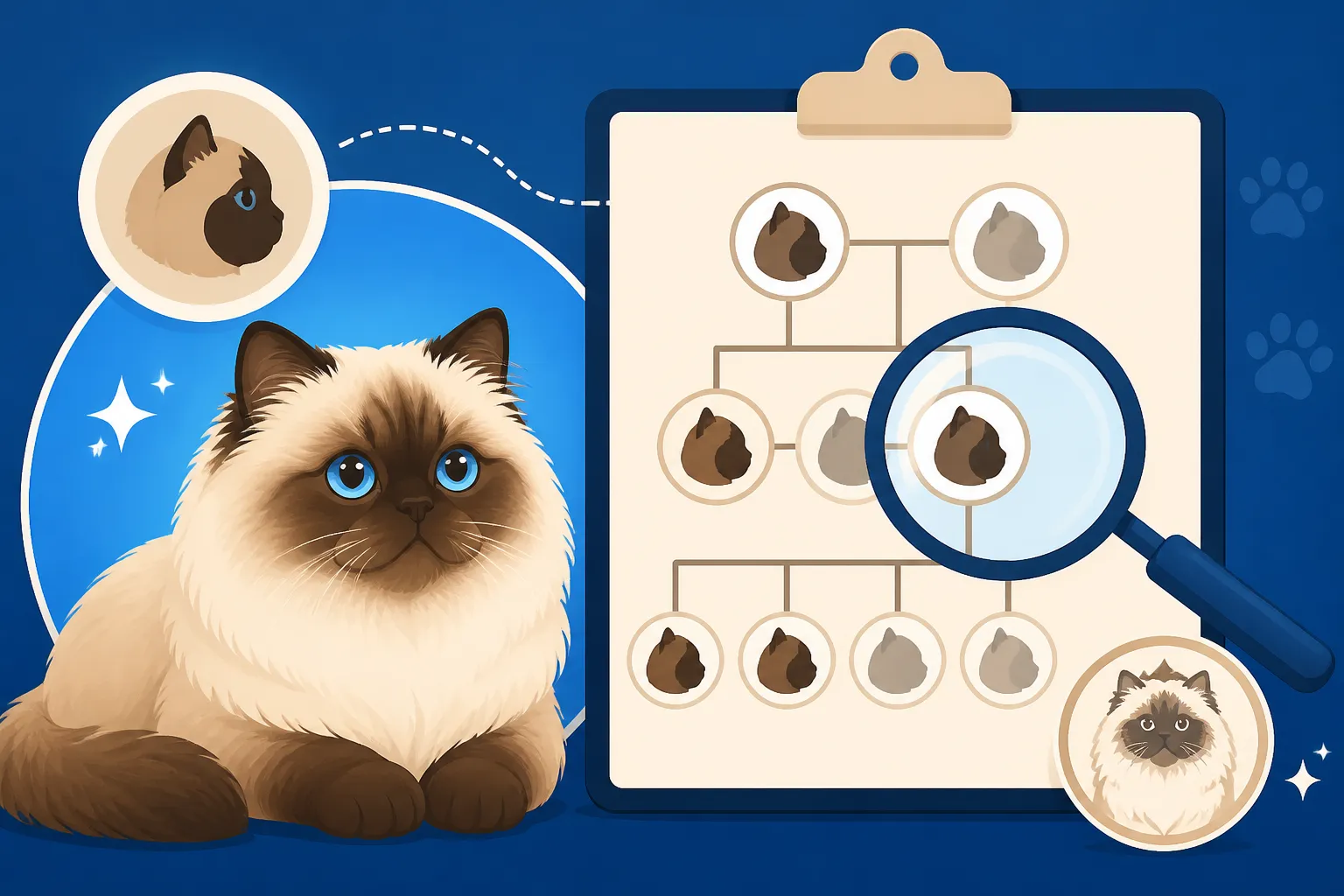
Once you understand the context of the registries, it’s time to dive into the actual document. A pedigree is more than just a name; it’s a detailed family tree, tracing your cat’s lineage back multiple generations. Each line and column provides valuable information, from names and birth dates to color and registration numbers.
The "Breed" or "Division" Line
This is the line most people zero in on immediately, and for good reason! As discussed, this is where the major confusion often arises for Himalayan owners.
If your pedigree is from the CFA, you'll typically see "Persian" listed under the breed. Then, in a separate column or line, or sometimes even within the same entry, it will specify "Himalayan Division" or "Colorpoint Persian." This is the crucial differentiator. It confirms that while your cat falls under the Persian umbrella for registration purposes, it possesses the distinct genetic markers and physical traits (like blue eyes and point coloration) that define a Himalayan. It’s like saying someone is an American citizen, but then also specifying they are from the state of California—both pieces of information are true and provide more detail. When reading Which Registry Prints Persian on a Himalayan's Papers, you can find even more details about this specific nuance.
For TICA pedigrees, the "Breed" line will almost unequivocally state "Himalayan." This makes it much simpler to understand at first glance, reflecting TICA's commitment to recognizing the Himalayan as a distinct and separate breed. There's no need for further division clarification here, as the breed name itself conveys all the necessary information about its type and pattern. Knowing this fundamental difference between the two primary registries will save you a lot of head-scratching.
Ancestral Names and Titles
Beyond the breed designation, a pedigree is a treasure trove of information about your cat's ancestors. Each entry will typically include the registered name of a cat, often accompanied by titles. These titles are fascinating because they tell a story about the cat's achievements in the show ring or its breeding contributions.
You might see titles like "CH" for Champion, "GCH" for Grand Champion, "DM" for Distinguished Merit, or "GC" for Grand Champion. These signify that the cat has achieved certain benchmarks in conformation shows, indicating adherence to the breed standard and often, exceptional quality. A "DM" title, for instance, is awarded to a female cat that has produced five Grand Champions or Distinguished Merits, or a male cat that has produced fifteen. Seeing these titles throughout your cat's lineage suggests a line of strong, healthy, and well-regarded animals. This is a great indicator of a reputable breeder who is dedicated to improving the breed and maintaining high standards.
Furthermore, the names themselves can be quite elaborate, often including a cattery prefix followed by a unique name chosen by the breeder. For example, "PurrfectPaws Blue Dream" might tell you the cattery (PurrfectPaws) and give a hint to the cat's color or characteristics. These names are not just pretty; they help track specific lines and identify breeders. It's like looking at a family tree and seeing generations of noteworthy individuals; it adds depth and history to your own cat's background.
Understanding Genetic Markers and Health Information
A truly comprehensive pedigree, particularly from a responsible breeder, goes beyond just names and titles. It should also provide crucial information regarding genetic health testing, which is incredibly important for a breed like the Himalayan, known for certain inherited conditions.
PKD and PRA Status
One of the most critical pieces of information you should look for on a Himalayan pedigree, or at least be provided alongside it, is the status regarding Polycystic Kidney Disease (PKD) and Progressive Retinal Atrophy (PRA). These are hereditary conditions that can affect Himalayans, primarily inherited from their Persian side.
PKD is a genetic condition where cysts form in the kidneys, progressively leading to kidney failure. Responsible breeders will test their breeding cats for the PKD1 gene, and a cat that is "PKD negative" or "PKD clear" means it does not carry the gene and cannot pass it on to its offspring. This is paramount for ensuring the long-term health of your kitten. Similarly, Progressive Retinal Atrophy (PRA) is a group of degenerative eye diseases that can lead to blindness. Again, genetic testing is available, and a "PRA negative" or "PRA clear" status is highly desirable. This information helps you understand Every Himalayan Inherits Two Disease Lists, Not One, and why specific testing is so vital.
A reputable breeder will not only perform these tests but will also provide documentation of the results, often listing the status directly on the pedigree or an accompanying health certificate. If you see terms like "N/N" (normal/normal, indicating clear) or "heterozygous" (carrying one copy but not affected if linked to a recessive gene), it’s vital to understand what these mean for your cat's future health. A lack of this information should be a red flag, prompting further questions to the breeder. Knowing What Testing a Himalayan for PKD and the Eyes Costs helps you understand the breeder's investment in health.
Color and Pattern Genetics
While the Himalayan is defined by its colorpoint pattern, the pedigree will often go into further detail about specific point colors (e.g., Seal Point, Blue Point, Flame Point, Chocolate Point, Lilac Point, Tortie Point, Lynx Point) and even the genetic codes associated with them. This is especially relevant if you have a beautifully nuanced color like a Cream Point or a rarer Chocolate Point.
The color information on the pedigree confirms the precise genetic expression of your cat's coat. For example, a "seal point" Himalayan will have dark brown points, while a "blue point" will have cooler, slate-grey points. The genetic codes (often a series of letters and numbers) are used by registries to maintain accurate records of color and to track breeding lines. This can be fascinating for those interested in the intricacies of cat genetics, and it helps breeders plan for specific color outcomes in future litters. It also ensures that the cat meets the specific color standards for the breed division, which can be important for show purposes. This level of detail shows the careful planning and genetic understanding of the cattery your cat came from. You can also learn more about What a Himalayan's Point Color Is Recorded.
Beyond the Official Lines: What Else to Look For
While the pedigree itself is a formal document, a truly good breeder will provide additional context and information that goes hand-in-hand with it. These are the soft facts that aren't printed but are crucial for a clear picture of your cat's background and future.
Breeder Information and Cattery Name
The pedigree will always list the breeder's cattery name. This is their brand, their identity within the cat fancy community. A reputable cattery will have a consistent name that often reflects their values or their geographical location. For example, "Mountain View Himalayans" or "Royal Paws Cattery." You should always be able to easily identify the cattery that bred your cat.
Beyond the name, a good breeder will be transparent about their practices. They should be willing to discuss their breeding philosophy, the health testing they conduct, and how they socialize their kittens. This isn't strictly on the pedigree, but it's vital information that complements it. The pedigree is the "what," and the breeder's transparency is the "why" and "how." For instance, asking Which Two Certificates a Himalayan Breeder Owes You will ensure you get all the necessary health and registration documentation. Don't be shy about asking questions!
Health Guarantees and Contractual Details
While not directly part of the pedigree's genealogical chart, a health guarantee and a clear contract are indispensable documents that should always accompany your Himalayan's pedigree. These legally binding agreements outline the breeder's commitment to the health of the kitten and your responsibilities as a new owner.
A strong health guarantee will typically cover genetic conditions like PKD and PRA for a specified period, sometimes even for the cat's lifetime against these specific conditions. It should detail what recourse you have if your kitten develops a covered genetic illness. Some contracts might even mention general health for the first few days or weeks, covering common kitten ailments. This is where brands like Healthy Paws, an excellent pet insurance provider, become relevant, as they can help cover unexpected veterinary costs, regardless of the breeder's guarantee. While a good guarantee offers peace of mind, pet insurance offers another layer of financial protection for unforeseen health issues not covered by the breeder's contract.
The contract will also specify things like whether you're purchasing a pet-quality cat (meant for companionship) or a show/breeding-quality cat. Pet-quality cats are almost always sold with a spay/neuter clause, meaning you agree to have your cat altered by a certain age and not to breed it. This helps protect the breed from irresponsible breeding practices. Understanding Whether a Himalayan Guarantee Covers the Kidneys is a key point to clarify before you finalize the purchase. This holistic package—pedigree, health certificates, and contract—gives you the most complete picture of your Himalayan's heritage and your shared future.
Common Confusions and What They Mean for You
Navigating the world of pedigreed cats can be tricky, and the Himalayan’s unique status often leads to questions. Let’s tackle some of the most frequent points of confusion.
The "Colorpoint Persian" Name
You might occasionally see "Colorpoint Persian" listed instead of "Himalayan Division" or "Himalayan." This term is essentially interchangeable with "Himalayan" in many contexts, especially in registries that group them under the Persian umbrella. Historically, before "Himalayan" became widely accepted, "Colorpoint Persian" was a descriptive term used to differentiate these pointed cats from their solid-colored Persian counterparts.
This simply reinforces the idea that your cat is a Persian with the specific genetic modifier for color points. It doesn't change the fact that your cat has the characteristic blue eyes, the darker 'points' on its extremities (ears, face mask, legs, tail), and the generally loving, calm temperament associated with the breed. It's just another way of describing the same beautiful cat. Don't let the varying terminology throw you off; the key is always the underlying genetic expression of the colorpoint pattern on a Persian body type. This is particularly relevant when discussing Whether Britain Calls the Himalayan a Colorpoint Persian.
How the Registry Split Affects a Himalayan Buyer
The split in how registries classify Himalayans can feel like a headache for buyers, but in reality, for a pet owner, its impact is often minimal. The most significant effect is simply on the wording on your paperwork. If you plan to show your cat, then the registry matters more, as different associations have different standards and classes. However, if your primary goal is to bring home a healthy, well-adjusted companion, the specific wording on the pedigree becomes less critical than the health testing and care provided by the breeder.
What does matter immensely is the breeder's integrity. A good breeder will be upfront about which registry they use, what the pedigree will say, and why. They will educate you on the breed's history and its classification. If a breeder is vague or dismissive about the pedigree, that's a larger concern than the actual words on the page. Ultimately, whether it says "Himalayan" or "Persian (Himalayan Division)," you're still getting the same wonderful breed. The conversation around Why the 1984 Decision Still Confuses Himalayan Buyers highlights the ongoing impact of these historical choices on new owners.
Here's a quick reference table to help visualize the differences you might encounter:
| Feature | Cat Fanciers' Association (CFA) | The International Cat Association (TICA) |
|---|---|---|
| Breed Line on Pedigree | "Persian" | "Himalayan" |
| Division/Sub-Category | "Himalayan Division" or "Colorpoint Persian" | Not applicable; recognized as a standalone breed |
| Date of Classification | Reclassified in 1984 | Established as a distinct breed from its inception |
| Show Ring | Judged within the Persian breed group | Judged as its own distinct breed |
| Breeding Potential | Can be bred to other Persians (with caution) | Primarily bred to other Himalayans |
The Importance of the Pedigree for Your Himalayan
So, after all this discussion, why is a pedigree so important? It’s more than just fancy paper; it’s a vital record that ensures you’re making an informed decision about your pet and supports responsible breeding practices.
Assurance of Breed Purity and Lineage
A pedigree is essentially proof of your cat's ancestry. It guarantees that your cat is indeed a purebred Himalayan (or Colorpoint Persian, depending on the registry) and not a mixed breed. For many, this breed purity is important because it means certain physical traits, temperament characteristics, and health predispositions are more predictable.
It also allows you to trace your cat's lineage, sometimes back many generations, verifying that it comes from a line of documented ancestors. This transparency is key. You're not just buying a cute kitten; you're bringing home a living piece of history with a carefully documented background. This is crucial for understanding What Your Himalayan's Certificate Actually Says.
A Tool for Health and Wellness Planning
Perhaps the most practical value of a pedigree, especially when paired with health testing records, is its role in anticipating and planning for your cat's health. Knowing if a cat's ancestors were tested for PKD or PRA, and what their results were, gives you invaluable insight. If your cat comes from a clear line, you can have greater confidence in their genetic health.
However, even with clear parents, a pedigree reminds you of potential breed-specific issues that may not be genetic. For example, all Himalayans, due to their brachycephalic (flat) faces, can be prone to respiratory issues or tear staining. This knowledge helps you proactively seek proper care. It informs your conversations with your vet, helps you choose appropriate food and flat-faced friendly bowls, and even influences your home environment to support their unique needs. It helps you consider things like Why a Himalayan Needs Dentals Earlier Than a Siamese.
Supporting Responsible Breeding
By demanding a pedigree and associated health documents, you, as a buyer, play a crucial role in supporting responsible breeding. When breeders know that buyers are educated and ask for these details, it encourages them to uphold high standards of health testing, ethical breeding practices, and accurate record-keeping.
Conversely, if buyers don't ask for pedigrees or test results, it creates a market for unscrupulous breeders who cut corners, potentially leading to unhealthy or poorly socialized animals. So, your diligence in understanding and verifying your Himalayan's pedigree contributes to the overall health and welfare of the breed as a whole. It ensures that the legacy of these beautiful cats continues in the best possible way, moving away from lines that carry preventable diseases. Knowing Why a Himalayan Breeder Should Test Eyes as Well as Kidneys is part of being a responsible owner.
In conclusion, while the breed line on a Himalayan pedigree might initially cause a moment of confusion, understanding the history and the different approaches of cat registries quickly clears things up. Whether it says "Himalayan" or "Persian," your cat is undeniably a beautiful, unique member of the Himalayan family. The true value of the pedigree lies in the detailed lineage, health information, and the assurance it provides, allowing you to give your beloved companion the best possible care throughout their happy, pampered life.
Disclaimer
This article is for general informational purposes only and does not constitute professional advice. Laws, prices and regulations vary by location and change over time. Consult a qualified professional for guidance on your specific situation.