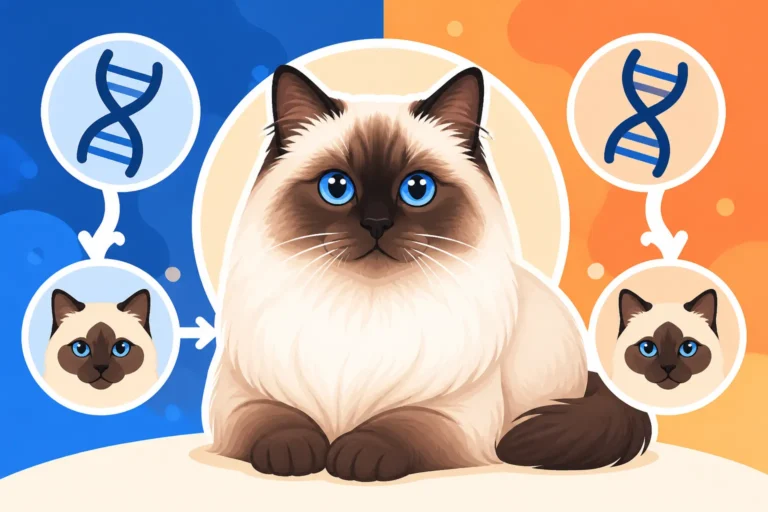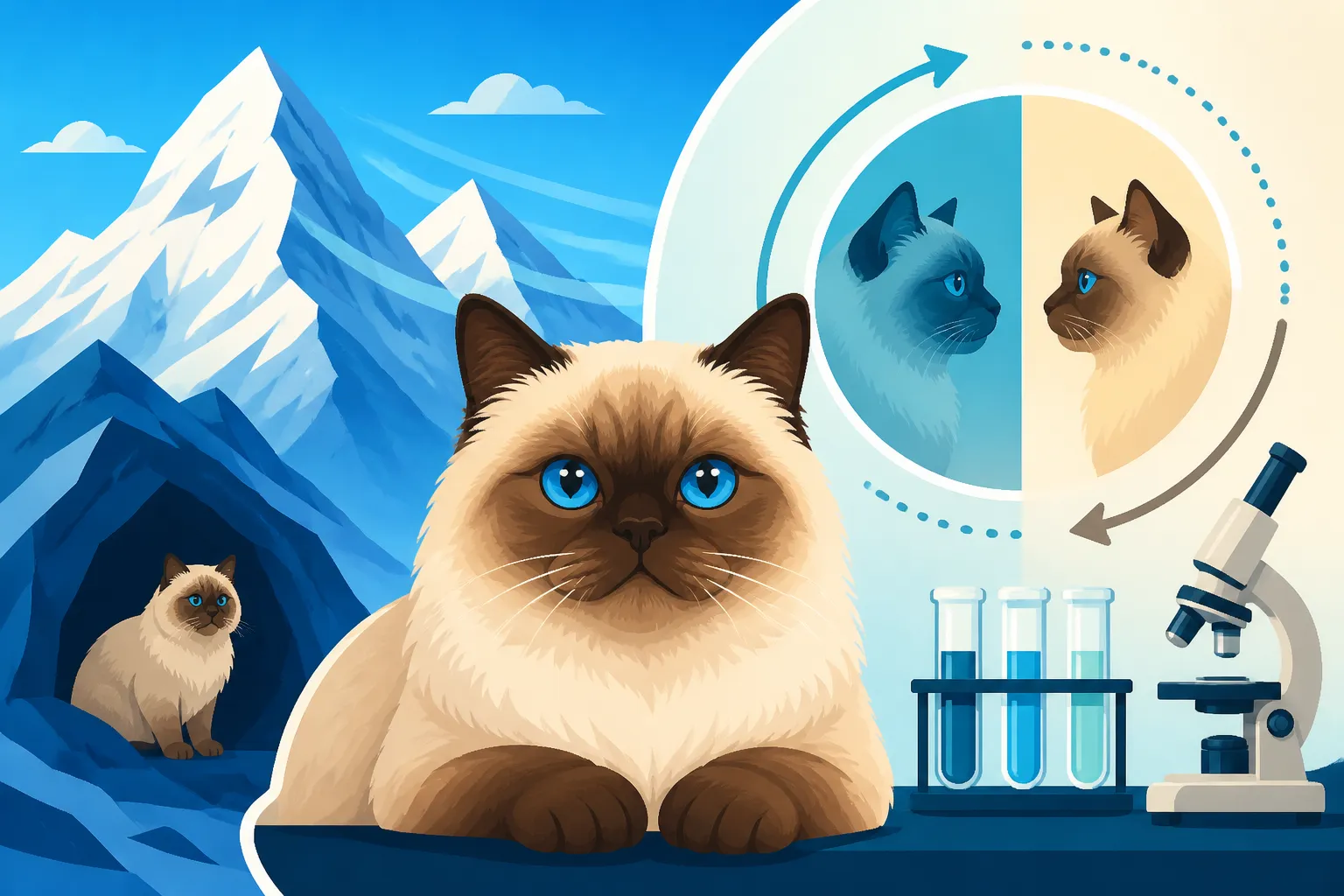
What the Himalayan Experiment Was Trying to Prove
Many of us look at the beautiful Himalayan cat, with its striking color points and luxurious coat, and simply marvel at its elegance. We might even wonder about its history, perhaps assuming it's an ancient breed from some faraway land. But the truth is, the Himalayan's origins are far more recent and, believe it or not, rooted deeply in a fascinating scientific experiment designed to unravel the mysteries of genetics. This guide will take you through the incredible journey of how this beloved feline came to be, not by accident, but as a deliberate effort to prove a fundamental principle of inheritance.
Unraveling a Genetic Mystery: The Origins of the Himalayan Cat Experiment
The early 20th century was a thrilling time for geneticists. Mendel's laws of inheritance, initially discovered in pea plants, were slowly but surely being confirmed across a wider range of species. Scientists were eager to understand how traits, from eye color to coat pattern, were passed down from one generation to the next, not just in plants, but in complex mammals. Cats, with their diverse coat colors and patterns, presented a compelling, albeit challenging, subject for such studies. The idea wasn't just to make a new "pretty" cat; it was to use the feline as a living laboratory to observe and record how specific genes expressed themselves.
The Himalayan pattern itself, characterized by darker "points" on the cooler extremities of the body (ears, face mask, paws, and tail) and a lighter body, was already known in other animals, most notably the Himalayan rabbit. This striking pattern, also seen in some mice and rats, intrigued researchers. They suspected it was controlled by a specific gene, often called the "Himalayan gene" or "cs gene," which affects the distribution of pigment based on temperature. Imagine trying to prove this with certainty, before the advent of rapid genetic testing we have today! It required careful, meticulous breeding and observation over many generations, a true labor of love and science.
The scientific community at the time was moving beyond simply describing observable traits. They wanted to understand the underlying mechanisms, the blueprint hidden within each cell. This quest led to ambitious projects involving various species, and cats, with their relatively fast reproductive cycles compared to, say, elephants, offered a practical model. The goal was to demonstrate conclusively that specific traits, even complex ones like the temperature-sensitive colorpoint pattern, followed predictable Mendelian inheritance patterns, just like the simple traits Mendel observed in his peas. It was a big step for genetics to show these principles applied across the animal kingdom.
The Challenge of Selective Breeding for Research
Before embarking on such a project, researchers faced considerable challenges. They needed purebred lines of cats with well-defined, stable traits to ensure their experimental results were clear and not muddled by unknown genetic factors. This meant sourcing Persians, known for their long coats and often solid or bicolor patterns, and Siamese, famous for their distinctive pointed coats, blue eyes, and more lithe bodies. The genetic makeup of these animals needed to be as consistent as possible across the experimental groups.
Furthermore, these breeding programs weren't just about pairing any two cats. They were carefully designed crosses, often involving backcrossing (mating offspring back to a parent) and sibling matings, all to isolate and confirm the inheritance patterns of specific genes. This is a far cry from casual backyard breeding; it's precise, scientific work. The commitment required to maintain accurate records, track progeny, and ensure the health and welfare of many generations of cats for a purely scientific purpose was immense. It truly highlights the dedication of these early geneticists.
Think about the patience involved. Each litter had to be carefully documented: coat color, pattern, eye color, and even temperament were noted. Then, the kittens would grow, and their points would develop, often over several weeks or months. This meant long-term observation and detailed record-keeping. It wasn't a quick study; it was a marathon of careful scientific inquiry.
The Harvard-Cornell Collaboration: Clyde Keeler, Virginia Cobb, and the Vision
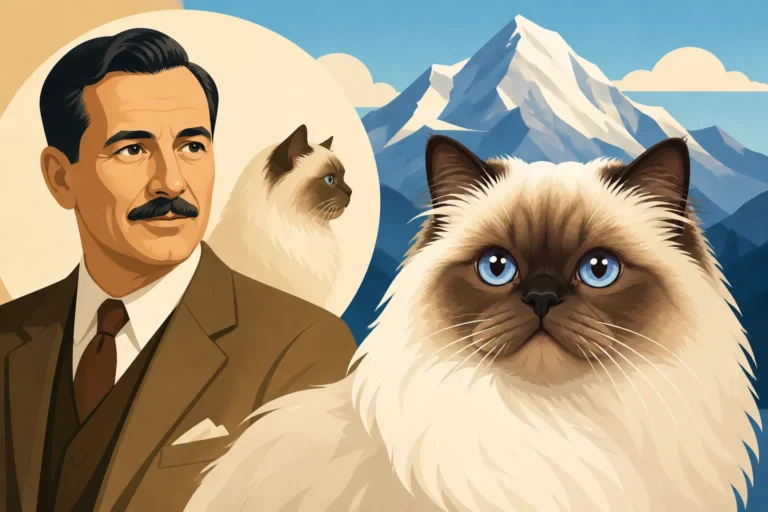
The pioneering work that led to the Himalayan cat we know today was a collaborative effort, primarily between scientists at Harvard University and Cornell University. At the heart of this endeavor were Dr. Clyde Keeler and Virginia Cobb. Dr. Keeler, a biologist with a keen interest in mammalian genetics, was based at Harvard. He had already done significant work with laboratory animals, particularly mice, studying hereditary traits. Virginia Cobb, working independently at Cornell, was also deeply involved in cat breeding and genetics research. Their combined efforts provided the perfect storm of scientific curiosity and practical application.
Keeler and Cobb shared a common goal: to demonstrate how complex genetic traits, specifically the colorpoint pattern, were inherited according to Mendelian laws in a mammalian species like the domestic cat. They weren't just trying to create a new breed for show; their primary motivation was to collect empirical data to support the burgeoning field of genetics. This was cutting-edge science in the 1930s, a time when the intricacies of DNA were still decades away from being fully understood. Their "experiment" was a live, multi-generational study aimed at proving a theoretical principle. You can read more about Clyde Keeler, Virginia Cobb and the First Himalayan.
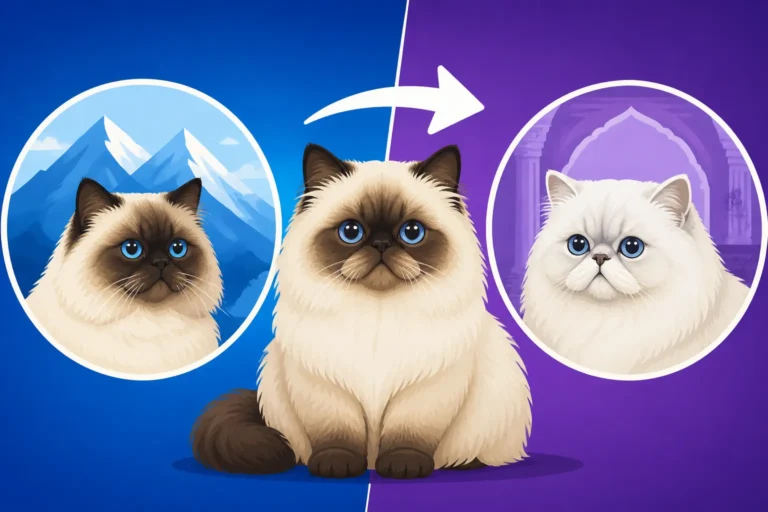
The choice of parent breeds was critical. The Siamese cat provided the essential colorpoint gene, along with its distinctive blue eyes and vocal nature. The Persian cat contributed the luxurious long coat, cobby body, and quiet disposition. By crossing these two distinct breeds, Keeler and Cobb hypothesized they could combine the long fur of the Persian with the pointed pattern of the Siamese, thereby demonstrating that these traits were inherited independently, or at least in a predictable, linked fashion. This wasn't about aesthetics; it was about tracing the journey of genes.
Setting Up the Scientific Crosses
The initial crosses involved breeding a purebred Siamese cat with a purebred Persian cat. The first generation of kittens from this cross, known as the F1 generation, were not pointed themselves. This was an expected result for geneticists because the colorpoint gene is recessive. This meant that each F1 kitten received one copy of the colorpoint gene from its Siamese parent and one copy of the non-colorpoint (or solid color) gene from its Persian parent. Since the solid color gene is dominant, all the F1 kittens appeared solid-colored, effectively "hiding" the colorpoint trait.
The real test came in the subsequent generations. To reveal the hidden colorpoint trait, the F1 cats had to be bred together (creating an F2 generation) or backcrossed to a purebred Siamese (which would also bring out the recessive gene). According to Mendelian genetics, roughly a quarter of the F2 kittens (if both F1 parents carried the gene) would express the recessive colorpoint trait. This is a fundamental principle of genetics, and demonstrating it so clearly in a domestic mammal was a significant achievement. This work also laid the groundwork for understanding Why a Himalayan Needs Two Copies of the Point Gene.
The meticulous record-keeping during this phase was paramount. Each mating, each litter, and the traits of every kitten had to be cataloged. This data would then be analyzed to see if the observed ratios of pointed versus non-pointed kittens matched the predictions of Mendelian inheritance. It's a testament to their dedication that they could maintain such a rigorous program over several years and many generations of cats. If you want to dive deeper into the historical context, understanding The Himalayan Was Made at Harvard in the 1930s can be truly insightful.
Beyond the Points: Proving Mendelian Principles in Mammals
While the striking colorpoint pattern was the most visible outcome, the true aim of the Himalayan experiment was to provide irrefutable evidence of Mendelian principles at play in mammalian genetics. At the time, genetics was a rapidly evolving field, and proving these fundamental laws across diverse species strengthened its scientific foundation. It wasn't just about a pretty cat; it was about understanding life itself.
The "Himalayan gene" is a temperature-sensitive allele (variant) of the tyrosinase gene, which is responsible for producing melanin, the pigment that colors fur. This gene produces an enzyme that is only active at cooler temperatures. In the warmer core of the cat's body, the enzyme is inactive, resulting in pale fur. However, in the cooler extremities (paws, ears, tail, face), the enzyme is active, leading to darker pigment deposition. The experiment was designed to show that this specific gene behaved predictably through generations, just like any other recessive gene.
This demonstration had far-reaching implications beyond the feline world. It validated the universality of Mendelian inheritance, reinforcing the idea that the basic rules of heredity apply to all sexually reproducing organisms, from peas to people. This foundational understanding has since informed countless studies in human genetics, medicine, and agriculture. So, next time you admire a Himalayan, remember you're looking at a living testament to a pivotal moment in genetic research.
The Scientific Journal and Public Awareness
The results of Keeler and Cobb's work were not just kept within the confines of their laboratories. They published their findings, most notably in a scientific paper in 1936. This publication, The 1936 Paper That Started the Himalayan, formally documented their methodology, observations, and conclusions, sharing this significant genetic breakthrough with the wider scientific community. It wasn't just a casual announcement; it was a peer-reviewed scientific report, solidifying the experimental findings.
While the scientific community was the primary audience, the sheer novelty of creating a cat with the combined traits of a Persian and a Siamese also garnered some public attention. Imagine the buzz around a "new" type of cat, deliberately engineered for science! This public interest, while secondary to the scientific goals, eventually paved the way for the breed's development as a companion animal.
This intersection of rigorous scientific research and the eventual emergence of a beloved pet breed is quite unique. It highlights how pure scientific inquiry can sometimes lead to unexpected and delightful outcomes that touch the lives of many beyond the lab. It's also a good reminder that scientific advancements, even those for pets, are built on foundational knowledge and careful experimentation, the kind of detailed work that sometimes gets overlooked when we just see the end result.
The Unexpected Legacy: A New Breed Emerges from Scientific Inquiry
What started as a purely academic pursuit to prove a genetic theory soon blossomed into something more. The pointed, long-haired cats produced through Keeler and Cobb's carefully orchestrated breeding program were not only scientifically significant but also incredibly beautiful and appealing. It quickly became clear that these "Siamese-Persian" crosses, as they were initially called, had immense potential as a distinct cat breed. The scientific experiment had, almost serendipitously, created a new kind of companion animal.
This transition from laboratory subject to recognized breed wasn't immediate, but it was inevitable given the cat's unique charm. Breeders, seeing the potential, began to take over the work, focusing on refining the type, ensuring consistent traits, and establishing breeding lines. This is where the goals shifted from pure scientific proof to establishing a breed standard and gaining recognition from cat fancier associations. You can find more about the initial motivations behind the cross in Why Harvard Crossed a Persian With a Siamese to Make the Himalayan.
The name "Himalayan" was eventually chosen, a nod to the Himalayan rabbit which famously exhibits the same temperature-sensitive colorpoint pattern. This name distinguished the new breed and helped solidify its identity. It's a charming link to the very genetic principle that spurred its creation. Even today, when searching for well-researched information about your feline friend, whether it's about genetics or choosing the right cat food from a retailer like Chewy, knowing this history adds a layer of appreciation.
From Lab to Living Room: The Breed's Development
Once the scientific principles were firmly established, the focus of the Himalayan project shifted. While the genetic theory was proven, there was still work to be done to ensure the cats consistently reproduced the desired traits: a long, flowing Persian coat combined with the striking Siamese points and blue eyes, all within the sturdy, cobby body type of the Persian. This involved further selective breeding, often spanning many more generations. The initial experiment provided the proof of concept, but refining the "product" for the show ring and pet homes was another endeavor entirely.
Breeders carefully selected individuals that best embodied the desired physical characteristics, paying attention to head shape, ear set, eye color, and coat quality, in addition to the points. This is where the art of breeding intersects with the science of genetics. It's about combining traits to create a harmonious and appealing whole, while also ensuring health and temperament. The dedication of early breeders, building on the scientific foundation laid by Keeler and Cobb, was crucial in bringing the Himalayan to prominence.
Today, the Himalayan cat is celebrated worldwide, a testament to both scientific curiosity and dedicated breeders. Its origins serve as a fantastic story, reminding us that sometimes, the pursuit of knowledge leads to unexpected and beautiful outcomes. Knowing What the 1936 Paper Said About the Himalayan Cross truly underscores the depth of this fascinating journey.
The Lasting Impact on Cat Breeding
The Himalayan experiment wasn't just about creating one breed; it profoundly influenced cat breeding and genetics as a whole. It provided a clear, documented example of how specific genes could be tracked and manipulated through careful breeding. This understanding has been invaluable for breeders working with other colorpoint breeds or those trying to understand the inheritance of various coat colors and patterns in cats. The principles demonstrated remain just as relevant for any modern breeder today.
Furthermore, the experiment highlighted the importance of scientific rigor in breeding programs. It moved cat breeding beyond mere aesthetics to a more evidence-based approach, encouraging a deeper understanding of genetics among breeders. This foundation helps responsible breeders make informed decisions today, aiming for healthy, well-tempered cats that also conform to breed standards. It's a powerful legacy that continues to shape the feline world.
It also showcased that a "hybrid" can be consistently bred to become a recognized and cherished purebred animal. This challenged earlier notions about purebred lines and demonstrated the dynamic nature of breed development. The Himalayan stands as a living monument to scientific inquiry and the passion of those who translate that knowledge into the beautiful animals we share our homes with.
| Aspect | Persian Parent Contribution | Siamese Parent Contribution | Himalayan Outcome | Genetic Principle Illustrated |
|---|---|---|---|---|
| Coat Length | Long, luxurious coat | Short, sleek coat | Long, luxurious coat | Dominant long-hair gene from Persian |
| Color Pattern | Solid, non-pointed body color | Colorpoint (darker extremities) | Colorpoint (darker extremities) | Recessive colorpoint gene from Siamese |
| Eye Color | Copper, green, blue (variable) | Striking blue eyes | Striking blue eyes | Gene linked to colorpoint pattern |
| Body Type | Cobby, sturdy, rounded | Svelte, athletic, elegant | Cobby, sturdy, rounded | Dominant cobby body type from Persian |
| Temperament | Calm, quiet, docile | Active, vocal, curious | Mix of both, generally calm but conversational | Blended inheritance/expression |
| Scientific Objective | Source of long coat, solid gene | Source of colorpoint gene, blue eyes | Demonstrates recessive trait expression and gene combination | Mendelian Inheritance, gene interaction |
Disclaimer
This article is for general informational purposes only and does not constitute professional advice. Laws, prices and regulations vary by location and change over time. Consult a qualified professional for guidance on your specific situation.