How Many Himalayans Existed at Recognition
When a new cat breed bursts onto the scene, capturing hearts with its unique charm, it's natural to wonder about its origins – not just how it came to be, but how many of these magnificent creatures were actually around when they first received official recognition. The journey of the Himalayan cat from a scientific experiment to a beloved breed is a fascinating tale, and understanding its early numbers helps us appreciate the dedication of those pioneering breeders who brought this stunning feline into existence. This guide will explore the often-elusive figures surrounding the Himalayan's official recognition, shedding light on why precise counts are difficult to pin down and what those early days truly meant for the breed.
The Genesis of a New Breed: From Lab to Living Room
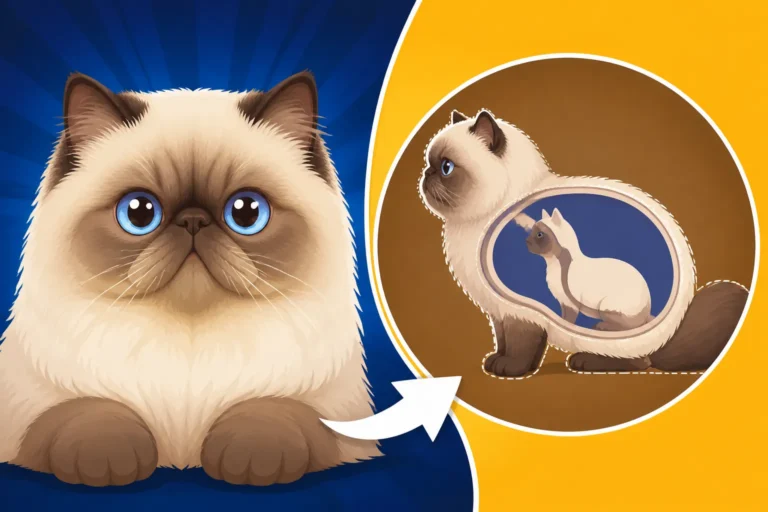
The Himalayan cat, with its stunning blue eyes and striking colorpoint pattern on a long, luxurious coat, wasn't just a happy accident. It was the result of deliberate, scientific crosses between Persian and Siamese cats. Imagine the dedication, the careful planning, and the sheer patience involved in bringing two distinct breeds together to create something entirely new. These weren't just casual backyard breedings; they were focused efforts to understand genetics and create a specific vision.
Early Experimental Crosses and Genetic Proof
The story truly begins in the 1930s, with researchers at Harvard University. They weren't necessarily setting out to create a new pet breed, but rather to study the genetics of coat color and patterns. The Himalayan Was Made at Harvard in the 1930s tells a deeper story about this. Scientists like Clyde Keeler and Virginia Cobb were at the forefront, carefully breeding Persian cats with Siamese cats. Their goal was to see if the colorpoint gene, characteristic of the Siamese, could be transferred to the longhaired body and cobby frame of a Persian.
These initial experimental crosses were groundbreaking. The researchers meticulously documented their findings, publishing a pivotal paper in 1936. This publication, The 1936 Paper That Started the Himalayan, laid the scientific foundation for what would eventually become the Himalayan breed. At this stage, there weren't "Himalayan cats" in the recognized sense; there were simply cats exhibiting the desired genetic traits. Think of them as prototypes, proving the concept before the product was fully refined for the public. It took How Many Generations the First Himalayan Took to truly establish the look.
The Vision of Dedicated Breeders
While the scientific community proved the genetic possibility, it took the passion and vision of dedicated cat fanciers to transform these experimental crosses into a stable, recognizable breed. These individuals saw the immense potential in a cat that combined the luxurious coat and docile temperament of the Persian with the captivating point coloration and piercing blue eyes of the Siamese. They took the baton from the researchers and began the painstaking work of selective breeding to consistently reproduce the desired traits, generation after generation.
This wasn't an overnight process. It involved careful record-keeping, understanding pedigrees, and making difficult decisions about which cats to breed to further the emerging type. They were laying the groundwork, building the very first lines of cats that would eventually be recognized as Himalayans. At this point, the cats were often referred to as "Siamese-Persians" or "Colorpoint Persians" before the name "Himalayan" really stuck, as explained in What Siamese Persian Meant Before the Name Himalayan.
The Road to Official Recognition: A Pounding of Pavement
Achieving official breed recognition from major cat registries is no small feat. It's a rigorous process that demands consistency, stability, and a significant number of cats that reliably produce the desired characteristics. For a new breed like the Himalayan, this journey was particularly challenging, requiring years of advocacy and meticulous breeding programs.
Marguerita Goforth's Pioneering Role
One name stands out prominently in the history of Himalayan recognition: Marguerita Goforth. She was a powerhouse, dedicating herself to the breed in the United States. Goforth understood that for the Himalayan to move beyond a novelty and become a legitimate show cat, it needed the backing of established registries. Her tireless efforts, along with those of other committed breeders, were crucial in presenting a unified front to the cat fancy associations.
Her work culminated in a major milestone: Marguerita Goforth and the Himalayan's 1957 Recognition. This year marked a significant turning point, as the Himalayan officially gained recognition as a distinct breed by some of the leading associations. This wasn't just about getting a fancy name on a piece of paper; it was about validating years of breeding effort and opening the door for Himalayans to compete in shows and be recognized as a standard within the cat world. This initial recognition was a triumph, and The Year CFA First Accepted the Himalayan is an important part of that story.
Meeting Registry Standards: More Than Just Good Looks
Cat registries have strict criteria for recognizing new breeds. It's not enough to simply have a few beautiful cats. They look for:
- Consistency: The cats must consistently produce offspring that meet the breed standard in terms of coat, color, body type, and temperament.
- Sufficient Numbers: There needs to be a healthy population of unrelated breeding stock to ensure genetic diversity and prevent inbreeding problems. This prevents the breed from being a passing fad or collapsing due to a limited gene pool.
- Multi-Generational Pedigrees: Evidence of several generations of consistent breeding is often required, demonstrating that the traits are firmly established.
- A Dedicated Breeder Base: Registries want to see a committed group of breeders who are dedicated to the long-term health and preservation of the breed.
These requirements ensure that any new breed is robust and sustainable. It's a commitment to the future of the cats themselves, ensuring they aren't merely a fleeting trend.
Counting the Uncountable: Estimating the Population at Recognition
Now to the core question: exactly how many Himalayans existed at the point of official recognition? This is where things get a bit murky, and it's important to set realistic expectations. Unlike a modern census, early breed registries weren't typically conducting precise population counts down to the last kitten.
The "Foundational Stock" Concept
When a breed is first recognized, the focus isn't on a massive existing population, but rather on having a sufficient foundation of breeding animals. Registries primarily needed to see that there were enough genetically distinct cats to form a viable breeding program without immediately running into severe inbreeding issues. This often meant identifying a handful of key breeding cats and their immediate offspring that demonstrated the consistent traits required by the proposed standard.
Think of it this way: to plant a forest, you don't need a million trees right away. You need enough healthy saplings of various genetic backgrounds to start growing. For a new cat breed, this "foundational stock" would likely be in the dozens, perhaps topping out at a few hundred, but certainly not thousands. These were the cats that would be recorded in the very first studbooks or registers for the new breed.
| Criteria for Breed Recognition | Description | Estimated Minimum Number (for foundational stock) |
|---|---|---|
| Consistency of Type | Reliable reproduction of physical and temperament traits across generations | At least 3-5 distinct breeding lines |
| Genetic Diversity | Enough unrelated cats to avoid immediate inbreeding depression | 20-50 individuals (breeding age, proven type) |
| Multi-Generational Pedigrees | Documentation showing lineage and trait stability over several generations | Minimum of 3 generations of consistent breeding |
| Number of Breeders | A core group actively committed to the breed's development | At least 5-10 active catteries/enthusiasts |
| Breed Standard | A detailed written description of the ideal cat | (N/A, but requires consensus among breeders) |
As you can see, the emphasis is on quality and consistency rather than sheer quantity. The goal was to ensure the breed had a solid genetic footing for the future, not to count every single existing animal that vaguely resembled the new type.
Why Exact Numbers Are Elusive
The simple truth is that precise, universally agreed-upon numbers for how many Himalayans existed at the exact moment of recognition are not readily available, nor were they likely meticulously tracked by registries at the time. Here's why:
- Focus on Registration, Not Census: Registries primarily deal with registering cats that meet specific criteria, not conducting a population census. The emphasis was on accepting applications for registration from cats that qualified under the new standard.
- Gradual Acceptance: Recognition wasn't always a single, sudden event. Different registries might have recognized the breed at slightly different times or under varying conditions, making a global count at one precise moment impossible.
- Unregistered "Type" Cats: There might have been many cats that looked like Himalayans but weren't part of formal breeding programs or registered. These wouldn't have counted towards the "official" numbers for recognition.
- Evolving Standards: The breed standard itself might have evolved slightly in the early years, meaning some cats that were "Himalayan-type" might or might not have qualified at different points.
Therefore, while we don't have a definitive "X number of Himalayans existed on Y date," we can confidently infer that the officially recognized and registered population at that initial moment would have been relatively small, consisting of the foundational stock that demonstrated the breed's viability. The initial recognition of the Himalayan was more about the quality of the cats presented and the potential they held, rather than an overwhelming quantity.
Beyond Recognition: The Himalayan's Growing Popularity
Once recognized, the floodgates began to open for the Himalayan cat. The breed's unique combination of beauty and temperament quickly made it a favorite, and its numbers began to swell significantly in the decades following recognition.
Expanding the Gene Pool and Establishing Lines
With official recognition came increased interest, more dedicated breeders, and a concerted effort to expand the gene pool. Breeders, now operating under established guidelines, could focus on refining the breed, ensuring health, and further popularizing these charming cats. This expansion was crucial for the long-term viability of the breed, moving it beyond the initial small foundational numbers.
The growth involved careful selection, bringing in new Persian lines that carried the necessary genes while maintaining the desired "type." This strategic breeding allowed for a wider variety of point colors, like the rich seal points, the striking blue points, and the warm flame points, all contributing to the breed's diverse appeal. You can learn more about this in How Many Point Colors the Himalayan Division Recognizes. The availability of quality food and supplies from places like Chewy also made managing growing catteries much easier, helping breeders ensure their cats were well-nourished.
The Enduring Appeal of a Beloved Breed
The Himalayan's initial recognition was just the beginning of its journey. Its captivating appearance, combined with its sweet, gentle, and often vocal nature (inherited from its Siamese ancestors), quickly cemented its place as a beloved companion animal. While controversies and changes in registration practices, such as Why CFA Made the Himalayan a Persian Division in 1984, might have shifted how the breed is classified on paper, the cat itself has remained consistently popular. For example, How the Himalayan Is Registered by CFA Today speaks to these changes.
Today, many years after its initial recognition, the Himalayan continues to charm cat lovers worldwide. It's a testament to the foresight of those early researchers and the unwavering dedication of pioneering breeders like Marguerita Goforth who worked tirelessly to bring this magnificent breed into the spotlight. Their efforts, starting with a relatively small number of foundational cats, led to the thriving population of Himalayans we cherish today. When choosing a cat, it's always worth learning What Nobody Tells You Before Buying a Himalayan to be fully prepared for their unique needs, like grooming tools and specialty foods you can find readily on platforms like Chewy.
And remember, whether you're looking for specialized kibble for a flat-faced breed or a new brush to keep that luxurious coat pristine, reputable pet supply retailers like Chewy make it simple to find everything your Himalayan needs to thrive, carrying forward the legacy of care these cats have enjoyed since their earliest days.
Disclaimer
This article is for general informational purposes only and does not constitute professional advice. Laws, prices and regulations vary by location and change over time. Consult a qualified professional for guidance on your specific situation.