How Long the Himalayan Took to Reach Championship
It can be incredibly confusing for new Himalayan cat owners, or even seasoned enthusiasts, to piece together the exact timeline of how this beloved breed came to be officially recognized and, more importantly, when it finally achieved the coveted championship status. There's a rich history filled with passionate breeders, scientific endeavors, and pivotal decisions by cat registries that often gets condensed or overlooked. This guide will meticulously unravel that journey, tracing the Himalayan's path from its earliest origins through the dedicated efforts that eventually led to its recognition in the show ring.
The Genesis of the Himalayan: Early Experiments
Before the Himalayan could even dream of championship status, it had to exist. This wasn't a breed discovered in a remote monastery but rather a carefully, purposefully created feline. The idea was simple yet revolutionary: combine the regal, long-haired elegance of the Persian with the striking colorpoint pattern and vibrant blue eyes of the Siamese. This was a true labor of love, spanning decades and involving some truly dedicated individuals who saw the potential for something extraordinary.
Harvard's Role and the First Crosses
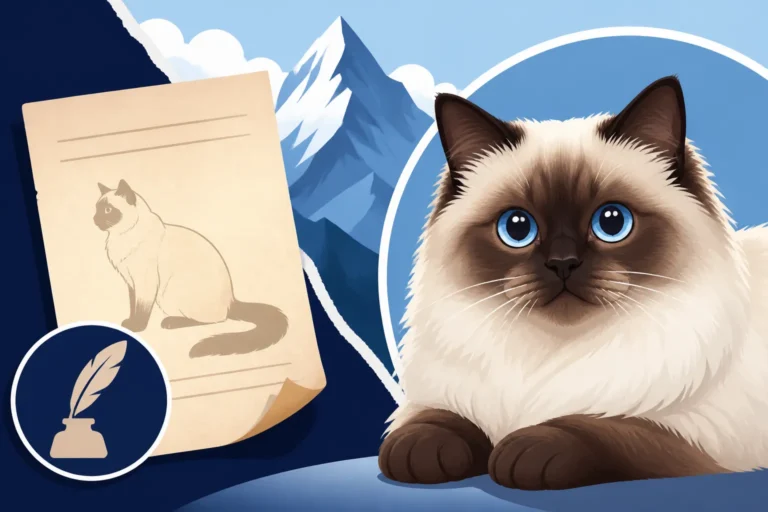
The story of the Himalayan truly begins in the scientific laboratories of Harvard University in the 1930s. Dr. Clyde Keeler and Virginia Cobb, two brilliant researchers, weren't initially trying to create a new cat breed; they were studying how genetic traits were inherited, particularly the albino series responsible for colorpoint genetics. They embarked on a series of experimental crosses, mating Siamese cats with Persians. Their goal was to understand the inheritance of the colorpoint gene and long hair, to prove specific genetic principles. This meticulous, scientifically driven approach laid the absolute groundwork for the breed. The Himalayan Was Made at Harvard in the 1930s is a fascinating read if you want to dive deeper into the initial spark.
These early experimental cats, often simply called "Siamese-Persians" at the time, were the very first examples of what would become the Himalayan. They were living proof that the combination was possible. Imagine the excitement, seeing those first kittens born with long coats and the characteristic points beginning to develop. It was a pioneering effort, one that required patience and careful record-keeping, as each generation slowly refined the desired traits. This wasn't a quick process; it involved backcrossing and selective breeding to solidify the genetic blueprint. Clyde Keeler, Virginia Cobb and the First Himalayan details the incredible dedication these two had.
The scientific community eventually saw the publication of their work. The 1936 Paper That Started the Himalayan presented their findings, effectively documenting the creation of this new feline type. While it wasn't a breed standard or a show entry, it was the intellectual foundation, the birth certificate, if you will, for the Himalayan. This academic origin is a unique aspect of the Himalayan's story, setting it apart from many other breeds that evolved more naturally or through less documented efforts by hobby breeders.
Early British and Canadian Contributions
While the American researchers were busy with their genetic experiments, parallel efforts were brewing across the Atlantic. British breeders, captivated by the idea of a colorpoint longhair, were also working on their own lines. They too were crossing Persians with Siamese, driven by a similar vision of a cat with the luxurious coat and temperament of a Persian but with the stunning color pattern of a Siamese. The names they used varied, sometimes "Colorpoint Longhairs" or "Himalayan Persians," reflecting the ongoing development and lack of a unified nomenclature.
These early British efforts, while perhaps less formally documented from a purely scientific standpoint than the Harvard project, were equally crucial in developing the breed's genetic pool and refining its appearance. Breeders experimented with different lines, slowly working towards a consistent type. This period was characterized by a lot of trial and error, a blending of existing Persian and Siamese genetics, and a deep understanding of what made a healthy, beautiful cat. What Britain Called the Himalayan Before 1955 sheds light on the varied naming conventions of the time.
Similarly, Canadian breeders also played a significant role. With a passion for feline genetics and the desire to create new varieties, they contributed their own breeding programs to the emerging Himalayan type. Their efforts often involved importing cats from both American and British lines, further broadening the genetic diversity and strengthening the characteristics that would eventually define the breed. How Canada Contributed to the Himalayan reveals how these various independent efforts eventually converged to solidify the breed’s foundation across different continents. It was truly a global endeavor, driven by a shared vision.
Seeking Recognition: The Initial Breed Status
Once the initial "Siamese-Persian" crosses proved successful and a consistent type began to emerge, the next monumental step was to gain formal recognition from the major cat registries. This wasn't just about showing off beautiful cats; it was about establishing the Himalayan as a legitimate, distinct breed with its own standards, separate from its parent breeds. This process is often a painstaking one, requiring years of lobbying, presenting, and proving consistency.
The American Journey to Provisional Status
In the United States, after the initial scientific curiosity, hobby breeders took up the torch. They were determined to refine the Himalayan further and bring it into the official world of pedigreed cats. This meant establishing a breeding program that consistently produced cats matching a specific ideal. It required careful selection, diligent record-keeping, and demonstrating that the desired traits were inheritable and stable across generations. These breeders often formed clubs and associations to collectively advocate for their emerging breed.
Gaining provisional status with a cat registry is a huge hurdle. It means the registry acknowledges the existence of the breed and allows it to be shown, but not yet to compete for championship titles. This period is a proving ground, where breeders must show that the breed has enough numbers, a consistent type, and a distinct look that sets it apart. It’s a time of intense scrutiny from judges and other breeders. For the Himalayan, this meant demonstrating that it wasn't just a novelty, but a genuine breed worthy of its own category.
This push for provisional status required immense dedication. Breeders spent countless hours traveling to shows, presenting their cats, explaining the breed's lineage, and advocating for its unique qualities. They had to articulate why the Himalayan was more than just a colorpoint Persian, highlighting its specific genetic background and the consistent traits that had been developed. It was a long road, paved with determination and a belief in the beauty and charm of these new cats.
Marguerita Goforth's Pioneering Efforts
No discussion of the Himalayan's recognition would be complete without highlighting the immense contributions of Marguerita Goforth. She was a powerhouse in the American cat fancy, a passionate breeder with an unwavering vision for the Himalayan. Goforth understood the importance of standardized breeding and rigorous documentation. Her cattery became a beacon for Himalayan development, producing many of the foundational cats that would go on to shape the breed.
Marguerita Goforth was instrumental in gathering data, organizing breeders, and tirelessly presenting the case for the Himalayan to various cat associations. She was a tireless advocate, working within the established frameworks of organizations like the Cat Fanciers' Association (CFA) to argue for the Himalayan's rightful place. Her efforts were not just about her own cats, but about securing a future for the entire breed she loved so dearly. Marguerita Goforth and the Himalayan's 1957 Recognition marks a crucial turning point directly attributable to her work.
Her perseverance paid off significantly when the Cat Fanciers' Association, a major registry in the US, granted the Himalayan provisional recognition in 1957. This was a monumental achievement, a testament to the decades of work by countless individuals, but particularly driven by Goforth's leadership. It meant that the Himalayan, which had started as a scientific experiment, was now officially on the map as a breed in development, taking its first steps towards full championship glory.
The Leap to Championship Status
Provisional status is a wonderful achievement, but championship status is the ultimate goal. It means the breed is fully accepted, can compete for top honors, and has earned its place among the established breeds. For the Himalayan, this was the culmination of scientific endeavor, dedicated breeding, and relentless advocacy.
When the Himalayan Gained Championship Acceptance
Following its provisional acceptance in 1957, the Himalayan continued to flourish. Breeders diligently worked to ensure consistency in type, temperament, and health, producing more and more cats that met the emerging standards. This period saw the breed gaining popularity, attracting more breeders and admirers who fell in love with its unique combination of Persian elegance and Siamese coloring. The push for championship was on, fueled by the growing numbers and quality of Himalayans being exhibited.
The Cat Fanciers' Association officially granted the Himalayan championship status in 1957. This was a truly defining moment, signifying that the breed had come of age. It was no longer an experimental curiosity or a provisional entry; it was a full-fledged champion-eligible breed, ready to compete alongside the Persians, Siamese, and other well-established breeds for Best in Show honors. The Year CFA First Accepted the Himalayan is a key date for anyone interested in the breed's official journey.
Other registries followed suit, recognizing the immense popularity and distinct characteristics of the Himalayan. For instance, The International Cat Association (TICA), while founded later, also recognized the Himalayan as a distinct breed and granted it championship status, allowing it to compete in its own category. This widespread acceptance demonstrated the breed's undeniable appeal and the success of its dedicated advocates in establishing its unique identity in the feline world.
The Criteria for Championship and Early Victories
Achieving championship status isn't just a rubber stamp; it means meeting specific, stringent criteria. For the Himalayan, this meant consistently demonstrating the Persian body type – cobby and heavily boned – combined with the unique colorpoint pattern and deep blue eyes derived from the Siamese. Judges would assess the cat against a detailed breed standard, looking for specific qualities in head shape, coat length and texture, eye color, and of course, the clarity and definition of its points.
| Feature | Himalayan Standard (Championship Criteria) |
|---|---|
| Body Type | Cobby, heavily boned, broad chest, short, well-muscled legs |
| Head Shape | Large, round, broad skull, small, low-set ears, full cheeks |
| Eyes | Large, round, brilliant, deep blue (no other color permitted) |
| Nose | Short, "button" nose (in Peke-face), or traditional length |
| Coat | Long, flowing, silky texture, full ruff and britches |
| Color Pattern | Colorpoint (darker "points" on ears, face, paws, tail) |
| Point Colors | Seal, Blue, Chocolate, Lilac, Flame, Cream, Tortie, Lynx |
| Temperament | Gentle, docile, affectionate, relatively quiet |
Early championship victories were incredibly significant for the Himalayan breed. Each win in the show ring further solidified its standing and showcased its beauty to a wider audience. These early champions became the foundation of future breeding programs, proving that the breed could consistently produce cats of exceptional quality that adhered to the demanding standards. It wasn't just about winning ribbons; it was about validating the vision and hard work of the breeders who had brought the Himalayan into existence.
The Great Merger and its Aftermath
While the Himalayan had achieved championship status, its journey within the cat fancy was not without further twists and turns. One of the most significant changes came years after its initial recognition, altering its classification in a major registry and leading to lasting confusion for many enthusiasts.
CFA's 1984 Decision to Merge with the Persian
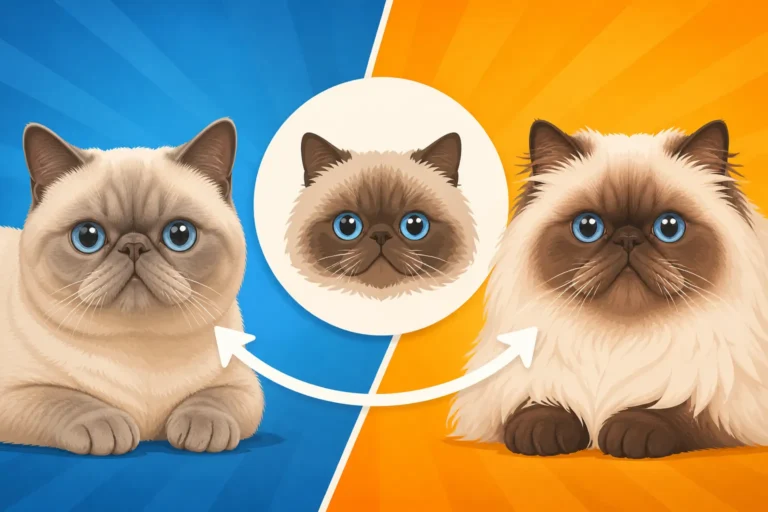
In a move that surprised and, in some cases, dismayed many Himalayan breeders, the Cat Fanciers' Association made a pivotal decision in 1984. CFA voted to reclassify the Himalayan not as a separate breed, but as a "Colorpoint Persian" division within the Persian breed itself. This meant that while Himalayans could still compete and achieve championship status, they would do so under the umbrella of the Persian breed standard, rather than their own distinct standard. This decision was largely driven by the genetic reality that Himalayans are, essentially, long-haired cats with Persian conformation that carry the Siamese colorpoint gene. Why CFA Made the Himalayan a Persian Division in 1984 delves into the rationale behind this significant change.
For some, this was a logical step, acknowledging the deep genetic ties between the Himalayan and the Persian. After all, the Persian was one of its foundational parent breeds. However, for many dedicated Himalayan breeders, it felt like a demotion or a loss of identity for a breed they had worked so hard to establish. They had invested decades in developing the Himalayan's unique combination of traits, and suddenly, it was being folded back into one of its ancestors. The argument became less about the physical cat and more about the paperwork and official classification.
This reclassification meant that Himalayans competing in CFA shows would be judged against the Persian standard, with specific allowances for their colorpoint pattern and blue eyes. While they retained their ability to earn championship titles, they were doing so as a type of Persian rather than an independent breed. This decision has caused ongoing discussion and occasional confusion, particularly for new owners trying to understand their cat's official lineage and show prospects. What a Colorpoint Division Means for a Himalayan explains the practical implications of this distinction in the show ring.
TICA's Separate Path and Continued Recognition
In contrast to CFA's decision, other major cat registries opted to maintain the Himalayan as a distinct breed. The International Cat Association (TICA), for example, continues to recognize the Himalayan as a separate and independent breed with its own unique breed standard. This means that in TICA shows, a Himalayan competes against other Himalayans, judged according to criteria specifically tailored to its unique characteristics, rather than being a division of the Persian breed.
This divergence in classification between major registries has meant that Himalayan breeders and owners sometimes navigate a dual reality. Depending on which association they are registered with or choose to show in, their cat might be considered a distinct breed or a division of another. For those who believe in the Himalayan's unique identity, TICA's approach offers validation. Why TICA Kept the Himalayan Separate highlights the differing philosophies among cat fancy organizations.
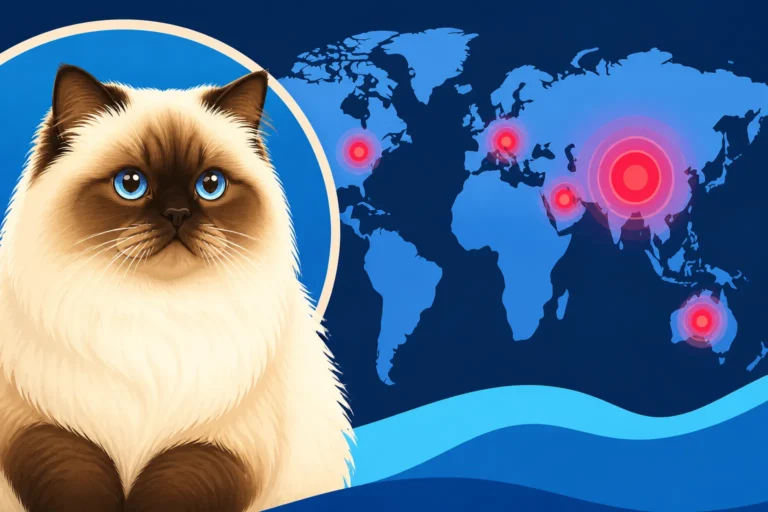
Ultimately, regardless of the classification, the Himalayan continues to be a cherished and popular breed worldwide. Its journey to championship was a testament to the vision of its creators and the tireless efforts of breeders like Marguerita Goforth. From scientific experiment to a recognized, championship-winning breed, the Himalayan's story is one of perseverance, passion, and the enduring appeal of its exquisite beauty. Whether it's registered as a Himalayan or a Colorpoint Persian, its gentle temperament, stunning blue eyes, and luxurious coat ensure its place in the hearts of cat lovers everywhere. How Long a Himalayan Takes to Finish Its Coat and Points is a reminder that the cat's development is a lengthy process, much like its journey to recognition.
Disclaimer
This article is for general informational purposes only and does not constitute professional advice. Laws, prices and regulations vary by location and change over time. Consult a qualified professional for guidance on your specific situation.