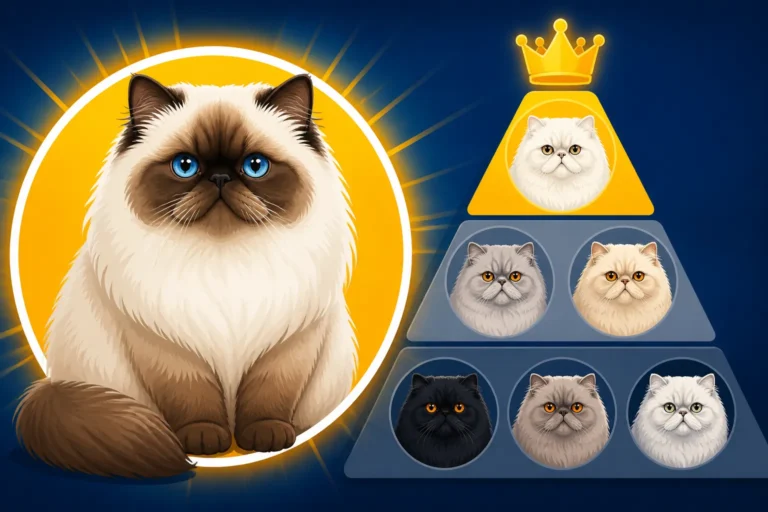
Why TICA Kept the Himalayan Separate
For anyone delving into the wonderful world of Himalayan cats, one of the most confusing aspects often pops up when you start looking at pedigrees and breed registries. It's a real head-scratcher: why do some organizations list the Himalayan as its own distinct breed, while others seem to have absorbed it into the Persian category? This guide will unravel that mystery, focusing on why The International Cat Association (TICA) has steadfastly maintained the Himalayan's unique identity, offering a clear perspective on this often-debated topic for prospective owners and seasoned enthusiasts alike.
The Historical Context: When the Himalayan Emerged
To truly understand the differing stances of cat registries, we need to rewind a bit and look at the Himalayan's origin story. This isn't just about a pretty cat; it's about a fascinating genetic journey and the dedicated people who brought this beautiful breed to life. The Himalayan didn't just appear out of nowhere; it was a deliberate, scientific endeavor that captivated breeders and geneticists alike.
The Harvard Experiment and Early Recognition
The Himalayan cat, as we know it, began as a specific breeding experiment back in the 1930s. Researchers at Harvard Medical School, notably Dr. Clyde Keeler and Virginia Cobb, set out to understand the genetics of colorpoint patterns in cats. They meticulously crossed Siamese cats, known for their distinctive points and lively personalities, with long-haired Persians, admired for their luxurious coats and placid temperaments. The goal wasn't just to create a new breed, but to study how traits like coat length and colorpoint genes were inherited. Their work was quite groundbreaking for its time. You can read more about this fascinating beginning in The Himalayan Was Made at Harvard in the 1930s.
The initial crosses proved successful, resulting in kittens that displayed the long coat of the Persian and the colorpoint pattern of the Siamese. These early "Siamese-Persian" hybrids, as they were often called, sparked immense interest. The official birth of the Himalayan as a recognized breed in the United States, however, took a few more decades, culminating in Marguerita Goforth's tireless efforts. Her dedication eventually led to the cat's formal recognition by the Cat Fanciers' Association (CFA) in 1957. Marguerita Goforth and the Himalayan's 1957 Recognition provides a deeper dive into her crucial role. It wasn't just about showing off a new kind of cat; it was about proving a consistent genetic inheritance pattern, generation after generation, establishing its bona fides as a unique entity.
The American vs. British Naming Convention
Even in its early days, the naming of this gorgeous new breed presented a bit of a quandary, highlighting a divide that would eventually influence registry decisions. In America, the name "Himalayan" quickly took hold, inspired by the Himalayan rabbit, which shares the same striking colorpoint pattern (darker extremities, lighter body). It was a name that instantly conveyed the cat's most distinctive visual trait. This straightforward approach appealed to breeders and the public alike, who recognized the cat as a unique entity, combining the best features of its parent breeds into something new and exciting.
Across the Atlantic, however, the British cat fancy took a slightly different route. While they admired the cat, they often preferred to refer to it as a "Colorpoint Persian." This name emphasized its Persian lineage and coat type, while acknowledging the "colorpoint" aspect that came from the Siamese. This semantic difference wasn't just trivial; it reflected a fundamental perception of the breed. Was it truly a new breed, or merely a variation of an existing one? This distinction laid the groundwork for the divergent paths that CFA and TICA would eventually take, showcasing how deeply ingrained breed identity can be, even down to a name.
CFA's Decision: Merging the Himalayan into the Persian
For many years, the Himalayan enjoyed its status as a distinct breed in the eyes of most cat registries, including the venerable Cat Fanciers' Association (CFA). However, in the mid-1980s, a significant shift occurred within CFA that would forever change how many perceived the Himalayan. This decision was met with mixed reactions and continues to be a point of discussion among enthusiasts.
The Rationale Behind the 1984 Merger
In 1984, CFA made a pivotal decision to officially merge the Himalayan into the Persian breed as a "Colorpoint Persian Division." This meant that, under CFA's rules, the Himalayan was no longer considered a separate breed but rather a color division of the Persian. The primary rationale behind this move was the undeniable genetic and physical similarities between the two. Himalayan cats possess the same long, flowing coat, the cobby body, the round head, and often the same "peke-face" or "doll-face" structure as a Persian. The only major differentiating factor was the colorpoint gene, which Himalayans inherit from their Siamese ancestors, giving them their distinctive darker points and blue eyes.
From CFA's perspective, the logic was that Himalayans are essentially Persians that just happen to carry the colorpoint gene. Since breeding between Persians and Himalayans was already common practice to maintain genetic diversity and improve certain traits, they argued it made sense to formalize this connection. The organization believed that recognizing the Himalayan as a color division rather than a separate breed simplified classification and acknowledged the deep genetic relationship. This change, while seemingly administrative, had profound implications for how the breed was shown, judged, and understood within the largest cat registry in North America. You can find more detail on this in Why CFA Made the Himalayan a Persian Division in 1984.
The Impact on Breeders and Show Standards
The merger had a substantial impact on Himalayan breeders who suddenly found their cats competing directly against other Persian varieties, rather than in their own separate categories. For some, this was a welcome integration, allowing for a broader gene pool and a clearer path for breeding programs that aimed for the ideal Persian type, simply with colorpoints. They could now freely breed their Himalayans to solid-colored Persians, further reinforcing the shared characteristics. This integration also meant that the Himalayan's show standard became entirely aligned with the Persian standard, with the only allowances being for the colorpoint pattern and mandatory blue eyes.
However, for other breeders, particularly those who had worked hard to establish the Himalayan's unique identity, the merger felt like a loss. They felt it diminished the distinct heritage and specific traits that set the Himalayan apart, beyond just its color. It meant that cats that once championed as "Best Himalayan" would now be vying for "Best Colorpoint Persian," and potentially against other Persian divisions. This created a sense of erasure for some, who believed the Himalayan deserved its own category to preserve its specific history and characteristics. The debate over this decision has lingered for decades, shaping the breeding strategies and philosophical outlooks of breeders depending on their registry affiliation. The implications for judging and competition standards are thoroughly explored in What a Colorpoint Division Means for a Himalayan.
TICA's Philosophy: Celebrating Breed Distinctiveness
In stark contrast to CFA's decision, The International Cat Association (TICA) chose a different path, steadfastly maintaining the Himalayan's status as a distinct and separate breed. This decision reflects a different philosophy towards breed recognition, one that prioritizes the unique combination of traits and historical development that defines each feline lineage.
Valuing the Himalayan's Unique Heritage
TICA's approach is rooted in recognizing the Himalayan's unique heritage as a hybrid of two distinct breeds: the Persian and the Siamese. While the physical resemblance to the Persian is undeniable, TICA acknowledges that the Siamese contribution, beyond just the colorpoint gene, instilled certain characteristics that distinguish the Himalayan. For instance, many Himalayan owners will tell you their cats possess a more vocal nature and a slightly more playful, interactive demeanor than a typical Persian, traits often attributed to their Siamese ancestry. The Himalayan Kept the Siamese Voice and Lost the Volume explores this fascinating aspect of their personality.
By keeping the Himalayan as a separate breed, TICA essentially honors the deliberate effort of early breeders to combine these specific qualities into a new, consistent type. It's a recognition that while the Himalayan looks like a Persian with color, its genetic makeup and often its temperament represent a unique blend. This philosophical stance allows TICA to maintain a breed standard that, while similar to the Persian in many aspects, can also account for the subtle differences that breeders have cultivated over generations. It provides a distinct space for Himalayan enthusiasts to celebrate their cats not just as a color variation, but as a breed in their own right, with a history and identity all their own. This separate status is a source of pride for many who feel it accurately reflects the breed's distinctiveness.
Maintaining a Separate Standard for the Himalayan
One of the most significant practical outcomes of TICA maintaining the Himalayan as a separate breed is the existence of its own distinct breed standard. While this standard naturally shares many commonalities with the Persian standard – focusing on the cobby body, round head, small ears, and luxurious long coat – it also has specific nuances that cater directly to the Himalayan's unique features. For example, the TICA standard places emphasis on the clarity and contrast of the points against the body color, and the required intense blue eye color. This isn't just about acknowledging color; it's about evaluating the overall balance and presentation of the cat as a Himalayan.
This separate standard provides a clear framework for breeders aiming to produce Himalayans that excel in the show ring under TICA's rules. It allows for judging that specifically looks for characteristics that embody the Himalayan ideal, without diluting it by direct comparison to a solid-colored Persian. This means that while a Himalayan might be judged on its overall "Persian type," the judges are also specifically looking for the excellence of its point coloration and the vibrant blue of its eyes as integral parts of its breed identity. This dedicated standard ensures that the unique traits the Himalayan brings to the table are not overlooked but are instead celebrated and preserved. The specifics of how points are judged can be found in How the Himalayan Standard Divides Its Points.
| Feature | CFA (after 1984) | TICA |
|---|---|---|
| Breed Status | Colorpoint Persian Division (of Persian) | Separate Breed: Himalayan |
| Primary Identifier | Persian with colorpoint pattern | Himalayan (distinct breed) |
| Breed Standard | Persian Standard (with colorpoint allowance) | Himalayan Standard (specific to the breed) |
| Show Competition | Competes within Persian categories | Competes in its own Himalayan breed category |
| Registry Focus | Integration & simplification | Distinctiveness & unique heritage |
| Pedigree Listing | Often lists as "Persian" | Lists as "Himalayan" |
Practical Implications for Himalayan Owners and Breeders
The differing stances of major registries like CFA and TICA have very real, tangible consequences for anyone involved with Himalayan cats, whether you're a dedicated breeder working to improve lines or a new owner simply trying to understand your cat's paperwork. It's not just an academic debate; it affects decisions every day.
Navigating Dual Registration and Pedigrees
For breeders, one of the most common challenges is navigating dual registration. Many breeders choose to register their cats with multiple associations to maximize their options for showing and selling kittens. This means understanding that a cat registered as a "Persian, Colorpoint Division" with CFA will be registered as a "Himalayan" with TICA. The pedigree paperwork, while tracing the same lineage, will reflect these different classifications. This can be particularly confusing for new owners who receive paperwork that might list their beloved cat as a "Persian" from one parent club, but then see "Himalayan" used colloquially or by a different breeder. What a Himalayan Buyer Should Ask About Registration offers crucial advice on understanding these documents.
It's vital for owners to recognize that despite these different classifications, they are still bringing home the same wonderful, long-haired, blue-eyed companion. The distinction is primarily administrative and historical, not about the fundamental genetic makeup of the individual cat. However, understanding this dual nature is important for anyone considering showing their cat or, especially, if they plan to become involved in breeding. A breeder must be meticulous in maintaining records for both systems if they operate across registries. This ensures continuity and avoids confusion, clearly detailing the cat's ancestry and genetic traits regardless of the specific registry's naming conventions.
The Role of Registries in Breed Preservation
Beyond just paperwork, the role of cat registries like TICA and CFA is absolutely critical in the preservation and responsible development of breeds. By maintaining distinct breed standards and registration processes, they help guide breeders in their efforts to uphold the health, temperament, and physical characteristics of each feline type. TICA's decision to keep the Himalayan separate serves as a powerful statement about its commitment to preserving the specific traits and genetic heritage of this unique blend of Persian and Siamese. This commitment encourages breeders to focus on maintaining the ideal Himalayan type, from the intensity of its point color to the specific conformation that defines it.
For owners, knowing their cat comes from TICA-registered lines (or other registries that recognize the Himalayan separately) can offer reassurance that their pet's lineage has been intentionally managed to meet the standards of a distinct breed. This can influence everything from health screening protocols specific to the Himalayan's unique predispositions, to guiding breeding choices that aim to enhance specific breed characteristics. When searching for essentials like a sturdy scratching post that a fluffy cat can use, or special grooming tools, reputable online pet stores such as Chewy often categorize products to cater to the specific needs of various breeds, making it easier for owners to find suitable items for their unique Himalayan cat. This dedicated focus by a registry ensures that the qualities that make the Himalayan so special continue to thrive for future generations.
The Enduring Appeal of the Himalayan as a Distinct Breed
Regardless of how various registries classify them, Himalayans have carved out a significant and beloved niche in the hearts of cat enthusiasts worldwide. Their enduring appeal speaks volumes about their unique charm and the way they truly stand apart, even among their Persian relatives.
Why Owners See More Than Just a Colorpoint Persian
For many Himalayan owners, their cats are undeniably more than just a Persian with a specific color pattern. They often report a distinct personality that bridges the gap between the calm, regal Persian and the more outgoing, communicative Siamese. Himalayans are known for being affectionate and devoted lap cats, much like Persians, but they also tend to be more vocal, often "chatting" with their owners in soft, melodious trills or chirps inherited from their Siamese side. This gentle yet expressive nature sets them apart, making them incredibly engaging companions. Their bright blue eyes, a mandatory trait linked to the colorpoint gene, also add an undeniable allure and an almost soulful expression that captivates many.
This unique combination of a docile, luxurious exterior with an often more interactive inner life is precisely what makes the Himalayan so beloved. Owners cherish their distinctive looks and their delightful temperaments, feeling that these qualities warrant recognition as a separate breed. It's an emotional connection to a cat that embodies the best of two worlds, creating an animal that is both stunningly beautiful and wonderfully companionable. For instance, when looking for special food bowls that accommodate their flat faces, or plush beds they can sink into, many owners will specifically search for "Himalayan cat supplies" on sites like Chewy, highlighting their perceived distinctiveness. This strong identity, cultivated over decades, reinforces the argument for the Himalayan's unique standing. Why Breeders Still Use the Name Himalayan further explores this deep attachment to the breed's name.
The Future of the Himalayan's Separate Status
The debate over the Himalayan's classification may continue among cat fancy organizations, but the breed's popular appeal and distinct characteristics ensure its future. TICA's commitment to recognizing the Himalayan as a standalone breed provides a crucial avenue for breeders and owners who believe in celebrating this cat's unique heritage. This distinct status allows for focused breeding programs aimed at preserving the health and specific traits of the Himalayan, without the pressures of having to conform entirely to a broader Persian standard that might overlook these nuances.
As the cat fancy evolves, the value of genetic diversity and the preservation of distinct lines become even more important. TICA's approach provides a safeguard for the Himalayan's identity, ensuring that the careful work of the breed's founders and subsequent generations of breeders is honored. For potential owners, understanding these distinctions helps them make informed choices about where their kitten comes from and what kind of support and standards are behind their pet's lineage. Whether you call them a Colorpoint Persian or a Himalayan, one thing is certain: these stunning, blue-eyed beauties will continue to enchant cat lovers for many years to come, and registries like TICA play a vital role in upholding their unique place in the feline world. Even for everyday items like specialized combs for their long coats, or interactive toys for their moderate energy levels, retailers like Chewy often feature curated selections for specific breeds like the Himalayan, acknowledging their distinct needs.
Disclaimer
This article is for general informational purposes only and does not constitute professional advice. Laws, prices and regulations vary by location and change over time. Consult a qualified professional for guidance on your specific situation.