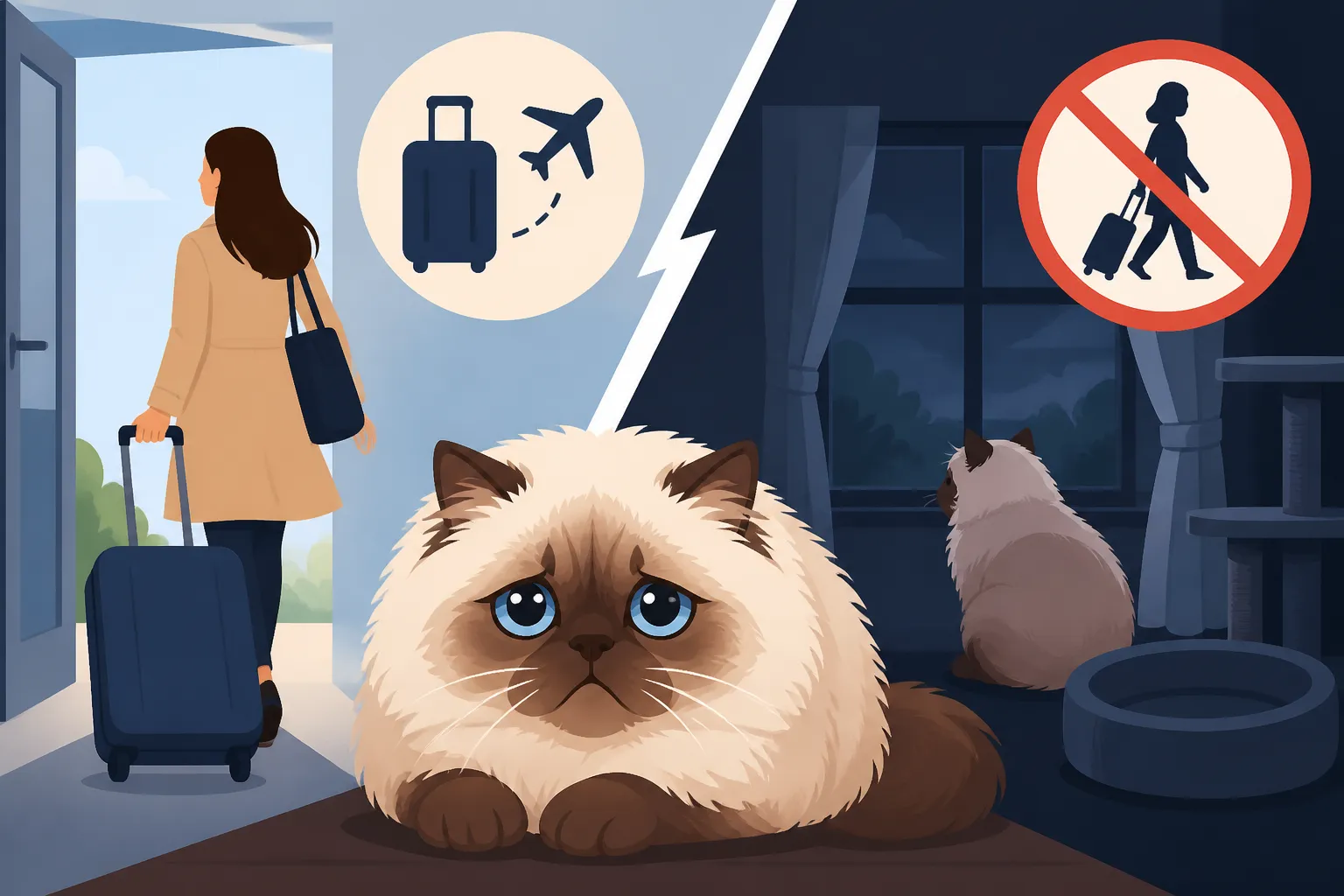
Why a Himalayan Is Wrong for Someone Away Every Week
A Himalayan may seem like an easygoing cat to leave at home, but a calm temperament does not mean it can manage a week without regular care. Its long coat, daily face-cleaning needs, predictable routine, and close bond with familiar people make frequent travel a real commitment. This guide explains what weekly absences mean for a Himalayan and how to judge whether the arrangement is fair to the cat.
Why weekly travel clashes with Himalayan care
A Himalayan needs more than food left out
Himalayans are often content to lounge, nap, and keep an eye on household life from a favorite chair. That relaxed style can make them seem unusually independent. But being less active than some breeds does not mean a Himalayan is comfortable being left without meaningful human contact for days at a time. Many enjoy familiar company and predictable interactions, even if they are not demanding attention every minute.
A week away also removes the small routines that help you notice when something is wrong. You might see that your cat is eating less, avoiding the litter box, squinting, or not grooming as usual because you live with them day to day. A pet sitter who only tops up food may miss those changes, especially under a thick coat that can conceal a wound or skin irritation. Changes in appetite, drinking, litter habits, breathing, or energy deserve attention rather than a quick assumption that the cat is simply having an off day.
Himalayans may also be unsettled by changes to the household rhythm. A different person entering the home, a missed meal, or an empty favorite chair can affect an individual cat differently. Some will retreat and wait quietly; others may vocalize or seek more attention when their person returns. For a closer look at how this breed handles disruptions, see How a Himalayan Reacts When Its Routine Breaks and How Long a Himalayan Takes to Accept a Change.
Grooming and face care cannot be saved up for later
The coat is one of the biggest practical reasons a Himalayan is a difficult match for someone who is away every week. Long, dense fur can tangle where you may not notice at first: beneath the arms, around the belly, behind the ears, and through the britches. A quick brush before leaving does not reliably prevent mats from forming during a long absence. If a sitter is not comfortable handling a comb, tangles may build until they are painful or need professional attention.
A Himalayan’s face also needs regular care. Tear tracks can leave residue, and the folds around a shortened nose need to be checked and kept clean and dry. A sitter who has never done this may be uneasy working close to the cat’s eyes or face. That hesitation is understandable, but it means the care task needs to be taught and practiced before you rely on someone to do it alone. The routine is easier when it is familiar to both cat and caregiver, as described in The Morning Face Routine Every Himalayan Needs and Getting a Himalayan Used to Having Its Face Wiped.
It is tempting to ask a friend to “just brush her a little” while you are gone. In practice, an inexperienced person may miss a tight mat, pull on sensitive skin, or stop as soon as the cat squirms. A combing session is not merely cosmetic; it is also a chance to check the skin and keep the coat comfortable. If daily grooming is already a struggle at home, recurring travel makes that challenge harder, not easier. The Daily Comb a Himalayan Cannot Skip explains why a missed day can matter.
What a week away requires from a caregiver
A dependable sitter needs to do more than refill bowls
For a Himalayan, a suitable care plan should include a person who can visit reliably, observe the cat closely, and handle the ordinary daily routine. That usually means checking food and water, scooping the litter, spending calm time with the cat, and reporting any change in behavior or health. Depending on the cat’s needs, the sitter may also need to wipe the face, check the coat, and follow instructions for medication or other care.
A brief visit focused only on feeding is not the same as attentive care. A Himalayan who hides under the bed, stops eating, or develops a matted patch may not announce the problem loudly. Ask a prospective sitter to describe what they would do if the cat refused food, seemed to be breathing harder than usual, or had a dirty, wet nose fold. Their answers can show whether they understand that “quiet” does not always mean “fine.”
Before the first trip, have the caregiver visit while you are home. Show them where supplies are kept and demonstrate face wiping and combing, if you expect them to do those tasks. Let the cat meet the person without pressure. Leave written instructions for feeding, litter, grooming, your veterinarian, and emergency contacts. Keep familiar food and supplies on hand; if you use a delivery service such as Chewy to replenish routine items, order early enough that a delayed parcel does not leave the sitter without what the cat needs.
A familiar home helps, but does not replace hands-on care
Keeping a Himalayan in its own home can be less disruptive than moving it to a new place, especially when the cat is attached to familiar resting spots and household patterns. But home care only works if the visits are consistent and the caregiver can respond when something seems off. A camera or automatic feeder may help you monitor parts of the routine, but neither can clean a face, check a coat, refresh a soiled litter area, or take a cat to the veterinarian.
Make the home easier for the sitter to manage. Put food, litter supplies, grooming tools, and cleaning cloths in clearly marked places. Keep the carrier accessible rather than buried in a closet, and make sure the caregiver knows how the cat responds to being handled. A simple log can help: note meals, litter-box use, face care, combing, and anything unusual. That way, a second caregiver or a veterinary clinic has useful context if a concern comes up.
Think carefully about temperature as well. Himalayans have a dense coat and a shortened face, so a stuffy or hot room can be a greater concern than it might be for a short-coated cat with a more typical muzzle. The sitter should know which rooms stay cool, where fresh water is available, and what signs mean the cat needs prompt help. For advice on travel and transport, see Which Carrier Gives a Himalayan Enough Air. If your trips involve flying, Why a Himalayan Should Not Fly in Cargo is also worth reading before you make plans.
| Care need while you are away | What a sitter should be prepared to do | Why it matters |
|---|---|---|
| Food and water | Follow the cat’s usual feeding instructions and check that water is clean and accessible | Appetite and drinking changes can be important clues |
| Litter | Scoop regularly and note changes in use or output | A clean box supports comfort and makes changes easier to spot |
| Coat | Check for tangles and follow the agreed combing routine | Mats can form in hidden areas and become uncomfortable |
| Face | Wipe and dry as instructed if this is part of the cat’s routine | Tear residue and damp folds can irritate sensitive skin |
| Company and observation | Spend calm time nearby and report unusual behavior | A quiet cat still needs someone to notice changes |
| Emergencies | Know the veterinarian, carrier location, and your instructions | A caregiver needs a clear plan if the cat becomes unwell |
How to decide whether this lifestyle can work
Look at your real travel pattern, not your best-case plan
There is a difference between an occasional trip and being away for much of every week. If your travel is predictable and you have a trusted person who can provide attentive, consistent care, owning a Himalayan may still be workable. If your plans change at short notice, your sitter is often unavailable, or you expect the cat to manage with food and water left out, the arrangement is much less suitable.
Be honest about the grooming, too. If you are away from Monday to Friday, who will comb the cat and check its face during those days? If you are away for a full week, who can do that routine safely and patiently? A professional groomer may help with coat maintenance, but occasional appointments do not replace everyday checks. Why a Himalayan Must Learn to Be Combed Before Twelve Weeks offers useful context on why grooming cooperation is best built early.
A written plan can make the decision clearer. List the days you expect to be away, who will visit, what care each person will provide, and what happens if the first sitter cancels. Include a backup person and a plan for urgent veterinary care. If you cannot fill those roles before bringing the cat home, it is better to recognize the gap now than to hope that a workable arrangement will appear later.
Consider whether another pet or a different breed fits better
A second cat is not an automatic solution to loneliness. Some Himalayans enjoy living with another compatible cat; others prefer their own space. A companion animal cannot take over grooming, face care, litter maintenance, or medical observation. If you are considering a second cat mainly because you travel, first think about whether you can meet the needs of two animals and introduce them gradually. Whether a Himalayan Wants a Second Cat explores how individual preferences matter.
You might also consider whether a different pet or breed better fits your schedule. That is not a judgment about how much you care. It is a practical match between the routine a particular animal needs and the time you can reliably offer. A Himalayan’s beauty and gentle manner can be appealing, but the coat and face require recurring attention. If you cannot provide that attention yourself or arrange for someone dependable to do it, another companion may be a kinder choice.
If you have already brought a Himalayan home, there are still ways to improve the arrangement. Find a regular sitter rather than relying on a different person each time, schedule practice visits, and make grooming part of the caregiver’s routine before a long trip. Keep a supply checklist so essentials are easy to replace; services such as Chewy can be useful for ordinary restocking, but delivery convenience does not replace a person checking on the cat. Most importantly, talk with your veterinarian about any health or handling needs that should be part of the plan.
Making weekly absences safer if you already own a Himalayan
Build a care routine before your next trip
Start with the cat’s normal day. Write down meal times, preferred resting places, litter habits, grooming needs, and how the cat signals discomfort or wants attention. Include the small details a regular household member may take for granted: whether the cat resists face wiping, which comb it accepts, or where it retreats when visitors arrive. A sitter who understands those details is more likely to notice when something is different.
Practice the handoff in stages. Begin with a short visit while you are home, then let the sitter handle a meal or grooming task while you observe. Give clear feedback without expecting the person to master everything in one session. If the cat becomes distressed during combing or face care, discuss a safer approach with your veterinarian or a qualified groomer rather than asking the sitter to force the task.
For longer trips, a house sitter may provide more continuity than several short visits, especially for a cat that is closely attached to its home routine. The important factor is not simply how long someone is physically present; it is whether they can reliably provide the care your cat needs and recognize when something requires attention. Agree on updates and a backup plan before you leave.
Make the choice around the cat’s needs
A Himalayan can be a lovely companion for someone who travels, but only when the care arrangements are genuinely dependable. The breed’s calm appearance can disguise how much its routine depends on regular coat maintenance, face care, observation, and familiar human contact. A week away is not automatically impossible, but it does require more planning than leaving extra food and hoping everything stays normal.
Before committing to weekly travel with a Himalayan, ask yourself three practical questions: Is there a consistent caregiver? Can that person handle the daily routine, including grooming tasks? Is there a clear response plan if the cat’s behavior or health changes? If any answer is no, address that weakness before the next trip. The cat’s coat, face, and habits are not occasional responsibilities; they are part of everyday ownership.
Disclaimer
This article is for general informational purposes only and does not constitute professional advice. Laws, prices and regulations vary by location and change over time. Consult a qualified professional for guidance on your specific situation.