Why Breeders Still Use the Name Himalayan
The name “Himalayan” can mean slightly different things depending on who is using it. A breeder may use it to describe a pointed Persian-type cat, while a registry may place that cat in a Persian division or recognize the Himalayan separately. This guide explains why breeders keep using the name, what it tells you, and what to check on a kitten’s registration papers.
Why breeders still use the name Himalayan
It remains a familiar name for a recognizable type
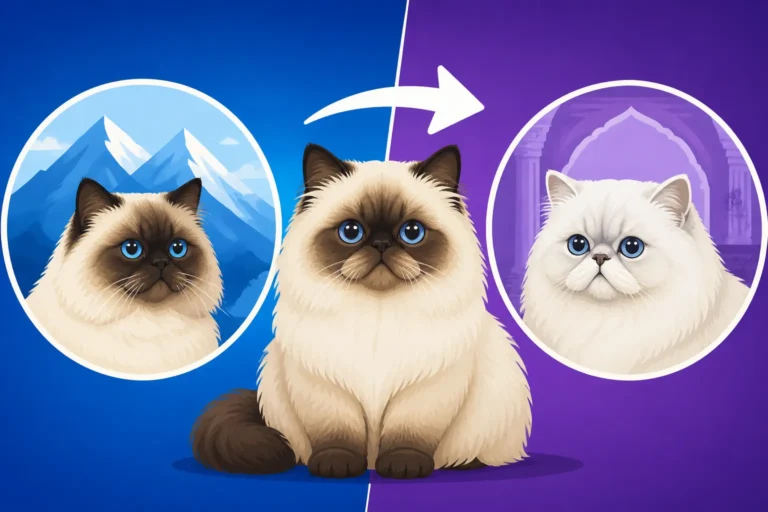
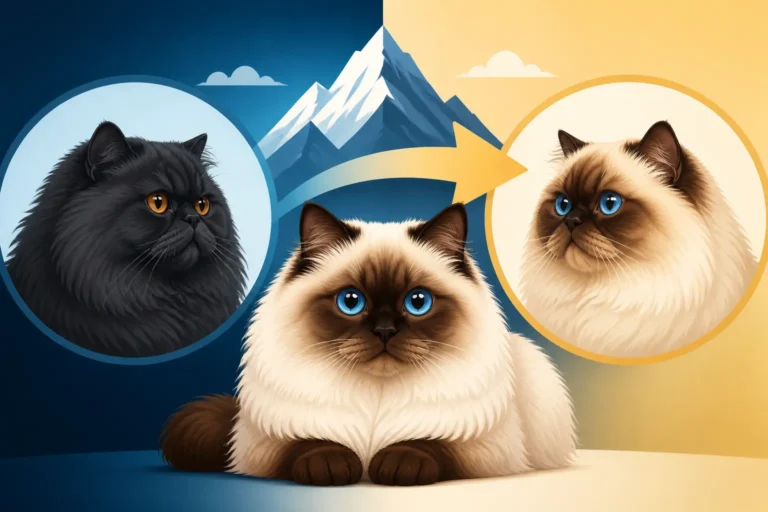
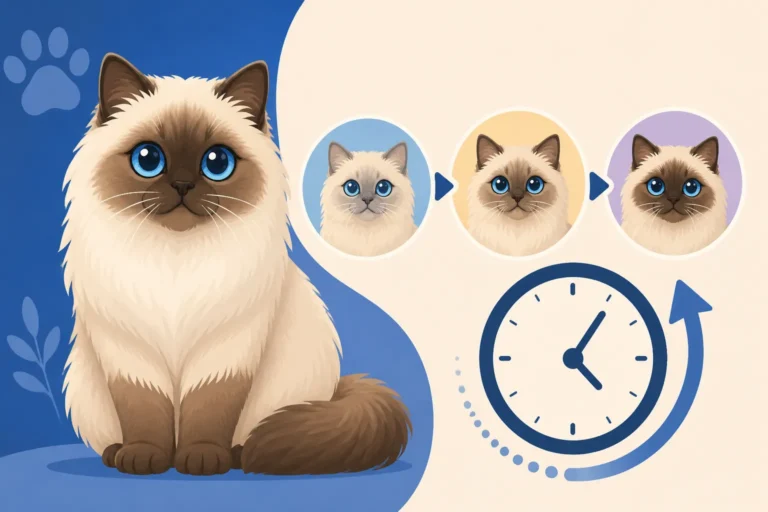
For many breeders and cat owners, “Himalayan” is the clearest everyday name for a longhaired, blue-eyed cat with darker color on the face, ears, legs, and tail. The pattern is called colorpoint: temperature-sensitive pigmentation makes the cooler parts of the body darker while the warmer torso stays lighter. The coat, round head, and sturdy build give the cat a look that people readily recognize as Himalayan.
That recognizable type has an identity beyond paperwork. Breeders may have spent years building lines with particular point colors, coat qualities, head shapes, and temperaments. Calling their cats Himalayans is a concise way to explain the kind of cat they raise, especially to prospective families who already know the name. It can also help distinguish a pointed cat from a solid-colored Persian in ordinary conversation.
The name has a long history in cat breeding, even though registries do not all use it in the same way. The Himalayan was developed by combining Persian and Siamese traits, including the Persian-style coat and body with the Siamese-derived colorpoint pattern. For background on that combination, see Why a Himalayan Is a Persian With the Point Gene.
A breed name can outlast a registry classification
Cat registries decide how breeds and varieties are organized in their own systems. Those decisions affect show classes and registration records, but they do not necessarily change the language breeders and owners use at home. A breeder may say “Himalayan” because it is the best-known name for the pointed Persian type, even if a particular registry records the cat under a Persian category.
That difference is especially visible in the United States. The Cat Fanciers’ Association, or CFA, treats the Himalayan as a Persian division rather than a wholly separate breed. The International Cat Association, or TICA, has kept the Himalayan as a separate breed. These are differences in registry classification, not proof that one association’s cats are fundamentally different animals. You can read more about the distinction in How the Himalayan Is Registered by CFA Today and Why TICA Kept the Himalayan Separate.
The term also persists because it is convenient. “Himalayan” quickly conveys a familiar combination of long coat and pointed coloring. “Colorpoint Persian” may be more precise in some contexts, but it is not the term every prospective owner recognizes first. Breeders often use the familiar name in conversations, advertisements, and care materials while still following the terminology required by the registry where their cats are registered.
What the name means on registration papers
The same cat may be described differently by different organizations
The wording on a pedigree or registration certificate depends on the organization that issued it. One document may list “Himalayan,” while another may place the cat in a Persian division or use a colorpoint-related label. That can be surprising if a breeder has consistently called the kitten a Himalayan, but it does not automatically mean the paperwork is wrong.
| Where the wording appears | What it may say | What the wording generally tells you |
|---|---|---|
| Breeder’s website or conversation | Himalayan | The familiar name for a pointed Persian-type cat |
| CFA registration or show context | Persian division or Himalayan-related classification | How CFA organizes the cat for its registry and shows |
| TICA registration or show context | Himalayan | TICA’s separate breed classification |
| Some British contexts | Colorpoint Persian | A regional naming convention for the pointed Persian type |
| Pedigree details | Breed, color, parents, and registered ancestors | The cat’s recorded identity and ancestry within that registry |
The table is a starting point, not a substitute for reading the actual certificate. A registry’s specific terminology matters, and a breeder should be able to explain what the document says and why. For more detail on regional language, see Whether Britain Calls the Himalayan a Colorpoint Persian.
Registration language is not a complete description of the cat
A breed label does not tell you everything you need to know about an individual kitten. It does not, by itself, confirm the kitten’s health, temperament, grooming habits, or the care taken in breeding. Nor does the word “Himalayan” guarantee a particular face shape or point color. Those details need to be discussed and documented separately.
Ask the breeder which registry issued the paperwork and what the kitten’s registered name, color, and parentage are. If you are considering showing the cat, ask which show system you plan to enter and whether the cat’s registration will be accepted in the class you expect. If you mainly want a companion, the exact label may matter less than clear records, responsible breeding practices, and a good match between the cat’s needs and your home.
It is useful to compare the breeder’s explanation with the actual document rather than relying on a listing title alone. What a Himalayan’s Certificate Actually Says and How to Read the Breed Line on a Himalayan Pedigree can help you understand what to look for. If a breeder says the name is interchangeable but cannot explain the registry entry, take time to ask more questions before putting down a deposit.
Why breeders use both Himalayan and Persian language
The names serve different audiences
A breeder may use “Himalayan” when speaking with someone who wants the familiar pointed cat, then use “Persian” or “colorpoint Persian” when describing the registry classification. That is not necessarily an attempt to mislead. It can be a practical response to a naming system that varies between organizations and regions.
This is similar to how a cat can have a common name used in conversation and a more specific label in official records. The important point is consistency and transparency: the breeder should explain the difference clearly, not leave you to discover it after the kitten comes home. Ask them to show you how the name appears on their registry paperwork and how the kitten will be recorded.
Some buyers also encounter the name through online listings and pet-care discussions. When researching grooming supplies or routine care, you may see “Himalayan” used more often than a registry’s formal classification. A retailer such as Chewy may organize products by practical needs—such as grooming tools, food, or litter—rather than by the exact breed wording on a certificate. That can be useful when shopping, but product categories are not evidence of a cat’s pedigree.
The name reflects history as well as appearance
“Himalayan” is not simply a casual nickname invented for a coat pattern. It is a historically established name associated with the development and recognition of the pointed Persian type. Even after registry classifications changed, breeders continued using the name because it connected their cats to that history and remained meaningful to the people who sought them.
The ongoing use of the word also reflects how breed identity is shaped by more than one authority. Registries establish their own rules for registration and competition. Breeders maintain lines and describe their cats to potential owners. Owners, veterinarians, and the wider public use the name they know. Those overlapping habits can keep a breed name in everyday use even when the official terminology differs from one association to another.
For the history behind the name itself, see Why the Himalayan Is Named After a Rabbit. For the broader disagreement over classification, Why the Himalayan Argument Is About Paperwork, Not Cats explains why the debate can sound more dramatic than it is for someone simply choosing a companion.
What to ask a Himalayan breeder
Get a clear explanation of registration
A responsible breeder should be comfortable answering straightforward questions about the kitten’s papers. Ask which registry they use, what name or classification will appear on the kitten’s certificate, and whether the parents are registered under the same organization. If the kitten is described as a Himalayan but the paperwork will say Persian or Colorpoint Persian, ask the breeder to explain that in plain language before you commit.
You can also ask for a sample or view of relevant paperwork with personal details covered. The goal is not to challenge the breeder over terminology; it is to make sure you understand what you are receiving. When a breeder explains the registry difference clearly and shows how the kitten’s parentage is recorded, the naming issue is usually easy to resolve.
If you are comparing catteries, write down each breeder’s answers so you can compare them later. The same word in two advertisements does not guarantee that the kittens have identical ancestry, registration, or care histories. What a Himalayan Buyer Should Ask About Registration offers a useful set of questions to take into those conversations.
Look beyond the breed label to daily care
Himalayan cats typically need regular coat care, and many need routine attention to their faces and eyes. Ask how the kitten has been introduced to combing, whether it tolerates face handling, and what care routine the breeder recommends. A kitten that has had calm, gentle practice with grooming may find the transition to a new home easier than one encountering a comb for the first time.
Get the breeder’s advice on the tools and routine the kitten already knows. If you need to replace a comb or stock up on basic supplies after bringing the kitten home, pet retailers such as Chewy can be one place to look, alongside local pet shops and veterinary recommendations. The useful question is not which store you choose, but whether the tool suits a long, dense coat and whether you can use it gently and consistently.
Also ask about the kitten’s health records, veterinary care, and family history. A breed name cannot replace documentation or a conversation about health screening. The registry label tells you how an organization classifies the cat; it does not settle every question about breeding quality or future care. When you need practical supplies, Chewy and other retailers may list items under different breed terms, so search by the cat’s actual need—such as a metal comb, shallow feeding dish, or suitable carrier—rather than relying only on the word “Himalayan.”
Decide how much the label matters to you
If you are buying a pet and do not plan to show or breed the cat, the exact registry category may be less important than a healthy kitten, honest records, and a breeder who answers questions openly. You may still want to understand the wording so that the certificate, microchip details, veterinary records, and purchase agreement do not leave you confused.
If registration matters for showing or breeding, check the rules of the organization you intend to use before choosing a kitten. Ask the breeder whether the cat’s papers meet those requirements and whether any limitations apply. A familiar name in an advertisement is not a guarantee that the cat qualifies for a particular show class or breeding program.
Ultimately, breeders keep using “Himalayan” because it remains recognizable, historically meaningful, and useful for describing a pointed Persian-type cat. The name can coexist with different registry classifications. Once you understand that distinction, the label becomes much less mysterious: focus on the actual pedigree, the registry’s wording, the kitten’s health and care, and the breeder’s willingness to explain each one.
Disclaimer
This article is for general informational purposes only and does not constitute professional advice. Laws, prices and regulations vary by location and change over time. Consult a qualified professional for guidance on your specific situation.