Why the Himalayan Argument Is About Paperwork, Not Cats
A Himalayan can look unmistakably like a Himalayan while its registration papers call it a Persian. That mismatch can feel confusing when you are comparing kittens, checking a pedigree, or trying to understand what a certificate actually proves. This guide explains why registries classify the cat differently, what the paperwork does and does not mean, and which questions to ask before you buy.
Why Himalayan paperwork can name a different breed
The cat and the registry are answering different questions
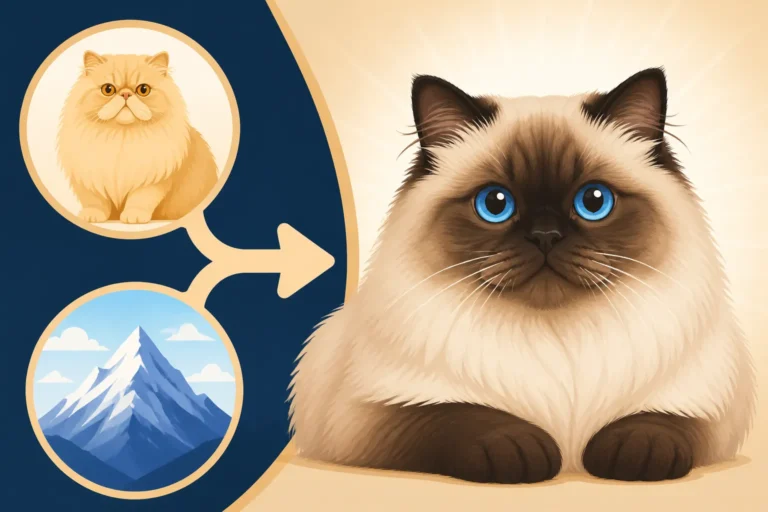
When someone says “Himalayan,” they may be describing a cat’s appearance and heritage: a longhaired, blue-eyed cat with darker color on the face, ears, legs, and tail. A registry, by contrast, is using its own rules to decide how that cat fits into its official breed system. Those two descriptions can both be accurate.
That is the heart of the paperwork argument. One person may be talking about the cat in front of them; another may be talking about the category printed on a registration certificate. The difference is especially noticeable in the United States, where major cat registries have not always organized Himalayans in the same way.
For a buyer, the label can matter when you are checking a pedigree, planning to show a cat, or trying to understand a breeder’s contract. But a label by itself does not tell you whether the cat is healthy, well-socialized, or responsibly bred. It is one piece of documentation—not a complete assessment of the animal.
A breed can be recognized as a separate type or as a division
Different registries create different systems for grouping cats. One may recognize the Himalayan as a breed in its own right, while another places it within the Persian breed and treats the pointed pattern as a division or variety. That does not mean one registry is describing a different-looking cat. It means the registries have chosen different ways to organize related cats.
This is why a buyer might see “Himalayan” on one document and “Persian” or “Colorpoint Persian” on another. The wording can reflect the registry’s classification rather than a disagreement about the cat’s coat pattern or ancestry. For a closer look at the distinction, see A CFA Himalayan Is a Persian on Its Own Paperwork and TICA Still Registers the Himalayan as a Breed of Its Own.
A registration certificate should therefore be read in context. Check which organization issued it, what breed or division it records, and whether the pedigree information matches the breeder’s explanation. If a breeder says the paperwork uses a different label because of registry rules, ask them to name the registry and show you the relevant documents.
What CFA and TICA paperwork can mean
Why the CFA classification surprises Himalayan buyers
The Cat Fanciers’ Association, commonly known as CFA, includes the Himalayan within its Persian classification. That can surprise someone who grew up hearing “Himalayan” used as a distinct breed name. The cat has not suddenly stopped being pointed or longhaired; the registry has grouped it under a broader Persian structure.
This difference can show up on a certificate, in show materials, or in a breeder’s explanation of a kitten’s registration. It is reasonable to ask for clarification if the printed breed line does not match the name used in an advertisement. A clear answer should explain the registry’s classification rather than dismissing your question as unimportant.
CFA’s approach is part of a longer history of changing breed categories. The decision and its consequences are explored in Why CFA Made the Himalayan a Persian Division in 1984 and Why CFA Folded the Himalayan Into the Persian in 1984. The practical takeaway is that a CFA document may use Persian terminology for a cat that a family, breeder, or other registry calls a Himalayan.
Why TICA paperwork may use a different label
The International Cat Association, or TICA, continues to register the Himalayan as a breed of its own. That means a TICA certificate may present the breed name differently from a CFA certificate, even when the cat’s pointed coat and Persian-type features are familiar to buyers of both.
Neither name should be treated as a shortcut for judging the cat’s quality. A registry label tells you how that organization records the cat. It does not, by itself, prove that the breeder completed health testing, that the pedigree is accurate, or that the kitten was raised with appropriate care. Ask to see supporting records rather than assuming a particular title guarantees them.
If you are comparing documents from different organizations, keep the registry name beside the breed name in your notes. That simple habit can prevent a lot of confusion later. For background on the difference in registry practice, see How TICA Registers the Himalayan Today and What a Colorpoint Division Means for a Himalayan.
| What you see on the paperwork | What it may mean | What to check next |
|---|---|---|
| Himalayan | The issuing registry recognizes or records the cat under that name | Confirm the registry and review the pedigree |
| Persian | The registry may classify Himalayan-type cats within the Persian breed | Ask whether the cat is recorded as a pointed or colorpoint variety |
| Colorpoint Persian | The document may be using a descriptive or registry-specific category | Ask how the breeder’s registry defines the term |
| A different name from the advertisement | The breeder may be using a familiar name while the registry uses another classification | Request an explanation and copies of the relevant records |
How to read a Himalayan pedigree without getting lost
Start with the issuing registry and the registered name
Before focusing on the breed line, identify the organization that issued the document. Registration terms are meaningful within that organization’s system, so the same cat may be described differently by separate registries. A breeder should be able to tell you which registry the kitten is registered with and why the paperwork uses its particular wording.
Then look at the registered name, identifying details, and pedigree entries. Make sure the document refers to the kitten or its parents—not simply to a similarly named cat. If the certificate is not yet available, ask what documents exist now and what the breeder expects to provide later. A straightforward breeder will explain the process without asking you to rely only on a verbal promise.
It also helps to separate registration from ownership and veterinary records. A pedigree documents lineage within a registry’s system. A veterinary record documents exams, vaccines, and treatment. A sales contract sets out the terms between buyer and breeder. These documents serve different purposes, so one cannot replace the others.
Treat health records as a separate, essential check
A pedigree does not automatically prove that a cat’s parents were screened for inherited health concerns. Ask what tests were performed, which cats were tested, and whether you can review the results. For a Himalayan, it is sensible to ask about the health history behind both sides of the pedigree, not just the name printed on the certificate.
Useful questions include:
- Which registry issued the pedigree?
- What breed or division does that registry use for this cat?
- Can I see the kitten’s registration paperwork or the parents’ registration records?
- What health tests were completed on the parents, and can I see the results?
- What does the contract say about health concerns, returns, and breeding rights?
- Which veterinary records will come with the kitten?
A breeder’s answers should be specific enough for you to understand what has and has not been checked. If you want to learn more about the records to request, read Which Papers a Himalayan Buyer Should Insist On and Which Two Certificates a Himalayan Breeder Owes You.
What the paperwork means for buyers and pet owners
The label does not determine whether the cat is right for your home
It is easy to get stuck on whether a certificate says “Himalayan” or “Persian,” especially when the breeder’s listing, the family’s preferred name, and the registry’s terminology differ. Still, for a pet owner, the more useful questions are often about the individual cat: how it breathes, how it was socialized, what grooming it needs, and what health information is available.
A Himalayan’s long coat calls for regular, hands-on care. Before bringing one home, think about whether daily combing and routine face cleaning fit your household. Ask to see the kitten in person when possible, and pay attention to its comfort, energy, and breathing rather than relying on carefully edited photos or a breed label alone. The practical realities are covered in What Nobody Tells You Before Buying a Himalayan.
You may also be planning for everyday supplies, such as a suitable comb, litter, bowls, and food. Retailers such as Chewy can be one place to browse for routine pet-care items, but a product listing is not a substitute for a pedigree, health certificate, or breeder record. Keep shopping decisions and verification of the cat’s background as separate tasks.
When a different label is a concern—and when it is not
A different breed name on the certificate is not automatically a warning sign if the breeder can clearly connect it to the registry’s rules and provide consistent records. A mismatch becomes more concerning when explanations keep changing, identifying details do not line up, or the breeder will not show documents they claim to have.
Be especially cautious of pressure to send a deposit before you have received clear answers about the registry, the kitten’s parents, and the contract. If you are buying supplies from Chewy or another retailer while preparing for a kitten, that is separate from confirming the breeder’s claims. Do not let a polished online listing or a confident sales pitch stand in for documentation.
If the papers are delayed, ask for a written explanation of what is pending and when the breeder expects to provide it. If something seems inconsistent, pause the purchase and request clarification from the breeder or the registry named on the document. The goal is not to win an argument about what the cat “really” is. It is to understand exactly what the records show and make an informed decision.
Keep the records together after bringing your cat home
Once your Himalayan is home, keep the pedigree, sales contract, veterinary records, test results, and microchip information in one place. A digital copy can be useful, but retain the original documents too. If your cat later needs veterinary care, changes homes, or is considered for showing, having the records organized makes routine conversations much easier.
For everyday care, Chewy may be convenient for browsing supplies, but keep receipts and product notes separate from medical and registration files. A retailer’s purchase history can help you remember what you bought; it does not establish a cat’s lineage or replace a veterinarian’s records.
The breed-name debate can sound personal because people are attached to the word “Himalayan.” In practice, most of the disagreement is about how registries file cats, not whether the cat’s coat, face, or personality has changed. Once you know who issued the paperwork and what that organization’s terms mean, the documents become much less mysterious.
Disclaimer
This article is for general informational purposes only and does not constitute professional advice. Laws, prices and regulations vary by location and change over time. Consult a qualified professional for guidance on your specific situation.