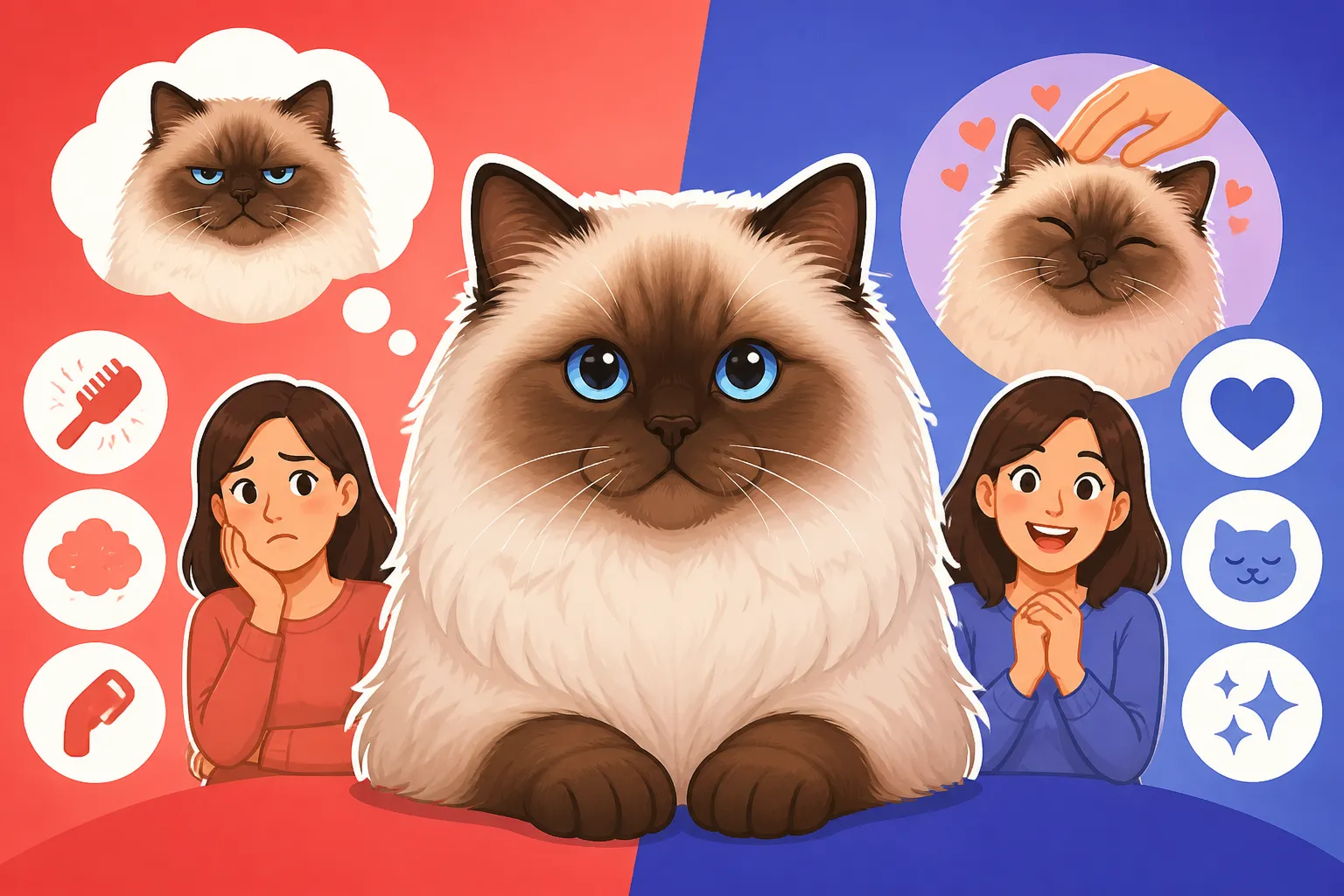
What Nobody Tells You Before Buying a Himalayan
A Himalayan can look like a quiet, low-maintenance lap cat, but the Persian coat, flat face and daily care routine can bring surprises home with the kitten. This guide explains what ownership really involves, from grooming and breathing considerations to health checks, household fit and breeder questions, so you can decide whether a Himalayan suits your everyday life.
The daily care routine is more demanding than the photos suggest
A long coat needs regular, hands-on grooming
A Himalayan’s full coat can knot close to the skin, especially around the armpits, belly, ruff and hindquarters. A quick brush over the top may make the fur look tidy while leaving tight tangles underneath. A metal comb that reaches through the coat is usually more useful for checking for mats than a brush that only smooths the surface.
Plan for grooming to become a normal part of the day, not an occasional weekend task. Work in short, gentle sessions and check sensitive spots carefully. If a mat is tight against the skin, don’t tug or try to cut it out with scissors; cat skin can be difficult to see through dense fur. A professional groomer or veterinarian can help when tangles are too close to the skin to remove safely.
Starting early makes a difference. A kitten introduced patiently to a comb, paw handling and brief grooming sessions has a better chance of accepting the routine as an adult. If the cat already resists, forcing a long session can make future attempts harder. For practical details on coat care, see The Daily Comb a Himalayan Cannot Skip and Why a Himalayan Mats Faster Than a Ragdoll.
Face care and cleanup may be part of every morning
Many Himalayan owners also make time to gently clean around the eyes and facial folds. Tears can leave marks on pale fur, and moisture that sits in a fold may irritate the skin. Use a soft, clean cloth and follow your veterinarian’s advice about products; avoid getting cleaners or wipes into the eyes.
There may be other small chores, too. Long fur can collect litter or food, and a flat face can make some cats awkward eaters. A shallow, easy-to-reach dish may be more comfortable than a deep bowl, while a litter box with a low entry can help a short-legged, sturdy cat get in and out. If you’re comparing supplies, retailers such as Chewy may offer a range of shallow bowls and low-entry boxes; check the item’s dimensions and shape against your cat’s needs.
These tasks can be manageable, but they take consistency. A face that is damp or irritated, a sudden change in tear discharge, or skin that smells unpleasant deserves veterinary attention rather than simply more wiping. The Morning Face Routine Every Himalayan Needs explains why owners often build face care into the day.
Health and comfort deserve attention before you bring one home
A short face can affect breathing and heat tolerance
Himalayans have Persian ancestry and may have shortened facial features. The degree varies from cat to cat, so don’t assume every Himalayan has the same breathing ability or needs. Listen for noisy breathing when the kitten is relaxed, and observe whether it can play without quickly struggling, open-mouth breathing or needing an unusually long recovery.
A warm room, energetic play or travel can be harder on a cat that already has restricted airflow. Keep the home comfortably cool, provide fresh water and give the cat the option to rest. If you notice labored breathing, persistent open-mouth breathing, fainting or distress, contact a veterinarian promptly. Those signs should not be dismissed as ordinary breed quirks.
When meeting a kitten, look beyond a cute face or a short video. Ask to see the cat in person if possible, watch it breathe while calm, and ask what the breeder knows about the parents’ breathing and health. A veterinarian can assess the individual cat and discuss any concerns. For more context, read Why a Himalayan’s Face Is Flat and a Ragdoll’s Is Not and What a Well Built Himalayan’s Breathing Sounds Like.
Ask about inherited conditions and health records
Himalayans can inherit health risks associated with their Persian and Siamese ancestry. Potential concerns include polycystic kidney disease, eye problems and heart disease, but a breed label alone cannot tell you whether an individual cat has a condition. Responsible screening, a clear family history and routine veterinary care are more useful than reassurance based only on appearance.
Ask the breeder which health tests have been performed, request copies of relevant results and confirm that the documents identify the tested cat. Ask what the results mean for the kitten and its close relatives, rather than accepting a vague statement that the line is “healthy.” Also request the kitten’s veterinary records and ask what follow-up care is recommended after adoption.
A new cat’s first veterinary visit is a good opportunity to establish a baseline, discuss preventive care and ask about the eyes, teeth, breathing and weight. If you are comparing documents and breeder answers, Which Two Certificates a Himalayan Breeder Owes You and Which Two Tests Belong on Every Himalayan Pedigree can help you prepare useful questions. When looking for basic grooming or health supplies, Chewy may be one place to compare product types, but product listings do not replace a veterinarian’s guidance.
| Before bringing a Himalayan home | What to check |
|---|---|
| Grooming routine | Can you make time for frequent combing and face care? |
| Breathing and comfort | Does the kitten breathe comfortably at rest and recover normally after play? |
| Health history | Can the breeder provide specific test results and veterinary records? |
| Home setup | Are food, water, litter and resting spots easy for the cat to reach? |
| Ongoing support | Do you have access to a veterinarian and, if needed, an experienced groomer? |
The right home matters as much as the right kitten
Consider your schedule, climate and household
A Himalayan may suit someone who enjoys a settled companion and can keep a reliable care routine. But a cat that needs regular combing and face cleaning may be a difficult fit for someone who travels often, works long hours away from home or dislikes hands-on grooming. Consider the routine you actually have, not the one you hope to establish after bringing home a kitten.
Climate and indoor comfort matter as well. A long, dense coat and a shortened muzzle can make heat management an important consideration. Keep the cat indoors, provide cool resting areas and be cautious about leaving it in a warm car, sunroom or poorly ventilated space. If your home gets hot, think in advance about how you’ll keep the cat comfortable during warm weather.
Children and other pets can be part of a successful household, but introductions and handling should be gentle. Teach children not to squeeze, carry roughly or disturb the cat while it rests. A calm, gradual introduction to another pet gives the Himalayan space to retreat and adjust. Who the Himalayan Actually Suits and Why an Apartment Suits a Himalayan offer useful ways to think about lifestyle fit.
Budget for care beyond the adoption itself
The purchase or adoption decision is only one part of the commitment. Plan for routine veterinary care, food, litter, grooming supplies and unexpected health needs. Some Himalayans may need professional grooming or extra veterinary attention, and these expenses can vary depending on the cat, the services available locally and its health.
Before committing, consider whether you can handle an unplanned appointment as well as ordinary monthly supplies. It can help to make a simple household budget that includes recurring care and a separate reserve for unexpected needs. Chewy can be a convenient place to compare food, litter and grooming products, but check that any item suits your individual cat rather than buying based only on a breed label or product description.
Avoid choosing a kitten solely because its coat color or facial type is especially appealing. Ask how the breeder socializes kittens, what support is available after adoption, what the contract covers and what happens if your circumstances change. A thoughtful breeder should welcome practical questions about daily care and health, not just discuss appearance.
How to choose carefully and prepare for the first weeks
Ask direct questions before placing a deposit
A good conversation with a breeder should cover more than color, registration and pickup arrangements. Ask to meet the kitten’s mother when possible, learn about the kitten’s living environment and see health documentation. Ask how the kittens have been handled and whether they are familiar with grooming, face cleaning and ordinary household sounds.
Useful questions include:
- What health screening has been done on the parents, and can I review the results?
- What veterinary care has the kitten received so far?
- How does the kitten breathe while resting and after gentle play?
- Has the kitten been introduced to combing and face handling?
- What food is the kitten eating, and how should a transition be managed?
- What support can I expect after the kitten comes home?
Take your time if answers are unclear or documents are unavailable. A deposit should not pressure you into skipping a visit, checking records or asking for time to think. For additional preparation, What Nobody Tells You Before Buying a Himalayan is a useful companion to your own checklist, and What a Himalayan Buyer Should Ask About Registration can help clarify paperwork.
Make the first days predictable
When the kitten arrives, set up a quiet room with food, water, a litter box, a bed and a few familiar objects. Keep the first introductions calm and allow the cat to explore at its own pace. A kitten may hide, eat less at first or spend time watching from a safe spot; a predictable routine can help it settle without overwhelming it.
Continue the food the kitten is already eating initially, unless a veterinarian advises otherwise. If you plan to change foods, ask how to do so gradually. Keep grooming sessions brief and positive, with treats or a pause when the kitten becomes uncomfortable. Don’t wait until tangles appear to begin combing, and don’t force handling if the kitten is frightened.
Arrange a veterinary check and bring the records you received. Mention any noisy breathing, eye discharge, reduced appetite, unusual tiredness or difficulty using the litter box. A new home is a good time to establish care, ask questions and learn what is normal for this particular cat. The more you know about the kitten’s health and habits, the easier it is to spot a meaningful change later.
Disclaimer
This article is for general informational purposes only and does not constitute professional advice. Laws, prices and regulations vary by location and change over time. Consult a qualified professional for guidance on your specific situation.