The Himalayan Is Named After a Rabbit
Many prospective Himalayan cat owners find themselves scratching their heads, wondering why such a majestic, fluffy feline bears the name of a mountain range, or even more curiously, a rabbit. It's a common point of confusion, and frankly, a bit of a historical quirk that makes perfect sense once you understand the genetics at play. This guide will delve deep into the fascinating origin story of the Himalayan cat's name, exploring the scientific connections and historical journey that led to this beloved breed sharing its moniker with a distinctly different, yet genetically similar, animal.
Understanding the Himalayan Cat's Unique Identity
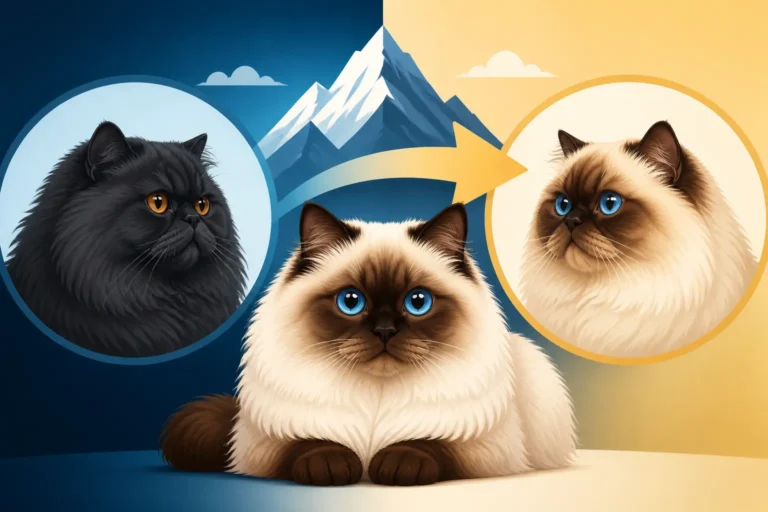
When you first lay eyes on a Himalayan cat, you're immediately struck by their regal appearance. They possess the luxurious, long coat and sturdy, cobby body of a Persian, but with the vivid blue eyes and distinctive color points of a Siamese. This combination wasn't an accident; it was a deliberate, scientific endeavor to create a cat that truly stood apart. Understanding their physical traits is the first step in appreciating the "why" behind their unique name.
A Blend of Persian Grandeur and Siamese Charm
Imagine the soft, dense fur of a Persian, flowing elegantly, creating a magnificent ruff around their head and lush britches on their hind legs. Now, picture that same opulent coat but with dark coloration on the extremities – the ears, mask, paws, and tail – contrasting sharply with a much lighter body. This is the essence of a Himalayan cat. They inherited the best of both worlds: the placid, sweet nature and heavy boning of their Persian ancestors, combined with a spark of the Siamese's intelligence and vocal tendencies. They are, in many ways, the ultimate "designer" cat, purpose-bred for a specific aesthetic. Their substantial build means they tend to be quite grounded, preferring the comfort of a sofa to scaling the bookshelves, a trait they definitely get from the Persian side of the family.
This careful blending of traits means that while they might look utterly luxurious, there's a practical side to their heritage. The full, flowing coat requires significant commitment from their human companions to keep it free of mats and debris, a trait entirely inherited from the Persian. Yet, the vibrancy of their personality, that little bit of "chatter" you get from them, and their slightly more engaged demeanor often surprises people expecting a purely silent, decorative cat. This lively spirit is a wonderful nod to their Siamese ancestry, making them less of a static ornament and more of a conversational, if serene, companion.
The Striking Pointed Pattern and Blue Eyes
The hallmark of the Himalayan cat is undoubtedly its "pointed" pattern. This refers to the darker pigment on their cooler body parts – ears, paws, tail, and face mask – while the warmer areas of their body remain a pale cream or white. It's a stunning visual, creating a dramatic contrast that captivates many enthusiasts. Coupled with this distinct pattern are their piercing, brilliant blue eyes, a trait that is not only beautiful but also genetically linked to the pointed coloring itself. You won't find a true Himalayan with any other eye color; it's a non-negotiable part of their genetic makeup and breed standard. Why Only Blue Eyes Are Allowed on a Himalayan explains this in more detail.
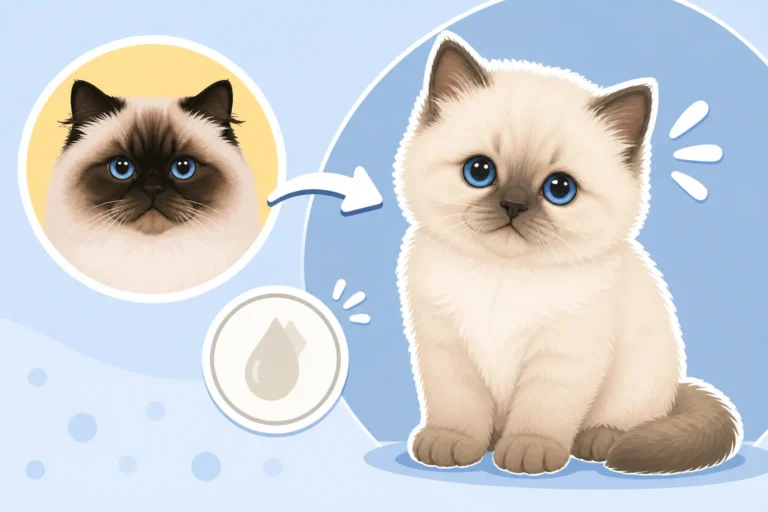
This unique combination isn't just a pretty facade; it's a genetic marvel. The pointed pattern is a form of partial albinism, where a specific enzyme responsible for pigment production only works effectively at lower temperatures. This is why a Himalayan kitten is born almost entirely white; their body temperature in the womb is uniformly warm. As they are exposed to the cooler ambient air after birth, their extremities, which are naturally cooler, begin to develop the darker pigment. It’s a living, breathing temperature map on their fur! The intensity of these points can vary based on diet, environmental temperature, and even age, with older Himalayans often showing a deepening of their point color as their metabolism slows and body temperature regulation changes slightly.
The Mystery of the Name: Why "Himalayan"?
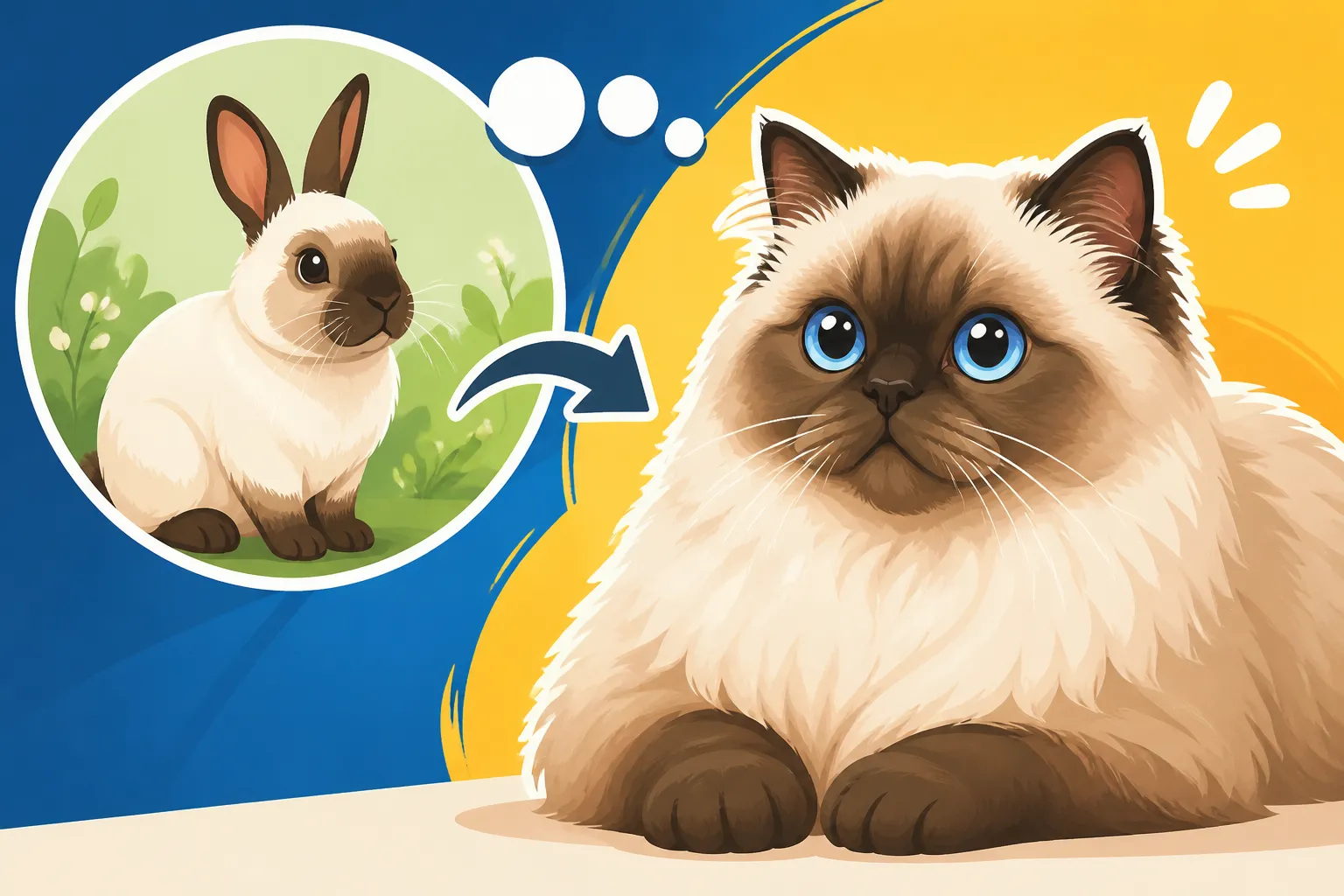
So, why would such a magnificent cat be named after a rabbit? It's a question that perplexes many, and the answer lies in the striking visual similarity of their coat pattern. The name "Himalayan" for the cat breed wasn't chosen to evoke mountains or snow-capped peaks, but rather as a direct homage to another animal that famously sports the exact same genetic coloration: the Himalayan rabbit.
Unraveling the Genetic Connection
The common thread between the Himalayan cat and the Himalayan rabbit isn't a shared lineage, but a shared genetic mutation. Both animals possess what is known as the "Himalayan gene," a specific allele that causes temperature-sensitive albinism. This gene dictates that pigment will only develop in the cooler parts of the body, leading to the distinctive dark points on the ears, nose, paws, and tail, while the rest of the body remains light. It's a fascinating example of convergent evolution in appearance, where two entirely different species developed the same striking characteristic due to identical genetic programming.
When breeders were first developing the cat, they were looking to replicate this precise pattern. They didn't just want a cat with dark ears; they wanted the exact temperature-dependent coloring. The existing "Himalayan" rabbit provided a perfect, universally recognized example of this genetic trait. Therefore, naming the cat after the rabbit was a way to instantly communicate its most defining characteristic – its coat pattern – to anyone familiar with the rabbit breed. It was a clever, descriptive, and scientifically accurate choice, even if it does lead to a bit of head-scratching today. The consistency of this genetic expression is truly remarkable, allowing breeders to confidently predict the coat pattern of their kittens even before the points fully develop.
The Original Himalayan Rabbit
To truly understand the cat's name, we need to picture the original inspiration: the Himalayan rabbit. These aren't just any rabbits; they are a distinctive, medium-sized breed known for their cylindrical body shape and, crucially, their dense, soft white fur contrasted with jet-black (or sometimes blue, chocolate, or lilac) points on their nose, ears, feet, and tail. Just like their feline namesakes, Himalayan rabbits are born white, with their points developing as they mature and are exposed to cooler temperatures. This visual consistency made them the perfect namesake for the newly emerging cat breed that shared this specific aesthetic.
The Himalayan rabbit breed has a long history, believed to have originated in the Himalayan region of Asia (hence their name, which does refer to geography), or possibly even further east in China or Russia, then making its way to Europe and eventually the United States. They've been a recognized breed for centuries, valued both for their unique appearance and their docile temperament. When the early cat breeders set out to create a cat with these very same "Himalayan" markings, it was only natural to borrow the well-established name. The name thus acts as a direct genetic shorthand, a nod to the rabbit breed that served as the perfect visual and genetic blueprint for what they hoped to achieve in the feline world.
Tracing the Pointed Pattern Across Species
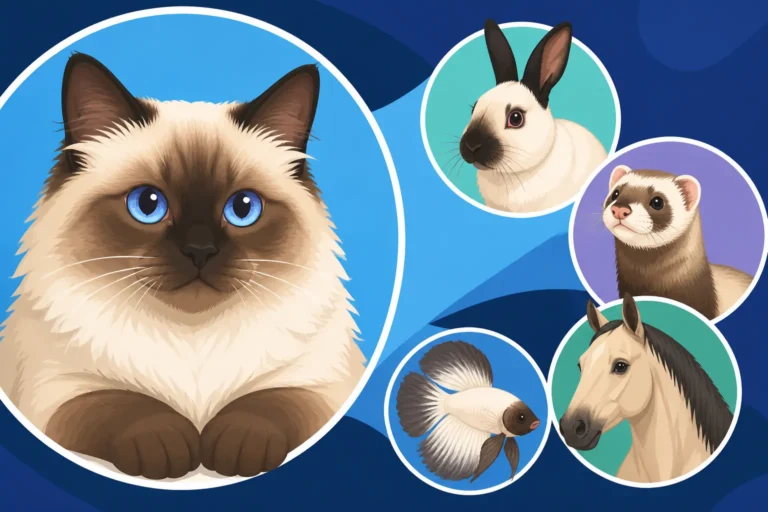
The Himalayan pattern isn't exclusive to cats and rabbits; it's a fascinating genetic trait that appears in various animal species, all thanks to that same temperature-sensitive gene. This widespread occurrence highlights the fundamental biological mechanism behind this distinctive coloration, making the Himalayan cat a brilliant example of genetic principles in action.
Beyond Cats and Rabbits: Other Pointed Animals
It might surprise you to learn that the "Himalayan" or "pointed" pattern isn't just found in cats and rabbits. You can observe this exact same genetic phenomenon in several other species! Think of certain breeds of mice, rats, and even ferrets. These animals, too, exhibit the darker extremities and lighter body, all due to that specific enzyme that only activates in cooler temperatures. In mice, for example, you'll find "Himalayan" varieties with dark noses and tails, looking remarkably similar to their feline and leporine counterparts, if on a much smaller scale.
This recurring pattern across different animals underscores how a single genetic mechanism can produce such a visually striking and consistent result. It's not about shared ancestry between, say, a cat and a ferret, but about sharing the same specific mutation in the gene responsible for melanin production. It's a beautiful testament to the power of genetics, showcasing how a seemingly minor tweak in DNA can lead to such a dramatic and recognizable phenotype across the animal kingdom. This wider presence of the trait solidified the "Himalayan" moniker as a descriptive term for this specific color presentation, making it universally understood among animal enthusiasts and breeders.
The Temperature-Sensitive Gene in Action
The science behind the pointed pattern is utterly captivating. It all comes down to a specific enzyme called tyrosinase, which is crucial for producing melanin, the pigment responsible for dark fur. In animals with the Himalayan gene, this enzyme is effectively "faulty" – it only functions correctly below a certain temperature threshold, typically around 92-93 degrees Fahrenheit (33-34 degrees Celsius). Above that, it simply doesn't work, and no pigment is produced.
So, what does this mean for our furry friends? The core of an animal's body, where vital organs reside, is generally warmer than its extremities like the ears, nose, paws, and tail. These cooler areas are where the tyrosinase enzyme can get to work, producing melanin and resulting in the darker points. The warmest parts of the body, conversely, remain pale. This is why a Himalayan cat born in a cooler environment might develop darker points faster or more intensely than one raised in a very warm climate, or why a shaved patch on a Himalayan's body will grow back dark before eventually lightening again as the body's internal heat normalizes the area. How Temperature Decides a Himalayan's Point Color offers a deeper dive into this fascinating phenomenon. This environmental influence means that while the genetics are constant, the final expression can have subtle variations based on the cat's living conditions, adding another layer of individuality to each beautiful coat.
The Scientific Origins: Harvard's Role in Breeding
The Himalayan cat wasn't a happy accident or the result of natural selection. It was the product of deliberate, scientific breeding experiments, primarily conducted in the hallowed halls of academia. The journey began with a clear objective: to combine the desirable traits of two existing purebred cats, the Persian and the Siamese, and the efforts at Harvard University were instrumental in laying the groundwork for what would become the Himalayan.
Dr. Clyde Keeler and Virginia Cobb's Vision
The true genesis of the Himalayan cat can be traced back to the collaborative efforts of Dr. Clyde Keeler, a geneticist, and Virginia Cobb, a cat breeder, in the 1930s. Working at Harvard Medical School, their primary objective wasn't initially to create a new breed of cat. Instead, Dr. Keeler was intensely interested in studying the inheritance of genetic traits, specifically focusing on the pointed pattern and its relationship to temperature. He had been conducting experiments with Himalayan rabbits and mice, observing the temperature-sensitive nature of their coat coloration, and wanted to see if the same principles applied to felines.
Virginia Cobb, a dedicated breeder of Siamese cats, became a crucial partner in this endeavor. She provided the necessary purebred Siamese cats for the cross-breeding, bringing her practical breeding expertise to Keeler's scientific theory. Together, they embarked on a series of crosses between Siamese cats (to provide the pointed gene and blue eyes) and Persian cats (to provide the long hair and cobby body). It was a painstaking, multi-generational project, requiring meticulous record-keeping and a deep understanding of feline genetics. Their vision was to scientifically prove a genetic hypothesis, and in doing so, they inadvertently created a stunning new cat. The Himalayan Was Made at Harvard in the 1930s provides more historical context on this groundbreaking work.
The Groundbreaking 1936 Paper
The culmination of Dr. Keeler and Virginia Cobb's initial work at Harvard was documented in a pivotal scientific paper published in 1936. This paper, titled "The Siamese-Persian Experiment," laid out their methodology, findings, and the genetic implications of their cross-breeding program. It detailed how they successfully transferred the Siamese colorpoint gene into a longhaired cat, resulting in kittens that possessed the desired combination of Persian coat type and Siamese coloration. This wasn't just a casual observation; it was a rigorous scientific study that proved the heritability of the pointed trait and its interaction with long hair in felines.
While the cats produced in these initial experiments weren't immediately recognized as a distinct breed or named "Himalayan," the 1936 paper provided the undeniable scientific proof of concept. It showed that it was possible to reliably reproduce the pointed longhair combination. This publication served as a blueprint and an inspiration for subsequent breeders, both in the United States and abroad, who took up the mantle to refine these early crosses into what we now recognize as the Himalayan cat. The paper's impact cannot be overstated; it was the academic foundation upon which an entire breed was built, moving cat breeding from mere aesthetics to a more scientific understanding of genetics. The 1936 Paper That Started the Himalayan further explores the significance of this publication.
Breed Recognition and the Naming Debate
The path to official breed recognition for the Himalayan cat was not straightforward. Despite the scientific success of its creation, getting cat fancy associations to accept a new breed, especially one derived from two existing, well-established breeds, often involves considerable debate over standards, naming, and classification.
Early Naming Attempts and Challenges
Once the initial crosses successfully produced pointed longhaired cats, breeders began working to stabilize the traits and present their new creations for recognition. The cats were, for a time, simply referred to as "Siamese-Persians" or "Colorpoint Persians," names that accurately described their heritage but lacked the distinct identity needed for a new breed. There was considerable discussion within the cat fancy about what to call these beautiful animals. Should they be considered a variant of the Persian? A distinct new breed? Or a division within the Siamese family?
The challenge was that they truly were a hybrid, embodying characteristics from both parent breeds. Some purists in both the Persian and Siamese camps were resistant to the idea of a new breed, fearing it would dilute the purity of their own lines. However, the undeniable beauty and unique appeal of these cats created a strong impetus for breeders to push for their own identity. The name "Himalayan," inspired by the rabbit, eventually gained traction because it was descriptive, unique, and clearly distinguished these cats by their most striking feature – the pointed coat. It sidestepped the debate of whether they were "more Persian" or "more Siamese" by focusing on a third, universally understood genetic trait.
Marguerita Goforth's Advocacy for the Himalayan
Among the dedicated breeders who championed the cause of the Himalayan cat, Marguerita Goforth stands out as a pivotal figure. A passionate and influential breeder, she devoted herself to refining the Himalayan breed and advocating for its official recognition. Goforth understood the need for a consistent standard and a united front among breeders to achieve acceptance from major cat registries. She worked tirelessly to establish lines that bred true, consistently producing cats with the desired Persian body, long coat, and precise Siamese point coloration.
Her efforts, along with those of other committed breeders, eventually paid off. In 1957, the Cat Fanciers' Association (CFA), one of the largest cat registries in the world, granted the Himalayan championship status as a distinct breed. This was a monumental achievement, solidifying its place in the cat fancy. While the CFA later reclassified the Himalayan as a division of the Persian breed in 1984, the initial recognition in 1957, largely due to advocates like Goforth, cemented the "Himalayan" name in the public consciousness and within many other international registries. Her dedication ensured that the breed, and its evocative name, would endure. Marguerita Goforth and the Himalayan's 1957 Recognition offers further insight into her contributions.
The Himalayan Rabbit: A Closer Look at its Traits
To truly appreciate why the Himalayan cat bears its name, it's essential to understand the characteristics of its namesake: the Himalayan rabbit. This breed is more than just a genetic curiosity; it's a well-established and beloved rabbit in its own right, with distinct physical and temperamental traits that make it a compelling animal.
Physical Characteristics and Temperament
The Himalayan rabbit is a slender, medium-sized rabbit, typically weighing between 2.5 to 4.5 pounds when fully grown. Its most striking physical feature, of course, is its coat pattern: a brilliant white body with distinct black, blue, chocolate, or lilac points on the nose, ears, feet, and tail. Their eyes are typically pink or red, a characteristic often associated with albino traits in rabbits. The fur is short, soft, and dense, lying close to the body, making them quite low-maintenance in terms of grooming compared to their long-haired feline counterparts. Their body shape is often described as "cylindrical," long and lean, a stark contrast to the cobby, heavy-boned structure of the Himalayan cat.
Beyond their appearance, Himalayan rabbits are known for their calm, docile, and friendly temperament. They are generally good-natured and enjoy interaction, making them popular pets, especially for families. They are often quite intelligent and can be litter-trained, much like cats. Their relaxed disposition and manageable size contribute to their appeal, making them one of the oldest and most consistently popular rabbit breeds. It's this clear, consistent expression of the pointed gene, combined with their amiable nature, that made them such a perfect and recognizable benchmark for the cat breeders to emulate.
| Feature | Himalayan Cat | Himalayan Rabbit |
|---|---|---|
| Species | Feline (Cat) | Lagomorph (Rabbit) |
| Origin | Deliberate cross-breeding (1930s, Harvard) | Ancient breed (Himalayan region/Asia) |
| Shared Trait | Pointed color pattern | Pointed color pattern |
| Genetic Basis | Temperature-sensitive albinism gene | Temperature-sensitive albinism gene |
| Body Type | Cobby, heavy boned, short legs (Persian-like) | Slender, cylindrical, lean, agile |
| Coat Length | Long, dense, flowing (Persian-like) | Short, dense, soft |
| Eye Color | Brilliant Blue (exclusive) | Pink/Red (common) |
| Temperament | Sweet, docile, vocal (Siamese influence) | Calm, docile, friendly, intelligent |
| Grooming Needs | High (daily combing) | Low (minimal brushing) |
| Average Weight | 7-12 lbs (3-5.5 kg) | 2.5-4.5 lbs (1-2 kg) |
Breeding for the Pointed Trait in Rabbits
Just like with the Himalayan cat, breeding Himalayan rabbits for their distinctive pointed trait requires a solid understanding of genetics. The gene responsible for the Himalayan pattern in rabbits is recessive, meaning a rabbit must inherit two copies of the gene (one from each parent) to express the pointed coloration. Rabbits that carry only one copy of the gene may look like solid-colored rabbits, but they can still pass the trait on to their offspring.
Breeders of Himalayan rabbits focus on maintaining the purity of the white body color and the intensity and clarity of the points. They select breeding pairs carefully to ensure strong contrast between the body and the points, as well as an even distribution of color. Environmental factors, particularly temperature, also play a role in the expression of the points, just as they do in cats. Rabbits raised in cooler conditions will typically develop darker, richer points compared to those in warmer environments. This consistent, predictable genetic expression across different mammals is precisely why the name "Himalayan" became such a potent descriptor for the cat breed, drawing a clear parallel to a well-known example of this remarkable genetic phenomenon.
Living with a Himalayan Cat: Reflecting its Unique Heritage
Bringing a Himalayan cat into your life means embracing a creature whose very existence is a testament to careful breeding and a unique genetic story. Their heritage dictates much of their care, from the elaborate coat to their specific needs for comfort and companionship. Understanding this history helps you provide the best possible home for these living works of art.
Grooming the Magnificent Coat
One of the most significant aspects of living with a Himalayan cat is managing their magnificent, dense, long coat. This is a direct inheritance from their Persian lineage, and it demands dedication. Unlike the short fur of their rabbit namesake, a Himalayan cat's coat is prone to matting and tangling if not meticulously maintained. Daily combing with a good quality steel comb is not just a suggestion; it's a necessity. Skipping even a day can lead to stubborn mats, especially in high-friction areas like the armpits, behind the ears, and in their britches. These mats aren't just unsightly; they can pull at the skin, causing discomfort, pain, and even skin infections. What Daily Combing Costs a Himalayan Owner in Time might make you gasp, but it's a real commitment.
Beyond daily combing, Himalayans often benefit from occasional professional grooming, or at least a regular trim of the "britches" around their hindquarters to prevent fecal matter from becoming entangled. Bathing should be minimal, only when truly necessary, as their dense undercoat can take an incredibly long time to dry thoroughly. Products specifically designed for long-haired cats can make the process easier. Many owners find that keeping a variety of grooming tools on hand, readily available from retailers like Chewy, helps immensely. From wide-toothed combs to slicker brushes for touch-ups, having the right equipment is crucial for keeping their coat pristine and comfortable.
Managing Health Considerations
The Himalayan cat's distinctive flat face, while appealing to many, also comes with specific health considerations, again largely inherited from the Persian side of their family tree. These include potential issues with breathing, tear staining, and dental overcrowding. Their brachycephalic (flat-faced) structure means their nostrils can be narrow, and their soft palate elongated, leading to noisy breathing, snoring, and a reduced tolerance for heat and strenuous exercise. It's why a Himalayan pants after even five minutes of play. Why a Himalayan Snores Louder Than Its Siamese Ancestors explains some of these concerns.
Regular veterinary check-ups are paramount, focusing not just on general health but specifically on their eyes, teeth, and respiratory system. Wiping their face daily to manage tear stains is a common routine for Himalayan owners, preventing skin irritation and discoloration. Given their crowded jaws, dental care is also incredibly important, often requiring professional cleanings more frequently than other breeds. Being proactive about their health means understanding these predispositions. For dietary needs, especially if specific formulations are recommended for dental health or to manage weight (as Himalayans can be prone to obesity due to their generally inactive nature), Chewy offers a wide range of specialized cat foods that can cater to these unique requirements. Always discuss specific dietary changes with your vet first to ensure it's the right fit for your cat's individual health profile.
Disclaimer
This article is for general informational purposes only and does not constitute professional advice. Laws, prices and regulations vary by location and change over time. Consult a qualified professional for guidance on your specific situation.