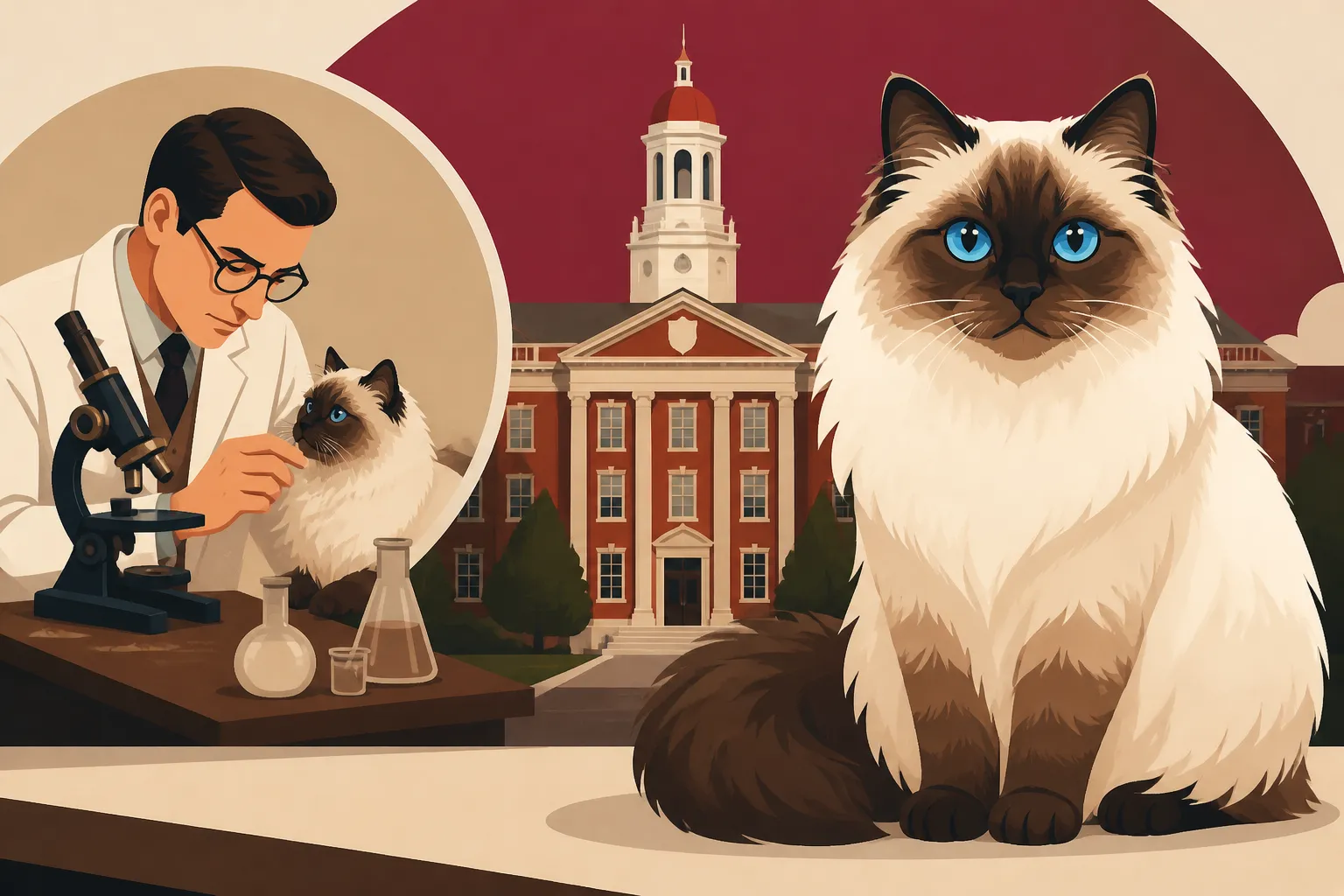
The Himalayan Was Made at Harvard in the 1930s
Many cat lovers adore the Himalayan for its stunning blue eyes, luxurious long coat, and distinctive color points, yet few truly know the remarkable scientific journey that led to its existence. It’s easy to assume such a beautiful breed simply evolved or was stumbled upon, but the truth is far more intriguing. This comprehensive guide will pull back the curtain on the Himalayan’s origins, revealing how this beloved feline was, quite deliberately, brought into being through groundbreaking genetic research at Harvard University in the 1930s.
The Scientific Curiosity that Started It All: Harvard in the 1930s
Imagine a time before we had widespread genetic mapping or even a full understanding of DNA's structure. In the 1930s, the scientific world was still unraveling the mysteries of inheritance, trying to figure out how traits were passed down from one generation to the next. It was a period of intense curiosity and meticulous observation, especially in the burgeoning field of genetics. Harvard University, a hub of intellectual pursuit, naturally became a setting for some of these pioneering investigations. Scientists there weren't necessarily setting out to create a new "designer" cat breed, as we might think of it today. Their motivations were far more academic and fundamental: they wanted to understand the very mechanics of how physical characteristics, particularly coat color and pattern, were inherited.
Geneticists Seeking Answers, Not New Breeds
The primary goal of the researchers at Harvard was pure scientific inquiry. They were driven by a desire to comprehend Mendelian inheritance patterns in mammals. Specifically, they were interested in how genes interact to produce observable traits, like the unique temperature-sensitive coloration seen in some animals. The idea of deliberately crafting a new cat breed, while a fascinating byproduct, was secondary to their core mission of expanding the fundamental knowledge of genetics. They were asking questions like, "What causes this color? How is it expressed? Can we predict the outcome of a specific cross?" Their work was foundational, laying groundwork for future genetic studies, and just happened to involve some incredibly beautiful felines.
This era was marked by an emphasis on experimental genetics, where controlled breeding programs were essential tools. Researchers carefully selected animals with distinct, easily observable traits to track how these characteristics segregated and recombined in subsequent generations. It was a painstaking process, requiring detailed record-keeping and a deep understanding of statistical probabilities. The cats in these studies weren't merely pets; they were living genetic puzzles, each kitten a new piece of data in a larger scientific endeavor. The focus was on the data, the patterns, and the underlying genetic mechanisms that governed them, rather than on creating a marketable pet.
The Role of the Siamese and Persian in Early Research
So, why did these researchers choose the Siamese and Persian cat breeds for their experiments? It wasn't arbitrary. Both breeds presented distinct, almost opposite, genetic packages that were incredibly useful for studying inheritance. The Siamese, with its striking "point" coloration (darker extremities like ears, face, paws, and tail) and bright blue eyes, offered a clear, well-defined trait linked to temperature sensitivity. Its short, sleek coat also contrasted sharply with the other chosen breed. On the other hand, the Persian was known for its luxurious, long coat, cobby body, and round head, representing a completely different genetic expression for hair length and body type.
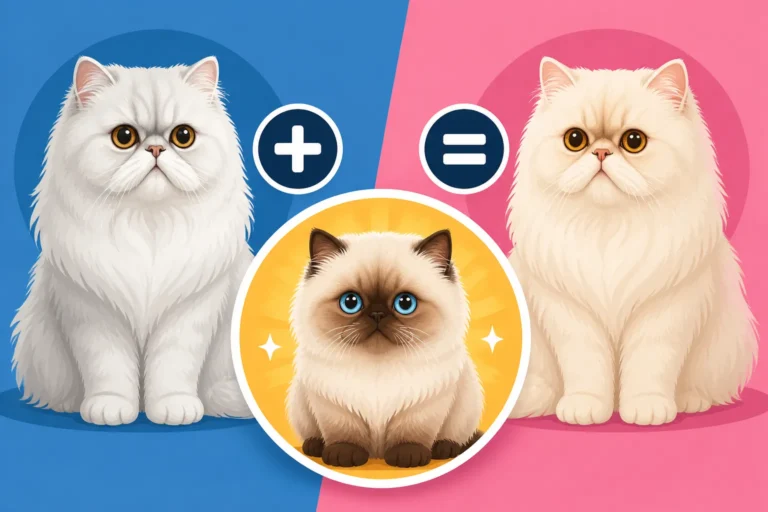
By crossing a Siamese with a Persian, the geneticists could observe how these contrasting traits interacted. Would the long hair be dominant over short hair? How would the point coloration manifest in a long-haired cat? Would the Siamese's blue eyes always appear with the points? These were crucial questions for understanding the interplay of multiple genes. The goal was to see if the point coloration, which they knew was recessive, could be expressed in a cat that also carried the gene for long hair. The Siamese provided the point-color gene, and the Persian provided the long-hair gene, setting the stage for an accidental creation that would eventually capture hearts worldwide. Why Harvard Crossed a Persian With a Siamese to Make the Himalayan
Clyde Keeler and Virginia Cobb: The Masterminds Behind the Cross
While the collective scientific endeavor at Harvard was significant, specific individuals stand out in the story of the Himalayan's creation. Dr. Clyde Keeler, a brilliant geneticist, and Virginia Cobb, a dedicated collaborator, formed the core team that meticulously planned and executed the breeding experiments. Their combined expertise—Keeler's theoretical knowledge and Cobb's practical breeding experience—proved to be the perfect synergy for such an ambitious project. They weren't just working with animals; they were probing the very blueprint of life, one feline generation at a time.
Keeler's Vision and Cobb's Dedication
Clyde Keeler was a pioneering geneticist with a profound interest in the inheritance of specific traits. He was particularly fascinated by the genetics of coat color and eye pigmentation across various species, having conducted earlier work with mice. His vision extended beyond simply categorizing traits; he wanted to understand the biochemical pathways and genetic switches that led to their expression. For Keeler, the cat experiment was another step in a lifelong quest to map the genetic landscape of mammals. He brought the scientific rigor, the hypothesis, and the analytical framework to the project, guiding the direction of the breeding program based on sound genetic principles.
Virginia Cobb, often seen as Keeler's indispensable partner in this specific endeavor, was much more than an assistant. She was a dedicated breeder with practical experience in animal husbandry, a meticulous observer, and a skilled record-keeper. Her dedication ensured the careful management of the breeding colony, critical for the success of any genetic study involving live animals. She oversaw the daily care, documented each litter, and provided the hands-on expertise required to bring Keeler's theoretical designs to life. Without Cobb's commitment to the precise execution of the breeding plan, the Harvard experiment might never have yielded such clear and significant results. Their collaboration was a textbook example of how theoretical science and practical application can intertwine to create something truly remarkable.
The Deliberate Mating and Its Unexpected Results
The actual breeding strategy involved a series of deliberate crosses. The first step was to mate a purebred Persian with a purebred Siamese. The offspring from this first generation, known as the F1 generation, were a fascinating blend. Genetically, they carried one copy of the long-hair gene from the Persian and one copy of the short-hair gene from the Siamese. They also carried one copy of the point-color gene from the Siamese and one copy of the solid-color gene from the Persian. As expected due to dominance, all the F1 kittens had short hair and were solid-colored, essentially looking like short-haired domestic cats, some with subtle blue eyes. This might have been a bit anticlimactic for anyone hoping for an instant new breed, but for the geneticists, it was exactly what they anticipated, confirming their understanding of dominant and recessive traits.
The real magic, the "unexpected result" that wasn't about the occurrence but the potential, happened when these F1 cats were bred together. According to Mendelian genetics, when two F1 carriers are bred, a certain percentage of the F2 offspring will express the recessive traits. And sure enough, in the F2 litters, kittens began to appear that had both the long hair of the Persian and the point coloration of the Siamese, coupled with those striking blue eyes. These were the first true "Himalayan" cats, even before they were given that name. They were long-haired, color-pointed cats – a combination previously unseen and scientifically proven through this deliberate cross. It was a moment of profound scientific confirmation and, unknowingly, the birth of a new and beloved breed. What Keeler and Cobb Were Studying When They Made the Himalayan
The 1936 Paper: Announcing a Genetic Breakthrough, Not a New Cat
While the world now celebrates the Himalayan as a distinct and beautiful cat breed, its initial unveiling to the scientific community was far more understated. It wasn't a grand press conference announcing a new pet; it was a publication in a respected academic journal, a staple of scientific discourse. The focus of this seminal paper was on the genetic mechanisms at play, illustrating a successful experimental model for understanding inheritance in felines. The cats themselves were the subjects, the living proof of genetic principles, rather than the stars of a new fancy.
Publishing the Findings: A Scientific Document
In 1936, Dr. Clyde Keeler and Virginia Cobb published their findings in a scientific journal, specifically The Journal of Heredity. The article, titled "The Siamese-Persian cat: an experimental cross," meticulously detailed their breeding program, the outcomes of the F1 and F2 generations, and the genetic conclusions drawn from these observations. It was a technical paper, replete with genetic charts, statistical analysis, and a dispassionate scientific tone, typical of research publications of the era.
The purpose of this publication was to share a significant scientific discovery with peers, contributing to the broader understanding of mammalian genetics. It was about the how and why of inheritance, not the aesthetics or the potential market for a new cat. For the scientific community, it provided compelling evidence for specific gene linkages and the expression of recessive traits across generations. This foundational work wasn't just a curiosity; it was a valuable piece of the genetic puzzle, demonstrating predictable outcomes in a complex mammalian system. The 1936 Paper That Started the Himalayan
The "Colorpoint Persian" Emerges in the Lab
Within the pages of that 1936 paper, and certainly within the Harvard lab, the cats that would eventually be known as Himalayans were referred to descriptively as "Siamese-Persian" cats or, perhaps more accurately, "colorpoint Persians." The name "Himalayan" had not yet been formally coined for the feline world, though the pattern itself was recognized in other species. These cats were undeniably unique: they possessed the luxurious long coat of their Persian ancestors, combined with the striking blue eyes and the temperature-sensitive point coloration of the Siamese.
The emergence of these long-haired, pointed cats was a breakthrough because it visually confirmed the independent segregation of the long-hair gene and the point-color gene. Scientists now had a living, breathing model to demonstrate how two recessive traits, carried unknowingly by the F1 generation, could combine to produce a novel phenotype in the F2 generation. This visual proof was exciting for geneticists, even if the wider public was still unaware of these beautiful, meticulously bred felines. It was a triumph of genetic engineering before the term even fully existed, showcasing how deliberate scientific crosses could unravel the mysteries of inheritance and, quite literally, create something new under the sun. What Siamese Persian Meant Before the Name Himalayan
From Lab Experiment to Pedigreed Cat: The Journey Beyond Harvard
The cats produced at Harvard were scientific subjects, but their striking appearance couldn't be ignored for long. It wasn't long before cat fanciers and dedicated breeders outside of the academic world began to take notice. The journey from a laboratory curiosity to a recognized pedigree cat was a gradual one, requiring the passion and perseverance of individuals who saw more than just genetic data in these unique felines. This transition marked a crucial shift from pure research to the deliberate development and standardization of a new breed.
The Post-War Breeding Efforts
After the initial genetic experiments at Harvard, the concept of a long-haired, pointed cat began to capture the imagination of cat enthusiasts. While the Harvard team had proved the genetic possibility, it was up to dedicated breeders to stabilize the type and breed for consistency. This effort truly gained momentum in the post-World War II era, both in the United States and the United Kingdom. In the US, a key figure was Marguerita Goforth, who is widely credited with tirelessly working to develop and promote the breed, giving it the structure and recognition it needed. In Britain, pioneering breeders like Brian Sterling-Webb also worked independently to establish what they initially called "Colourpoint Longhairs."
These breeders faced considerable challenges. They weren't just breeding for appearance; they had to ensure genetic diversity and health, all while trying to solidify the distinct traits of the emerging breed. This meant careful selection, extensive record-keeping, and often, collaboration with other breeders across different catteries. They aimed to produce cats that consistently displayed the Persian body type and coat, combined with the Siamese point coloration and blue eyes, ensuring that each generation moved closer to a stable, identifiable breed standard. The commitment of these early fanciers was paramount in taking the Himalayan from a scientific curiosity to a viable and beloved domestic cat. Marguerita Goforth and the Himalayan's 1957 Recognition
The Naming of the Himalayan: A Rabbit's Influence
The adoption of the name "Himalayan" for these cats is a fascinating side note, demonstrating how connections across species can influence our nomenclature. Prior to being used for cats, the term "Himalayan" was already well-established in the rabbit world, referring to a specific breed of rabbit that possessed the same distinctive temperature-sensitive point coloration: a pale body with darker extremities. When cat breeders encountered the long-haired, pointed cats emerging from the Persian-Siamese crosses, the visual similarity to the Himalayan rabbit was undeniable.
It was a logical and descriptive choice. The name instantly conveyed the most striking feature of these new cats—their unique color pattern—without requiring a lengthy explanation of their genetic lineage. This naming convention helped to quickly identify and differentiate them from other breeds. The name stuck, cementing "Himalayan" as the official designation for these beautiful felines. This cross-species naming highlights a common thread in genetics, where similar traits can arise through similar mechanisms, even in vastly different animals. It also underscores the simple, yet profound, observation that often guides common understanding. The Himalayan Is Named After a Rabbit
Establishing the Standard: The Himalayan's Path to Recognition
Once passionate breeders committed to developing these unique cats, the next crucial step was gaining official recognition from cat fancier associations. This process is rigorous, involving the establishment of a detailed "breed standard" that defines the ideal characteristics of the cat. For the Himalayan, this path was particularly complex, marked by debates over whether it should be a distinct breed or simply a variant of an existing one, particularly its Persian parent.
Early Recognition and Challenges
The journey to formal recognition for the Himalayan was a significant undertaking, primarily championed by dedicated breeders like Marguerita Goforth in the US. The first major milestone came in 1957 when the Cat Fanciers' Association (CFA) granted championship status to the Himalayan, recognizing it as a distinct breed. This was a huge victory, validating years of careful breeding and selection. However, this early recognition was not universally accepted, and debates simmered within the cat fancy world. Other associations, and even some within CFA, saw the Himalayan as essentially a Persian with a different coat color pattern.
The main challenge was defining its identity. Was it a completely new creation, or merely a variation of the Persian? Breeders meticulously worked to solidify specific traits: the cobby body, round head, small ears, and luxurious long coat characteristic of the Persian, combined with the distinctive blue eyes and various point colors (seal, blue, chocolate, lilac, flame, cream, tortie, lynx) inherited from the Siamese. The goal was to create a cat that consistently met these stringent aesthetic and structural requirements, proving its stability as a breed. This involved careful documentation and presentation at cat shows, demonstrating that the Himalayan could reproduce true to its type generation after generation.
The Persian Influence on the Himalayan's Look
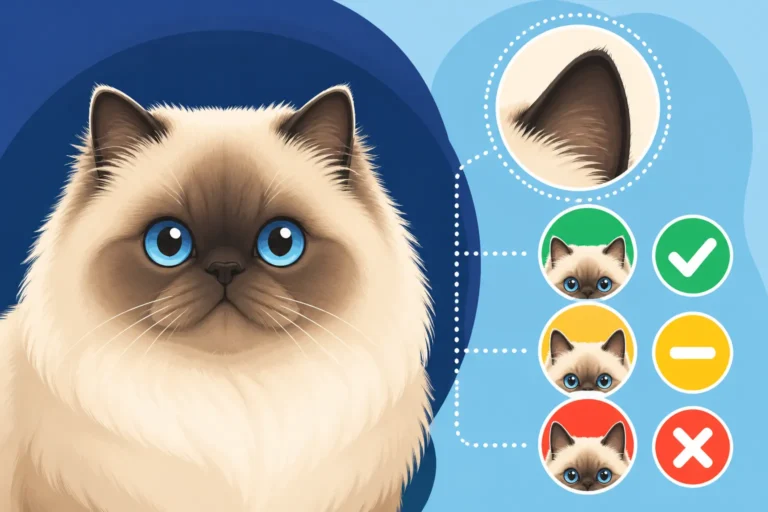
Despite its Siamese genetic contribution for points and blue eyes, the Himalayan's physical "type" overwhelmingly gravitated towards its Persian ancestry. This wasn't by accident; it was a deliberate choice by early breeders aiming to establish a consistent and recognizable appearance. The vision was to create a long-haired, pointed cat that otherwise conformed to the popular and well-established Persian breed standard. This meant emphasizing the Persian's cobby (stocky) body, short, thick legs, broad head, round face, full cheeks, and small, rounded ears set low on the head.
The most noticeable and sometimes debated aspect of this Persian influence was the development of the "Peke Face" or extreme brachycephalic profile. While the earliest Himalayans (often referred to as "Doll Face" Himalayans) had more moderate facial structures, show breeders, particularly in the mid to late 20th century, began selecting for increasingly flat faces with a "break" between the eyes. This was in line with the evolving Persian standard at the time, where a flatter face was considered desirable in the show ring. This selective breeding intensified certain facial features, which, while aesthetically distinct, also brought with it some of the unique health considerations associated with brachycephalic breeds, such as breathing difficulties and tear staining. The emphasis on the Persian look profoundly shaped the Himalayan we see today. Why Show Himalayans Drifted Toward the Flatter Face
The Unifying Act: CFA's Decision in 1984
The debate over the Himalayan's classification – whether it was a distinct breed or a color variant – came to a head in 1984. The Cat Fanciers' Association (CFA), one of the world's largest cat registries, made a landmark decision that would forever alter how the Himalayan was viewed and exhibited. This wasn't just a bureaucratic change; it was a profound shift in identity that had deep implications for breeders and fanciers alike, aiming for a more unified classification within the cat fancy.
Why CFA Merged the Himalayan Into the Persian
The decision by CFA in 1984 to integrate the Himalayan into the Persian breed was driven by several factors, primarily the increasing similarity in body type and head structure between the two breeds. As breeders focused on perfecting the Himalayan, they consistently bred towards the Persian standard, resulting in cats that were virtually identical to Persians in every aspect except for their color points and blue eyes. The distinction between a Persian and a Himalayan had become, in the eyes of many judges and the CFA board, largely superficial—a matter of color rather than fundamental breed characteristics.
The argument was that maintaining separate breed status for the Himalayan created unnecessary complexity and confusion. If the ideal Himalayan was essentially a color-pointed Persian, why not just classify it as such? This move aimed to streamline the show ring, simplify judging standards, and unify the breeding efforts under a single, overarching Persian umbrella. It also acknowledged the strong genetic heritage from the Persian side, effectively recognizing the Himalayan as a Persian with the recessive point gene. While controversial for some, the decision reflected a desire for consistency and clarity within the cat fancy, solidifying the idea that the Himalayan is a Persian, just with a special coat pattern. Why CFA Made the Himalayan Into the Persian in 1984
The Impact on Registration and Showing
The CFA's 1984 decision meant that from that point forward, Himalayans were no longer registered as a separate breed within CFA. Instead, they became a "Colorpoint Persian" division. This meant that when you looked at a CFA pedigree for a Himalayan, it would list "Persian" as the breed, with "Himalayan" specifying the color division. For breeders, this had significant implications. It meant they could, and often did, cross Himalayans with solid Persians, as long as the Persian carried the recessive point gene (making it a "Himalayan carrier"). This cross-breeding was encouraged to maintain genetic diversity and ensure the health of the lines, further blurring the lines between the two.
In the show ring, Himalayans now competed directly against other Persians, not as their own separate category. They were judged on the overall Persian standard, with their point coloration being a specific characteristic of their division. This change was met with mixed reactions. Some breeders lamented the loss of the Himalayan's independent identity, feeling that its unique origins and appearance warranted separate status. Others welcomed the integration, seeing it as a logical step that recognized the genetic and phenotypic realities of the breed. Today, while many still affectionately refer to them as Himalayans, especially in daily conversation, their official classification within CFA remains as Colorpoint Persians. Meanwhile, other registries, like TICA (The International Cat Association), continue to recognize the Himalayan as a distinct breed, allowing for a fascinating divergence in how this cat's identity is formally perceived across the world. TICA Still Registers the Himalayan as a Breed of Its Own
The Himalayan Today: A Legacy of Scientific Breeding
From its beginnings as a scientific experiment at Harvard in the 1930s to its eventual recognition and integration within the broader Persian breed, the Himalayan cat's journey is a testament to both scientific curiosity and dedicated breeding. Today, the Himalayan stands as a beloved companion, a living legacy of genetic research, and a breed with its own unique set of characteristics and care needs, shaped by its distinct ancestry.
Genetic Purity and Responsible Breeding
The scientific foundation of the Himalayan's creation means that genetics have always played a central role in its development and health management. Responsible breeders today prioritize genetic purity and health testing to ensure the well-being of their lines. One of the most critical health concerns linked to the Persian side of their ancestry is Polycystic Kidney Disease (PKD1). Thanks to advancements in veterinary science, a simple DNA test can now identify cats carrying the gene for PKD1, a condition that can lead to kidney failure. Breeders dedicated to the health of the breed meticulously test their breeding stock, working towards eradicating this inherited disease from Himalayan lines. PKD1 Came Down the Persian Side of a Himalayan
This emphasis on genetic testing isn't just about preventing disease; it's about honoring the scientific origins of the breed. It means making informed decisions about pairings, ensuring that future generations are as healthy and robust as possible. Ethical breeders will readily provide documentation of health clearances for their cats, giving prospective owners peace of mind. Moreover, owners are encouraged to maintain this vigilance, with regular veterinary check-ups and discussions about their cat's genetic history. For all the essential supplies needed to support a healthy Himalayan, from specialized foods for crowded mouths to grooming tools for that luxurious coat, many owners turn to reliable retailers like Chewy, knowing they can find products tailored to their cat's unique needs.
The Himalayan as a Beloved Companion
Beyond its genetic history and show ring classifications, the Himalayan is cherished as a loyal and affectionate companion. Its temperament is often described as a delightful blend of the Persian's placid, sweet nature and a hint of the Siamese's playful curiosity and vocal tendencies. They are generally calm and laid-back cats, perfectly content to adorn a favorite armchair or warm lap for hours, but they do enjoy interactive play sessions and will often "talk" to their owners with soft chirps and trills, a charming echo of their Siamese heritage. The Himalayan Is a Lap Cat That Answers Back
However, owning a Himalayan comes with specific care requirements, directly stemming from their unique genetic makeup and physical traits. Their long, dense Persian coat demands daily grooming to prevent mats and tangles, a commitment that every potential owner must be prepared for. Their flat faces, inherited from the Persian, often necessitate daily face wiping to manage tear stains and ensure clear breathing passages. Their bright blue eyes, a hallmark of their Siamese point coloration, can also be prone to watery eyes due to the facial structure. Managing these needs is part of the deep bond formed with a Himalayan, and with the right care, these cats can live a full and happy life, often for fifteen years or more. Investing in the proper grooming tools and eye care products, easily accessible from pet supply stores like Chewy, is crucial for their comfort and well-being. What Fifteen Years of a Himalayan's Coat and Face Costs
The Future of the Himalayan Breed
The Himalayan cat, born from a scientific experiment at Harvard, has cemented its place in the hearts of cat lovers worldwide. Its journey from a lab to a lap is a fascinating narrative of genetic discovery, dedicated breeding, and the enduring appeal of its unique beauty. As we look to the future, the emphasis remains on responsible care and ethical breeding, ensuring that this magnificent legacy continues to thrive.
Preserving Type and Temperament
The ongoing preservation of the Himalayan breed focuses on maintaining its distinctive "type" while also prioritizing health and temperament. Breeders continue to work within the established standards, aiming for the ideal Persian body and head structure combined with the vibrant point colors and captivating blue eyes. This involves careful selection of breeding stock, ensuring that traits like coat quality, facial symmetry, and eye color are consistently passed down. The aim is to uphold the breed's aesthetic hallmarks while also ensuring functionality and well-being.
Just as important as physical type is the preservation of the Himalayan's renowned temperament. Their gentle, affectionate, and somewhat laid-back nature is a huge part of their appeal. Responsible breeders focus on raising well-socialized kittens, exposing them to a calm home environment from a young age, and ensuring they inherit a sweet disposition. This commitment to both form and personality guarantees that future generations of Himalayans will continue to be cherished companions, embodying the best qualities of their unique genetic heritage.
Evolving Care and Research
As veterinary science advances, so does our understanding of optimal care for the Himalayan. New research continues to emerge regarding feline health, nutrition, and genetic predispositions. This means that owners and breeders have access to increasingly sophisticated tools for managing the breed's specific needs, such as improved diets for flat-faced cats or more effective strategies for coat maintenance. The dialogue between breeders, veterinarians, and researchers is ongoing, constantly refining best practices to enhance the lifespan and quality of life for Himalayans.
For example, understanding the dietary needs of a flat-faced cat that might struggle with certain kibble shapes has led to the development of specialized food options and bowl designs. Knowledge about their temperature sensitivity means owners are more aware of the need to keep them cool in warmer climates or during summer months. This continuous evolution of care, supported by readily available resources and products from pet suppliers like Chewy, ensures that the Himalayan can continue to thrive, adapting to modern living while maintaining the striking beauty and charming personality born from those pioneering experiments decades ago. How Long a Himalayan Lives Against Its Persian Half
| Characteristic | Persian Contribution | Siamese Contribution | Himalayan Outcome |
|---|---|---|---|
| Coat Length | Long, dense, luxurious | Short, sleek, fine | Long, dense, luxurious |
| Body Type | Cobby, stocky, heavy boned | Svelte, lithe, elegant | Cobby, stocky, heavy boned |
| Head Shape | Round, broad, flat face | Wedge-shaped, elongated | Round, broad, typically flat face (Peke or Doll) |
| Ear Size/Set | Small, rounded, low set | Large, pointed, high set | Small, rounded, low set |
| Eye Color | Copper, green, blue | Deep blue | Deep blue only |
| Color Pattern | Solid, bicolor, tabby, etc. | Point coloration | Point coloration |
| Temperament | Quiet, placid, affectionate | Vocal, active, playful | Affectionate, placid with vocal/playful hints |
| Voice | Soft, rarely used | Loud, demanding, distinctive | Soft, melodious, often chirpy |
Disclaimer
This article is for general informational purposes only and does not constitute professional advice. Laws, prices and regulations vary by location and change over time. Consult a qualified professional for guidance on your specific situation.