Why Harvard Crossed a Persian With a Siamese to Make the Himalayan
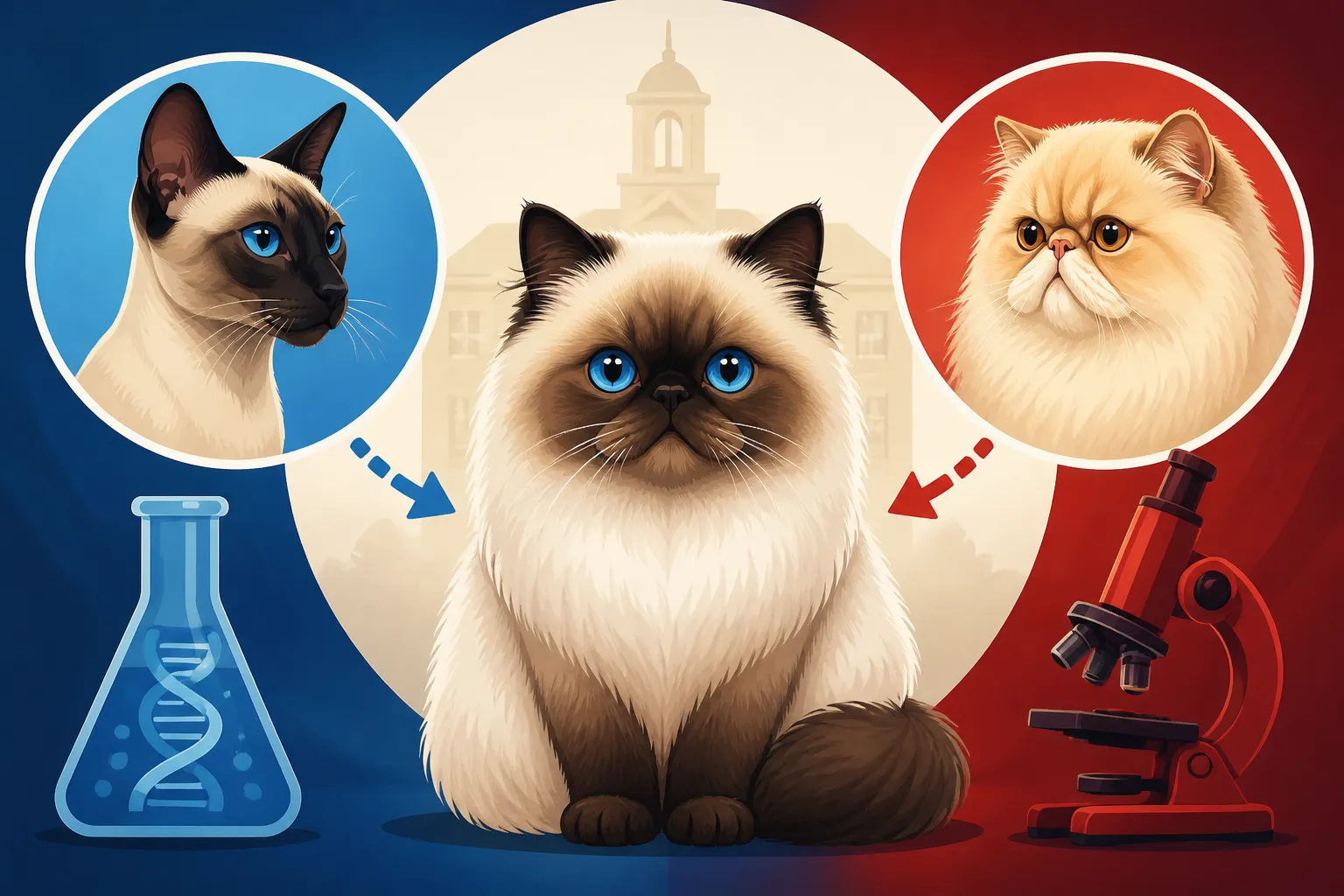
Have you ever gazed into the striking blue eyes of a Himalayan cat, admired their luxurious long coat, and wondered, "How on earth did this magnificent creature come to be?" It's a question many of us cat lovers ponder, especially when we learn about their surprising origins. The idea of crossing a stately, long-haired Persian with a sleek, vocal Siamese might seem like an unlikely pairing, but this guide is here to unravel the fascinating scientific journey that led to the creation of our beloved Himalayan, answering just why Harvard University embarked on such an ambitious feline project.
The Scientific Quest: Unraveling Coat Genetics
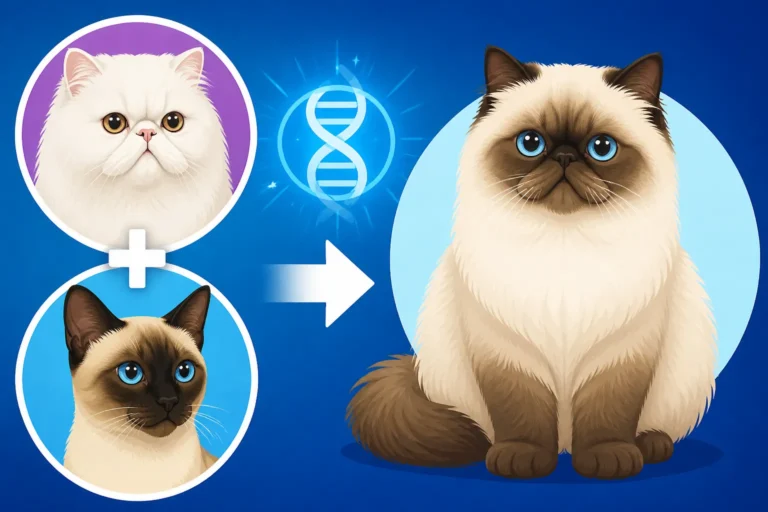
The story of the Himalayan cat isn't just a tale of beauty; it's a profound dive into the world of genetics, driven by a desire to understand the very blueprint of life. In the early 20th century, scientists were still piecing together the intricate puzzles of inheritance, and cats, with their diverse array of coat colors and patterns, offered a living laboratory. The decision to cross a Persian with a Siamese wasn't born from a whim to create a pretty new cat (though that was certainly a delightful side effect!). It was a calculated, scientific endeavor aimed at understanding how specific traits, particularly those related to color and coat length, were passed down through generations.
The Allure of the Siamese Point Pattern
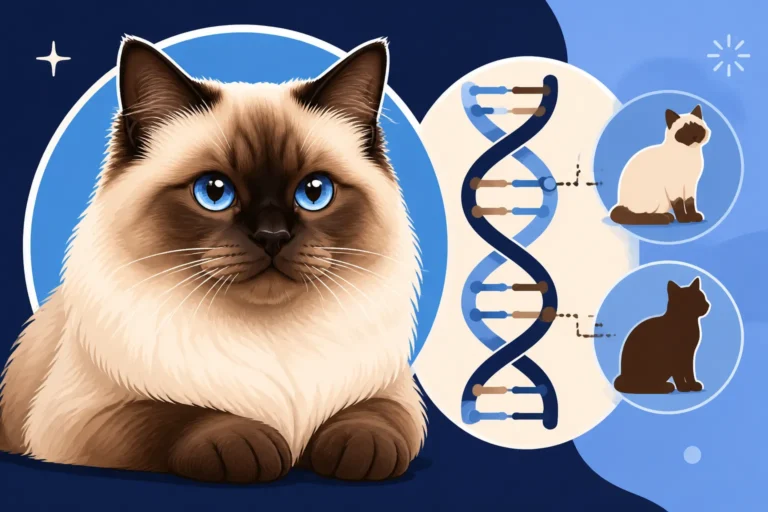
Imagine encountering a Siamese cat for the first time: their sleek, athletic build, those mesmerizing sapphire-blue eyes, and, of course, their distinctive "points"—darker fur on the ears, face, paws, and tail, contrasted against a much paler body. This unique coloration isn't just aesthetically pleasing; it's a fascinating biological phenomenon. What makes it so intriguing is that this pattern is temperature-sensitive. The gene responsible for the Siamese point coloration only allows pigment to develop in cooler parts of the cat's body. Where the body temperature is higher, the fur remains light. This is why a Siamese kitten is born almost entirely white; it's uniformly warm in the womb, and the pigment can't develop until exposed to cooler temperatures after birth.
For geneticists, this was a goldmine. The Siamese cat represented a clear, observable trait governed by a specific, well-defined genetic mechanism. Studying how this temperature-sensitive gene behaved when introduced into other breeds could unlock deeper secrets about genetic expression and environmental influence. It was a tangible way to observe Mendelian principles in action, providing valuable insights that extended far beyond the realm of cat breeding. The scientists at Harvard weren't just captivated by the Siamese's stunning looks; they were captivated by the elegant genetic machinery underpinning it.
The Persian as a Genetic Blank Canvas
Now, if you want to study how a particular gene expresses itself, you need a "control" or a contrasting genetic background. Enter the Persian cat. Persians were, and still are, renowned for their opulent, long-flowing coats, round heads, and cobby bodies. Crucially, they did not naturally carry the Siamese point gene. They came in an astonishing array of solid colors, tabbies, and shaded patterns, but never with the distinctive dark points and pale body of a Siamese. This made the Persian an ideal candidate for the other half of the cross.
The Persian offered a stable, established breed with a long-hair gene that was well understood. By introducing the Siamese's temperature-sensitive colorpoint gene into a Persian's genetic makeup, researchers could observe several key things:
- Would the Siamese point pattern express itself on a long coat, or would the long hair somehow mask or alter it?
- How would the two distinct genetic traits—long hair and point coloration—segregate and recombine in subsequent generations?
- Could a cat with both the Persian's luxurious coat and the Siamese's striking points be consistently produced?
Essentially, the Persian acted as a genetic vessel, a beautiful and consistent platform upon which to observe the interaction and inheritance of the Siamese colorpoint trait. It wasn't about finding the prettiest combination initially, but the most informative one for genetic study.
Beyond Aesthetics: The Purpose of the Cross
It's easy to look at a Himalayan cat today and think, "What a gorgeous breed! Someone just wanted a long-haired Siamese!" But the true initial purpose was far more academic. In the 1930s, at institutions like Harvard University, scientists were deeply invested in understanding heredity. The work that led to the Himalayan was a serious genetic experiment, driven by the desire to prove and document how inherited traits worked in mammals, specifically cats.
The researchers, particularly Dr. Clyde Keeler and his collaborator Virginia Cobb, were studying coat color inheritance and genetic linkage. They aimed to demonstrate that Mendelian laws of inheritance—the principles Gregor Mendel discovered with pea plants—applied equally to complex mammalian traits. By crossing two distinctly different breeds like the Siamese and the Persian, and then carefully tracking the traits in their offspring over multiple generations, they could map genes, observe how they segregated, and understand the mechanisms of dominant and recessive traits. This wasn't about designing a pet; it was about advancing scientific knowledge. The beauty that resulted was merely a testament to the elegant simplicity of genetic recombination. The profound impact of this early research is still felt today, influencing not just cat breeding but our broader understanding of animal genetics. What the Himalayan Experiment Was Trying to Prove
The Pioneering Researchers: Keeler and Cobb's Vision
Every significant scientific breakthrough has a human story behind it, and the creation of the Himalayan cat is no exception. It was the dedication and systematic approach of two remarkable individuals, Clyde Keeler and Virginia Cobb, that laid the groundwork for this beloved breed. Their collaboration, spanning academic rigor and practical breeding, was the engine behind what began as a scientific inquiry and blossomed into a new feline lineage.
Who Were Clyde Keeler and Virginia Cobb?
Dr. Clyde Keeler was a distinguished geneticist working out of the Bussey Institution for Research in Applied Biology at Harvard University. His academic focus was primarily on mammalian genetics, particularly in mice, where he explored various inherited traits. He was a scientist's scientist, driven by data, observation, and the systematic uncovering of genetic truths. Which University the Himalayan Research Was Done At
Virginia Cobb, on the other hand, brought a crucial practical element to the equation. She was not only a passionate cat breeder but also had a background in genetics. This combination made her an ideal collaborator for Keeler. While Keeler provided the academic framework and rigorous experimental design, Cobb offered invaluable expertise in feline husbandry, breeding practices, and a keen eye for observing traits across generations of cats. Their partnership perfectly bridged the gap between pure scientific theory and its real-world application, making the complex process of cross-breeding and observation feasible and successful.
Setting Up the Experiment: The Early Crosses
The creation of the Himalayan was not a swift process. It involved multiple generations of carefully planned crosses, designed to isolate and combine the desired genetic traits. The initial step was to breed a Siamese cat with a Persian cat. The first generation of kittens from this cross, known as F1 hybrids, typically exhibited short hair and solid colors. This might have seemed disappointing to anyone hoping for immediate results, but to Keeler and Cobb, these kittens were critical. They carried the recessive genes for both long hair (from the Persian) and the point coloration (from the Siamese) in a "hidden" state.
The real magic happened in the subsequent generations. These F1 hybrids were then inter-bred with each other or bred back to Persians (a process called backcrossing). It was in these F2 and later generations that the long-haired, pointed kittens began to appear. It was a painstaking process requiring patience, meticulous record-keeping, and a deep understanding of genetic probabilities. It wasn't just tossing two cats together; it was a carefully controlled breeding program aimed at specific genetic outcomes. It took several years and numerous litters to consistently produce cats that possessed both the long Persian coat and the distinctive Siamese points. This systematic, generation-by-generation approach was key to demonstrating the inheritable nature of these traits. How Many Generations the First Himalayan Took
The "Siamese-Persian" Emerges: Documenting the Results
As the years passed and the carefully planned crosses continued, Keeler and Cobb eventually achieved their scientific goal: they successfully produced cats that combined the long hair of the Persian with the point coloration and blue eyes of the Siamese. These cats, initially referred to simply as "Siamese-Persians" in their scientific notes and publications, were the tangible proof of their genetic hypothesis.
In 1936, Clyde Keeler published a paper detailing their findings in the Journal of Heredity, documenting the inheritance patterns they observed. This publication was a landmark moment, not just for cat enthusiasts but for the scientific community as a whole. It provided robust evidence for Mendelian inheritance in a complex mammalian cross and highlighted the environmental influence (temperature) on gene expression for the point pattern. The paper was an academic triumph, showcasing how careful experimental design could unravel the mysteries of heredity. It marked the formal scientific birth of what would later become known as the Himalayan cat, solidifying its origins as a breed forged in the crucible of genetic research. What the 1936 Paper Said About the Himalayan Cross
The Birth of a New Breed, Not Just an Experiment
While Keeler and Cobb were driven by scientific curiosity, the inherent beauty of their creation could not be ignored. The "Siamese-Persian" hybrids, with their striking combination of luxurious fur, intense blue eyes, and distinctive coloration, quickly captured the imagination of cat fanciers. What started as a genetic experiment soon transitioned into a dedicated effort to establish a new and beloved breed.
From Lab to Living Room: Recognizing the Potential
Once these long-haired, pointed cats started appearing consistently in the later generations of Keeler and Cobb's experimental breeding program, it wasn't long before their aesthetic appeal became undeniable. Imagine seeing a kitten with the plush, flowing coat of a Persian, but instead of a solid color, it had those captivating dark points and brilliant blue eyes of a Siamese. It was a novel and breathtaking combination that immediately sparked interest beyond the confines of the laboratory.
Cat breeders and enthusiasts, who were always on the lookout for new and exciting varieties, quickly recognized the immense potential. This wasn't just a scientific curiosity; it was a genuinely beautiful animal that could enrich the world of pedigreed cats. The demand for these unique "Siamese-Persians" began to grow, moving them from the experimental cages into the homes and hearts of dedicated fanciers. This shift marked the true transition from a research project to the burgeoning of a new and popular breed, adored for its unique blend of characteristics.
Early Breeding Efforts and Challenges
Turning a scientific success into a stable, recognizable breed for the cat fancy was no small feat. It required dedicated breeders to take the foundation cats produced by Keeler and Cobb (and parallel efforts by others in Britain and Canada) and embark on intensive breeding programs. The initial challenge was to consistently reproduce the desired traits: the Persian body type, coat length, and facial structure, combined with the Siamese point coloration and blue eyes. This meant carefully selecting breeding pairs, maintaining detailed pedigrees, and often dealing with litters that might not always produce the "perfect" combination in the early stages.
Breeders faced the task of standardizing the look, ensuring genetic health, and developing lines that reliably produced cats true to the emerging ideal. They had to refine the breed's characteristics, such as the roundness of the head, the fullness of the coat, and the intensity of the blue eye color. It was a labor of love and commitment, involving years of careful planning and many generations of cats to reach a point where the Himalayan could be presented for formal recognition by cat registries. Without these dedicated early breeders, the Himalayan would have remained a scientific footnote rather than becoming the cherished companion cat we know today. How Many Himalayans Existed at Recognition
Naming the "Himalayan": A Nod to Another Pointed Animal
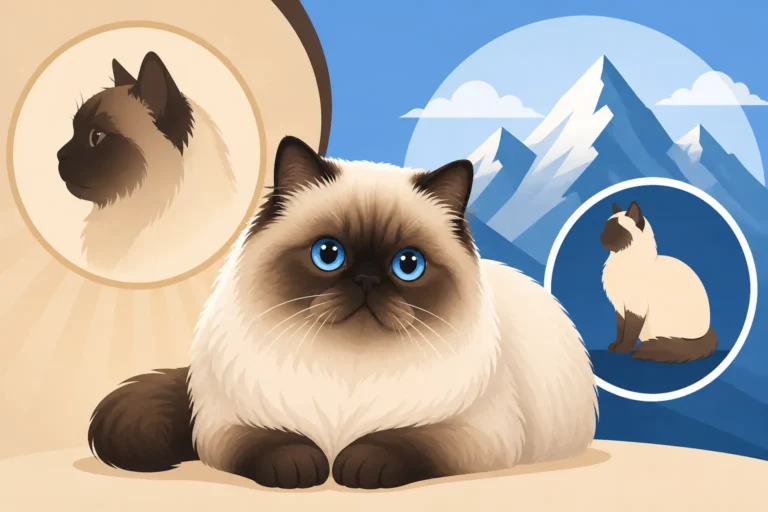
One of the most common misconceptions about the Himalayan cat is that its name derives from the Himalayan mountains or suggests some exotic ancestry from that region. While the name certainly sounds evocative, its true origin is far more scientific and charmingly direct. The breed was named after the Himalayan rabbit.
Like the Siamese cat, the Himalayan rabbit is characterized by its distinctive temperature-sensitive colorpoint pattern: a white body with dark points on its ears, nose, feet, and tail. When Keeler and Cobb were conducting their genetic research, the phenomenon of temperature-dependent pigmentation was already well-documented in these rabbits. Therefore, when their new cat hybrids exhibited the exact same genetic mechanism for their coloration, it was a natural and fitting choice to name them "Himalayan" cats. It was a direct acknowledgment of the shared genetic trait, a nod to parallel scientific observations in another species. So, next time you admire a Himalayan, remember its name isn't about lofty peaks, but about a furry, pointed rabbit that shared a similar genetic secret! The Himalayan Is Named After a Rabbit
The Lasting Legacy: Impact on Cat Fancy and Beyond
The Himalayan cat's journey from a scientific experiment to a beloved household companion has left an indelible mark on the world of cat fancy and genetics. It not only introduced a stunning new feline variety but also provided invaluable lessons about inheritance, shaping how we understand and categorize breeds today. Its story is a testament to the power of deliberate breeding and the enduring appeal of unique genetic combinations.
The Himalayan's Place in Cat Registries
The path to formal recognition for the Himalayan was, shall we say, a bit convoluted, leading to some interesting divergences in how the breed is classified even today. When the Himalayan first achieved championship status in various cat registries in the mid-20th century, it was generally recognized as its own distinct breed. Breeders worked tirelessly to establish a specific standard that highlighted its unique blend of Persian type and Siamese coloration.
However, in 1984, a significant decision was made by the Cat Fanciers' Association (CFA), one of the largest and most influential cat registries in the world. CFA opted to merge the Himalayan into the Persian breed, designating it as the "Himalayan Division" of the Persian. This meant that while Himalayans retained their distinct appearance, for registration and showing purposes within CFA, they were considered a colorpoint variety of Persian, judged under the Persian standard. This decision was largely driven by the Himalayan's strong genetic and physical ties to the Persian, emphasizing that it was essentially a Persian with the added colorpoint gene. It caused quite a stir among breeders at the time, creating a split in how the breed was perceived. Why CFA Made the Himalayan a Persian Division in 1984
Other registries, such as The International Cat Association (TICA), chose a different path. TICA continues to register the Himalayan as a separate and distinct breed, honoring its unique historical development and specific characteristics that set it apart. This dual classification means that depending on which registry you consult, your Himalayan might be considered a breed in its own right or a division of another. It’s a fascinating quirk of cat fancy history that continues to highlight the breed's unique origins and the ongoing discussions within the cat community about what constitutes a "new" breed versus a "variant." TICA Still Registers the Himalayan as a Breed of Its Own
Influencing Other Breeds: The Spread of the Point Gene
The success of the Himalayan cat proved a crucial point in feline genetics: the colorpoint gene could indeed be introduced and expressed in a long-haired breed while maintaining the desired body type. This groundbreaking achievement opened the doors for the development of many other beloved pointed longhair breeds.
Once the blueprint for creating a long-haired, colorpointed cat was established, other breeders and geneticists were inspired to apply similar principles to different foundation breeds. While breeds like the Ragdoll and Birman have their own unique histories and genetic combinations, the Himalayan's existence demonstrated the feasibility and beauty of these genetic crosses. It showed that the elegant Siamese point pattern wasn't exclusive to the Siamese, and could be integrated into other feline canvases.
This influence extends beyond direct breeding. The detailed understanding of how the point gene interacts with other coat genes, first explored with the Himalayan, contributed significantly to the broader field of cat genetics. It helped breeders predict outcomes, plan matings more effectively, and avoid undesirable traits, ultimately enriching the genetic diversity and beauty of the entire cat fancy. Every time you see a pointed longhair cat, you're seeing a direct or indirect legacy of that initial Harvard experiment. Why Every Modern Pointed Longhair Owes the Himalayan
More Than Just Looks: Health and Care Considerations
While the Himalayan cat is undeniably stunning, its genetic heritage brings with it important health and care considerations that prospective owners must be aware of. Because the Himalayan is essentially a Persian cat with Siamese points, it inherits many of the characteristics and potential health predispositions of its Persian ancestry.
One of the most notable health concerns that often accompanies the Persian lineage is Polycystic Kidney Disease (PKD). This is a hereditary condition where cysts develop in the kidneys, progressively impairing kidney function over time. Fortunately, thanks to advancements in genetic testing, responsible Himalayan breeders routinely screen their breeding cats for the PKD1 gene, which is prevalent in Persian lines. Ensuring your kitten comes from tested, clear parents is crucial for avoiding this painful condition. PKD1 Came Down the Persian Side of a Himalayan
Beyond specific genetic conditions, the Himalayan's defining physical traits—its luxuriant long coat and, for many, its distinctive brachycephalic (flat) face—demand dedicated daily care. The long coat is prone to matting and requires daily combing to prevent painful tangles and skin issues. Their flattened facial structure can sometimes lead to breathing difficulties (brachycephalic airway syndrome) and tear duct issues, resulting in prominent tear staining. This means their beautiful blue eyes may often water, requiring daily cleaning to prevent skin irritation and infection in the facial folds. Why a Himalayan's Eyes Water All Day Regular veterinary check-ups are essential to monitor these potential issues and ensure a long, comfortable life for your Himalayan companion. It’s a commitment, but one that’s richly rewarded by the affection of these unique and beautiful cats.
Here’s a quick overview of some of the key characteristics inherited from their parent breeds:
| Feature | Inherited from Persian | Inherited from Siamese |
|---|---|---|
| Coat Length | Long, luxurious, dense double coat | Short, sleek single coat (gene for short hair is dominant, but long hair is present in Himalayan due to selection) |
| Body Type | Cobby, heavy boned, short legs, round head | Svelte, lithe, muscular, elongated body and legs |
| Eye Color | Various, but not exclusively blue | Deep sapphire blue, characteristic of pointed cats |
| Color Pattern | Solid, tabby, shaded, bi-color, etc. (no points) | Colorpoint (darker extremities, paler body) |
| Vocalization | Generally quiet, soft purrs and meows | Vocal, distinctive "meezer" voice, chatty |
| Temperament | Calm, placid, lap cat, enjoys quiet surroundings | Active, playful, curious, demanding attention |
| Face Shape | Brachycephalic (flat face), sometimes extreme | Wedge-shaped, elegant, elongated muzzle |
| Grooming Needs | High, daily combing to prevent mats | Low, minimal brushing |
Ultimately, the Himalayan cat is a living testament to scientific curiosity and dedicated breeding. From a Harvard laboratory experiment designed to understand genetic inheritance, it blossomed into one of the most beloved and recognized feline breeds in the world. Its story is rich with history, a unique blend of scientific purpose and aesthetic triumph.
Disclaimer
This article is for general informational purposes only and does not constitute professional advice. Laws, prices and regulations vary by location and change over time. Consult a qualified professional for guidance on your specific situation.