How Many Generations the First Himalayan Took
It's quite fascinating, isn't it, to look at a beautiful Himalayan cat and ponder how such a unique blend of a majestic Persian and a vocal Siamese came to be? Many people assume it was a quick, lucky cross, but the truth is, creating the Himalayan was a deliberate, multi-generational scientific and breeding endeavor. This guide will take you through the thoughtful, sometimes painstaking, journey that led to our beloved pointed Persians, revealing how many generations of careful breeding were truly involved in solidifying this enchanting breed.
The Early Vision: Science Meets Genetics
Back in the early 20th century, the idea of intentionally creating a new cat breed with specific genetic traits wasn't just about making a pretty pet; it was often driven by serious scientific inquiry. Researchers were keen to understand how genes worked, especially when it came to traits like coat color and length. The Himalayan cat, as we know it, really began its journey in a laboratory setting, not just a backyard breeder's cattery.
The Pioneers and Their Purpose
The story really kicks off with researchers like Clyde Keeler and Virginia Cobb at Harvard University in the 1930s. Their work wasn't initially about creating a new show cat; it was about studying inherited traits, specifically the genetics of colorpoint patterns, which they noticed in other animals like rabbits. They wanted to understand how certain genes expressed themselves only in cooler parts of the body. So, they looked at two very distinct breeds: the long-haired Persian and the colorpointed Siamese. The goal was to combine the long coat of the Persian with the distinctive points and blue eyes of the Siamese, all while observing the genetic outcomes. It was a pioneering effort in understanding mammalian genetics. In fact, you can read more about this in The Himalayan Was Made at Harvard in the 1930s.
The Initial Cross: Laying the Foundation
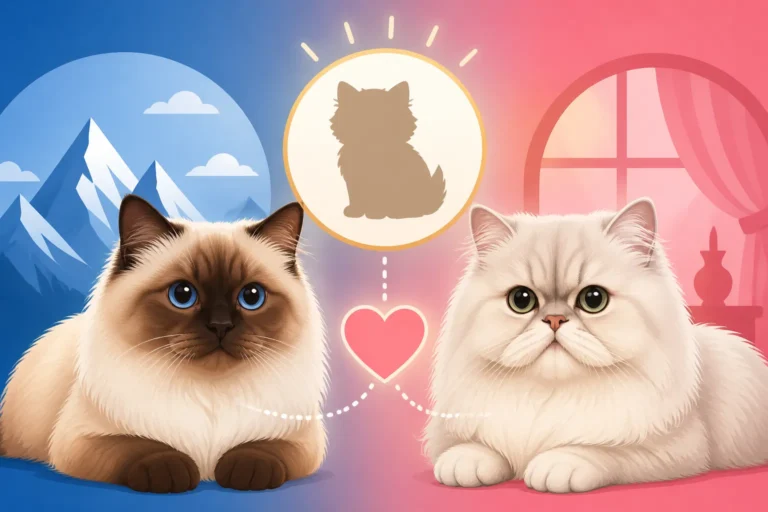
The very first step was, logically, to cross a Persian with a Siamese. Now, if you imagine that, you might think the kittens would immediately look like a Himalayan, right? But that's not how genetics works! The "colorpoint" gene, responsible for the darker points, is recessive. This means a cat needs two copies of the gene to actually show the trait.
So, when a Persian (which doesn't carry the colorpoint gene) was bred with a Siamese (which carries two copies), the first generation of kittens, often called the F1 generation, were not pointed. They were typically solid-colored, short-haired cats, looking much more like a domestic shorthair. The important thing, though, was that every single one of these F1 kittens carried one copy of the colorpoint gene and one copy of the long-hair gene, both hidden. They were essentially "carriers" of the Himalayan dream, even if they didn't look the part themselves. This was the crucial first generation, setting the stage for everything that followed.
Unlocking the Traits: The F2 and Beyond
The real magic, the appearance of the distinctive Himalayan traits, began to unfold in the subsequent generations. It wasn't a one-and-done deal; it was a patient process of selective breeding to reveal and then stabilize these desired characteristics.
The Second Generation: The First Glimmer of Points
To get the colorpoint pattern and long hair to appear, those F1 carrier cats had to be bred together. When two F1 cats (each carrying one copy of the recessive colorpoint gene and one copy of the long-hair gene) were bred, statistical probability dictated that some of their offspring, the F2 generation, would finally express the desired traits. This means some kittens in that litter would be long-haired and colorpointed, looking much more like the Himalayans we recognize today. This was often the second generation where the "Himalayan look" first emerged.
However, these F2 cats weren't consistently reproducing themselves. Some might be pointed, some solid; some long-haired, some short-haired. The challenge was immense, as documented in papers of the time, such as The 1936 Paper That Started the Himalayan. It was one thing to get a single pointed, long-haired cat, and quite another to reliably produce an entire litter of them, let alone establish a consistent breed.
From Glimmer to Consistency: Generations of Refinement
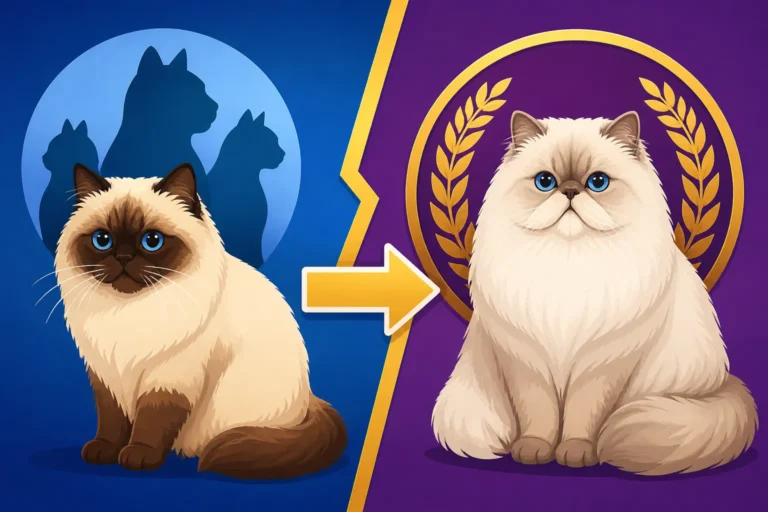
Here's where the answer to "how many generations" really becomes nuanced. While the first pointed, long-haired cats appeared in the second generation (F2), simply producing one or two such kittens wasn't enough to establish a breed. The goal was to create cats that would consistently produce offspring true to type, meaning they looked like Himalayans, had the desired temperament, and inherited all the specific physical traits of the Persian parent, like the cobby body, round head, and luxurious coat, alongside the Siamese points and blue eyes.
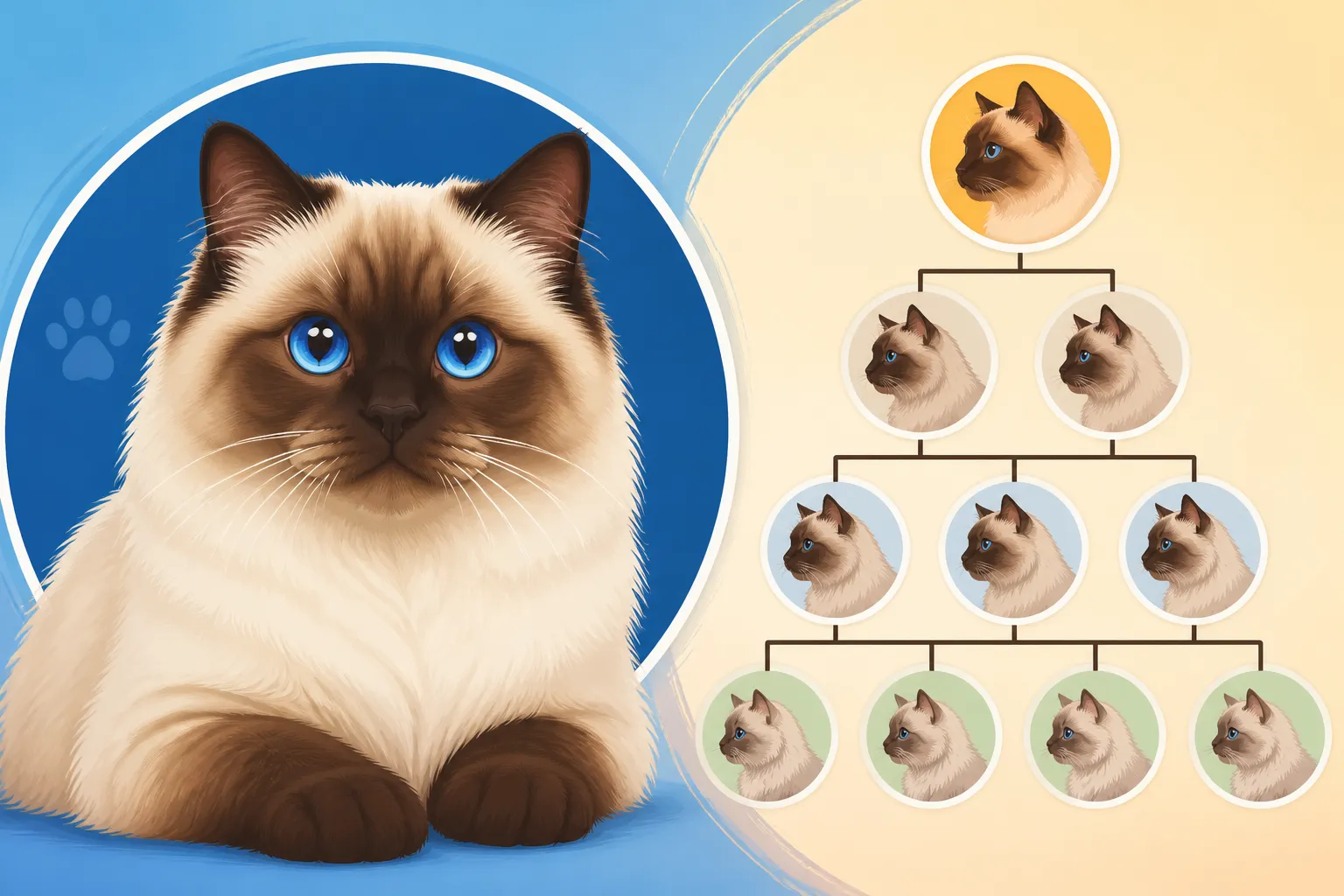
This took many more generations of careful, selective breeding. Dedicated breeders, such as Marguerita Goforth who became instrumental in the Himalayan's journey to recognition, spent years breeding these F2 cats back to Persians (to solidify the Persian type) or to other F2s and subsequent generations that were strong in type. They were meticulously tracking pedigrees and observing traits. It's often cited that it took at least four to five stable generations to consistently produce kittens that embodied the full Himalayan standard and could reliably pass those traits on. This careful work was essential for eventual breed recognition, which Marguerita Goforth helped secure in 1957; you can explore her contributions in Marguerita Goforth and the Himalayan's 1957 Recognition.
Think of it like building a house: the first cross laid the foundation. The second generation put up a few walls. But to have a sturdy, beautifully finished home that consistently meets all the architectural plans, you need to pour a lot more concrete, raise many more beams, and meticulously finish every detail over a prolonged period. This meant breeding for:
- Consistent Point Color: Ensuring the points developed reliably and with good contrast. How Many Weeks Before a Himalayan Kitten's Points Show gives insight into this development.
- Persian Type: Solidifying the cobby body, short legs, round head, and luxurious coat.
- Blue Eye Color: Maintaining the striking blue eyes from the Siamese heritage.
- Temperament: Selecting for the docile, affectionate nature that makes Himalayans such wonderful companions.
This wasn't just about two or three generations; it was a sustained effort over a decade or more, leading to a truly stable breed.
The Genetic Blueprint and Selective Breeding
Understanding the genetic underpinnings helps clarify why this process took so many generations. It wasn't guesswork, but a careful application of genetic principles.
The Recessive Genes at Play
At the heart of the Himalayan's creation are two recessive genes:
- The Colorpoint Gene (cs): This gene, inherited from the Siamese, dictates the point coloration. For a cat to be pointed, it needs two copies of this gene (cs/cs).
- The Long Hair Gene (l): This gene, inherited from the Persian, dictates the long coat. For a cat to have long hair, it needs two copies of this gene (l/l).
Let's visualize the initial cross and subsequent generations in a simplified way:
| Generation | Cross | Expected Phenotypes (Appearance) | Expected Genotypes |
|---|---|---|---|
| P (Parental) | Persian (solid, short) x Siamese (pointed, short) | Solid, short-haired, but carries long hair and point genes | (L/L, C/C) x (l/l, cs/cs) |
| F1 (First Filial) | Offspring of P cross | All solid, short-haired. All are carriers of long hair and point genes. | (L/l, C/cs) |
| F2 (Second Filial) | F1 x F1 | Approximately 1/16 will be long-haired and pointed (the first Himalayans!). Others will be solid, short-haired, or solid, long-haired. | (l/l, cs/cs) for the pointed long-hairs; other combinations for others. |
Note: This is a simplified table focusing on the key genes. Real-world breeding is far more complex.
As you can see from the table, it’s only in the F2 generation that you get the combination of two recessive genes (long hair and colorpoint) expressing themselves. This is a powerful demonstration of Mendelian genetics in action. For more on the specifics of the point gene, you might find Why a Himalayan Needs Two Copies of the Point Gene insightful, and How a Persian Can Carry the Himalayan Gene Hidden explains how these traits can pop up unexpectedly even today.
Beyond the F2: Fixing the Breed
The challenge after F2 wasn't just getting any long-haired, pointed cat. It was about getting a good quality one that met the emerging standards for the breed. The early F2 Himalayans might have had the right coat length and color pattern, but perhaps they had a thinner coat, or a less rounded head, or a body that wasn't quite "cobby" enough. This is where multiple additional generations came in.
Breeders had to make careful choices, selecting only the cats that best exemplified the desired traits and then breeding them together or back to purebred Persians that had excellent type but carried the Himalayan gene. This process of line breeding and outcrossing (when necessary) helped to "fix" the traits within the gene pool, ensuring that future generations would consistently produce cats that looked and behaved like true Himalayans. It wasn't just about combining two genes; it was about combining the best of both ancestral breeds into a harmonious new entity. The journey wasn't just physical; it was about temperament too, as explored in Whether the First Himalayan Was Meant as a Pet.
The Legacy: A Testament to Patient Breeding
The story of the Himalayan's creation is a true testament to the dedication of early geneticists and cat breeders. They didn't just stumble upon this beautiful combination; they meticulously worked through generations, applying scientific principles and keen observation.
From Experiment to Beloved Companion
It's easy to take for granted the consistent beauty and gentle nature of a Himalayan today. But when you consider the journey it took – from a scientific hypothesis in the 1930s, through initial crosses that produced non-Himalayan looking kittens, to the eventual emergence of the first pointed long-hairs in the F2 generation – you realize the profound effort involved. Then, the countless more generations of careful selection and breeding to solidify the type, temperament, and consistent genetic inheritance.
For many years, breeders continued to refine the lines, ensuring the luxurious coat, the gentle temperament, and the iconic blue eyes were consistently passed down. Today, we benefit from their extensive work, able to enjoy Himalayans whose appearance and disposition are predictable and cherished. This dedication is also why, even now, we track things like How Long a Himalayan Takes to Finish Its Coat and Points.
The Ongoing Role of Responsible Breeding
Even with established lines, responsible breeding continues to be a multi-generational commitment. Today's breeders meticulously study pedigrees, genetic test their breeding cats for inherited diseases, and carefully select mates to further enhance the breed's health and adherence to the standard. This ongoing commitment ensures that the legacy of those early generations lives on in healthy, beautiful, and well-tempered Himalayans. Things have certainly changed for the better, as you can discover in What Changed for Himalayan Breeders After 1984.
Looking at your own fluffy friend curled up on the sofa, maybe with their face in a specially designed Chewy bowl for flat-faced cats, it's incredible to think of the scientific journey behind their very existence. It truly took not just one or two, but many generations of careful, intentional breeding to bring the Himalayan cat into the world and solidify it as the beloved breed we adore today.
Disclaimer
This article is for general informational purposes only and does not constitute professional advice. Laws, prices and regulations vary by location and change over time. Consult a qualified professional for guidance on your specific situation.