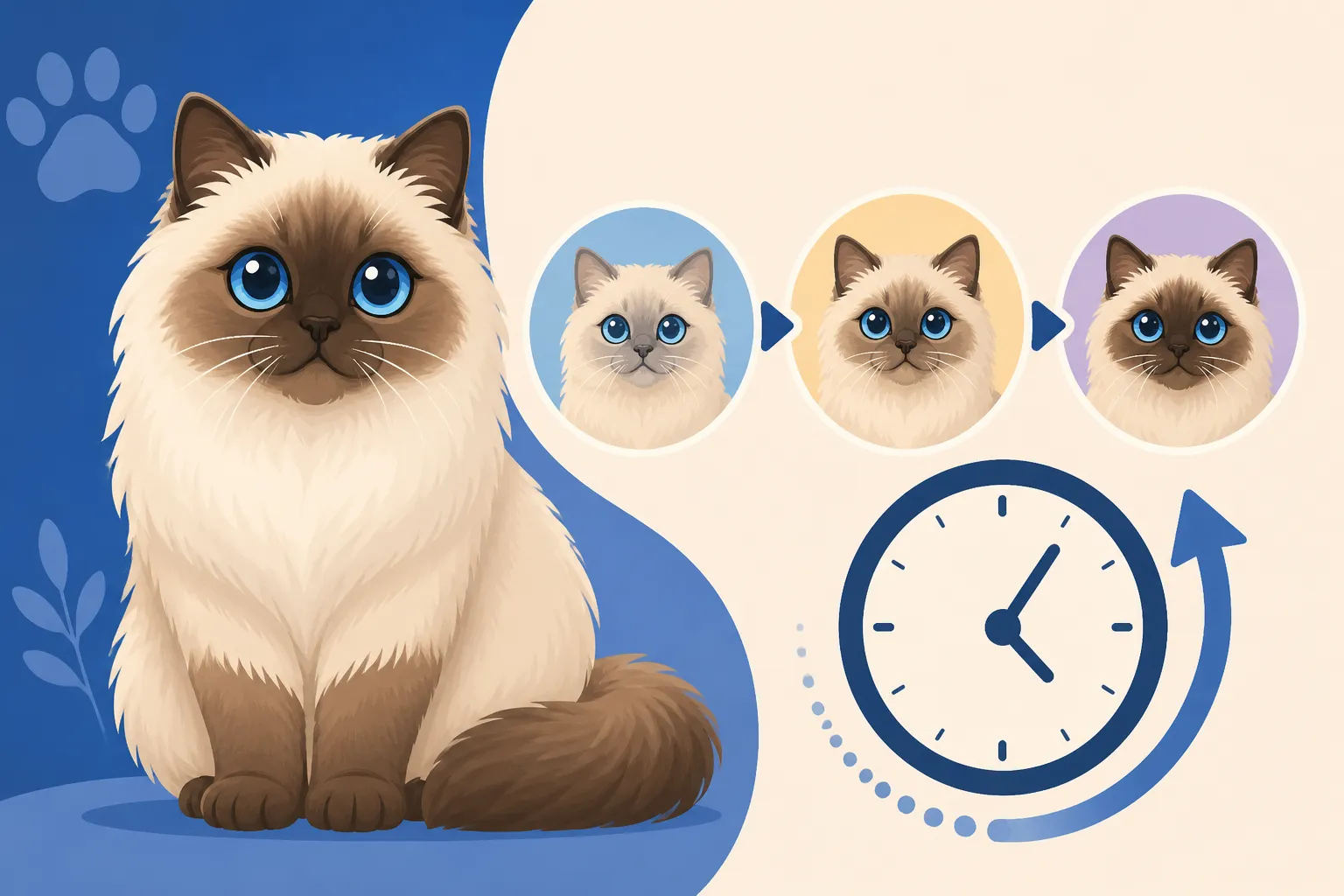
How Long a Himalayan Takes to Finish Its Coat and Points
One of the most common things new Himalayan owners wonder about, and even seasoned enthusiasts occasionally fret over, is how their beautiful, fluffy companion's signature point coloration and luxurious coat will truly develop. It's a journey, not a destination, and it certainly isn't an overnight transformation. If you've ever looked at your pale little kitten and wondered when those stunning points will really come in, or when that soft baby fluff will give way to a regal adult mane, you're in the right place. This guide will walk you through the fascinating timeline of a Himalayan's coat and point development, from a tiny, almost white newborn to a magnificent, fully colored adult.
The Magic of the Himalayan Point Gene at Birth
It's truly a marvel of genetics, isn't it? You bring home this adorable, fluffy kitten, and it's practically a little snowball, so much paler than the striking adults you've seen in pictures. This isn't a fluke; it's a fundamental part of the Himalayan's unique genetic makeup, inherited from its Siamese ancestors. That point coloration isn't just about aesthetics; it's a direct result of a temperature-sensitive albinism gene.
Why Every Himalayan Kitten is Born Almost White
The reason every single Himalayan kitten starts life as a creamy, almost pure white little puffball is entirely down to internal temperature. Inside the warmth of their mother's womb, the gene responsible for depositing pigment in their fur is effectively "turned off." Think of it like a delicate artist's brush that only starts painting when the air cools. The consistent, cozy warmth of the uterine environment ensures that the pigment-producing cells remain inactive. This means that for those crucial weeks before birth, there's no opportunity for the rich browns, blues, chocolates, or lilacs to develop, leaving every kitten looking remarkably similar, regardless of their eventual adult point color.
This uniform paleness at birth is a clear indicator of the point gene at work. If a kitten were born with full, dark coloration already present, it wouldn't be a true Himalayan, despite any long fur. The very act of being born nearly white is the first tell-tale sign of their breed and the unique way their genetics interact with their environment. It’s a beautiful, natural process, and it sets the stage for the incredible transformation to come.
The First Hints of Color: When Points Begin to Appear
Once those little bundles of fluff emerge into the world, the cooler ambient temperature outside the womb begins to work its magic. It's a slow process, almost imperceptible at first, but if you look closely, you'll start to notice the most exposed and therefore coolest parts of their tiny bodies showing the faintest blush of color. This typically begins around the nose, ears, paws, and the tip of their tail. These extremities are the first areas where the temperature drops enough for the pigment gene to activate.
You might see a subtle greyish tint on a future blue point, a faint sandy shade on a seal point, or a slight pinkish hue that will eventually bloom into a flame point. It's truly like watching a photograph develop, where the image slowly comes into focus. Owners often get so excited by these first hints, and rightly so! It's the beginning of their cat's individual masterpiece. These early color indicators, though often subtle, are the first reliable sign of what their adult point coloration will be, offering a sneak peek into their future beauty.
The Kitten to Juvenile Transformation
The early weeks and months of a Himalayan kitten's life are a period of rapid change, not just in their size and personality, but profoundly in their coat and point development. It’s a fascinating time to observe them, as their true colors quite literally emerge.
How a Himalayan Kitten's Points Darken Month by Month
After those initial faint blushes, the points really start to define themselves. From about two to three weeks of age, you'll see a more noticeable darkening on the ears and nose. By four to six weeks, the tail and paws will usually have clearer, albeit still light, coloration. This progression is consistent: the coolest parts darken first and most intensely. By the time a Himalayan kitten is eight to twelve weeks old, which is often around when they're ready to go to their new homes, their points should be distinctly visible, giving you a good idea of their final color.
However, don't expect them to be as dark or defined as an adult cat. This is just the beginning! The color will continue to deepen steadily over their first year, and then more subtly for several years beyond that. A seal point might initially look like a blue point, and a chocolate point could be mistaken for a lilac point in its early stages due to the relative paleness. It's a gradual intensification, influenced by everything from their genetics to the temperature of your home. A kitten growing up in a cooler climate or a house with lower ambient temperatures might show more rapid and intense point development than one in a consistently warm environment. This is part of the charm and mystery of the breed, watching them transform.
The Deepening Blue of Those Distinctive Eyes
Alongside the development of their fur points, another striking feature of the Himalayan truly comes into its own: their magnificent blue eyes. Just like their coat color, all Himalayans are born with blue eyes due to that same point gene. However, the initial blue might be a lighter, more ethereal shade in a very young kitten. Over the first few weeks and months, you'll notice their eyes gaining intensity and depth, settling into that vibrant, deep sapphire blue that is so characteristic of the breed.
The blueness isn't just a casual trait; it's a requirement for the breed standard in cat registries. A Himalayan without blue eyes, regardless of its point coloration, would not be considered true to type. This deepening of blue is a gradual process, often reaching its full, rich intensity by the time the cat is a year old, sometimes even a little longer. It's a captivating aspect of their appearance, drawing you in and complementing their evolving coat. The exact shade can vary from a lighter sky blue to a very deep indigo, and both are equally beautiful and correct. How Many Weeks a Himalayan's Blue Takes to Deepen
Reaching Adulthood: Coat Density and Full Point Definition
As your Himalayan kitten grows, the transformation from a playful ball of fluff into a majestic adult cat is truly something to behold. This stage involves not just the darkening of points but also the development of their iconic, luxurious coat.
The Maturing Coat: From Fluff to Full Persian Grandeur
That soft, fine "kitten fluff" that defines their early months gradually gives way to the dense, opulent double coat that Himalayans are famous for. This transition typically begins around six months of age and continues for well over a year, sometimes even two. The undercoat starts to thicken, providing insulation and a plush feel, while the longer, coarser guard hairs grow out, adding volume, sheen, and the characteristic flowing texture. You'll notice the ruff around their neck, the britches on their hind legs, and the tail becoming particularly magnificent.
This mature coat isn't just about beauty; it’s a functional marvel, a direct inheritance from their Persian lineage. However, with this grandeur comes responsibility. A full Himalayan coat is prone to matting if not meticulously cared for. Daily combing, using a good quality steel comb, is absolutely non-negotiable to prevent tangles from becoming painful mats. Brands like Chewy offer a wide array of specialized grooming tools perfectly suited for this demanding coat, from wide-toothed combs to finer ones for finishing. Neglecting this can lead to discomfort, skin issues, and costly trips to the groomer or vet for sedation and shaving. The transformation is stunning, but it demands dedication from their human companions.
How Many Years a Himalayan's Points Take to Finish
While you'll have a good indication of your Himalayan's point color by a few months of age, the process of their points fully finishing and reaching their deepest, most defined saturation is a much longer journey. It's not uncommon for a Himalayan to continue darkening and intensifying their point coloration until they are three to five years old, and in some cases, even a little beyond that. The color literally "ages" with them, becoming richer and more profound over time.
This gradual deepening is still governed by the temperature-sensitive gene. As the cat matures, its overall body temperature regulation might change slightly, and consistent exposure to the ambient temperature of your home means a slow, continuous process of pigment deposition. This is why you might notice subtle shifts even in an adult cat's points throughout the seasons – a cat might appear slightly darker in the colder winter months and a fraction lighter in the height of summer. This slow, evolving beauty means that the Himalayan you see as a two-year-old might look even more striking as a five-year-old. Why a Himalayan's Points Deepen Every Year It Lives
Factors Influencing Coat and Point Development
Understanding that a Himalayan's coat and point development is a dynamic, ongoing process is key to appreciating this unique breed. Several factors, both external and internal, play significant roles in how vividly those points emerge and how luxuriant their coat becomes.
Environmental Factors: Temperature and Sunlight
The most powerful external influence on a Himalayan's point development is temperature. Since the pigment-producing enzyme only activates in cooler conditions, the ambient temperature of your home, and even the climate you live in, will directly affect how dark and distinct your cat's points become. A Himalayan living in a consistently cooler environment will naturally develop deeper, more saturated points than one kept in a very warm house. This doesn't mean you should keep your house cold for the sake of color, but rather understand that environmental temperature is a major player.
Think about a shaved patch of fur on a Himalayan after surgery or an injury; it often grows back noticeably darker because the exposed skin is cooler. How a Shaved Patch Regrows Darker on a Himalayan This illustrates the principle perfectly. Similarly, prolonged exposure to direct sunlight, particularly harsh summer sun, can sometimes cause points to "bleach" or lighten slightly over time, or even make the body coat take on a yellowish tinge. While some sun is healthy, excessive exposure should be avoided for maintaining optimal color contrast and protecting their delicate skin. Why a Himalayan in a Cold House Darkens All Over
Genetic Predisposition and Individual Variation
While the temperature-sensitive gene is universal among Himalayans, the exact shade, intensity, and speed of point development can still vary based on individual genetics. Just like in any breed, different lines within the Himalayan family might carry slight variations in their genetic makeup that influence these traits. Some cats might naturally have a propensity for extremely dark, rich points, while others might lean towards a slightly softer, more subtle coloration.
These genetic differences are often carefully managed by responsible breeders who strive for consistency and adherence to breed standards. A breeder will look at the parents' and even grandparents' point development to get an idea of what a kitten's potential will be. It's why some flame points might have a vivid, fiery red, while others are a softer, peachier orange. These variations contribute to the beauty and individuality of each cat, making every Himalayan truly unique, even within the same litter.
Health, Nutrition, and Overall Well-being
Beyond genetics and environment, a Himalayan's general health and the quality of its nutrition are absolutely critical for both coat luster and point development. A healthy cat with a well-balanced diet will always have a more vibrant, resilient coat and clearer, more defined points than one who is struggling with health issues or poor nutrition. Essential fatty acids, like Omega-3 and Omega-6, are particularly important for skin and coat health, contributing to shine, softness, and reduced shedding.
Ensure your Himalayan is on a high-quality cat food that meets all their nutritional needs. Brands like Chewy offer a fantastic selection of premium cat foods, including options specifically formulated for long-haired breeds or those with sensitive skin, which can help support optimal coat health. Regular veterinary check-ups are also crucial to catch any underlying health problems that could manifest as a dull coat, poor skin condition, or even affect the vibrancy of their points. A cat that is feeling well and absorbing its nutrients properly will literally glow with health, and that includes its beautiful coat and points.
The Older Himalayan: Continued Changes and Maintenance
The journey of a Himalayan's coat and points doesn't stop once they reach full adult size and coloration. As they age gracefully, their coat continues to evolve, presenting both beautiful changes and new challenges for their dedicated owners.
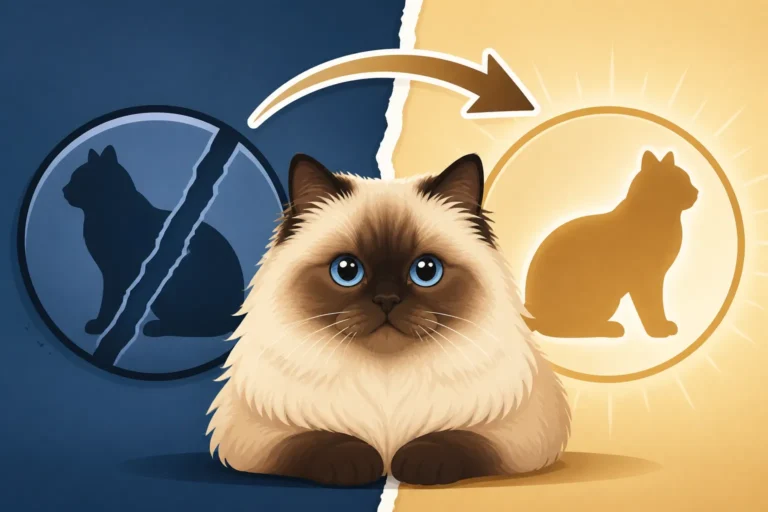
Why an Old Himalayan Looks Almost Solid Colored
It's a common observation among long-time Himalayan owners: as their beloved cats move into their senior years, often past the age of ten or twelve, their once striking point-to-body contrast might diminish. An old Himalayan can indeed appear almost solid colored, with its body coat darkening significantly to almost match its points. This phenomenon is largely due to several factors related to aging. As cats get older, their metabolism can slow down, and their ability to regulate body temperature might become less efficient. This can lead to their core body temperature being slightly lower, which in turn allows the pigment-activating enzyme to work more widely across their body, rather than being restricted to just the extremities.
Additionally, years of exposure to various environmental temperatures, even within a controlled indoor environment, can contribute to a gradual, overall darkening of the fur. The hormonal changes that come with age can also play a role. While this change in coloration is a natural part of the aging process, it can sometimes be a little startling for owners who are used to their cat's crisp contrast. It’s a gentle reminder of the passage of time and the lifelong commitment you make to your feline companion. An Old Himalayan Looks Almost Solid Colored
Maintaining Coat and Point Contrast Through the Years
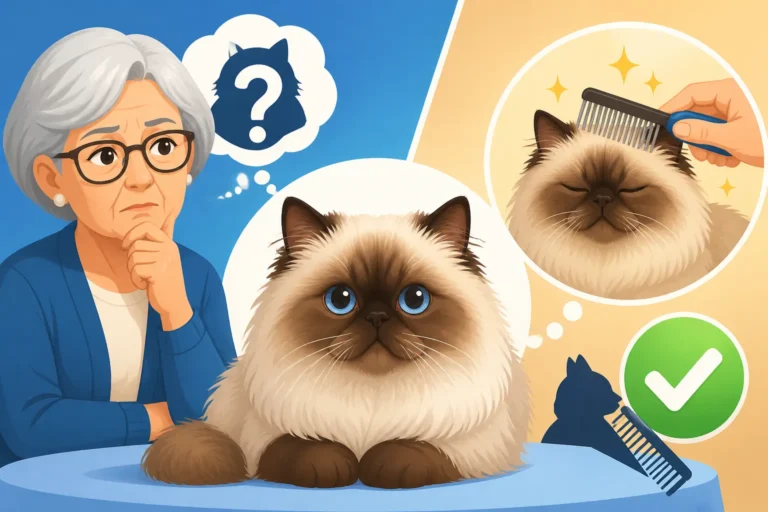
While some natural darkening in old age is inevitable, there's still plenty you can do to help maintain your Himalayan's magnificent coat and the best possible point contrast throughout their life. Consistent, diligent grooming remains paramount. Daily combing, using the right tools (a wide-toothed steel comb followed by a finer one), prevents matting and helps distribute natural oils, keeping the coat healthy and shiny. For an older cat, who might be less flexible or prone to arthritis, this grooming routine becomes even more important, and sometimes requires a softer touch and more patience. Caring for a Himalayan Whose Points Have Gone Dark
Beyond grooming, managing their environment is crucial. Keeping your home at a consistent, moderate temperature can help slow the overall darkening process, especially in very old age. Good nutrition, tailored to the needs of a senior cat, will also support skin and coat health. Sometimes, adding Omega-3 and Omega-6 fatty acid supplements (always discuss with your vet first!) can also contribute to a healthy, lustrous coat. Furthermore, ensure they have comfortable, easily accessible sleeping spots that aren't excessively warm or cold. Regular vet check-ups are essential to address any health issues that could impact coat quality, helping your cherished senior Himalayan look and feel their best for as long as possible.
Here’s a quick overview of the Himalayan coat and point development timeline:
| Age Range | Coat Appearance | Point Development | Key Influences |
|---|---|---|---|
| Birth – 2 Weeks | Soft, fine "kitten fluff" | Almost pure white, no visible points | Mother's womb warmth, lack of pigment enzyme |
| 2 – 6 Weeks | Kitten fluff, slightly denser | Faint blush on nose, ears, paws, tail tip | Cooler ambient temperature begins activation |
| 6 Weeks – 3 Months | Growing fluff, gaining volume | Points visible, but light (e.g., light brown) | Continued exposure to cooler air, genetic color |
| 3 Months – 1 Year | Developing double coat, becoming fuller | Points noticeably darker, blue eyes deepening | Consistent environmental temperature |
| 1 – 3 Years | Full, dense adult coat | Points reach near-final saturation and depth | Maturation, ongoing temperature influence |
| 3 – 5 Years | Coat at peak density and length | Points often reach their deepest, richest color | Full maturity, subtle environmental shifts |
| 5 – 10+ Years | Consistent adult coat | Points stable, excellent contrast | Maintained health and grooming |
| 10+ Years (Senior) | May thin slightly, less dense | Gradual overall darkening, less contrast | Metabolic changes, aging, sustained exposure |
Disclaimer
This article is for general informational purposes only and does not constitute professional advice. Laws, prices and regulations vary by location and change over time. Consult a qualified professional for guidance on your specific situation.