How a Shaved Patch Regrows Darker on a Himalayan
It's one of those moments that can truly make a Himalayan owner scratch their head, sometimes literally. You take your beloved fluffy companion in for what feels like an eternity in medical care – a necessary surgery, perhaps a mat removal that went a little too deep, or even a full "lion cut" to help them cope with summer heat. Everything goes well, you bring them home, and then… the fur starts to grow back, but it's not the beautiful, contrasting cream or white you're used to. Instead, the shaved patch comes in distinctly darker, sometimes even black! It's a surprising sight that often leads to worry or confusion, but it's a perfectly normal, fascinating quirk of the Himalayan breed, directly linked to their unique genetic makeup. This guide is here to unravel the mystery of why those shaved areas on your Himalayan often regrow with a deeper pigment, giving you the knowledge and practical tips to understand and manage this interesting phenomenon.
Understanding the Himalayan's Unique Coat Genetics
Himalayans aren't just stunningly beautiful; they're also walking, purring examples of fascinating genetics. Their distinctive "pointed" coloration – dark ears, paws, tail, and mask contrasting with a lighter body – is a marvel, and it's all thanks to a very specific gene. This isn't just a random pattern; it's a temperature-sensitive trait that defines much of their care and appearance. Understanding this genetic blueprint is key to truly grasping why their fur behaves the way it does, especially after a close shave.
The Tyrosinase Enzyme and Temperature Sensitivity
At the heart of the Himalayan's coloration is a modified enzyme called tyrosinase. In most cats, tyrosinase is responsible for producing melanin, the pigment that gives fur its color, and it works efficiently regardless of temperature. However, in Himalayan cats (and other pointed breeds like Siamese and Ragdolls), this enzyme is a bit… lazy. It only works effectively when the body temperature is cooler. Think of it like a tiny, internal paint factory that only turns on its machines when the air conditioning is cranked up.
In the warmer core areas of the cat's body – the torso, belly, and upper legs – the body temperature is too high for this modified tyrosinase to function, so little to no pigment is produced, resulting in the creamy white or pale fawn body coat we all adore. But on the extremities – the ears, nose, paws, and tail – the body temperature is naturally a few degrees cooler. Here, the enzyme kicks into gear, producing melanin and leading to those characteristic dark "points." It’s a remarkable natural mechanism, perfectly illustrating How Temperature Decides a Himalayan's Point Color.
Why Himalayan Kittens Are Born White
If their points are destined to be dark, why do Himalayan kittens arrive looking like tiny, pure white fluffy clouds? This is another beautiful demonstration of their temperature-sensitive genetics at play. During gestation, a kitten develops within the consistent warmth of its mother's womb. This cozy environment means that the kitten's entire body, from head to tail, maintains a uniform, warm temperature.
Because the tyrosinase enzyme cannot effectively produce pigment in this consistent warmth, the melanin production is suppressed across the entire fetal body. As a result, Himalayan kittens are born almost completely white or a very pale cream. It’s only after they are born and exposed to the cooler ambient air that their extremities begin to cool down, allowing the tyrosinase to activate in those areas. Over the first few weeks and months, you can actually watch their points slowly start to darken, a captivating transformation from a pristine canvas to their full, glorious coloration. This is a topic explored further in Why Every Himalayan Kitten Is Born Almost White.
Why Shaved Patches Grow Back Darker
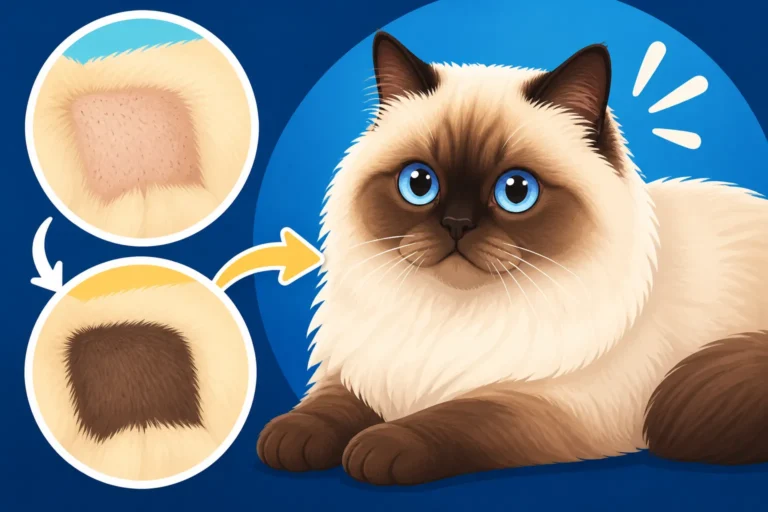
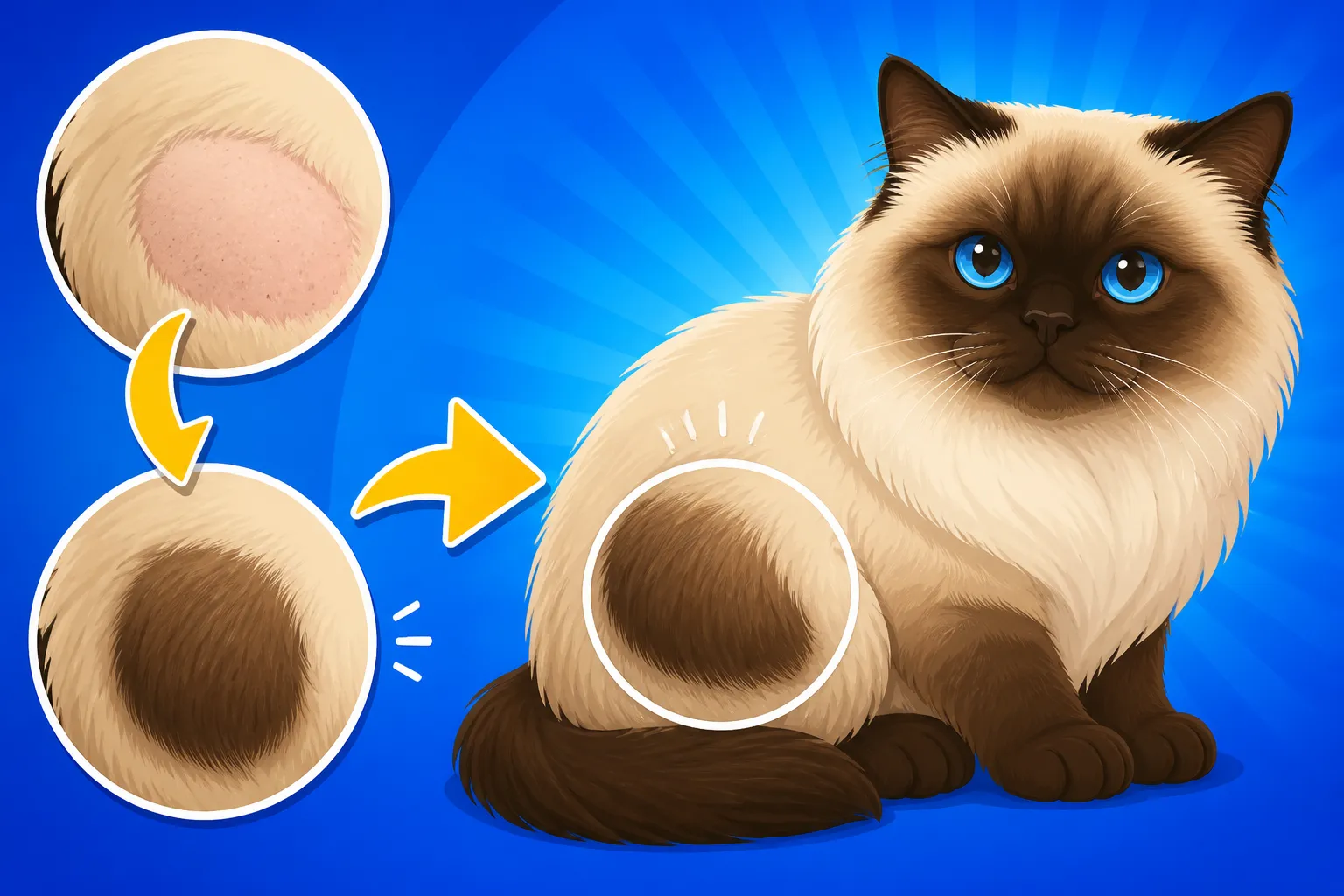
This is where the magic, or perhaps the momentary mystery, happens right on your cat's fur. When a patch of your Himalayan's fur is shaved, it directly exposes that area of skin to the cooler surrounding air. Unlike the insulated areas covered by their dense double coat, the shaved spot loses its natural warmth. This cooling effect triggers the temperature-sensitive tyrosinase enzyme to become active, leading to a darker regrowth.
It can be quite startling to see a perfectly cream-colored flank suddenly sprout a dark patch of fur, almost like a temporary tattoo. However, it's just your Himalayan's genetics doing what they do best: responding to their environment. This phenomenon isn't a sign of illness or a permanent change; it's a testament to the intricate biological process that creates their stunning appearance in the first place.
The Impact of Cooler Skin Temperatures on Regrowth
Imagine your Himalayan's glorious coat as a natural insulator, trapping body heat close to the skin. When a veterinarian shaves a patch for an IV line, a surgical incision, or to examine the skin, that insulating layer is gone. The exposed skin on that area experiences a significant drop in surface temperature compared to the surrounding fur-covered skin. This localized cooling is precisely what the modified tyrosinase enzyme needs to get to work.
The cells in the hair follicles of the shaved area, now experiencing a cooler temperature, start to produce more melanin. This darker pigment is incorporated into the new hair shafts as they grow, resulting in the famously darker regrowth. It's not that the cat's underlying color has changed; it's that the conditions on that specific patch of skin have temporarily shifted to favor pigment production. Over time, as the fur grows back and provides insulation, or if the cat is consistently kept warm, this darker patch will gradually lighten to match the surrounding body color. It's a visible, temporary shift, a miniature, localized version of Why a Himalayan in a Cold House Darkens All Over.
Common Scenarios for Shaved Patches
Shaved patches can pop up for a variety of very practical, sometimes unavoidable, reasons. The most frequent culprits are veterinary procedures. Whether it's a patch on the leg for an intravenous catheter during a dental cleaning, a larger area on the belly for an ultrasound, or a substantial shave for abdominal surgery, these medical necessities often result in temporary bald spots that regrow darker. These shaves are essential for your cat's health, but they invariably lead to this color phenomenon.
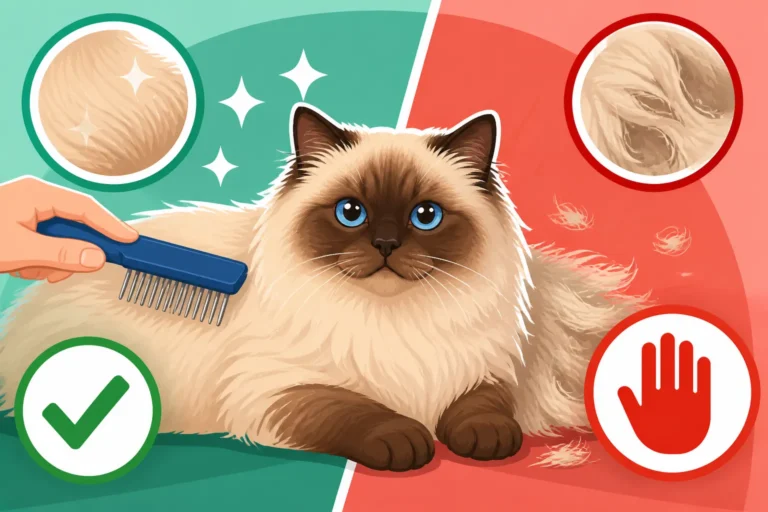
Another common scenario involves mat removal. Despite our best efforts with The Daily Comb a Himalayan Cannot Skip, a dense Persian coat can develop mats, especially in areas like the armpits, behind the ears, or on the britches. If a mat is too tight or close to the skin to be gently combed out, a vet or professional groomer might need to shave it out. Similarly, some owners opt for a full "lion cut" for their Himalayan, especially in warmer climates, to reduce grooming burden or help with heat regulation. This extensive shaving will lead to a much larger area of dark regrowth, which can be quite a striking change when it starts coming in. Understanding When a Lion Cut Is the Right Answer for a Himalayan often means understanding this temporary color shift too.
Managing and Minimizing Color Changes
While the temporary darkening of a shaved patch is a natural and harmless occurrence, many owners understandably want to minimize its appearance or help the fur return to its original color as quickly as possible. There are indeed some proactive steps you can take to influence the regrowth and ensure your Himalayan's coat recovers beautifully. Patience is a virtue here, as nature will ultimately take its course, but providing the right environment can certainly assist the process.
Keeping Your Himalayan Warm During Recovery
Since the darker regrowth is a direct result of cooler skin temperatures, the most logical approach to minimizing this effect is to keep your Himalayan's shaved areas warm. This doesn't mean overheating your cat, which can be dangerous for a breed prone to overheating, as discussed in Why a Himalayan Cannot Cool Itself by Panting. Instead, it means providing a consistently warm, comfortable environment during the regrowth phase.
For small shaved patches, a soft, comfortable sweater designed for cats can help maintain a more consistent skin temperature, especially if your home fluctuates in warmth. For larger shaved areas, ensuring your Himalayan has access to warm, cozy sleeping spots is crucial. This could involve using soft blankets, a heated pet bed (on a low, safe setting), or simply ensuring they have a favorite sunny spot or a bed near a gentle heat source (but never too close!). Even a soft, warm towel placed over the shaved area when they are resting can make a difference. The goal is to gently raise the skin temperature of that specific area to inhibit the tyrosinase enzyme from producing excessive pigment. You can often find excellent warming pads and cozy beds through retailers like Amazon or Chewy, making it easier to create those warm havens.
The Patience Game: How Long It Takes for Color to Normalize
Perhaps the most important "management strategy" for a darkened shaved patch is simply patience. This isn't an overnight fix; your Himalayan's fur needs to go through its natural growth cycle, and the pigment production needs time to normalize as the insulating layer returns. The speed of regrowth depends on several factors, including the cat's individual metabolism, age, general health, and the size of the shaved area.
Typically, you'll start to see some fuzz within a few weeks, but it can take several months – sometimes up to six months or even longer for a full lion cut – for the fur to grow back to its original length and texture. The darker pigment will gradually fade as the new hair shafts, grown under more insulated, warmer conditions, push through. It’s a bit like watching a slow-motion painting change color. Don't be surprised if an older Himalayan takes even longer, or if their overall point color continues to deepen with age, making previously pale areas slightly darker anyway, as highlighted in Why an Old Himalayan Looks Almost Solid Colored. Just keep up with your regular grooming and care, and trust the process.
Long-Term Coat Care for Consistent Color
Beyond the immediate aftermath of a shaved patch, maintaining your Himalayan's magnificent coat is a continuous effort that can indirectly help prevent unnecessary shaves and support consistent coloration. A healthy, well-maintained coat is less prone to matting, which in turn reduces the need for extensive shaving. Moreover, a cat's overall health and environment play a significant role in the vibrancy and consistency of its point colors.
Grooming Practices to Avoid Unnecessary Shaving
The best defense against a dark regrowing patch is often preventing the need for shaving in the first place. For Himalayans, this means a rigorous, consistent daily grooming routine. Their long, dense double coat is a magnet for mats, especially the fine undercoat. Why a Missed Day Costs a Himalayan a Mat is a lesson many owners learn the hard way. A good quality metal comb, like those often found on Chewy or Amazon, with both wide and fine teeth, is your best friend. Start from a young age to get your kitten accustomed to being combed daily, making it a positive experience with treats and gentle handling.
Focus on areas particularly prone to matting: behind the ears, under the armpits, the "britches" around the hind legs, and the belly. If you encounter a small tangle, try to gently work it out with your fingers and the wide-toothed side of the comb before it becomes a full-blown mat requiring a shave. Regular grooming not only prevents mats but also removes loose undercoat, which can help regulate body temperature more effectively. Consider professional grooming for trims around the britches or for de-shedding services to keep the coat manageable and less prone to tangles. The article How Often a Himalayan Must Be Combed offers further guidance on this crucial routine.
Environmental Factors and Overall Coat Health
While genetics dictate the potential for point coloration, environmental factors also play a role in how those colors manifest over time. As we've discussed, ambient temperature is a huge influencer. Keeping your Himalayan in a consistently moderate indoor environment will help maintain the contrast between their points and body color. Too cold, and their body fur might start to darken slightly; too hot, and they risk overheating, though this won't lighten their points significantly once developed.
Nutrition is another cornerstone of coat health. A high-quality diet rich in essential fatty acids (like Omega-3 and Omega-6) can contribute to a healthy, lustrous coat that is less prone to breakage and matting. Look for premium cat foods that list real meat as the first ingredient and contain these beneficial oils. Some owners even explore fresh food delivery services or specific veterinary diets if their cat has sensitivities, all of which can contribute to skin and coat vitality. Hydration is also vital; ensuring your Himalayan always has access to fresh, clean water supports overall health, including skin and fur integrity. Remember, a healthy cat generally has a healthier, more vibrant coat.
| Factor | Effect on Shaved Patch Regrowth | Management |
|---|---|---|
| Skin Temperature | Cooler temps activate pigment enzyme, leading to darker fur. | Keep shaved area gently warm with sweaters or warm bedding. Ensure comfortable room temperature. |
| Time (Fur Growth Cycle) | Fur grows back naturally; dark pigment fades as insulation returns. | Patience is key. Full regrowth and color normalization can take 3-6+ months. |
| Grooming Habits | Poor grooming leads to mats, often requiring shaving. | Daily combing with a steel comb (like those from Chewy) prevents mats, reducing need for shaving. |
| Overall Health & Nutrition | Healthy cat has healthier, more vibrant coat. | Feed a high-quality diet rich in Omega fatty acids. Ensure good hydration. |
| Age of Cat | Older cats may take longer for fur to regrow and normalize color; overall points may deepen. | Factor in longer recovery times for senior Himalayans. |
Disclaimer
This article is for general informational purposes only and does not constitute professional advice. Laws, prices and regulations vary by location and change over time. Consult a qualified professional for guidance on your specific situation.