Whether a Himalayan Can Be Bred to a Persian
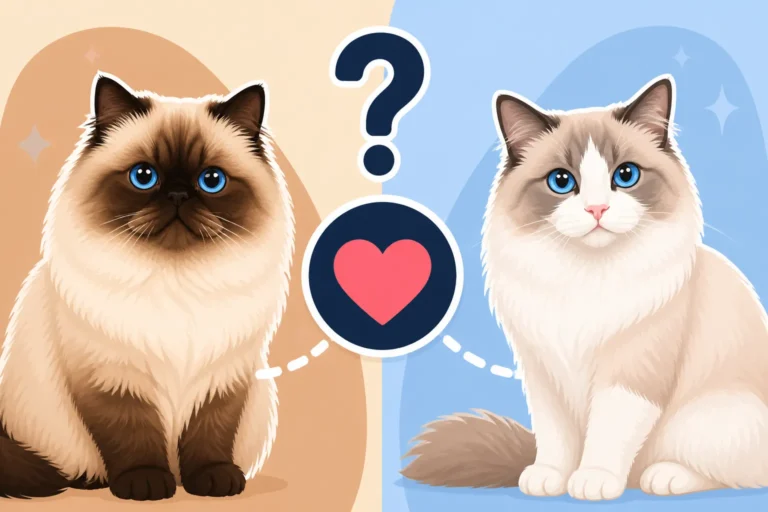
A Himalayan can be bred to a Persian, but the pairing’s outcome depends on the cats’ genes, health, pedigree, and the rules of the registry involved. The most common surprise is that not every kitten will look Himalayan: the pointed pattern is recessive, so a Persian’s hidden colorpoint gene matters. This guide explains the possible kitten colors, paperwork, and responsible breeding checks.
What a Himalayan and Persian pairing can produce
The pointed pattern depends on both parents’ genes
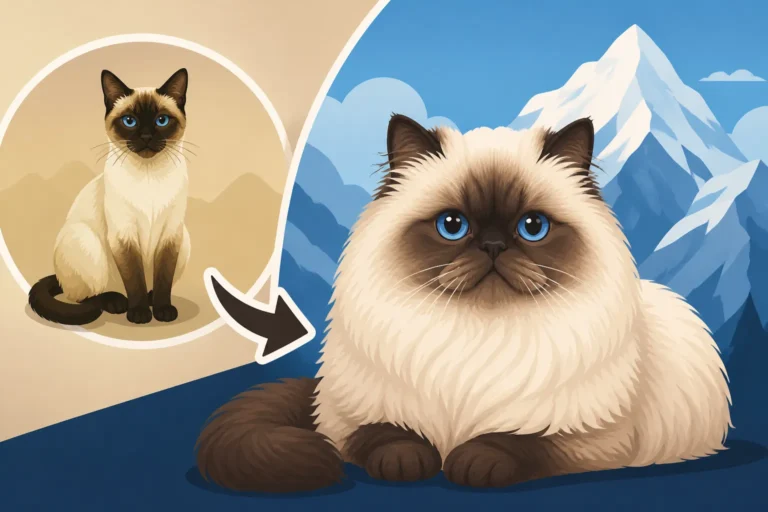
The Himalayan’s distinctive points—the darker color on the face, ears, legs, and tail—come from a temperature-sensitive colorpoint gene. A kitten needs two copies of the relevant allele to show the pointed pattern. That means a Persian can be part of a Himalayan breeding program, but the Persian’s own color and genetic background affect what the litter may look like.
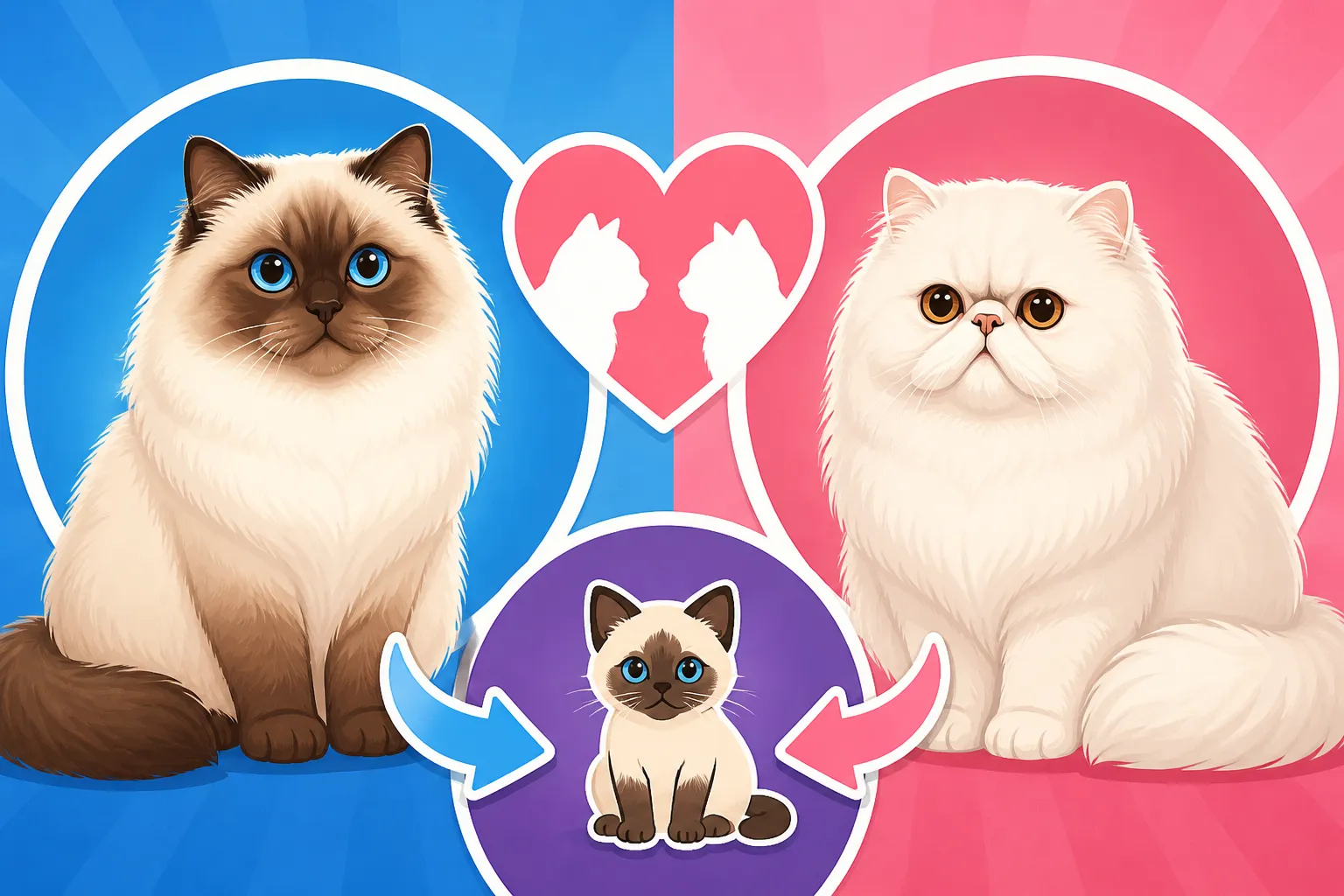
If a Himalayan is paired with a Persian that does not carry a colorpoint allele, none of the kittens are expected to be pointed. They can inherit one copy from their Himalayan parent, however, and carry the allele without showing the Himalayan pattern. If that Persian does carry one copy, some kittens may be pointed while others may be carriers without looking pointed. A genetic test can clarify whether a cat carries the allele; appearance alone cannot reliably tell you.
| Himalayan parent | Persian parent | Likely colorpoint outcome |
|---|---|---|
| Carries two copies | Carries no copies | Kittens are not pointed but inherit one copy |
| Carries two copies | Carries one copy | Some kittens may be pointed; others may carry one copy |
| Carries two copies | Carries two copies | Kittens are expected to be pointed |
These are basic inheritance patterns, not a promise about an individual litter’s exact appearance. Other genes influence coat color, markings, and the shade of the points. A breeder should explain what is known about each parent’s genotype and pedigree rather than guessing from a Persian’s coat color. For background on this inheritance, see Why a Himalayan Needs Two Copies of the Point Gene and How a Persian Can Carry the Himalayan Gene Hidden.
A Persian may be pointed, solid, or a carrier
“Persian” describes a breed, not one specific coat pattern. A Persian may be a solid color, patterned, or colorpoint, and some Persians carry the colorpoint allele without displaying points. The best way to understand a planned pairing is to distinguish what each cat looks like from what each cat can pass to its kittens.
For example, imagine a seal-point Himalayan paired with a solid Persian. If the Persian has no colorpoint allele, the kittens may not have the Himalayan pattern, even though they inherit one copy from the Himalayan parent. Those kittens may still be important to a breeding program because they can pass the allele to a future generation. A breeder should not describe them as Himalayan-patterned simply because one parent is a Himalayan.
The reverse can also happen: two cats that do not look pointed may produce pointed kittens if both carry the allele. A pedigree can offer clues, but it is not a substitute for testing when the genetic status matters. For more on the relationship between these cats, read Why a Himalayan Is a Persian With the Point Gene and What a Persian Carrying the Himalayan Gene Is Called.
What breed registries may call the kittens
Registration depends on the organization and the pedigree
Himalayan recognition is not handled identically by every cat registry. Some organizations treat the Himalayan as a separate breed, while others place colorpoint cats within a Persian breed or division. As a result, the same kitten may be described differently on paperwork depending on the registry and the parents’ registration status.
Before breeding, ask the relevant registry how it records a Himalayan–Persian litter. Confirm whether the proposed parents are eligible, what breed name or division may appear on the kittens’ papers, and what documentation is required. A breeder should be able to show the parents’ registration records and explain how the kittens will be registered—not leave you to discover a mismatch after a deposit or sale.
This is particularly important if the goal is showing or preserving a specific pedigree. A kitten’s appearance does not automatically determine the breed name printed on its certificate. The registry’s rules and the recorded ancestry matter. You can learn more about the naming differences in How the Himalayan Is Registered by TICA Today and How the Himalayan Is Registered by CFA Today.
Appearance and paperwork are not the same thing
A Persian–Himalayan kitten may have a Persian-style coat and body, with or without visible colorpoint markings. The kitten’s appearance can change as it grows, and pointed kittens are often born very pale before their darker areas become more noticeable. A very young kitten may not yet show the full contrast an owner expects.
That gradual change is one reason a breeder should avoid promising a particular point color or show outcome before there is enough information. Ask how the kitten’s color will be recorded, what the parents’ pedigrees show, and whether the registry accepts the litter as planned. The point pattern and the paperwork answer different questions: one describes inherited appearance, while the other records ancestry under a particular organization’s rules.
If you are considering a kitten from such a litter, request clear written terms about registration and any limits on breeding rights. Useful background includes How a Himalayan Kitten’s Points Darken Month by Month and What a Himalayan Buyer Should Ask About Registration.
Health and welfare checks before breeding
Both parents need more than a compatible pedigree
A Himalayan and a Persian share important ancestry, so the pairing should be planned around health as carefully as coat color. Responsible breeders discuss inherited risks with their veterinarian, review family health history, and use appropriate testing rather than assuming that a cat is healthy because it looks well. Polycystic kidney disease is a particularly important concern in Persian-related lines; ask for verifiable results for both parents, not a casual assurance that the family has “never had a problem.”
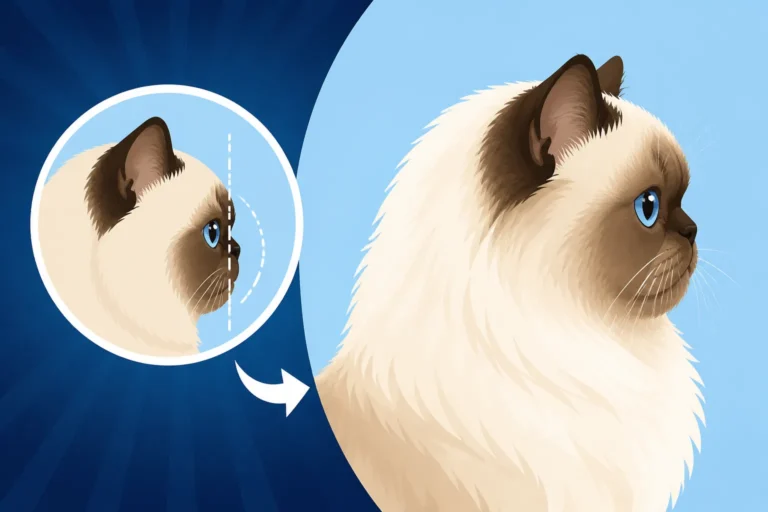
Breeding candidates also need a thorough veterinary assessment. A veterinarian can evaluate breathing, eyes, teeth, body condition, and general health, while advising which screenings make sense for the individual cats and their lineage. The face shape and airway function deserve particular attention in flat-faced cats. A cat should not be selected for breeding just because a very short muzzle or extreme facial type is fashionable.
Ask for test records and make sure they identify the actual cat being bred. If the breeder cannot explain what was tested, why it matters, or how the result affects the pairing, pause before proceeding. Related reading includes Which Two Tests Belong on Every Himalayan Pedigree and Which Diseases a Himalayan Inherits From Each Parent Breed.
Plan for pregnancy, birth, and kitten care
Even a genetically sensible pairing does not guarantee an easy pregnancy or delivery. The queen’s age, health, body condition, and veterinary history all matter. Before mating, work with a veterinarian on a plan for prenatal care, emergency contact, and monitoring during labor. A responsible breeder should be prepared to seek veterinary help promptly if the queen or kittens show signs of distress.
Kittens also need close observation after birth and consistent follow-up as they grow. Keep accurate records of weights, feeding, veterinary checks, and any concerns. A simple kitten-care checklist can help organize supplies; some owners use retailers such as Chewy or a local pet shop to find basics, but a veterinarian should guide decisions about nutrition and health care.
The same practical planning applies to the adult cats. A long coat needs regular grooming, and kittens should be gently introduced to combing and routine handling early. Owners comparing supplies at Chewy or another retailer should focus on safe, easy-to-clean tools and bowls suited to the individual cat, not on products marketed as a substitute for veterinary care.
Questions to ask before choosing a Himalayan–Persian litter
Ask the breeder to explain the genetic plan
A thoughtful breeder should be able to describe why these two particular cats are being paired. Ask whether the Persian has been tested for the colorpoint allele, what coat patterns may be possible, and what the breeder can and cannot predict about the kittens. If the answer is simply “they’re both Persians” or “the kittens will all be Himalayans,” ask for clarification. Breed labels alone do not establish the kittens’ genetic outcome.
Also ask how the breeder evaluates the parents’ health and whether the results can be reviewed. Request the names of the testing laboratories or clinics, copies of relevant records, and a clear explanation of how the results relate to the cats in the litter. A responsible breeder welcomes reasonable questions and does not pressure a buyer to decide before seeing the paperwork.
If you are preparing for a kitten, plan for the daily realities as well as the genetics. Grooming, eye care, routine veterinary visits, and an indoor-safe home are part of responsible ownership. Chewy may be one option for comparing ordinary supplies, but the breeder and your veterinary team should be your source for advice tailored to a specific kitten.
Treat vague promises as a reason to slow down
Be cautious if a breeder will not show pedigrees, cannot provide health records, or says testing is unnecessary because the cats appear healthy. A guarantee should be written and understandable, with clear terms about what it covers and what the buyer must do. A verbal promise about a kitten’s color or future health is not a substitute for documented information.
It is also reasonable to ask what happens if the litter does not match the predicted colors or if a kitten’s registration differs from what you expected. Those details belong in the conversation before a breeding or purchase, not after the kittens are born. A reputable breeder should be transparent about uncertainty, including the fact that inheritance can produce kittens that are carriers rather than visibly pointed.
Ultimately, a Himalayan can be bred to a Persian, but a responsible pairing is not simply a matter of matching two attractive cats. It requires understanding recessive inheritance, confirming registry rules, screening for relevant health concerns, and preparing to care for the queen and kittens. The clearest answers come from documented genetic results, veterinary guidance, and an honest discussion of what the pairing can—and cannot—predict.
Disclaimer
This article is for general informational purposes only and does not constitute professional advice. Laws, prices and regulations vary by location and change over time. Consult a qualified professional for guidance on your specific situation.