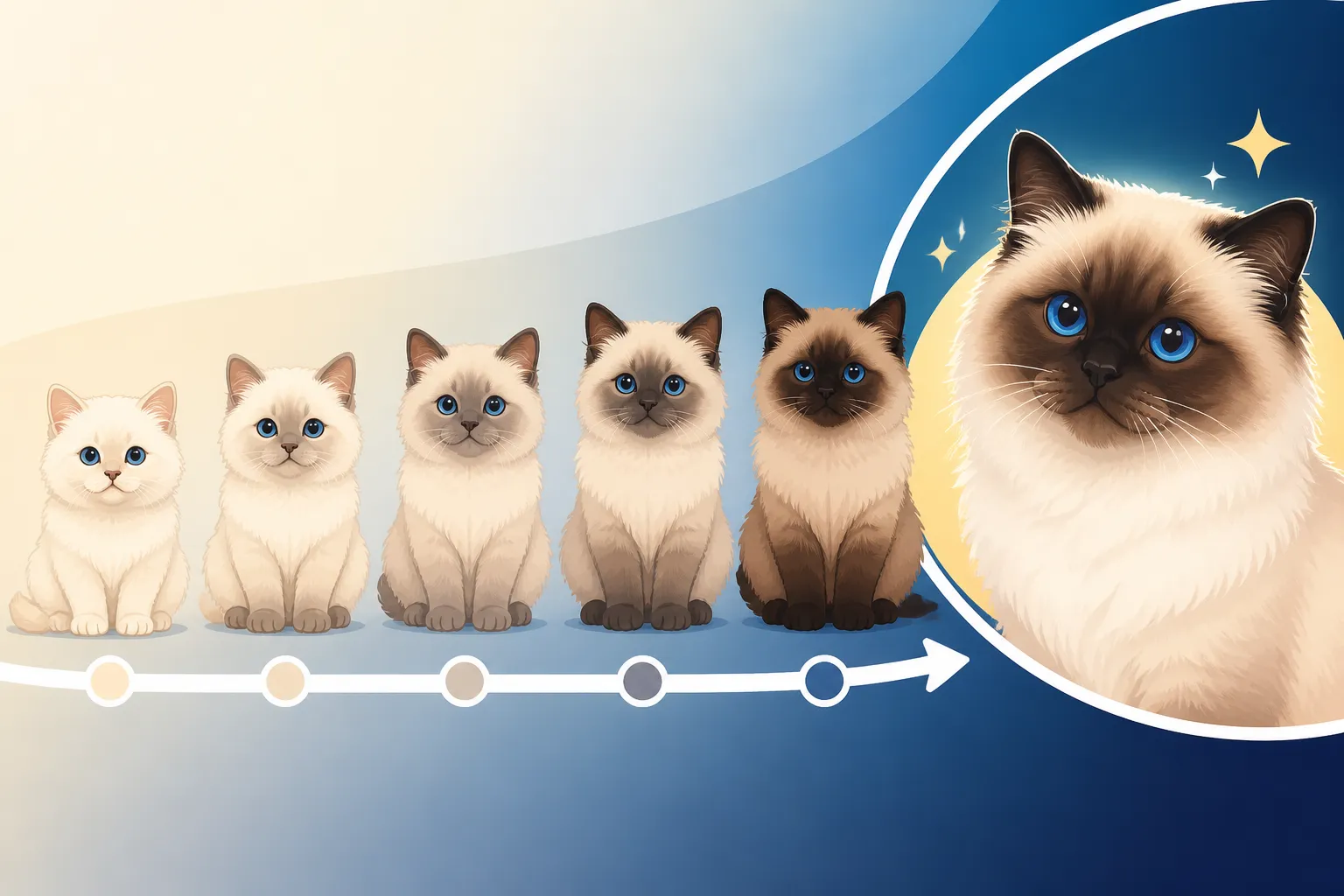
How a Himalayan Kitten’s Points Darken Month by Month
One of the most enchanting mysteries for any new Himalayan cat owner is watching their tiny, pale kitten slowly transform. You bring home this little cloud of fluff, mostly white or cream, and you know they're supposed to have those gorgeous "points" – the darker coloration on their ears, face, paws, and tail – but for weeks, they just look like a marshmallow. It's perfectly normal to wonder, "When will those colors truly come in? And how fast?" This guide is here to demystify that magical process, taking you through the fascinating journey of how a Himalayan kitten's points deepen and spread, month by month, right before your eyes.
The Genetic Magic Behind Himalayan Points
Understanding why your Himalayan kitten's points develop at all is the first step to appreciating their unique beauty. It's not just random; it's a specific genetic trait that makes these cats so special and gives them their striking appearance.
The Temperature-Sensitive Gene in Action
At the heart of every Himalayan's coloring lies a remarkable temperature-sensitive enzyme. This enzyme is responsible for producing melanin, the pigment that gives fur its color. Here's the kicker: this enzyme only works efficiently at cooler temperatures. In warmer conditions, it's largely inactive. When your Himalayan kitten is developing in the womb, and for a short time after birth, their entire body is kept at a uniformly warm temperature. This means the melanin-producing enzyme isn't really getting a chance to activate across their body.
Because of this physiological reality, every single Himalayan kitten, regardless of its eventual point color, is born looking almost entirely white or a very pale cream. It's a truly amazing phenomenon, almost like they're a blank canvas waiting for nature to paint in their beautiful patterns. You might be surprised to learn that this same gene is responsible for the coloring in other pointed breeds too. Which Gene Makes a Himalayan Pointed delves deeper into this fascinating genetic blueprint. It's a gentle reminder that their distinct look isn't just skin deep, it's a fundamental part of their genetic makeup.
Initial Point Appearance and Fading Kitten Coats
So, if they're born pale, when do those points start to show up? The key is exposure to cooler ambient temperatures. As a kitten grows and is no longer nestled in the constant warmth of the womb, the cooler extremities of their body – their ears, nose, paws, and tail – begin to drop slightly in temperature. It's a very subtle shift, but it's enough to kickstart that temperature-sensitive enzyme into action.
The first hints of color are often incredibly subtle, almost like a faint blush rather than a distinct shade. You might see a slight darkening on the very tips of their ears or tail, perhaps a faint smudginess around their nose. It's easy to miss if you're not looking closely, and many new owners might even wonder if their kitten will ever develop the rich points they've dreamed of. This initial stage is all about gentle unfolding, not a sudden splash of color. Don't worry if your kitten still looks very light; it's all part of the natural process that eventually leads to their stunning mature coat.
Month-by-Month Point Progression
Watching the points develop is truly one of the joys of raising a Himalayan kitten. It's like watching a polaroid picture slowly come to life. Let's break down what you can expect to see as the weeks turn into months.
Weeks 0-4: The Barely-There Whispers
In these earliest weeks, your Himalayan kitten is going to be mostly a fluffy, pale wonder. Their body temperature is still quite stable, and they're often snuggled up with their littermates and mother, keeping them uniformly warm. You'll likely see the very first, almost imperceptible signs of color on the extremest points. Think of it as a faint shadow rather than a solid color.
The tips of their tiny ears might show a hint of cream or light beige, and their nose leather might start to get a slight pinkish-brown tint. Their tail tip might also show a barely-there smudge. These aren't the deep, rich colors you're picturing yet, but rather the initial promise. It's a time of rapid growth and development for the kitten overall, and the point coloration is just beginning its journey. Keeping them in a warm, draft-free environment during this time is crucial not only for their health but also for allowing their body coat to remain beautifully pale while the points begin their slow reveal. If you're wondering exactly when these first hints emerge, When a Himalayan Kitten's Points First Appear offers a more detailed timeline.
Months 1-3: The Colors Start to Bloom
By the time your Himalayan kitten reaches 4 to 6 weeks of age, and certainly by 8 to 12 weeks, you'll start to see much more defined color. This is typically around the time kittens are ready to go to their new homes, and you'll already have a good idea of their basic point shade. The ears will be visibly darker, often a clear seal, blue, chocolate, or lilac, depending on their genetics. Their paws will show distinct color, moving from faint smudges to well-formed points, though perhaps not as dark as they will eventually become.
The mask on their face will begin to develop in earnest. You'll notice the color extending from their nose leather up towards their eyes, creating that classic Himalayan facial "V" or "mask." The tail, too, will be much more distinctly colored. During this period, the contrast between their body and their points really starts to establish itself. A Seal Point kitten will show clear dark brown points, while a Blue Point will have more of a smoky grey. If you're curious about the general timeframe for this development, How Many Weeks Before a Himalayan Kitten's Points Show can give you a clearer picture. It’s a joy to observe this transformation, as each day brings a slightly deeper hue.
Months 4-6: Defining the Contrast
As your Himalayan kitten continues to grow through its middle months, from four to six months old, the points will deepen considerably and become much more solid in color. This is when the striking contrast that Himalayans are famous for truly shines. The ears, paws, and tail should have quite rich, consistent color, and the facial mask will be well-defined, framing their beautiful blue eyes.
The body coat, by now, should have settled into its pale, contrasting shade, whether it's cream, frost, or another light hue. This excellent contrast is highly valued in the breed, and it's a testament to that fascinating temperature-sensitive gene doing its work. During these months, their playfulness increases, and they become more curious, but their coat development remains a gradual, ongoing process. You'll notice the depth and saturation of color increasing, making those points truly pop against their lighter body. For more information on maintaining that lovely pale body coat, Why a Himalayan's Body Coat Should Stay Light is a helpful resource.
Factors Influencing Point Development
While the genetic blueprint dictates the type of points your Himalayan will have, several environmental and care factors can subtly influence the rate and intensity of their color development. It's a dance between nature and nurture, where your care plays a supporting role.
Ambient Temperature and Its Impact
The single most significant environmental factor affecting a Himalayan's point development and overall coat color is ambient temperature. Remember that temperature-sensitive enzyme? It's constantly reacting to the warmth around your cat. If your home is generally cooler, particularly during the kitten's first year of life, you might notice their points developing a little faster and becoming slightly darker. Conversely, a very warm environment can sometimes slow the darkening process or result in slightly less intense point coloration.
This is why some owners might see subtle differences in their cat's coat over different seasons. A Himalayan who loves to snooze on a cool tile floor or spend time in a slightly cooler room might develop deeper points than one who always seeks out the warmest, sunniest spot. It's not about making your cat uncomfortable, of course, but simply understanding that a consistently warm environment can result in a paler overall appearance, including the body coat. This phenomenon is fascinatingly detailed in How Temperature Decides a Himalayan's Point Color, which explains how even small temperature fluctuations can leave their mark on the coat.
Genetics and Predetermined Shades
While temperature plays a role in the rate and intensity of point development, the actual color of your Himalayan's points is entirely determined by their genetics. Whether your kitten will have Seal, Blue, Chocolate, Lilac, Flame, Cream, Tortie, or Lynx points is set from the moment of conception. You can often get a good idea of a kitten's likely point color by looking at the parents and the rest of the litter.
For example, a kitten genetically destined to be a Seal Point will always develop dark brown points, even if they appear pale initially. A Blue Point will develop slate gray points. The environment won't turn a Seal Point into a Blue Point; it merely influences how quickly and deeply that predetermined color manifests. This genetic blueprint is also why certain areas of the body, like the ears and tail, tend to be the darkest and most pronounced points. Why a Himalayan's Ears and Tail Are the Darkest Points sheds more light on this inherent patterning.
Health, Nutrition, and Grooming's Role
A healthy kitten is a happy kitten, and a healthy kitten is also one whose coat will develop optimally. Good nutrition is paramount for a luxurious, well-pigmented coat. Ensuring your Himalayan kitten receives a high-quality, balanced diet rich in essential fatty acids and proteins will support healthy fur growth and color development. Look for foods that list meat as the primary ingredient.
Beyond diet, consistent grooming plays an indirect but important role. A well-groomed coat, free of mats and tangles, allows for proper air circulation and temperature regulation across the body. Mats can trap heat, potentially influencing local temperature and how the points develop in those specific areas. Regular combing, with tools readily available from retailers like Amazon, not only keeps the coat beautiful but also ensures even temperature distribution. A clean, healthy coat simply looks its best, showcasing those developing points with clarity. Proper protein intake is also vital for coat quality and pigment. Consider reading What Protein Level a Himalayan's Coat Needs for dietary guidance specific to your cat's magnificent fur.
Long-Term Point Evolution
The journey of your Himalayan's coat color doesn't end when they reach adulthood. It's a lifelong process, with subtle changes continuing for many years, adding depth and character to their already stunning appearance.
Beyond Kittenhood: Continued Darkening
While the most dramatic transformation from white to fully pointed occurs within the first 6 to 12 months, a Himalayan's points will continue to deepen and spread throughout their first few years of life, and often subtly throughout their entire lifespan. You might notice the color becoming richer, more saturated, and even spreading slightly further up their legs or onto their body as they mature. This is a normal part of the aging process for pointed breeds.
It's also common for the body coat to darken somewhat with age. While ideally, the body remains a pale contrast to the points, older Himalayans often develop a slightly creamier or buff-colored body, which can be lovely in its own right. This natural darkening often contributes to a more uniform look as they enter their senior years, giving them a distinguished appearance. Don't be surprised if your nine-year-old Himalayan's points are a shade or two darker than they were when they were two. This gradual deepening is truly fascinating to observe over the years. To get a comprehensive view of this long-term change, take a look at How Many Years a Himalayan's Points Take to Finish.
The Beauty of the Changing Coat
The evolving coat of a Himalayan is one of its most charming characteristics. It’s a living canvas, constantly reacting to its environment and genetics. Instead of being a static feature, it's a dynamic part of their beauty, showcasing the unique genetic mechanism that makes them so special. Embrace these changes, as they tell the story of your cat's life and the environment they've experienced.
A slight variation in point depth or body shade is perfectly normal and contributes to the individual charm of your cat. Whether your Himalayan maintains a crisp, high-contrast look or develops a softer, more uniform coloring in their later years, their majestic Persian coat and striking blue eyes will always remain a hallmark of their breed. For those curious about how this progression might culminate, Why an Old Himalayan Looks Almost Solid Colored provides an interesting perspective on the coats of very senior Himalayans.
Disclaimer
This article is for general informational purposes only and does not constitute professional advice. Laws, prices and regulations vary by location and change over time. Consult a qualified professional for guidance on your specific situation.