Reaching a Himalayan’s Crowded Back Teeth
If you've ever tried to peer into your sweet Himalayan's mouth, let alone attempt a dental routine, you know the struggle is real. Their utterly adorable, flattened faces, while charming, come with a very real and often frustrating challenge: crowded teeth that are incredibly difficult to reach. This guide is here to walk you through the unique dental landscape of your Himalayan and offer realistic, empathetic advice on how to keep those pearly whites as clean as possible, even the ones way in the back.
Understanding the Himalayan's Unique Dental Anatomy
The Himalayan cat, with its stunning coat and captivating blue eyes, inherited its distinctive facial structure from its Persian lineage. This beloved brachycephalic, or "flat-faced," characteristic, while giving them that undeniably cute doll or peke face, profoundly impacts their oral health. It's not just an aesthetic; it's a structural reality that brings specific dental challenges.
The Shortened Jaw and Crowded Teeth
Imagine trying to fit a full set of normal-sized teeth into a jaw that's simply too short. That's essentially what happens with many Himalayans. The selective breeding that gave us their charmingly flat faces also led to a significant shortening of the upper and lower jaws. While the jaw itself is shorter, the number and size of the teeth haven't necessarily shrunk to match.
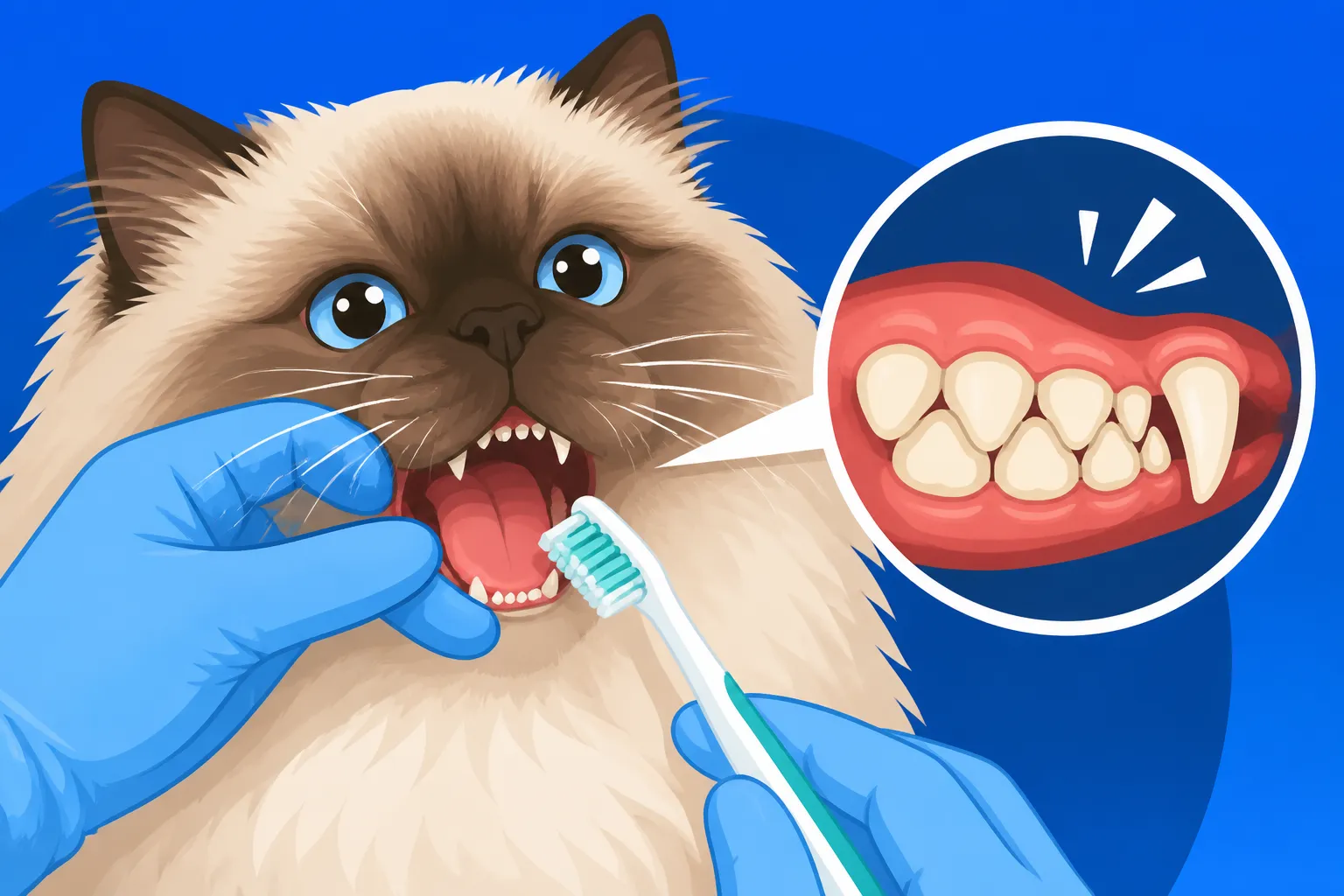
This compression means that teeth often grow in rotated, misaligned, or tightly overlapped, particularly those molars and premolars tucked away at the back. Instead of neat, evenly spaced rows, you might find teeth twisted at odd angles, or one tooth partially erupting behind another. This isn't just an inconvenience; it creates a veritable labyrinth of nooks and crannies where food particles and bacteria can easily hide, making it a nightmare to clean effectively. It's a key reason why understanding What a Persian Jaw Does to a Himalayan's Bite is so important for their long-term health.
The Flat Face and Limited Access
Beyond the internal crowding, the external structure of your Himalayan's flat face presents its own set of hurdles for dental care. That endearing flat muzzle, whether it's a more traditional doll face or an extreme peke face, physically limits the access you have to their mouth. What a Peke Face Himalayan's Profile Measures will often show a significant reduction in the muzzle length compared to other cat breeds.
When you try to gently open their mouth, you'll often find that the surrounding skin folds and the limited flexibility of their jaw make it tricky to get a clear view, let alone insert a toothbrush. It's not like working with a cat with a more prominent muzzle where you can easily pull back the lips. For a Himalayan, you're often contending with soft tissue that wants to spring back, obscuring those already hidden back teeth. This anatomical reality means that patience and specialized tools become your best friends in maintaining their oral hygiene.
The Common Dental Problems You'll Encounter
Given their unique facial and jaw structure, Himalayans are unfortunately predisposed to a range of dental issues that can lead to significant discomfort and health problems if not addressed. Being aware of these common challenges is the first step in proactive care.
Plaque, Tartar, and Gum Disease
The crowded nature of a Himalayan's teeth, with all those tight spaces and overlapping surfaces, creates an ideal environment for the rapid accumulation of plaque. Plaque is a sticky, colorless film of bacteria that constantly forms on teeth. If it's not removed through regular cleaning, it begins to harden within a matter of days, transforming into tartar (calculus). Tartar is rough and porous, providing an even better surface for more plaque to accumulate and further irritate the gums.
This irritation leads to gingivitis, which is essentially inflammation of the gums. You might notice your Himalayan's gums appear red, swollen, or even bleed slightly when touched or if they are eating crunchy food. Gingivitis is reversible with professional cleaning and diligent home care. However, if left untreated, it progresses to periodontal disease, a much more serious condition. Periodontal disease attacks the supporting structures of the teeth, including the bone and ligaments, leading to irreversible damage, pain, and eventually, tooth loss. This accelerated progression is Why a Himalayan Needs Dentals Earlier Than a Siamese.
Resorption and Tooth Loss
Beyond plaque and tartar, Himalayans are also particularly susceptible to feline odontoclastic resorptive lesions (FORLs), often simply called resorptive lesions. These are incredibly painful erosions that occur on the tooth surface, typically at or below the gum line. The body mistakenly attacks its own tooth structure, progressively "resorbing" or dissolving it. They are often hidden, making them difficult to spot without a professional dental examination and X-rays.
The crowded and misaligned teeth in a Himalayan's jaw can contribute to the development of FORLs due to abnormal pressure or chronic inflammation. These lesions cause significant pain, and affected cats might show subtle signs like drooling, preferring wet food, or even a sudden aversion to having their face touched. Sadly, by the time many owners notice their cat is in pain, the lesion is often quite advanced. If not treated by extraction of the affected tooth, these lesions can lead to severe infection and widespread dental issues. This predisposition is a serious concern, highlighting Why a Crowded Persian Jaw Resorbs a Himalayan's Teeth.
Essential Tools for At-Home Dental Care
Tackling your Himalayan's dental care effectively means having the right equipment. You wouldn't use a hammer for a screw, and the same principle applies here. Standard human dental tools are simply not designed for a cat's small, unique mouth.
Choosing the Right Toothbrush
The absolute most crucial tool in your at-home dental arsenal is the right toothbrush. Forget anything you use for yourself; a human toothbrush is far too large and unwieldy for a Himalayan's tiny, crowded mouth. You need brushes specifically designed for felines. Look for options with very small heads and super-soft bristles. Some excellent choices include:
- Finger brushes: These are soft, rubber or silicone sleeves that fit over your finger. They're great for introducing brushing, especially to kittens, as they allow you to gently massage the gums and clean the outer surfaces of the teeth. They also provide tactile feedback, helping you feel where the crowded areas are. However, they may struggle to reach the very back molars effectively.
- Small-headed cat toothbrushes: These look more like miniature versions of human toothbrushes but are designed with a much smaller head and often an angled handle to help you navigate tight spaces. Some even feature dual heads, with one being extra-small, which can be fantastic for getting behind those canines and accessing the back teeth. Brands like Virbac C.E.T. or Petrodex offer good options.
- Gauze pads: For very resistant cats or as an initial step, a piece of gauze wrapped around your finger can be used with toothpaste to gently wipe down the tooth surfaces. While not as effective as bristles, it's better than nothing and can help acclimate your cat to the sensation.
Experimentation is key here. What works for one Himalayan might not work for another, especially with their varying degrees of brachycephaly.
Safe and Effective Cat Toothpaste
This is a non-negotiable rule: NEVER use human toothpaste on your cat. Human toothpastes contain fluoride, xylitol, and other detergents that are toxic if swallowed by pets, and cats will absolutely swallow it. Always choose a toothpaste specifically formulated for felines.
Cat toothpastes are designed to be safe for ingestion and often come in flavors that cats find appealing, such as poultry, fish, or malt. More importantly, many cat toothpastes are enzymatic, meaning they contain enzymes that help break down plaque and bacteria even without vigorous scrubbing. This is a huge benefit for those hard-to-reach areas where intense brushing is simply impossible.
Brands like Virbac C.E.T. Enzymatic Toothpaste or Petrodex Enzymatic Toothpaste are highly recommended by veterinarians. You might have to try a few different flavors to find one your Himalayan actually enjoys. Many pet supply retailers, like Chewy, carry a wide variety of these specialized toothpastes, making it easy to find one that your finicky feline might tolerate. You can also often find good selections on Amazon with various flavor profiles.
Other Helpful Aids
While a toothbrush and enzymatic toothpaste are your primary weapons, several other aids can complement your efforts, especially if your Himalayan is particularly resistant to direct brushing.
- Dental Gels and Oral Rinses: These products are often applied directly to the gums or mixed with water. They typically contain antimicrobial agents that help reduce bacteria in the mouth and slow down plaque formation. While they don't provide the mechanical cleaning action of a brush, they can be a helpful supplement, particularly in areas you simply cannot reach with a brush. Always look for veterinary-approved options.
- Dental Wipes: These are pre-moistened pads designed for cleaning teeth. They're a step up from plain gauze and can be useful for daily wiping of the outer tooth surfaces, especially for cats who tolerate finger manipulation better than a brush. Again, they're not a substitute for brushing, but a good interim solution or an addition to your routine.
- Veterinary Oral Health Council (VOHC) Approved Dental Treats: These treats are specifically formulated and scientifically proven to help reduce plaque and/or tartar. While they don't replace brushing, they can offer a daily boost to oral hygiene. Look for the VOHC seal on the packaging to ensure effectiveness. When considering different cat food and treat brands, you might find options offering supplemental dental chews, but always verify they carry the VOHC seal. It’s important to remember that not all dental treats are created equal, and some may be too hard for a Himalayan's crowded jaw or simply ineffective.
Techniques for Effectively Brushing Those Tricky Back Teeth
Now that you've gathered your tools, the real challenge begins: actually getting them into your Himalayan's mouth and onto those hard-to-reach back teeth. This requires patience, consistency, and a very gentle approach.
Starting Slow and Positive Reinforcement
You cannot rush a Himalayan, especially when it comes to something as invasive as mouth care. The key to success is building trust and making the experience as positive as possible from day one. Start with tiny, incremental steps, and be prepared for this process to take weeks, or even months, especially if you have an adult cat.
Begin by simply getting your Himalayan comfortable with you touching their face and mouth area. Gently stroke their cheeks and chin, gradually moving to lift their lips for just a second. Reward them immediately with a favorite treat and praise. Repeat this several times a day in short bursts. The goal here isn't to clean teeth yet, but to desensitize them to facial handling. You're trying to achieve a level of comfort similar to how they might tolerate a daily grooming session. Getting a Toothbrush Into a Himalayan's Crowded Mouth is a marathon, not a sprint. Once they tolerate lip lifting, introduce a tiny dab of cat toothpaste on your finger and let them lick it off. This helps them associate the taste with a positive experience. Then, very briefly touch a tooth with your toothpaste-covered finger, always rewarding afterward.
Mastering the Lift-and-Brush Method
Once your Himalayan is comfortable with you touching their gums and a finger brush, you can gradually introduce the toothbrush. For those elusive back teeth, the "lift-and-brush" method is your best bet, combined with a small, angled brush.
First, find a comfortable and secure position for both of you. Many owners find it easier to sit on the floor with their Himalayan gently held in their lap, or positioned on a low table, much like Why a Himalayan Tolerates Combing Better on a Table. Use one hand to gently cup your cat's head and use your thumb and forefinger to lift their upper lip, exposing the outer surfaces of the molars and premolars. Don't try to open their mouth wide; you're just exposing the outside of the teeth.
With your other hand, take your small-headed cat toothbrush and approach the teeth at a 45-degree angle to the gumline. The bristles should gently sweep across the tooth surface and just under the gum edge. Use small, gentle circular motions. Focus primarily on the outer surfaces of the teeth, as your cat's tongue naturally does a decent job of cleaning the inner surfaces. Spend a few seconds on each section, particularly concentrating on those crowded back teeth where plaque loves to hide. Remember, short, frequent sessions are far more effective and less stressful than trying to do a full deep clean all at once. If your cat resists, stop, offer praise and a treat, and try again later.
Making it a Consistent Routine
Consistency is paramount for effective dental care, especially with the anatomical challenges of a Himalayan's mouth. Aim for daily brushing. If daily is truly impossible due to your cat's temperament or your schedule, every other day is significantly better than sporadic efforts. Establishing a predictable routine will help your Himalayan become accustomed to the process.
Choose a quiet time of day when your cat is relaxed, perhaps before a meal or just after a nap. This predictability helps them understand what's coming and reduces anxiety. Create a calm environment – a quiet room, a soft voice, and minimal distractions are key. Consistency doesn't mean intensity; even a minute or two of gentle brushing on a few key teeth is a success. Don't feel you have to clean every single tooth perfectly every time. Building a positive association with the routine itself is more important in the long run.
If your Himalayan is exceptionally resistant, remember not to force the issue. Forcing them can create a negative association that makes future attempts even harder. Sometimes, simply applying the enzymatic toothpaste with your finger to as many teeth as you can reach is the best you can do. Every little bit helps in the battle against plaque and tartar, and How Often a Himalayan's Crowded Mouth Needs Cleaning will depend heavily on how consistent you can be with this daily routine.
When to Seek Professional Veterinary Care
Despite your best efforts with at-home dental care, Himalayans are often destined to need professional veterinary intervention due to their predispositions. Knowing when to call the vet and what to expect from a professional cleaning is crucial for their long-term health.
Recognizing Signs of Advanced Dental Disease
One of the most common and often overlooked signs of dental disease is bad breath, or halitosis. Many owners mistakenly believe "cat breath" is normal, but it's not. Persistent, foul breath is a strong indicator of bacterial overgrowth and infection in the mouth. If you find yourself thinking, "Wow, my cat's breath is really bad," it's time to book a vet visit. Why Bad Breath in a Crowded Himalayan Jaw Means Trouble cannot be overstated; it often signifies significant infection.
Beyond bad breath, observe your Himalayan's eating habits carefully. Changes in how they eat are a major red flag for oral pain. Are they dropping food, chewing only on one side of their mouth, struggling with hard kibble, or showing a sudden preference for wet food? These can all indicate discomfort. You might also notice them pawing at their mouth, excessive drooling, or a reluctance to have their face touched. Visible tartar accumulation (brown or yellow buildup on the teeth), red and swollen gums, or even bleeding gums are also clear signs that professional help is needed. If your cat starts losing weight or showing a general decrease in activity, it could be a sign that the dental pain is significantly impacting their quality of life. Even Why a Himalayan Drops Food Onto Its Ruff can sometimes indicate dental discomfort.
The Importance of Regular Veterinary Check-ups and Dentals
Even the most dedicated home dental care regimen for a Himalayan often needs to be supplemented with regular professional dental cleanings under anesthesia. Their crowded jaws and propensity for issues like resorptive lesions make this almost inevitable. Your veterinarian can perform a comprehensive oral examination that goes far beyond what you can see at home. This includes probing gum pockets for signs of periodontal disease and, critically, taking full mouth dental X-rays.
Dental X-rays are paramount because over 60% of dental disease lies below the gumline, completely invisible to the naked eye. Without X-rays, conditions like bone loss, hidden abscesses, or painful resorptive lesions would go undiagnosed. During a professional cleaning, the vet will scale (remove tartar) both above and below the gumline, polish the teeth to smooth out microscopic scratches where bacteria can attach, and perform any necessary extractions of diseased teeth.
The frequency of these professional dental procedures will vary depending on your individual Himalayan's genetics, the severity of their brachycephaly, and the effectiveness of your home care. Some Himalayans might need an annual dental, while others might go longer. Your vet will be able to advise you on the best schedule. Never hesitate to discuss your cat's dental health at their annual wellness exam, and be open to your vet's recommendations for professional intervention.
Beyond Brushing: Other Dental Care Considerations
While brushing is the cornerstone of at-home dental care for your Himalayan, a holistic approach that includes diet, hydration, and even their environment can significantly contribute to their overall oral health and make your efforts more successful.
Diet and Hydration for Oral Health
The food your Himalayan eats can play a supporting role in their dental health. While many flat-faced cats thrive on wet food due to its easier consumption with their unique jaw structure, some specialized dental kibbles are designed with larger, fibrous pieces that physically help scrape plaque from the teeth as your cat chews. Discuss these options with your veterinarian. They can help you determine if a dental-specific diet is appropriate for your Himalayan, taking into account their overall health and any existing dental issues. Keep in mind, no kibble, dental or otherwise, can replace the effectiveness of brushing. Which Kibble a Himalayan's Shortened Jaw Can Lift is a critical factor here, as many flat-faced cats struggle with standard kibble.
Beyond food, ensure your Himalayan always has access to fresh, clean water. Hydration is vital for overall health, and it also aids in saliva production. Saliva naturally helps rinse away food particles and neutralize acids in the mouth, providing a mild protective effect. You might consider a wide, shallow water bowl that is easier for their flat faces to access without getting their ruff soaked. Some owners also explore water additives that contain ingredients to help reduce plaque and tartar. These are not a magic bullet and certainly don't replace brushing, but they can be a useful supplementary tool. You can often find these specialized water additives for cats at pet supply stores like Chewy or on Amazon. Ensuring How Much Water a Himalayan Should Get Through daily is a good general health practice.
Environmental Factors and Enrichment
While you might not immediately connect environmental factors with dental health, a calm, enriching environment indirectly supports your Himalayan's well-being, which in turn can impact their ability to cope with health routines, including dental care. Stress can weaken the immune system, potentially making cats more susceptible to gum disease. Providing a stable, predictable routine and a peaceful home reduces overall stress.
Additionally, offering appropriate cat-safe chew toys can provide some minor mechanical cleaning and enrichment. Look for soft, pliable toys that are specifically designed for cats to gnaw on, rather than hard bones or antlers which can easily fracture a cat's teeth, especially in a crowded jaw. While Himalayans are generally less inclined to chew vigorously compared to some other breeds, a gentle chew can still offer a small benefit.
Regular play and interaction, even if not directly dental-related, keeps your Himalayan mentally and physically stimulated. It also gives you valuable one-on-one time to observe their behavior, appetite, and general health, allowing you to notice any subtle signs of dental discomfort sooner rather than later. A healthy, happy cat is more likely to tolerate handling and care routines. Why a Himalayan Plays Longer Than a Persian and Less Than a Siamese suggests they do enjoy playful interaction, which can be leveraged for health checks.
| Dental Tool | Description | Pros for Himalayans | Cons for Himalayans |
|---|---|---|---|
| Finger Brush (Silicone) | Soft silicone sleeve with nubs, fits on finger. | Gentle, good for initial training, tactile feedback for crowded areas. | Limited reach for very back molars, less aggressive plaque removal. |
| Small-Headed Cat Toothbrush | Miniature brush with soft bristles, often angled. | Better reach into crowded areas and back teeth, more effective plaque removal. | Can be challenging to maneuver in very flat faces, requires more cooperation. |
| Dental Wipes/Gauze Pads | Pre-moistened wipes or gauze wrapped around finger. | Easiest starting point, very gentle, good for front teeth and gum massage. | Minimal impact on plaque in crowded back teeth, mainly surface cleaning. |
| Enzymatic Cat Toothpaste | Cat-safe, flavored paste with plaque-fighting enzymes. | Safe for ingestion, appealing flavors encourage acceptance, actively breaks down plaque. | Must be used consistently, finding the right flavor is crucial for compliance. |
| Oral Rinses/Gels | Liquid or gel applied to gums or added to water. | Suppresses bacteria, useful supplement when brushing is difficult. | Does not provide mechanical cleaning, not a standalone solution. |
| VOHC-Approved Dental Treats | Specially designed treats for plaque/tartar reduction. | Easy and enjoyable for cats, provides daily minor cleaning action. | Not a substitute for brushing, can be high in calories, check for VOHC seal. |
Disclaimer
This article is for general informational purposes only and does not constitute professional advice. Laws, prices and regulations vary by location and change over time. Consult a qualified professional for guidance on your specific situation.