Why a Himalayan Tolerates Combing Better on a Table
If you've ever tried to comb your beautiful Himalayan on your lap, only to end up with a crick in your neck, a grumpy cat squirming away, and perhaps a few scratches, you're not alone. The struggle is real when you're trying to navigate that magnificent, dense coat on an uncooperative feline. This guide is going to walk you through precisely why moving your grooming sessions to a dedicated table can transform the experience for both you and your Himalayan, making it safer, more efficient, and surprisingly more tolerable for your beloved companion.
The Ergonomic Advantage: Why a Table Benefits You (and Your Back!)
Let's be honest, grooming a Himalayan is a commitment. That luxurious, double-layered coat is a thing of beauty, but it demands consistent attention. Many new owners, and even some seasoned ones, start by trying to comb their cat on the floor or cuddled on their lap. It feels natural, cozy even, but it quickly turns into an exercise in physical contortion and frustration. This is where the simple act of elevating your grooming station to a table makes an astonishing difference, not just for your comfort, but crucially, for how your Himalayan perceives the entire process.
Eliminating the Hunch and Strain
Think about it: when you're on the floor, you're hunched over, straining your back, neck, and shoulders. Your arms are often in awkward positions, trying to reach under the cat, around its britches, or into those tricky armpit areas. This isn't just uncomfortable for you; it limits your dexterity and makes it harder to get a good, thorough comb-through. You can't see properly, you can't get the right angle, and you're constantly shifting position, which in turn makes your cat uneasy.
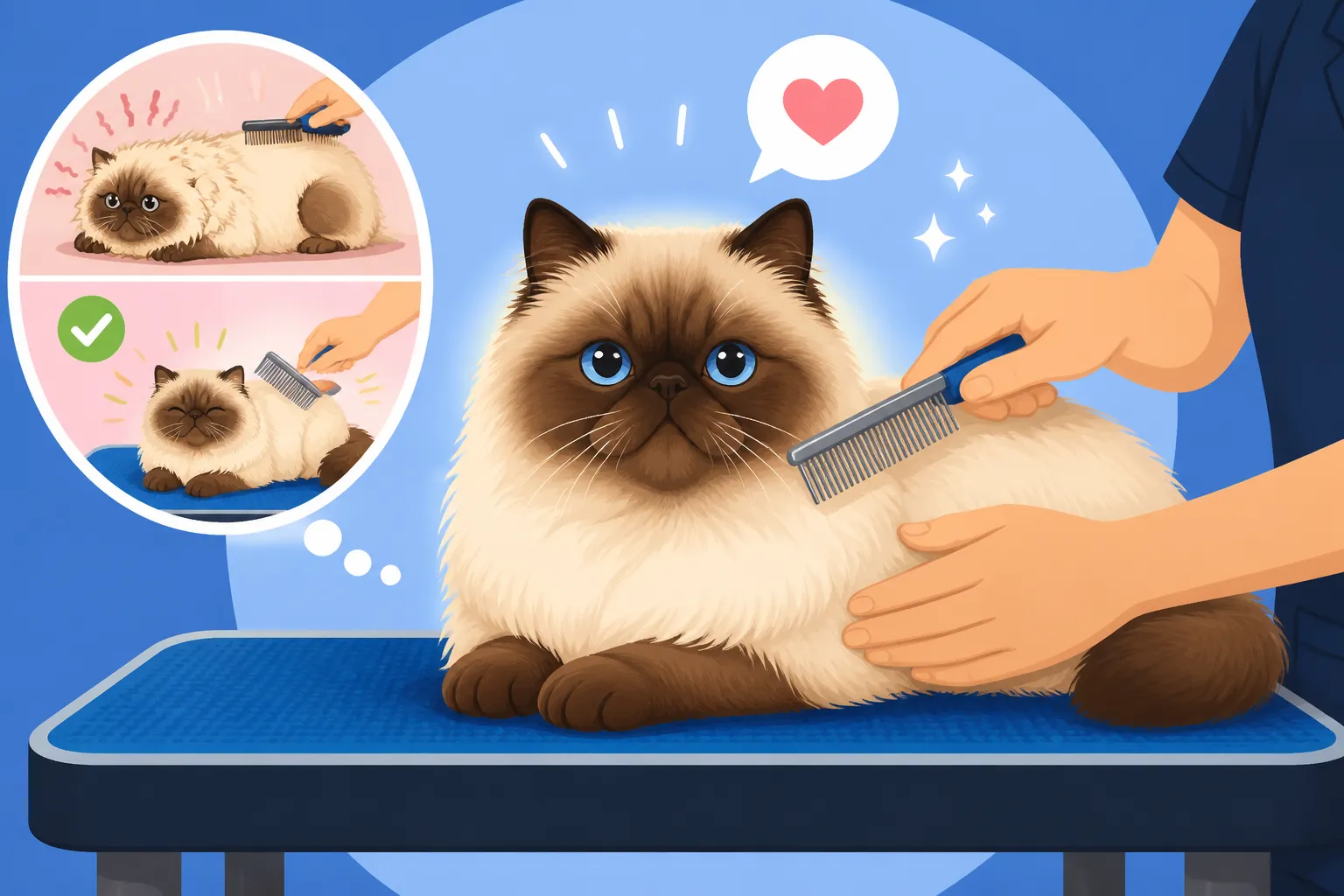
A grooming table, or even a sturdy, non-slip surface at waist height, brings your cat up to your level. This allows you to stand comfortably, with a straight back, and your arms at a natural working height. You gain a much clearer view of the cat's entire body, from the top of its glorious ruff to the tips of its fluffy tail and all those dense areas prone to matting. This improved posture means less fatigue for you, which translates to a calmer, more patient groomer. And as we all know, a patient groomer makes for a more patient cat.
Better Visibility and Access to Tricky Spots
The sheer volume of a Himalayan's coat means there are many hidden areas where mats can form unnoticed. The armpits, behind the ears, the tummy, and especially the britches (those fluffy pantaloons on their hind legs) are notorious for tangles. When your cat is on your lap or the floor, these spots are often obscured or difficult to reach without considerable wrestling.
On a table, with good lighting, you can systematically work your way through the coat. You can gently position your cat, lift a leg, or roll them slightly to gain full access to these problem zones. This isn't about forcing them into uncomfortable positions, but about having the space and leverage to groom thoroughly and efficiently. For example, lifting a front leg slightly to get at an armpit mat is far easier and less stressful for the cat when you have a stable surface and two free hands. It allows for a methodical approach, ensuring no area is missed, which is critical for preventing those painful, tight mats that can quickly lead to skin irritation or worse. This level of thoroughness is a key component of The Daily Comb a Himalayan Cannot Skip.
Establishing a Routine: Consistency and Expectation Management for Your Himalayan
Cats are creatures of habit, and Himalayans are no exception. They thrive on predictability and a consistent routine. When grooming becomes a part of their expected daily or weekly schedule, performed in a specific location, it helps them understand what's happening and mentally prepare for it. This consistency is perhaps one of the biggest reasons why a Himalayan will tolerate combing better on a table.
Signifying "Grooming Time"
Imagine your Himalayan's perspective. If you sometimes comb them on the sofa while watching TV, sometimes on the bed, and other times when you're just lounging on the floor, the signals are mixed. Is this play time? Cuddle time? Or is it the dreaded comb? This inconsistency can create anxiety, making them more prone to squirming or resisting because they don't know what to expect.
A grooming table, by contrast, serves as a clear, consistent signal. When they are placed on the table, they quickly learn that this is "grooming time." It's not cuddle time, it's not play time – it's the dedicated period for coat maintenance. This spatial and temporal consistency helps them mentally switch gears. They understand the routine, and while they might not love it, they'll often resign themselves to it with less fuss because it's a predictable part of their day. This is crucial for Getting a Himalayan Kitten Used to the Comb from a young age. Starting this routine early can set them up for a lifetime of more cooperative grooming sessions.
The Power of Positive Reinforcement
With a consistent routine on a dedicated table, you can more effectively implement positive reinforcement. Because you're standing comfortably and have both hands free, you can easily offer treats, gentle praise, or a favorite toy (briefly!) during and after the session.
Think of it like this:
- Before: Place your Himalayan gently on the table.
- During: Use a calm, reassuring voice. Offer small, high-value treats intermittently for good behavior, like holding still for a few minutes. You might find great options for treats on Chewy or Amazon.
- After: When the session is done, give a final treat, a favorite head scratch, and let them off the table. This clearly marks the end of the activity and rewards their cooperation.
This structured approach helps your cat associate the table, and the grooming process, with positive experiences rather than just an uncomfortable wrestle. Over time, many Himalayans will actually wait by the table when it's grooming time, knowing what's coming and that good things follow. It becomes less of a battle and more of a negotiated peace, which is frankly a huge win for any Himalayan owner!
Safety and Stability: Securing Your Himalayan on a Grooming Table
One of the often-overlooked benefits of grooming on a table is the increased safety and stability it offers for both you and your Himalayan. A cat squirming off a sofa can still potentially injure itself, but a fall from a table is a much more serious proposition. Creating a secure environment isn't about restraint in a negative sense, but about establishing a calm, controlled space that minimizes accidents and maximizes cooperation.
Non-Slip Surfaces are Non-Negotiable
The first rule of table grooming is a non-slip surface. A bare table, even wood, can be slick under a cat's paws, especially if they're nervous. This immediately creates insecurity, making them more likely to struggle, leading to falls.
Always use a non-slip mat or a towel securely fastened to the table. These provide traction for your cat's paws, giving them a sense of grounding and stability. They can shift their weight without feeling like they're going to slide off, which significantly reduces anxiety. I've seen owners use everything from rubber bath mats to custom-cut yoga mats; the key is that it stays put and gives your cat purchase. A stable cat is a calmer cat, and a calmer cat is much easier to comb.
The Role of a Grooming Arm and Loop
For many Himalayans, especially those who are still learning the routine or are particularly wiggly, a grooming arm with a gentle, adjustable loop can be a game-changer. This isn't about tying your cat down; it's about providing a soft, reassuring anchor that prevents them from jumping off the table and keeps them gently positioned.
The loop should be placed comfortably around their neck or chest, snug enough to prevent escape but loose enough to be breathable and never cause discomfort. It's a safety measure, much like a seatbelt in a car. It ensures that if they do try to make a dash for it, they're gently stopped, preventing a dangerous fall. This tool allows you to keep both hands free for actual grooming, which dramatically increases efficiency and reduces the time your cat has to spend on the table. You'll find a variety of grooming arms and loops on sites like Amazon, often adjustable to different table heights. Just remember, never leave your cat unattended on a grooming table, especially when secured by a loop.
Preventing Falls and Injuries
A stable table combined with a non-slip surface and, if needed, a grooming arm, drastically reduces the risk of accidental falls. Cats, even docile Himalayans, can be unpredictable. A sudden noise, a stray bird outside the window, or just a moment of restlessness can cause them to bolt. A fall from a table can lead to sprains, fractures, or even internal injuries, particularly for a cobby, heavy-boned breed like the Himalayan.
By securing them gently and providing a stable platform, you create a controlled environment where the focus can be entirely on their coat. This attention to safety allows you to relax a little more, and that calm energy transfers to your cat. The less you're worried about them falling, the more efficiently and thoroughly you can comb through their majestic fur, preventing tangles and mats that could otherwise become a medical issue requiring sedation and clipping. Why a Matted Himalayan Becomes a Medical Case is a real concern, and proper table grooming can help avoid it.
| Feature / Location | Grooming on Lap/Floor | Grooming on Table |
|---|---|---|
| Owner Ergonomics | Hunching, back/neck strain, awkward angles | Standing upright, comfortable, better visibility |
| Cat's Stability | Less secure, easy to squirm/fall off lap | Non-slip surface, secure footing, less likely to fall |
| Grooming Access | Difficult to reach armpits, belly, britches | Full, easy access to all body parts |
| Routine & Consistency | Mixed signals, less predictable, potential anxiety | Clear signal for "grooming time," predictable routine |
| Positive Reinforcement | Harder with one hand, less structured | Easy to offer treats/praise, hands-free |
| Safety | Risk of minor falls, owner scratches | Reduced risk of severe falls, gentle containment |
| Time Efficiency | Slower, more wrestling, often incomplete | Faster, more thorough, less struggle |
Choosing the Right Equipment: Making Your Grooming Station a Success
Once you've decided to embrace the table grooming method, having the right tools is paramount. It’s not just about any comb and any table; it’s about selecting items that specifically cater to the unique needs of a Himalayan's coat and temperament, turning a potential struggle into a manageable, even pleasant, routine. Investing in quality equipment from the start can save you a lot of headache and vet bills down the line.
Selecting the Ideal Grooming Table
You don't necessarily need a professional hydraulic grooming table, especially if you're just starting out. A sturdy, stable table that is roughly waist-high for you is often sufficient. Look for:
- Stability: It absolutely must not wobble. Any instability will make your cat feel unsafe and increase their anxiety.
- Size: Large enough to comfortably accommodate your Himalayan, allowing them to stand and turn around without feeling cramped, but not so large that they can easily wander off out of reach.
- Surface: Ideally, it should come with a rubberized, non-slip surface, or you should plan to add one. Many pet supply stores, or online retailers like Chewy and Amazon, offer folding grooming tables that are perfect for home use and can be stored away when not in use. These are often made with steel legs for stability and a textured, easy-to-clean surface.
Remember, this table is more than just a surface; it's the foundation of your new, improved grooming routine. What a Himalayan Cattery's Grooming Room Should Look Like emphasizes the importance of a dedicated, functional space, and your home setup should aim for similar principles of safety and efficiency.
Essential Grooming Tools for a Himalayan's Coat
Beyond the table itself, your toolkit needs to be specific to the Himalayan's long, dense, and delicate coat. Trying to use the wrong comb is like trying to rake leaves with a spoon – ineffective and frustrating for everyone involved.
- Steel Comb: This is your absolute workhorse. You'll need at least one good quality, all-metal steel comb with both wide and medium-spaced teeth. The wide teeth are for initial detangling and separating the long guard hairs, while the finer teeth are for getting down to the undercoat and ensuring no mats are forming close to the skin. Which Steel Comb a Himalayan's Coat Needs is crucial knowledge for any owner.
- Slicker Brush (Optional but helpful): While primarily used for the top coat and fluffing, a slicker brush can be useful for removing loose hair from the guard coat and adding a finishing touch. Be extremely gentle, as the wire bristles can scratch delicate skin if used improperly.
- Mat Splitter/Dematter: For those stubborn little tangles that inevitably appear, a mat splitter or dematting comb can be a lifesaver. These tools are designed to carefully cut through mats without pulling the surrounding fur, saving your cat from discomfort. Use them with extreme caution and always away from the skin.
- Blunt-nosed Scissors: Essential for trimming around the britches (to prevent litter and waste from getting caught) and for carefully snipping out small, intractable mats that simply cannot be combed out. Again, always use blunt-nosed scissors for safety.
- Grooming Powder (Optional): Some owners find a light dusting of cornstarch or specific grooming powder can help absorb oils and make the coat easier to comb through, especially in dense areas.
Having these tools readily available on your grooming table ensures a smooth, uninterrupted session. You won't be scrambling to find a tool, which keeps the process flowing and your Himalayan calmer. By having everything at your fingertips, you reinforce the idea that this is a professional, efficient, and ultimately tolerable experience. It truly makes a world of difference for both of you.
Disclaimer
This article is for general informational purposes only and does not constitute professional advice. Laws, prices and regulations vary by location and change over time. Consult a qualified professional for guidance on your specific situation.