Why the Point Gene Makes Every Himalayan Blue Eyed
It’s a common sight when you gaze into the captivating face of a Himalayan cat: those piercing, brilliant blue eyes. Many new owners, and even seasoned enthusiasts, find themselves wondering, "Why always blue? Is it just a coincidence, or is there something more profound going on?" The truth is, the stunning blue eyes so characteristic of every Himalayan are not a random happenstance; they are intrinsically linked to the very gene that gives them their distinctive point coloration. This guide will delve deep into the fascinating genetic connection that guarantees your fluffy companion will always have those beautiful azure or sapphire peepers, and how this unique trait influences their care.
The Genetics of Color Points and Blue Eyes
The distinctive appearance of a Himalayan cat, with its darker "points" (ears, face mask, paws, and tail) and lighter body, is due to a specific genetic mutation. This isn't just a surface-level aesthetic; it's a fundamental aspect of their biology that also dictates their eye color. Understanding this connection helps us appreciate these magnificent felines even more.
The Temperature-Sensitive Gene at Play
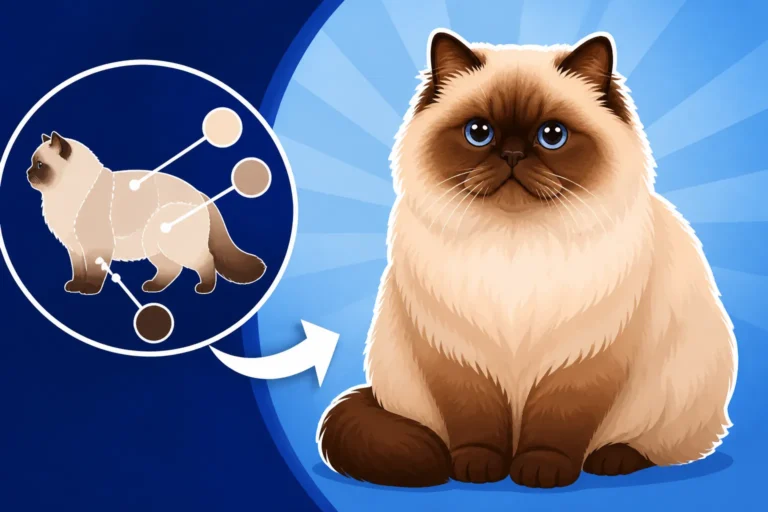
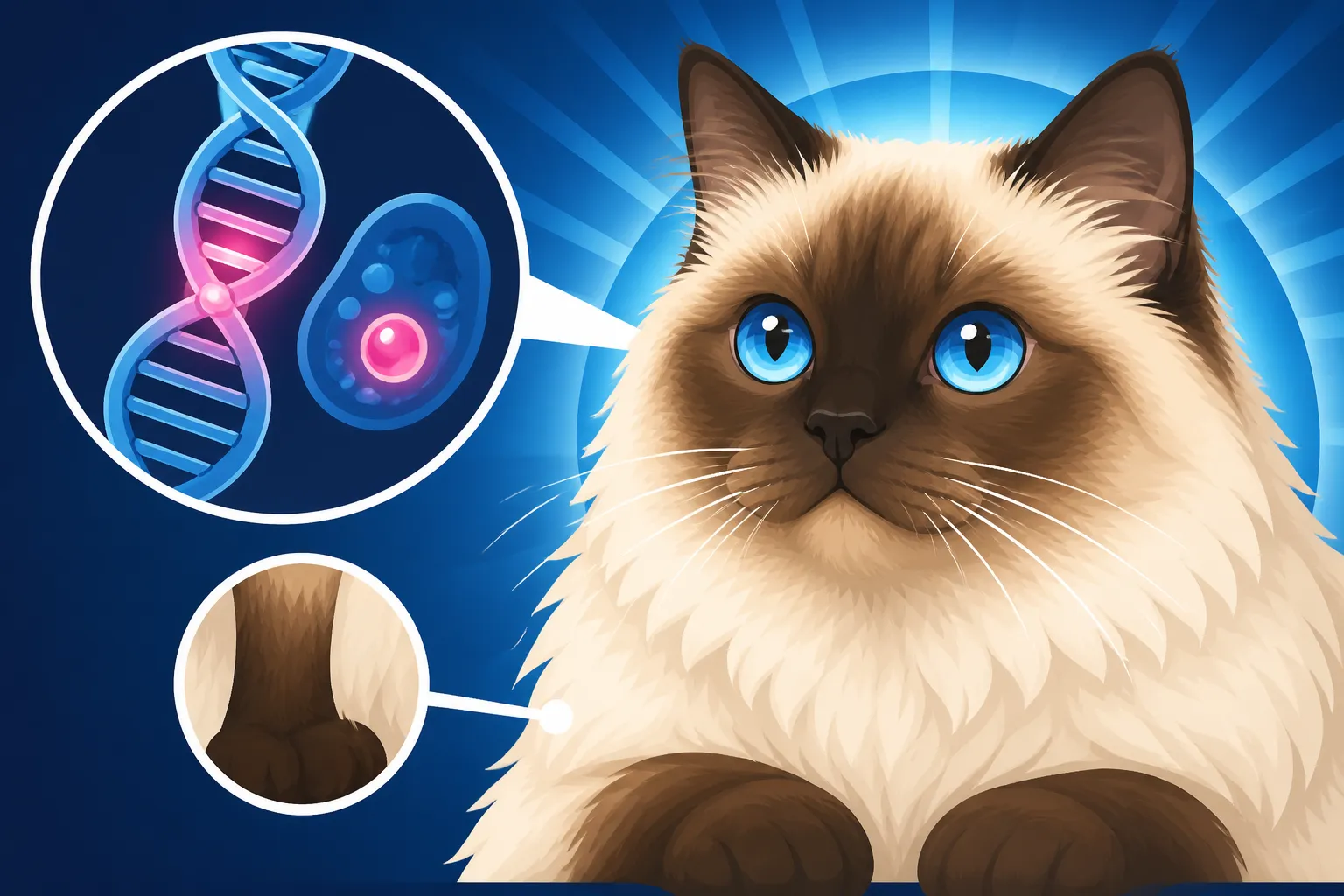
At the heart of the Himalayan's color pattern is a gene responsible for producing an enzyme called tyrosinase. This enzyme is crucial for melanin production, which is the pigment that gives hair, skin, and eyes their color. However, in Himalayan cats, this particular tyrosinase enzyme is temperature-sensitive. What does that mean for your cat? Well, it means the enzyme only works effectively in cooler parts of the body.
Think of it like this: in the warmer core areas of your Himalayan's body – the torso and belly – the enzyme is less active, leading to very little melanin production and, consequently, a pale, cream, or even white coat. But on the extremities, which are naturally cooler, the enzyme kicks into high gear, producing more melanin and resulting in the darker shades we see on their points. This is why A Himalayan's Point Color Is a Record of Where It Sleeps and why a shaved patch on a Himalayan might grow back darker if the surrounding skin is cooler than the cat's core body temperature. It's a truly remarkable biological thermostat at work, painting their coat in shades of seal, blue, chocolate, or lilac, all based on external and internal temperatures.
A Shared Genetic Blueprint with Other Pointed Breeds
It's not just Himalayans that exhibit this stunning coloration. Breeds like Siamese, Ragdolls, and Birmans also share this temperature-sensitive gene, which is often referred to as the "Himalayan gene" or the "colorpoint gene." This gene is a recessive trait, meaning a cat needs to inherit two copies of it (one from each parent) to display the pointed pattern. If a cat only inherits one copy, it will not be pointed but can still pass the gene on to its offspring, becoming what breeders call a "carrier."
The common ancestry of these pointed breeds, especially the Himalayan's direct lineage from Siamese and Persian cats, explains this shared genetic trait. The Siamese were the original source of the colorpoint gene and the beautiful blue eyes that come with it. The early breeders who created the Himalayan intentionally introduced this gene into Persian lines to combine the Persian's long, luxurious coat and sturdy build with the Siamese's striking points and brilliant blue eyes. What the Siamese Side Gave a Himalayan Besides Points goes into more detail about these inherited traits.
Why Only Blue? The Pigment Paradox
Now, let's get to the crux of the matter: why are these cats always blue-eyed? It’s not just a coincidence that the temperature-sensitive gene affects both coat color and eye color; it's a direct consequence of how melanin works in the eyes.
Melanin's Role in Eye Color
In most mammals, eye color is determined by the amount and type of melanin present in the iris. More melanin generally leads to darker eyes (brown, black), while less melanin can result in lighter colors (green, hazel). Blue eyes in cats, and indeed in humans, are not actually caused by blue pigment. Instead, they are the result of a phenomenon called Rayleigh scattering.
Rayleigh scattering happens when light enters an eye with very little melanin in the iris. The blue wavelengths of light are scattered more efficiently than other wavelengths, making the eyes appear blue. It's the same principle that makes the sky appear blue!
The Genetic Link to the Blue Iris
The same temperature-sensitive gene that limits melanin production in the warmer parts of a Himalayan's body also severely restricts melanin development in the iris of their eyes. Even though the eyes are generally cooler than the body's core, the specific way this gene affects pigment production means that very little to no melanin is deposited in the iris at all. This lack of pigment is what leads to the characteristic blue eye color.
Because this gene's effect on melanin is so profound and consistent in the iris, every cat that expresses the full colorpoint pattern – including every Himalayan – will invariably have blue eyes. There are no exceptions to this rule. If you see a cat that looks like a Himalayan but has green or gold eyes, it's either not a true Himalayan, or it's a mixed breed that hasn't fully inherited the colorpoint gene in the way a purebred Himalayan does. Why a Himalayan's Required Blue Eyes Carry No Penalty in the show ring, in fact, highlights how fundamental this trait is to the breed standard.
The Depth of Blue and Its Development
While all Himalayans have blue eyes, the intensity and shade of blue can vary. You might see anything from a pale sky blue to a deep sapphire. This variation can be influenced by other modifying genes, but the underlying blue remains constant. Interestingly, just like their points develop and darken over time, a Himalayan kitten's eyes might not show their full depth of color immediately.
When Himalayan kittens are born, their eyes are typically a cloudy blue or grayish-blue. This is because their eyes are still developing, and the full effect of the gene's pigment restriction isn't entirely apparent yet. As they mature, usually around 8 to 12 weeks of age, the true blue color will deepen and become more defined. How Many Weeks a Himalayan's Blue Takes to Deepen can give you a clearer timeline of this fascinating developmental process. It's one of the many joys of watching a Himalayan kitten grow, seeing those points darken and those eyes transform into brilliant jewels.
The Nuances of Himalayan Blue Eyes
The blue eyes of a Himalayan are not just a genetic fact; they are a defining feature that breeders strive to maintain and enhance according to breed standards. There's a particular look to a Himalayan's blue eyes that sets them apart.
What the Breed Standard Demands
For show-quality Himalayans, the depth and clarity of the blue eye color are paramount. Judges look for eyes that are large, round, and a brilliant, vivid blue. The bluer, the better! Any hint of green or gold is considered a fault. The ideal is a deep sapphire blue that complements their rich point coloration. This insistence on intense blue eyes underscores how integral this trait is to the Himalayan's identity.
It's a testament to careful breeding that these cats consistently display such striking eye color. Breeders work diligently to ensure their lines carry the necessary genetic traits to produce both strong point contrast and dazzling blue eyes. How Large and Round a Himalayan's Blue Eyes Should Be is a crucial aspect of judging a Himalayan's conformation, emphasizing not just the color, but also the shape and placement within their rounded head.
Blue Eyes and Vision: Any Differences?
A common question that arises is whether these blue eyes, or the underlying genetic condition that causes them, affect a Himalayan's vision. For most Himalayans, the answer is no. Their blue eyes function perfectly normally, and they have excellent sight. However, it's worth noting that cats with blue eyes, especially those linked to the colorpoint gene, sometimes have a slightly reduced ability to see in very low light conditions compared to cats with more melanin in their eyes. This is a very minor difference, though, and rarely impacts their daily life indoors.
Another characteristic that is sometimes associated with blue-eyed cats, particularly Siamese (from which Himalayans inherit their pointed gene), is strabismus, or "cross-eyes." While it can occur in Himalayans, it's far less common than in their Siamese ancestors due to decades of careful breeding to reduce this trait. Whether a Himalayan Can Be Cross Eyed Like a Siamese explores this topic in more detail. In general, a Himalayan's blue eyes are a feature of beauty, not a handicap.
Ensuring Lifelong Eye Health for Your Blue-Eyed Beauty
While the blue eyes themselves are healthy and beautiful, the genetic makeup and physical characteristics of the Himalayan, particularly their brachycephalic (flat) face, can sometimes lead to specific eye care needs. It's crucial for any Himalayan owner to be proactive in maintaining their cat's eye health.
Managing Tear Stains and Discharge
Due to their unique facial structure, Himalayans often have tear ducts that can become blocked or overflow, leading to tear staining. These tear stains, which can range from light pink to a noticeable reddish-brown, are particularly obvious against their pale body fur and around their bright blue eyes. They are caused by porphyrins, pigments in tears that oxidize when exposed to air. Regular cleaning is absolutely essential to prevent irritation, infection, and unsightly discoloration.
Every morning, make it a routine to gently wipe around your Himalayan's eyes with a soft, damp cloth or a pet-specific eye wipe. Many owners find success with wipes designed for sensitive areas, available at retailers like Chewy or Amazon. Ensure the area is kept dry to prevent bacterial growth, which can lead to further irritation or skin infections. This daily ritual is not just about aesthetics; it's vital for their comfort and health. Why a Himalayan's Eyes Water All Day is a common concern for owners, and proper management is key.
Protecting Against Corneal Issues
The prominent, round eyes of Himalayans, while beautiful, can sometimes be more exposed and therefore slightly more vulnerable to injury or irritation. Their flatter facial structure means their eyes may not be as recessed as in other breeds, making them prone to issues if they rub against surfaces or get dust in their eyes. Always be vigilant for signs of discomfort, excessive blinking, redness, or discharge, which could indicate a corneal abrasion or ulcer.
A corneal ulcer, for example, is a serious condition that can rapidly worsen and potentially impact vision if not treated promptly. If you ever suspect an eye injury, do not wait; contact your veterinarian immediately. What a Corneal Ulcer Looks Like on a Blue Eyed Himalayan can help you recognize the signs, but only a vet can properly diagnose and treat it. Regular veterinary check-ups are paramount, and your vet will often pay close attention to their eyes. How Often a Himalayan's Eyes Should Be Examined typically includes an annual assessment during their wellness visits.
General Care and Nutrition for Eye Health
While there isn't a “magic food” that changes eye color, a well-balanced diet contributes significantly to overall health, including eye health. Ensuring your Himalayan receives all necessary vitamins, minerals, and essential fatty acids can help maintain healthy tear production and reduce inflammation. High-quality cat food, whether wet or dry, from reputable brands provides the foundational nutrition they need.
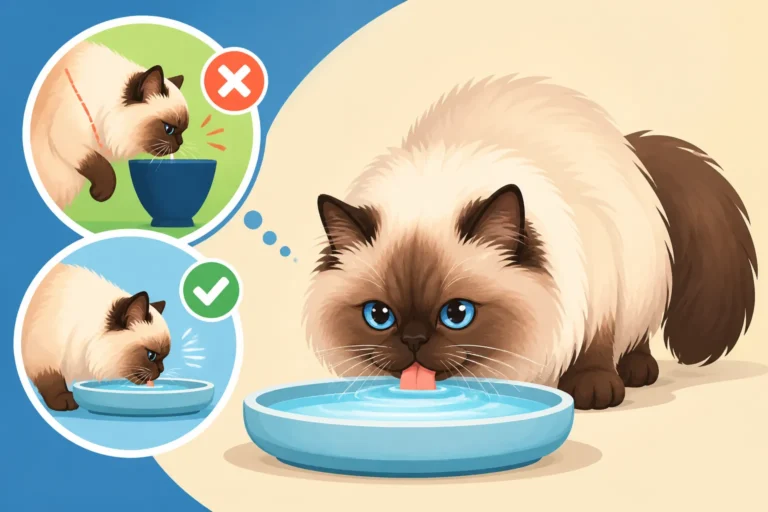
Consider bowls that are shallow and wide to accommodate their flat faces, preventing food or water from getting into their eyes or staining their facial fur while eating. You can find excellent ceramic or stainless steel options on Amazon that are easy to clean and won't harbor bacteria. Furthermore, a calm, clean indoor environment reduces exposure to irritants that could affect their sensitive eyes. Keeping dust to a minimum and avoiding strong air currents or smoke near them will help protect those beautiful blue windows to their soul.
Here's a quick comparison of blue eye traits in pointed breeds:
| Characteristic | Himalayan Cats | Siamese Cats | Ragdoll Cats |
|---|---|---|---|
| Eye Color | Always blue, typically large and round. Deep sapphire preferred. | Always blue, often more almond-shaped. Intense blue is standard. | Always blue, oval shape. Various shades of blue, often vivid. |
| Genetic Basis | Colorpoint gene (temperature-sensitive tyrosinase) | Colorpoint gene (temperature-sensitive tyrosinase) | Colorpoint gene (temperature-sensitive tyrosinase) |
| Link to Coat Color | Direct: gene restricts pigment in warmer body parts and eyes. | Direct: gene restricts pigment in warmer body parts and eyes. | Direct: gene restricts pigment in warmer body parts and eyes. |
| Common Eye Issues | Tear staining due to brachycephalic face, potential for corneal issues. | Less tear staining, but historically more prone to strabismus (cross-eyes). | Generally few specific eye issues, typical breed health considerations. |
| Eye Shape | Large, round | Almond-shaped, often slanted | Large, oval |
| Breed Standard Focus | Depth of blue, roundness, placement in flat face. | Intensity of blue, clarity, classic oriental shape. | Intensity of blue, clarity, set proportionally to head. |
The blue eyes of your Himalayan are a magnificent genetic marvel, a constant reminder of the unique heritage these cats carry. They are a feature to be admired, protected, and cared for diligently, just like every other aspect of your cherished companion.
Disclaimer
This article is for general informational purposes only and does not constitute professional advice. Laws, prices and regulations vary by location and change over time. Consult a qualified professional for guidance on your specific situation.