Whether a Cooling Mat Reaches a Himalayan’s Skin
It's a common worry for us Himalayan cat parents, isn't it? We see our fluffy companions trying to cope on a warm day, perhaps stretched out on the cool tile, and we desperately want to help them feel more comfortable. The idea of a cooling mat sounds like a fantastic solution, a simple way to offer relief, but then you look at that magnificent, dense coat, and you can't help but wonder: can a cooling mat really get past all that fluff to reach their skin and make a difference? This guide is all about diving deep into that very question, exploring how cooling mats interact with a Himalayan's unique physiology, and offering practical strategies to ensure your beloved cat stays cool and comfortable, even when the mercury rises.
Understanding the Himalayan's Unique Thermal Challenges
Let's face it, our Himalayans are built for looking gorgeous, not necessarily for extreme heat. Their unique blend of Persian luxuriance and Siamese coloring gives them some specific challenges when it comes to staying cool. It's not just about aesthetics; their physical traits genuinely impact their ability to regulate body temperature.
The Insulating Power of a Double Coat
That stunning, flowing coat, a hallmark of the Himalayan, is absolutely beautiful to behold and incredibly soft to touch. However, it’s also a powerful insulator. Much like a thick winter coat on a human, it’s designed to trap warmth close to the body. Your Himalayan actually has a double coat: a soft, downy undercoat that's incredibly dense, and longer, coarser guard hairs over the top. This combination creates a significant barrier.
Think about it: in their ancestral colder climates, this double coat would have been a massive advantage, keeping them toasty. But in warmer environments, it works against them. It’s like wearing a heavy wool sweater in summer; the heat gets trapped, and it's difficult for their body to dissipate it effectively. Even a slight increase in ambient temperature can quickly make them uncomfortable because their natural cooling mechanisms, like sweating through their paw pads, are simply not enough to counteract the insulation. You might find them seeking out unusual spots, like the coolest corners of the bathroom, just to find a patch of relief. How Much Undercoat a Himalayan Carries Under Its Points really highlights this challenge.
Why Flat Faces Affect Temperature Regulation
Beyond the coat, our Himalayans inherit another trait that impacts their heat tolerance: their brachycephalic, or flat, face. While undeniably charming, this facial structure, inherited from their Persian side, comes with a compacted respiratory system. Their nostrils can be narrowed, their soft palate elongated, and their airways generally less efficient than those of a cat with a longer muzzle.
What does this mean for staying cool? Cats primarily cool themselves by panting, much like dogs. When they pant, air passes over the moist surfaces of their mouth and lungs, and as the moisture evaporates, it carries heat away from the body. However, a Himalayan's restricted airways make this process far less effective. They can't move as much air as efficiently as other cats, meaning their natural "air conditioning" system is working overtime, but producing minimal results. This is a big reason why Why a Himalayan Overheats Twice as Fast as a Siamese is such an important topic. They exert more effort to breathe, which in turn generates more body heat, creating a vicious cycle of discomfort, especially when stressed or active.
Recognizing Signs of Overheating in Your Himalayan
Being able to spot the early signs of overheating is crucial for any Himalayan owner. Our cats are masters at hiding discomfort, so you need to be observant. It’s not always as dramatic as heavy panting; sometimes it’s far more subtle.
Look for a change in behavior first. Is your normally active cat suddenly lethargic and uninterested in play? Are they seeking out cooler, unusual places to lie down, like the bathtub or the kitchen sink? You might notice more frequent or heavier panting than usual, even without strenuous activity. Their gums might appear a darker red, and their paw pads could feel warmer to the touch. Sometimes, their breathing might become visibly more labored, and they might even start drooling. If you notice any of these symptoms, particularly rapid or open-mouth breathing, it's a clear signal that your cat is struggling with the heat. Remember, The Temperature a Himalayan Starts to Struggle At is often lower than you might think due to their unique physiology. Early intervention can prevent a mild case of discomfort from escalating into a serious health emergency.
How Cooling Mats Work and Their Limitations for Himalayans
Cooling mats certainly sound like a perfect solution for an overheated pet. They promise passive cooling without electricity, often relying on pressure-activated gels or simple water. But for our abundantly coated Himalayans, the reality can be a bit more complicated.
Types of Cooling Mats Available
When you start looking, you'll find a few main types of cooling mats on the market, each with its own mechanism.
First, there are the gel-filled mats. These usually contain a non-toxic gel that remains cooler than room temperature and is activated by pressure. When your cat lies on it, the gel absorbs their body heat, and the mat's material dissipates it into the air, offering a cool spot. Many pet stores, and online retailers like Chewy or Amazon, carry various brands of these. Then you have water-filled mats, which require you to fill them with water and sometimes even chill them in the refrigerator first. These offer a more direct, but often shorter-lived, cooling effect. Finally, some mats use a simple phase-change material that cools as it absorbs heat and then slowly releases it back into the environment as it warms up. Each type has its pros and cons in terms of convenience, durability, and cooling power.
The Challenge of Penetrating a Thick Coat
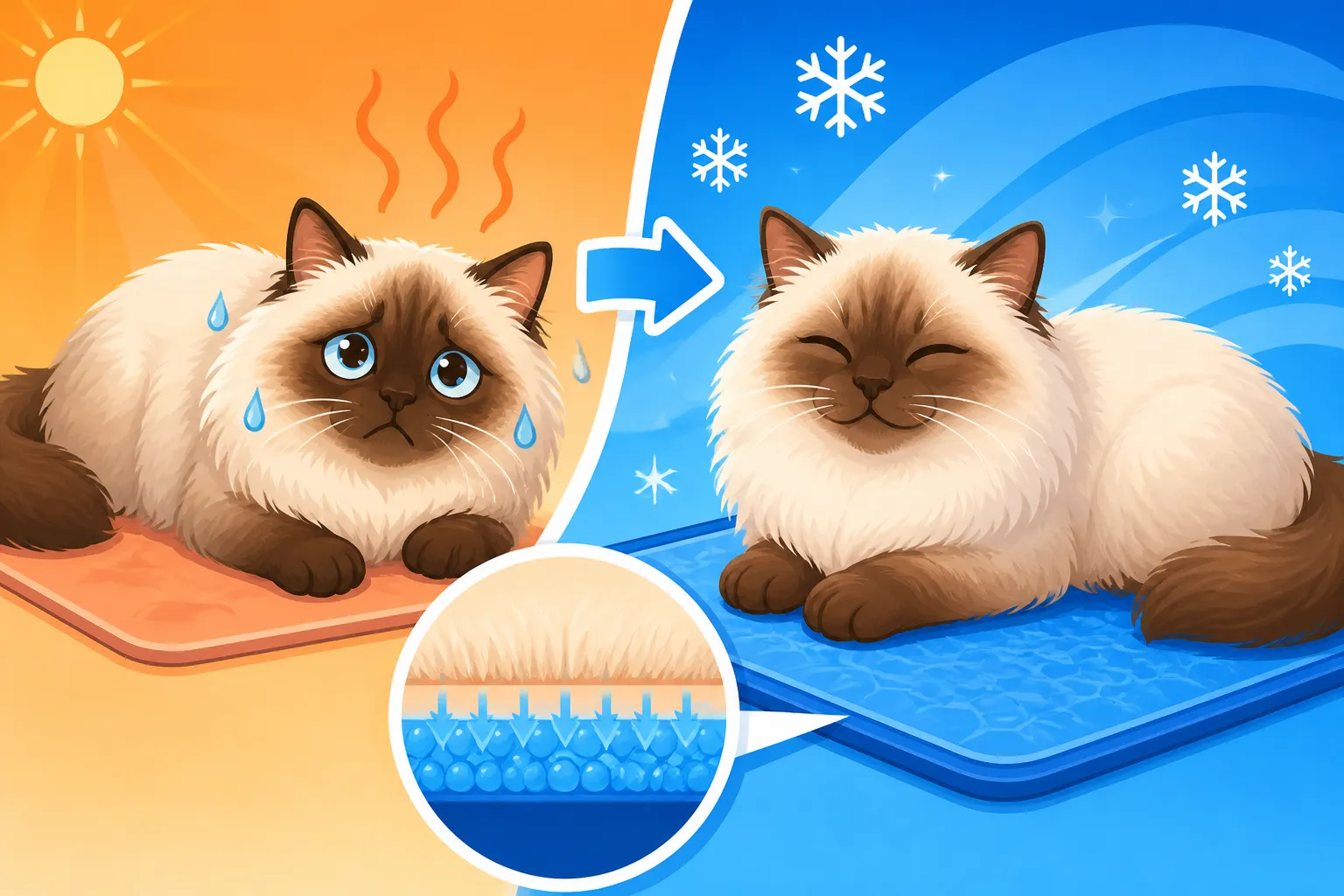
Here’s where the main challenge lies for our Himalayans: that glorious, dense coat. For a cooling mat to effectively draw heat away from the body, it needs to make direct or near-direct contact with the skin. But with a Himalayan's luxurious double coat, that contact is often indirect at best. The thick layer of fur acts as a barrier, much like insulation in a house.
While the mat might feel cool to your hand when you press on it, a cat’s body, especially one with such a thick coat, doesn’t exert enough pressure to push all that fur aside and get significant skin contact. Imagine trying to cool your skin by putting an ice pack over a thick winter coat; you'd feel some chill, but it wouldn't be nearly as effective as placing it directly on your skin. So, while a Himalayan might still enjoy the idea of a cool surface, the actual thermal transfer needed to meaningfully lower their core body temperature through all that fur can be severely limited. It's a bit like them lying on a cool tile floor – they get some relief, but it's not a deep, penetrating cool.
Maximizing Contact for Effective Cooling
Despite the challenges, you can take steps to make a cooling mat more effective for your Himalayan. The goal is to reduce the barrier of fur as much as possible, or to enhance the cooling effect in other ways.
One simple trick is to gently brush or comb your cat before they lie on the mat. Removing any loose undercoat can help slightly reduce the thickness. Positioning the mat in a shaded, well-ventilated area, perhaps near a fan, will also boost its efficacy. The fan will help circulate air over the mat, drawing heat away from it more quickly, allowing it to cool down faster between uses or even while your cat is on it. You can also try placing a thin, damp towel over the mat – not soaking wet, just slightly cool and moist. This can provide a more direct, evaporative cooling effect that might penetrate the fur a bit more readily, but always supervise to ensure your cat doesn't get chilled or dislike the dampness. Ultimately, while a cooling mat might offer some relief, it's often best viewed as one component of a larger cooling strategy.
Alternative and Complementary Cooling Strategies
Since cooling mats might not be a silver bullet for our heavily coated Himalayans, it's wise to explore a range of other methods to keep them comfortable. Combining several approaches often yields the best results.
Strategic Grooming and Haircuts
Grooming isn't just about preventing mats; it's a vital part of heat management for a Himalayan. Regular, thorough combing is paramount, especially during warmer months. That dense undercoat can trap an incredible amount of heat. Using a good quality metal comb, work through their fur daily to remove as much loose hair as possible. This thinning of the undercoat dramatically improves air circulation close to the skin. The Daily Comb a Himalayan Cannot Skip is essential all year round, but even more so when it's warm.
For some Himalayans, especially those who really struggle with the heat, a professional "lion cut" might be considered. This involves shaving the body fur, leaving a mane around the head, fur on the lower legs, and a pom-pom on the tail. While it can seem drastic, it significantly reduces the insulating layer. It's important to consult with your vet and a professional groomer before opting for this, as some cats can get sunburned or feel exposed. However, for a cat truly suffering, the relief can be profound. Whether a Himalayan Should Be Lion Cut in Summer delves deeper into this option.
Environmental Adjustments for Cooler Comfort
Making your home a cool sanctuary is probably the most effective way to help your Himalayan beat the heat. This starts with controlling the ambient temperature. Keep air conditioning running, or use fans strategically. Just remember, fans don't cool cats the way they cool humans; they mostly move air around, which can help with evaporation, but don't lower the actual air temperature. Placing bowls of ice in front of a fan can create a makeshift swamp cooler effect for localized areas.
Draw curtains or blinds during the hottest parts of the day to block direct sunlight, which can quickly turn a room into an oven. Provide multiple cool resting spots. Tile floors, marble hearths, or even a raised bed with an open mesh bottom can offer some relief. You might notice your Himalayan instinctively gravitate towards the coolest spots, as explored in Why a Himalayan Lies on the Coldest Tile in the House. Ensure they have access to these areas freely. Consider placing ice packs (wrapped in a towel to prevent direct skin contact) under their favorite blanket or bed for an extra cool boost, especially when they're dozing.
Hydration and Dietary Considerations
Staying properly hydrated is absolutely critical for all cats, but even more so for Himalayans struggling with heat. Dehydration exacerbates the effects of overheating and can lead to serious health issues. Always provide fresh, clean water in multiple locations throughout the house. Wide, shallow bowls are often preferred as they don't bend whiskers uncomfortably, and some Himalayans might appreciate a water fountain to encourage drinking, as the moving water can be more enticing.
Consider incorporating more wet food into their diet. Wet food has a significantly higher moisture content than dry kibble, which contributes directly to their daily water intake. Even if your Himalayan primarily eats dry food, adding a small amount of wet food as a treat or mixing it in can make a difference. Freeze low-sodium chicken broth in ice cube trays for a hydrating, tasty treat your cat might enjoy licking on a hot day. Just be mindful of their specific dietary needs and any sensitivities. High-moisture diets offer clear benefits, and many pet food retailers stock excellent wet food options. This is also why Why Water Matters More in a Himalayan Carrying Cysts is a crucial read, as hydration impacts kidney health.
Ensuring Your Himalayan's Overall Well-being in Warm Weather
Beyond specific cooling tactics, a holistic approach to your Himalayan's health, particularly during warm weather, is essential. Their unique predispositions mean we, as their caregivers, need to be extra vigilant.
Regular Vet Checks and Health Monitoring
Your veterinarian is your best partner in ensuring your Himalayan stays healthy, especially when dealing with potential heat stress. Regular check-ups allow your vet to assess your cat's overall health, including their respiratory function, heart health, and any underlying conditions that could make them more susceptible to heat. Discuss your concerns about heat tolerance with them. They might suggest specific diagnostic tests or offer tailored advice for managing your cat's individual needs.
For instance, they can evaluate the severity of any brachycephalic airway syndrome your cat might have and advise on monitoring techniques or even surgical options in extreme cases. Keeping an eye on their weight is also important, as overweight cats struggle more with heat. Be proactive and schedule a visit if you notice persistent signs of discomfort or breathing difficulties. Early detection of issues can make all the difference in their quality of life. Why a Himalayan Is a Harder Anesthetic Than a Siamese is a good article to review, as it speaks to the general health considerations that impact vet care.
Balancing Comfort with Grooming Needs
It's a delicate dance, isn't it? We want our Himalayans to be comfortable, but we also know that their magnificent coat requires dedicated care. Striking the right balance is key. Over-grooming or bathing too frequently can strip their skin of natural oils and cause irritation. However, under-grooming can lead to mats, which further trap heat and can cause skin infections.
As mentioned, daily combing is non-negotiable. It’s an act of love and prevention, keeping their coat free of tangles and reducing the insulating layer of dead hair. During hot spells, you might find yourself doing short, extra combing sessions to ensure maximum ventilation. Consider visiting a professional groomer regularly, not just for a lion cut, but for thorough de-shedding services that can reach deeper into the undercoat than home grooming tools might. They often have specialized equipment that can make the process less stressful for your cat and more effective. A matted coat is not only uncomfortable but can lead to medical issues, making What an Old Himalayan Needs Once Its Coat Starts Matting an important read for long-term care.
It's about making thoughtful choices that prioritize your Himalayan's comfort and health while still appreciating their unique beauty. A well-cared-for Himalayan is a happy Himalayan, regardless of the temperature outside.
| Cooling Method | Pros | Cons | Effectiveness for Himalayans |
|---|---|---|---|
| Cooling Mat | Passive, no electricity, portable | Limited skin contact due to thick fur, can warm up | Moderate |
| Air Conditioning | Lowers ambient temperature, broad relief | Costly, not always available | High |
| Fans | Improves air circulation, inexpensive | Doesn't lower temperature, limited direct cooling for cats | Moderate |
| Wet Towels/Cloth | Direct evaporative cooling, quick relief | Needs frequent re-wetting, can make fur damp | High (if direct skin contact) |
| Ice Packs (wrapped) | Localized intense cooling | Must be wrapped to avoid frostbite, short-lived | Moderate to High |
| Increased Hydration | Essential for internal regulation | Not a direct cooling method, but vital support | High (preventative) |
| Strategic Grooming | Removes insulating fur, improves airflow | Requires consistent effort, some cats dislike grooming | High |
| Lion Cut | Drastic heat reduction | Requires professional groomer, sunburn risk, aesthetic change | Very High |
Disclaimer
This article is for general informational purposes only and does not constitute professional advice. Laws, prices and regulations vary by location and change over time. Consult a qualified professional for guidance on your specific situation.