Trimming a Himalayan’s Claws When It Rarely Uses a Post
It’s a common frustration for Himalayan cat owners: you invest in a beautiful, sturdy scratching post, hoping your fluffy companion will keep their claws neatly trimmed, only to find them completely ignored. Instead, those lovely long claws continue to grow, snagging on carpets, blankets, and even your favorite sweater. This guide is here to walk you through why your Himalayan might be giving the scratching post the cold shoulder and, more importantly, how you can confidently and safely trim their claws to keep them comfortable and healthy, even if they never touch a post.
The Unique Needs of Himalayan Claws and Why They Seldom Use Posts
Himalayan cats are truly special, a delightful blend of the Persian's luxurious coat and the Siamese's striking points and personality. However, this unique heritage also comes with a distinct set of physical characteristics and behaviors that can make routine care, like claw trimming, a bit different. Many Himalayan owners find themselves puzzled when their cat shows absolutely no interest in scratching posts, leaving those beautiful paws with increasingly long and sharp claws.
Understanding the Himalayan's Lifestyle and Its Impact on Claws
Unlike some of their more rambunctious feline cousins, Himalayans tend to be less athletically inclined. They're often described as "lap cats" or "floor dwellers," preferring a cozy spot on the sofa or a sunny patch of carpet to scaling tall cat trees or engaging in vigorous play sessions. This generally sedentary lifestyle means they don't get the natural claw wear and tear that an active, climbing cat would. If your Himalayan is spending most of their day napping or observing the world from a comfortable perch, their claws aren't being naturally abraded or shed the way they would if they were constantly gripping, climbing, and stretching. This lack of natural maintenance means manual intervention becomes even more crucial.
Furthermore, the very thing that makes a Himalayan so endearing – their cobby, sturdy build and magnificent long coat – can sometimes make physical activities, including vigorous scratching, less appealing or even difficult. Imagine trying to stretch and grip a sisal post with a thick mane of fur between your paw and the scratching surface, all while navigating a relatively short, broad body. It's simply not as easy for them as it might be for a sleek, agile Siamese.
The Role of Their Persian Heritage in Claw Health
The Persian side of the Himalayan equation brings with it not just that stunning long coat, but also a predisposition for a generally more laid-back demeanor compared to the active Siamese ancestry. While they do retain some of that Siamese chatty nature and playful spark, their energy levels often lean more towards the relaxed Persian. This translates directly to less frequent use of scratching surfaces. Persians are known for their dignified, calm presence, and Himalayans often inherit this inclination for quiet contemplation over athletic feats.
When a cat doesn't use scratching posts regularly, several issues can arise. Overgrown claws can curl and grow into the paw pads, causing immense pain, infection, and making walking difficult. They can also snag on household items, leading to torn claws, which are incredibly painful and often require a vet visit. Regular trimming, therefore, isn't just about protecting your furniture; it's a vital part of your Himalayan's overall health and well-being. It’s a bit like us trimming our nails – a simple act that prevents a whole lot of discomfort down the line.
Why Your Himalayan Ignores the Scratching Post
It's truly perplexing, isn't it? You pick out what you think is the perfect scratching post, maybe even a few different types, only to have your regal Himalayan sniff it once and then continue to claw at your sofa. The truth is, there are several reasons why your specific cat might be giving these designated scratching zones the cold shoulder, and it often comes down to their individual preferences and physical make-up.
Texture and Material Preferences
Cats are incredibly particular about what feels good under their paws. What one cat loves, another might despise. Many scratching posts are covered in sisal rope, which is a great, durable material for many cats. However, some Himalayans might find it too rough, too stiff, or simply not satisfying. They might prefer cardboard scratchers, which offer a different kind of shredding sensation, or perhaps a carpeted surface (though we generally try to avoid carpeted posts as it can encourage scratching on actual carpets).
Think about your cat’s existing scratching habits. Are they going for the woven texture of your rug? The smooth, vertical surface of a door frame? The nubby fabric of your couch? Each of these indicates a preference. If your Himalayan consistently opts for a specific texture, try to find a scratching post that mimics that feeling. Some cats even prefer horizontal scratchers over vertical ones, or a combination of both. It's all about experimentation to discover what truly speaks to their inner feline.
Placement and Stability Issues
Location, location, location! Just like real estate, the placement of a scratching post is paramount. Cats don’t scratch randomly; they scratch to mark territory, stretch their muscles, and shed outer claw layers. They often want to scratch right after waking up or after a good nap, and often in prominent areas where they feel safe and where their "mark" will be noticed. If a scratching post is tucked away in a quiet corner of a spare room, your Himalayan might never feel the urge to use it there.
Try placing scratching posts in areas where your cat already spends a lot of time, especially near their favorite napping spots or by doorways they frequent. If your Himalayan is currently using your sofa arm as a scratching post, place a suitable alternative right next to it, or even block the sofa access temporarily while the new post is introduced. Stability is another huge factor. A wobbly scratching post is not only unsatisfying but can also be scary for a cat, especially a heavier, cobby breed like a Himalayan. They need to feel secure when they’re putting their full weight and stretching motion into it. A top-heavy or unstable post will quickly be abandoned.
Physical Comfort and Limitations
Remember, Himalayans have that distinctive cobby body and often a flatter face. While their "Doll Face" counterparts might have a slightly more pronounced muzzle, even they can find certain postures uncomfortable. Stretching up fully to scratch a tall vertical post might strain their back or shoulders, or perhaps their thick ruff of fur gets in the way. How a Himalayan's Cat Tree Should Be Waist High at Most is a good read on how their physical structure impacts their preferences for verticality.
An older Himalayan might have early signs of arthritis that make vigorous stretching painful. A very fluffy cat might find their long fur getting caught, making the experience unpleasant. Observing how your cat tries to scratch (or doesn't try) can offer clues. Do they reach up tentatively? Do they prefer to scratch low to the ground? This insight can guide you towards more suitable scratching solutions, such as horizontal mats or shorter posts. Sometimes, the problem isn't the cat's will, but their physical ability or comfort.
Essential Tools for a Smooth Claw Trimming Session
Alright, so your majestic Himalayan has decided that scratching posts are merely decorative furniture. No problem! We're going to take matters into our own hands, but to do it right, safely, and with as little stress as possible for both of you, you need the right tools. Think of it like a mini grooming kit specifically for their lovely paws. Having everything ready before you even pick up your cat is half the battle won.
Choosing the Right Clippers for Himalayan Claws
This isn't a one-size-fits-all situation. There are typically two main types of cat nail clippers, and what works best for your Himalayan depends on your comfort level and your cat's claw thickness.
- Scissor-Style Clippers: These look and function much like a small pair of scissors, with a curved blade that snips the claw. Many owners find these easy to use because they offer good control and a clear view of the claw. They're excellent for both beginners and experienced trimmers.
- Guillotine-Style Clippers: These clippers have a small hole you insert the claw into, and then a blade slides across to cut it. They can be very effective, especially for thicker claws, but some people find it harder to see the exact cutting point, increasing the risk of cutting too far back.
For a Himalayan, whose claws can be quite sturdy, you might find that a high-quality scissor-style clipper gives you the precision you need. Make sure they are sharp; dull clippers can crush the nail rather than cut it cleanly, which is painful for your cat. You can find a good selection of both types on online retailers like Amazon or Chewy, and reading reviews from other cat owners can often help you make an informed decision.
Styptic Powder: Your Safety Net
Accidents happen, even to the most careful of us. Sometimes, despite our best efforts, we might clip a little too far back and nick the "quick" – the sensitive part of the claw that contains blood vessels and nerves. It will bleed, and your cat will likely let you know they are not pleased! That's where styptic powder comes in.
Styptic powder is a lifesaver to stop bleeding quickly. It contains ingredients that constrict blood vessels and promote clotting. Always have it within arm's reach when you're trimming claws. If you accidentally cut the quick, simply dip the bleeding claw into the powder or apply a pinch directly to the tip with gentle pressure. The bleeding should stop almost immediately. It’s a bit like having a first aid kit for their nails. Don't skip this essential item; it provides immense peace of mind.
Other Helpful Accessories for a Stress-Free Session
Beyond clippers and styptic powder, a few other items can make your claw trimming routine much smoother:
- Bright Light: Good lighting is absolutely critical. You need to clearly see the claw and, more importantly, the quick. Natural daylight is ideal, but a good desk lamp or headlamp can also work wonders, especially if your Himalayan has darker claws where the quick is harder to discern.
- Plenty of Treats: Positive reinforcement is your best friend when it comes to any grooming activity with a cat. Have a stash of your Himalayan's absolute favorite treats ready. Small, high-value treats that can be given quickly, like freeze-dried chicken or salmon, are perfect. Give a treat after each paw, or even after each claw if your cat is particularly tolerant. The goal is to make the experience as positive as possible, associating claw trims with delicious rewards.
- A Towel or Blanket: Sometimes, a soft towel can be used to gently wrap your Himalayan, creating a "kitty burrito" that can help calm them and prevent them from wiggling away too easily. This isn't about restraint in an aggressive way, but rather providing a sense of security and making it easier to access their paws without them feeling completely exposed.
- Patience and Calm Demeanor: This isn't a physical tool, but it's arguably the most important. If you're stressed or rushed, your cat will pick up on that energy, making the process much harder. Approach the session with a calm, patient attitude, and be prepared to take breaks if needed. A few clipped claws are better than a full-blown wrestling match that traumatizes your cat and makes future trims impossible.
A Step-by-Step Guide to Trimming Your Himalayan's Claws
So, you've got your tools, you're mentally prepared, and your Himalayan is (hopefully) blissfully unaware of what's about to happen. Now, let's get down to the actual trimming. Remember, patience and a gentle touch are key. This isn't a race; it's a careful grooming ritual that will benefit your cat immensely.
Creating a Calm Environment and Handling Your Cat
Before you even think about clippers, set the stage for success. Choose a quiet time when your cat is relaxed, perhaps just waking up from a nap or while they're sitting comfortably on your lap. Avoid times when they're playful, agitated, or hungry. Find a well-lit area where you feel comfortable and secure. Teaching a Himalayan to Lie Still for Its Daily Comb offers excellent advice on how to get your cat used to being handled for grooming, and many of those principles apply directly to claw trimming.
Gently pick up your Himalayan and place them on your lap or a soft, elevated surface, like a table (if they're accustomed to it from grooming sessions). Speak to them in a soft, reassuring voice. Some cats respond well to a gentle swaddling in a towel, which can make them feel secure and prevent them from wiggling too much. The goal isn't to immobilize them completely, but to minimize unnecessary movement and keep them feeling safe. Start by simply holding a paw, gently pressing on a toe bean to extend a claw, and then releasing it, without even bringing out the clippers initially. Do this a few times, offering treats and praise, until they're comfortable with the sensation.
Identifying the Quick and Making the Cut
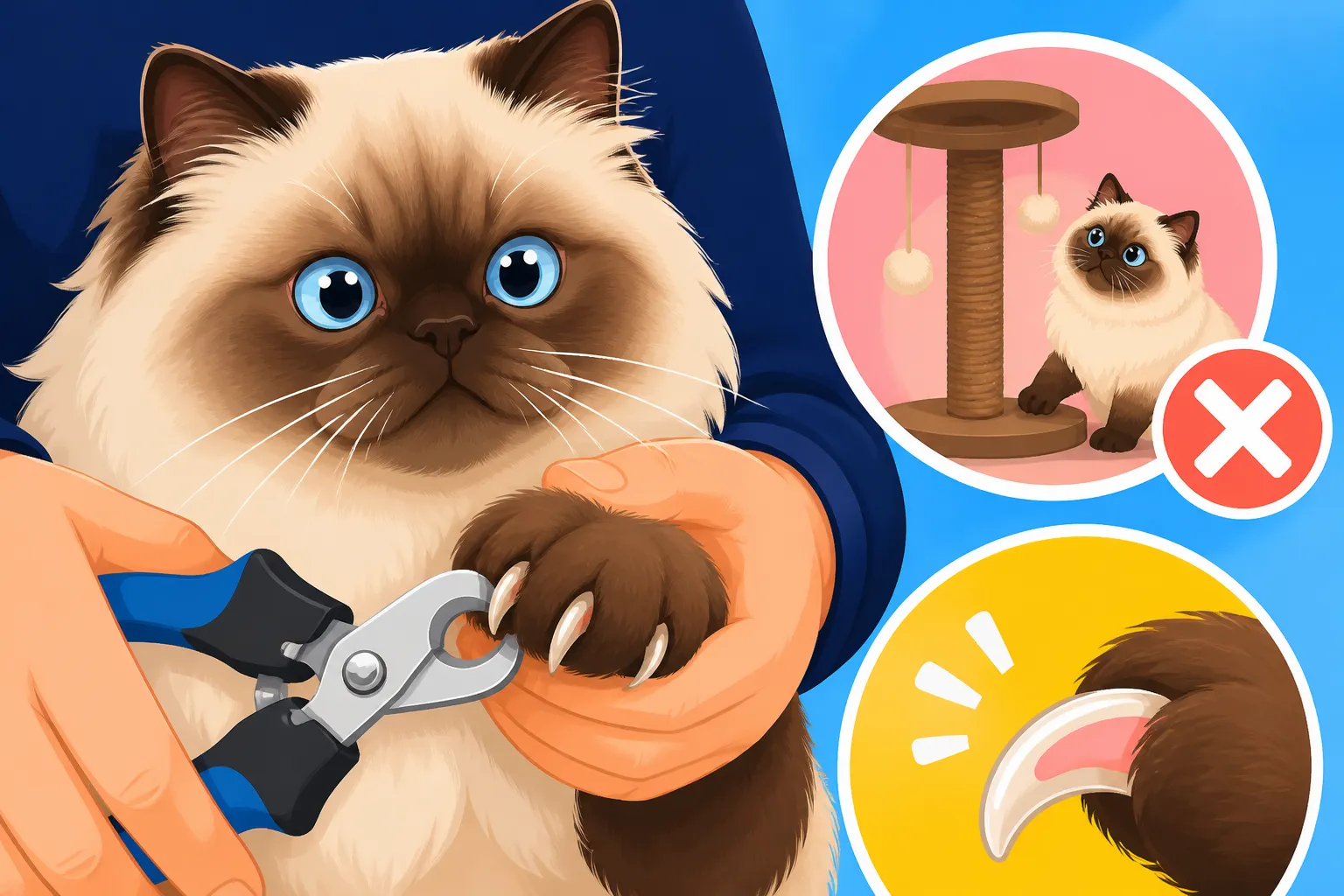
This is the most crucial part: knowing where to cut. Cat claws have two main parts: the keratinized outer shell (the part you want to trim) and the "quick" (the pinkish, sensitive core containing blood vessels and nerves).
- Locate the Quick: On light-colored claws, the quick is usually visible as a pinkish area within the transparent claw. You want to cut only the clear, hooked tip, well away from the quick. On dark-colored claws, the quick is much harder to see. In this case, it’s always better to take off tiny slivers at a time, looking at the cross-section of the claw. As you trim, you'll eventually see a small, dark dot in the center of the white or clear claw — this is where the quick begins, so stop before you reach it. When in doubt, trim less, not more.
- Positioning the Paw: Gently hold your cat's paw between your thumb and forefinger. Use your thumb to apply slight pressure to the top of the paw, just above the claw, and your forefinger to press lightly on the toe pad. This action will extend the claw fully.
- Making the Cut: Position your clippers at a 45-degree angle, making sure you cut below the quick. Make a swift, decisive cut. A quick, clean snip is less jarring for your cat than a slow, hesitant squeeze.
- The Dewclaws: Don't forget the dewclaws! These are the claws located on the inner side of their front legs, slightly higher up than the other toes. They don't touch the ground and therefore don't wear down naturally at all, making them particularly prone to overgrowth and curling into the paw pad. They are often overlooked but are just as important to trim.
What to Do If You Cut Too Short and Establishing a Routine
If, despite your best efforts, you accidentally nick the quick:
- Don't Panic: Take a deep breath. It happens.
- Apply Styptic Powder: Immediately grab your styptic powder. Dip the bleeding claw directly into the powder, or press a pinch of powder onto the tip of the claw with gentle pressure for a few seconds. The bleeding should stop quickly.
- Reassure Your Cat: Offer immediate comfort and a high-value treat. End the session for that paw, or even for the entire session if your cat is very distressed. You can always try again later or the next day.
Establishing a Routine: Consistency is key. How often you need to trim will depend on your individual Himalayan, but generally, every 2-4 weeks is a good starting point. Some less active cats might need it more frequently. Keeping their claws at a manageable length not only prevents pain and injury but also makes the trimming process itself easier, as the quick tends to recede slightly with regular trims. Make it a positive experience by always offering treats and praise. Even if you only manage a few claws at a time, that's progress!
| Clipper Type | Pros | Cons | Ideal For |
|---|---|---|---|
| Scissor-Style | Good visibility of the claw; easy to maneuver | May require more hand strength for very thick claws | Most Himalayan owners, beginners, cats with lighter claws |
| Guillotine-Style | Strong cutting action, good for thick claws | Can be harder to see the quick; less control for very small cuts | Experienced trimmers, cats with very dark or exceptionally thick claws |
| Human Nail Clippers | Easily accessible | Can crush cat claws, risk of splitting; not designed for cat claws | Not recommended for cats |
Encouraging Scratching Post Use for a Happier Himalayan
While we've focused on how to manage claws when posts are ignored, wouldn't it be wonderful if your Himalayan did use them? It’s certainly worth trying a few strategies to make scratching posts more appealing, even for the most stubborn of felines. After all, scratching is a natural, healthy behavior that provides exercise, stress relief, and a way for your cat to mark their territory.
Experimenting with Different Types and Textures
As we touched on earlier, cats are picky! If your Himalayan isn't using a sisal rope post, it doesn't mean they don't want to scratch; it just means they don't like that particular medium.
- Cardboard Scratchers: These are often a huge hit. They're inexpensive, come in various shapes (flat, angled, curved), and offer a satisfying shredding sensation. You can find multi-packs on Chewy or Amazon.
- Carpeted Scratchers (with caution): While generally not recommended for teaching not to scratch your carpet, some cats simply prefer carpet. If you go this route, ensure the texture is very different from your home carpets, and always try other options first.
- Wood or Bark Posts: Some cats love the feeling of real wood or tree bark. These can be rustic and durable, and offer a very natural scratching experience.
- Fabric Posts: Posts covered in upholstery fabric (a different texture than your sofa, ideally!) might appeal to a cat that likes to scratch at soft furnishings.
Don't be afraid to have a few different types in different locations. What works for one cat might not work for another, and sometimes, it's just about finding that perfect match. Remember, the sensation of scratching should be satisfying, not frustrating.
Strategic Placement and Stability Reinforcement
Where you put a scratching post is almost as important as the post itself. Cats scratch for a reason, and they often want to do it in specific spots.
- High-Traffic Areas: Place posts in areas where your Himalayan regularly naps, eats, or walks through. A good spot is often right next to their favorite sleeping area, so they can stretch and scratch upon waking.
- Near Problem Areas: If your Himalayan is currently attacking your favorite armchair, put a desirable scratching post right in front of or next to that armchair. You can even temporarily cover the armchair with something unappealing (like double-sided sticky tape or aluminum foil) to redirect them to the new post.
- Vertical vs. Horizontal: Observe how your cat stretches. Do they lean forward to scratch horizontally, or do they reach up high? Offer both vertical posts and horizontal scratcher mats. Many Himalayans, with their lower activity levels, might prefer horizontal options that don't require as much vertical stretching. Why a Himalayan Stays on the Floor and the Sofa highlights their preference for lower surfaces, which extends to their scratching habits.
- Stability is Non-Negotiable: I cannot stress this enough. A wobbly post is a terrifying post. Ensure any vertical post is heavy-based or secured in some way so it won't tip over when your Himalayan puts their weight into it. If it moves, they won't use it.
Tempting Attractants and Positive Reinforcement
Sometimes, a little extra encouragement is all it takes. Cats are creatures of habit and scent, so we can use that to our advantage.
- Catnip: Generously rub catnip onto the scratching post. For many cats, the scent of catnip is irresistible and will draw them in for an exploratory scratch. Not all cats respond to catnip, but it's worth a try!
- Feliway or Other Pheromone Sprays: Pheromone sprays mimic the natural facial pheromones cats use to mark their territory as safe and secure. Spraying a scratching post with one of these can encourage your Himalayan to rub against it and use it, associating it with positive feelings.
- Play and Praise: Engage your cat in play near the scratching post. Dangling a wand toy around the post can encourage them to bat at it, and perhaps accidentally (or deliberately!) scratch it. When they do, even if it's just a tentative claw, offer immediate praise and a high-value treat. Make it a fun, rewarding experience. If they even look at it, reward them! The more positive associations you can build, the better.
Remember, the goal is to make the scratching post the most appealing option in the house for their scratching needs. It might take time and persistence, but finding the right combination of texture, placement, and encouragement can make a world of difference for your Himalayan's claw health and your furniture's longevity.
When to Seek Professional Assistance for Claw Care
Even with all the best intentions and the right tools, there are times when trimming your Himalayan's claws feels like an impossible task. It’s okay to admit defeat and seek professional help. Recognizing when to call in the experts can save you and your cat a lot of stress, and prevent potential injuries.
When Your Cat is Uncooperative or Aggressive
If your Himalayan transforms into a furry, four-legged tornado every time you approach with clippers, it’s a clear sign that you might need professional intervention. Some cats are simply not amenable to home claw trims, no matter how patient or gentle you are. Aggression, extreme fear, or intense struggling can be dangerous for both of you, risking scratches, bites, or accidental injury to your cat's quick.
A professional groomer or veterinary technician has specialized training in handling difficult cats and the right tools to get the job done efficiently and safely. They can often complete the task in minutes what might take you hours (or result in no clipped claws at all). They also have techniques to calm anxious cats, and can often assess if there's an underlying reason for the aggression or fear, such as pain. Don't feel like a failure if you need to go this route – you're prioritizing your cat's safety and well-being.
Dealing with Black Claws or Overgrown, Ingrown Claws
Black claws pose a particular challenge for home trimmers. As mentioned, it's virtually impossible to see the quick on dark nails, making the risk of cutting too short much higher. If your Himalayan has dark claws, a professional can often rely on experience and anatomical knowledge to safely trim them, or they may use specialized lighting that helps them identify the quick more accurately.
Overgrown claws are another scenario where professional help is invaluable. If your cat's claws have curled so much that they are growing into the paw pads, or are very long and thick, this is a painful and potentially infectious situation that requires immediate attention. A vet can gently uncurl, trim, and treat any embedded claws, often under light sedation if the cat is in pain or very distressed. Ingrown claws can lead to severe infections, so don't delay in seeking help if you notice this issue.
The Benefits of Regular Vet or Groomer Visits
Even if you’re generally comfortable trimming your Himalayan’s claws, occasional professional trims can be incredibly beneficial.
- Expert Eye: Vets and groomers can often spot subtle issues that you might miss, such as changes in nail health, early signs of infection, or even conditions like arthritis that might make a certain claw-trimming position uncomfortable for your cat.
- Reinforced Training: For cats that are moderately tolerant, regular visits to a professional can reinforce the idea that claw trims are just another part of their routine, and they learn to accept it more readily.
- Comprehensive Grooming: Many groomers offer full grooming packages that include not just claw trims but also brushing, ear cleaning, and face cleaning – all essential for a long-haired, flat-faced breed like the Himalayan. Why a Himalayan's Vet Year Is Eyes, Teeth and Kidneys reminds us that a holistic approach to their health care is always best. A vet or groomer can also advise on appropriate grooming tools, such as the best steel comb for a Himalayan's coat.
Think of professional claw care as another tool in your toolkit for keeping your Himalayan healthy and happy. It's a testament to responsible pet ownership to know when to delegate certain tasks to those with specialized expertise.
Disclaimer
This article is for general informational purposes only and does not constitute professional advice. Laws, prices and regulations vary by location and change over time. Consult a qualified professional for guidance on your specific situation.