Whether a Himalayan Queen Needs a Caesarean
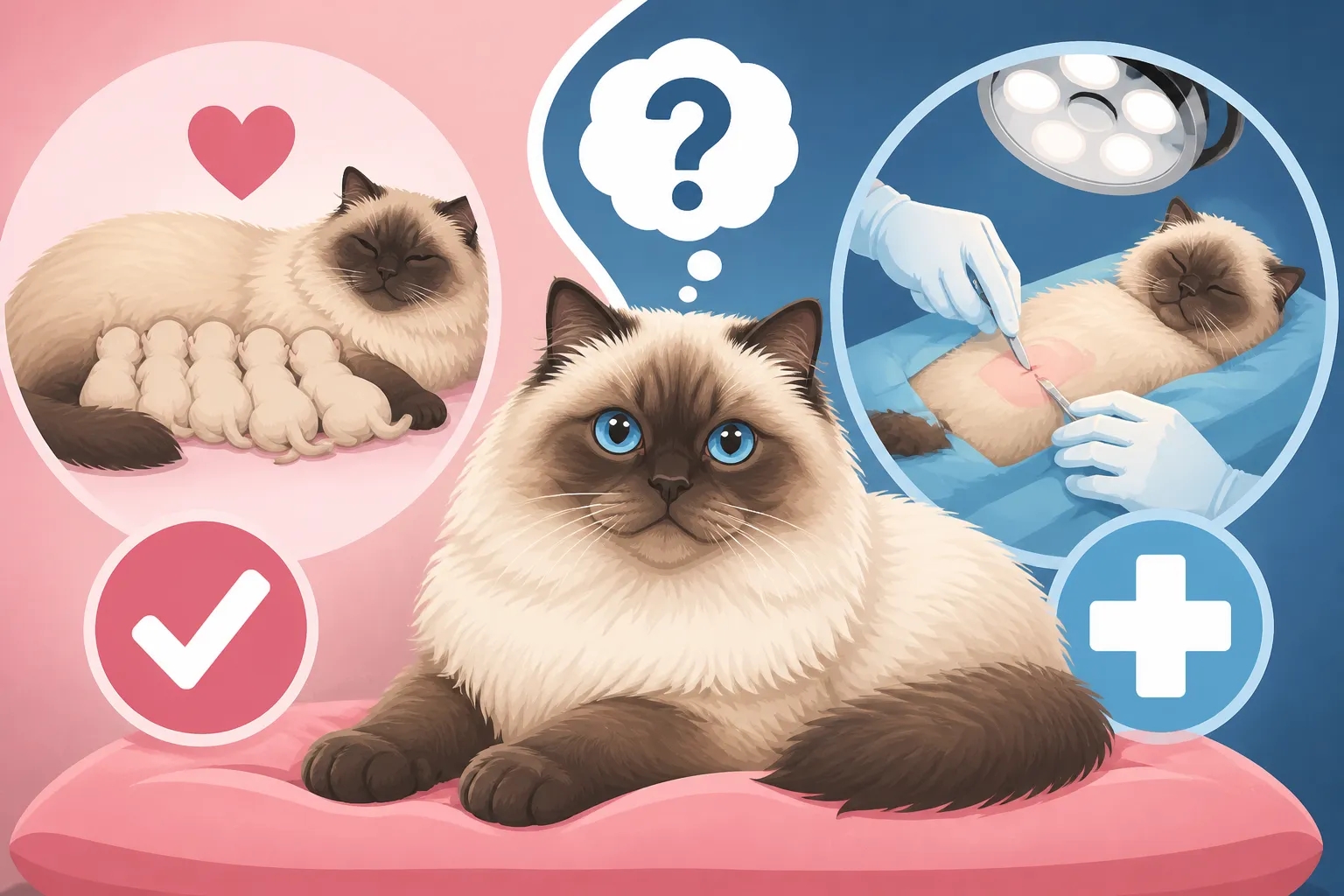
A Himalayan queen does not automatically need a caesarean just because she is a Himalayan. Still, her Persian-type facial structure, individual pelvic anatomy, kitten size and previous birth history can all affect delivery planning. This guide explains when a planned or emergency C-section may be considered, what warning signs need urgent veterinary attention, and how to prepare without assuming trouble is inevitable.
Do Himalayan queens routinely need a caesarean
Breed alone does not decide how a queen gives birth
A Himalayan queen may deliver naturally if she and her kittens are healthy and labor progresses normally. The breed name by itself is not a reason to schedule surgery. A vet considers the individual cat’s health, body and pelvic structure, pregnancy, kitten positions and previous births rather than making a decision from appearance alone.
Himalayans are closely associated with Persian-type body and head characteristics, but there is no reliable rule that every queen with those features will have obstructed labor. Some cats deliver without assistance; others may develop complications for reasons that cannot be predicted from breed alone. The background on Why a Himalayan Is Judged as a Persian in CFA helps explain why the breed’s Persian characteristics are part of the conversation, but it does not establish that a C-section is inevitable.
It is also worth separating a flat face from the mechanics of birth. Brachycephalic features can matter to anesthesia and breathing management, but they do not, by themselves, prove that a queen’s birth canal is too small or that her kittens cannot pass. A veterinarian needs to assess the whole cat. For the related anesthesia considerations, see Why a Himalayan Is a Harder Anesthetic Than a Siamese.
Individual risk factors matter more than a blanket rule
A history of difficult labor or a previous caesarean is important information for the veterinarian. So are known pelvic abnormalities, a kitten that is unusually large or positioned awkwardly, and signs that the queen is becoming exhausted or unwell. These factors may lead the vet to discuss a planned operation or to prepare for an emergency one.
The litter itself can affect the picture, too. A small litter does not automatically mean a difficult birth, but a kitten may be relatively large when there are only a few. Conversely, a larger litter can bring its own challenges, including fatigue and the possibility that not all kittens are positioned or delivered smoothly. How Big a Himalayan Litter Usually Is and Why a Cobby Himalayan Queen Has Few Kittens provide useful context, but litter size cannot predict a particular delivery on its own.
A previous uncomplicated birth is reassuring, but it is not a guarantee that the next one will be the same. The queen’s age and health, the kittens’ size and position, and changes during this pregnancy all matter. Share any earlier labor records or surgery history with the vet rather than relying on memory alone, especially if you are planning a breeding.
When a planned or emergency C-section may be considered
What can lead to a planned caesarean
A veterinarian may recommend discussing a planned C-section if there is a known physical problem that makes vaginal delivery unsafe, a history of serious dystocia, or a pregnancy in which examination suggests the queen or kittens face an elevated risk. A plan may also be considered if a previous delivery required urgent surgery, depending on what caused the difficulty and whether that cause is likely to recur.
Planning does not mean surgery is automatically the safest choice. A caesarean involves anesthesia, an operation and recovery for the mother, as well as immediate care for newborn kittens. A vet weighs those risks against the potential danger of waiting for labor or allowing a difficult delivery to continue. A Himalayan’s facial anatomy is one reason to make sure the clinic understands her breed-related airway considerations and can manage anesthesia appropriately.
Ask the veterinarian what findings are driving the recommendation and what signs would change the plan. Useful questions include: Is there evidence of a pelvic or fetal-size concern? What would prompt surgery rather than continued monitoring? Which clinic should be contacted after hours? If a planned procedure is being considered, clarify how the kittens will be warmed and supported while the queen recovers.
When a delivery problem becomes urgent
Dystocia means difficult or obstructed birth. It can happen when labor does not progress, a kitten is poorly positioned, the mother is exhausted, or another complication arises. It is not something a breeder can reliably diagnose by watching from the room; the vet may need to examine the queen and use imaging to determine what is happening.
Contact a veterinarian urgently if the queen is straining hard without producing a kitten, appears weak or distressed, has heavy bleeding, or has abnormal discharge before a kitten arrives. A kitten visibly stuck at the opening also needs immediate veterinary guidance. Do not wait for a situation to become dramatic before calling: describe what you see, when it began, and whether any kittens have already been born.
Do not pull forcefully on a kitten or give medication intended to speed labor unless a veterinarian specifically instructs you. Drugs that affect contractions can be dangerous if a kitten is obstructing the birth canal. Keep the queen calm, follow the clinic’s instructions and be ready to transport her. For more on the breed’s anesthesia considerations, How a Vet Manages a Himalayan Under Anesthetic offers relevant background.
| Situation | What it may mean | Practical response |
|---|---|---|
| Queen is comfortable and labor is progressing | Natural delivery may be proceeding normally | Monitor quietly and keep the vet’s contact details ready |
| Straining continues without a kitten, or the queen seems distressed | Labor may not be progressing safely | Call the veterinarian promptly for instructions |
| Heavy bleeding, weakness or a kitten visibly stuck | Possible emergency | Seek urgent veterinary care; do not pull or medicate without direction |
| Prior difficult birth or known physical concern | The next delivery may need an individualized plan | Discuss monitoring, referral and possible planned surgery before labor |
Preparing for labor and veterinary care
Make a plan before the due period
Arrange a pregnancy check and discuss delivery planning with a veterinarian familiar with feline reproduction or experienced in managing births. The vet can decide whether examination or imaging is appropriate and explain what information it may provide. Imaging can help assess matters such as kitten number or position, but its timing and usefulness should be determined by the clinic.
Make sure you know where to go if your regular clinic is closed. Save the regular vet’s number and the nearest emergency clinic’s details, check how you will transport the queen, and ask whether the clinic wants a call before you leave. If she has a history of difficult labor, or the vet has identified a concern, confirm the plan in advance rather than trying to make decisions in the middle of the night.
Prepare a quiet, clean nesting area and a secure carrier that is easy to access. You can source ordinary supplies, such as washable bedding and a carrier, from a local pet shop or Chewy, but keep medical equipment and medication decisions with your veterinarian. A kitten milk replacer may be useful to have available if the vet recommends supplementation, but it should not replace veterinary help when a newborn is weak or unable to nurse.
Keep observation calm and useful
Write down when labor signs begin, when each kitten is born, and whether the queen is nursing and behaving normally. These details can help a veterinarian assess the situation over the phone. Avoid repeatedly handling the queen or moving her nest without a reason; a calm environment makes it easier to observe her and reduces unnecessary stress.
A home checklist should support—not replace—professional care. Keep clean towels, a phone, transport arrangements and the clinic’s number close by. If you order supplies through Chewy or another retailer, check that they arrive before the expected delivery window rather than waiting until labor begins. Never use a heating device in a way that could overheat or burn kittens; ask your vet how to keep newborns warm safely if the queen needs surgery or cannot care for them immediately.
Breeding decisions also deserve broader preparation than the birth itself. Confirm the queen’s health, discuss inherited conditions in both parental lines, and make sure you have a plan for routine and emergency veterinary costs. The guide Which Diseases a Himalayan Inherits From Each Parent Breed can help frame health questions for a breeder and veterinarian. If a Himalayan is being bred to a Persian, Whether a Himalayan Can Be Bred to a Persian and What a Persian Carrying the Himalayan Gene Is Called explain relevant breed terminology, though neither replaces individual veterinary advice.
Caring for the queen and kittens after delivery
Recovery after a caesarean
After surgery, the queen needs a quiet recovery space and close observation according to the clinic’s discharge instructions. The veterinary team will explain how to monitor her incision, manage prescribed medication and arrange follow-up. Do not give human painkillers or leftover medication; many common products can be unsafe for cats, and the right treatment depends on the surgery and the queen’s condition.
The first hours after surgery can be especially hands-on because the queen may still be recovering from anesthesia and the kittens need warmth and feeding. Ask the clinic how to introduce kittens to her safely, how often to check that they are nursing, and what to do if she is too groggy or uncomfortable to care for them. If you need to supplement, follow the vet’s directions for the product and feeding method rather than improvising.
Call the clinic if the queen seems increasingly weak, has trouble breathing, appears to be in significant pain, or has concerning changes at the incision. Likewise, a kitten that is cold, unusually limp, unable to latch or persistently crying needs prompt advice. A caesarean can be the right intervention when necessary, but recovery is a period of active care—not simply a return home and a wait.
Natural birth still calls for sensible follow-up
A queen that delivers naturally may still need veterinary attention if labor was prolonged or difficult, she seems unwell, or a kitten is not nursing or thriving. Keep observing the mother’s appetite, comfort and interaction with the litter. Any sudden decline or worrying discharge should be discussed with a vet rather than assumed to be part of normal recovery.
For kittens, watch for regular nursing and steady care from the mother. If one kitten is consistently pushed aside or cannot latch, ask the vet what to do; small newborns can become vulnerable quickly. Keep the nest clean and comfortably warm, and avoid separating the queen from her litter unless there is a safety or medical reason.
The most useful conclusion for an owner or breeder is not that every Himalayan queen needs surgery, nor that a natural birth is always safe. It is that the plan should fit the individual queen and pregnancy, with a clear route to veterinary help if labor changes. Having that conversation early can ease the uncertainty and help you act quickly if a real complication appears.
Disclaimer
This article is for general informational purposes only and does not constitute professional advice. Laws, prices and regulations vary by location and change over time. Consult a qualified professional for guidance on your specific situation.