Why CFA Made the Himalayan a Persian Division in 1984
If you've ever found yourself scratching your head, wondering why your beautiful Himalayan cat's registration papers might say "Persian," or why some people refer to them as "Colorpoint Persians," you're not alone. This enduring puzzle stems from a significant decision made by the Cat Fanciers' Association (CFA) in 1984, which forever changed the formal classification of the Himalayan breed. This guide is here to untangle that history, explain the rationale, and clarify what it all means for Himalayan owners then and now.
The Himalayan's Unique Genesis and Early Recognition
The Himalayan cat, with its striking Siamese points and luxurious Persian coat, wasn't just a happy accident. It was the result of deliberate, scientific breeding efforts aimed at combining the best traits of two beloved but very distinct breeds. This unique origin story laid the groundwork for its eventual, sometimes confusing, journey through the cat fancy world.
Born of Scientific Curiosity, Not Just Beauty
The story of the Himalayan actually begins in the hallowed halls of academia, specifically at Harvard Medical School in the 1930s. Researchers like Dr. Clyde Keeler and Virginia Cobb were deeply interested in genetics and inheritance, and they saw an opportunity to study how certain traits, like coat color and pattern, were passed down. They embarked on a project to cross Siamese cats, known for their distinctive color points, with long-haired Persians. Their goal wasn't initially to create a new pet breed, but to understand genetic principles. Imagine the dedication – generations of selective breeding, meticulously tracking traits, all in the name of science! It was a fascinating experiment, proving that the pointed gene from the Siamese could indeed be expressed in a long-haired cat. This initial scientific endeavor inadvertently created the foundation for one of the most beloved cat breeds in the world. The Himalayan Was Made at Harvard in the 1930s is a great dive into this specific piece of history.
As these experimental cats started to gain attention beyond the laboratory, their beauty and unique combination of traits captured the imagination of cat enthusiasts. These early "Siamese-Persian" crosses began to be selectively bred for consistent appearance and temperament, moving from a scientific curiosity to a budding new breed. People were captivated by the contrast of dark points against a pale body, paired with the regal, long-haired elegance of the Persian. It wasn't just a new look; it was a new personality, blending the Siamese's vocal charm with the Persian's placid nature.
The Road to Independent Breed Status
After these initial scientific explorations, passionate breeders picked up the torch, working tirelessly to stabilize the traits and gain recognition for this new type of cat. It wasn't an overnight success; it took decades of careful breeding and advocacy to establish the Himalayan as a distinct entity in the cat fancy world. Pioneers like Marguerita Goforth in the United States were instrumental in this process, dedicating years to perfecting the breed and campaigning for its formal acceptance. Marguerita Goforth and the Himalayan's 1957 Recognition details her incredible efforts.
By the mid-20th century, these efforts paid off. In 1957, the Cat Fanciers' Association (CFA) officially recognized the Himalayan as a separate and distinct breed. This was a monumental achievement, giving Himalayans their own championship status and allowing them to compete in cat shows as "Himalayan." For breeders, this meant their hard work was validated, and for prospective owners, it meant a clear identity for the cat they adored. For a time, the Himalayan stood proudly alongside the Persian, Siamese, and other recognized breeds, enjoying its unique place in the feline hierarchy. This period was a golden age for Himalayan enthusiasts, with a clear path for breeding, showing, and celebrating these magnificent animals.
Understanding the Cat Fanciers' Association (CFA) Perspective
To truly grasp why the Himalayan's status shifted, we need to understand the underlying philosophy and historical practices of the Cat Fanciers' Association. CFA, being one of the oldest and most prestigious cat registries, has a particular way of looking at breed development and classification, which ultimately influenced the 1984 decision.
CFA's Historical Approach to Breed Development
CFA has always had a rather conservative and methodical approach to recognizing and categorizing cat breeds. Their philosophy often centers on the idea of maintaining distinct genetic lines while also recognizing variations within established breeds. When a new breed emerges, CFA typically evaluates it based on its genetic heritage, unique physical characteristics, and whether it breeds true — meaning, whether kittens consistently exhibit the desired traits from generation to generation. If a new cat appears to be largely a variation of an existing, well-established breed, particularly concerning its body type and structure, CFA might lean towards incorporating it as a division of that parent breed, rather than granting it entirely separate status. This approach helps to keep the number of "new" breeds manageable and emphasizes a strong, purebred foundation.
For many years, the Himalayan existed as its own breed within CFA, but the inherent Persian body type was always a point of discussion. From its very inception, the Himalayan was purposefully bred to have the same cobby body, round head, small ears, and luxurious long coat as a Persian. The only major distinguishing factor was the colorpoint pattern and blue eyes, which came from the Siamese ancestry. This close genetic and phenotypic relationship to the Persian was a constant undercurrent in discussions about the Himalayan's identity within the cat fancy. It set the stage for later debates about whether the points were enough to warrant a completely separate breed designation or if they were simply a color variation on a well-known canvas.
The "Colorpoint Persian" Concept Takes Root
As time went on, the concept of the "Colorpoint Persian" gained increasing traction within CFA, eventually leading to the 1984 reclassification. This idea wasn't new; even in the early days, some breeders and judges viewed Himalayans as essentially Persians with a specific color pattern, rather than a fundamentally different breed. They argued that if you stripped away the points, what you had was undeniably a Persian cat – the same distinctive head, body, and coat type. The pointed pattern, while beautiful and unique, was seen by many as a variation of the Persian phenotype, rather than a reason for complete separation.
This viewpoint was strengthened by the practice of outcrossing Himalayans to solid Persians to maintain and improve desirable Persian characteristics, such as coat quality, bone structure, and extreme facial type (for those who favored it). When you breed a Himalayan to a solid Persian, you get kittens that carry the Himalayan gene but may not express it themselves (they'd look like solid Persians). This genetic interchangeability further blurred the lines for some, reinforcing the idea that the Himalayan was intrinsically linked to the Persian. The name "Colorpoint Persian" wasn't just a fancy moniker; it reflected a growing sentiment that the core essence of the cat was Persian, with the points merely being a delightful color overlay, much like a tortie or calico pattern on any other breed. This perspective gradually built momentum, culminating in the controversial decision that reshaped the Himalayan's official standing. Why a Himalayan Is a Persian With the Point Gene provides more detail on this genetic connection.
The 1984 Merger: What Exactly Happened?
The year 1984 marked a pivotal moment for the Himalayan cat. The Cat Fanciers' Association, after much deliberation and internal debate, made the decision to formally merge the Himalayan breed into the Persian breed category. This wasn't just a simple name change; it was a reclassification with profound implications for how Himalayans were registered, shown, and perceived within the largest cat registry in North America.
The Official Decision and Its Rationale
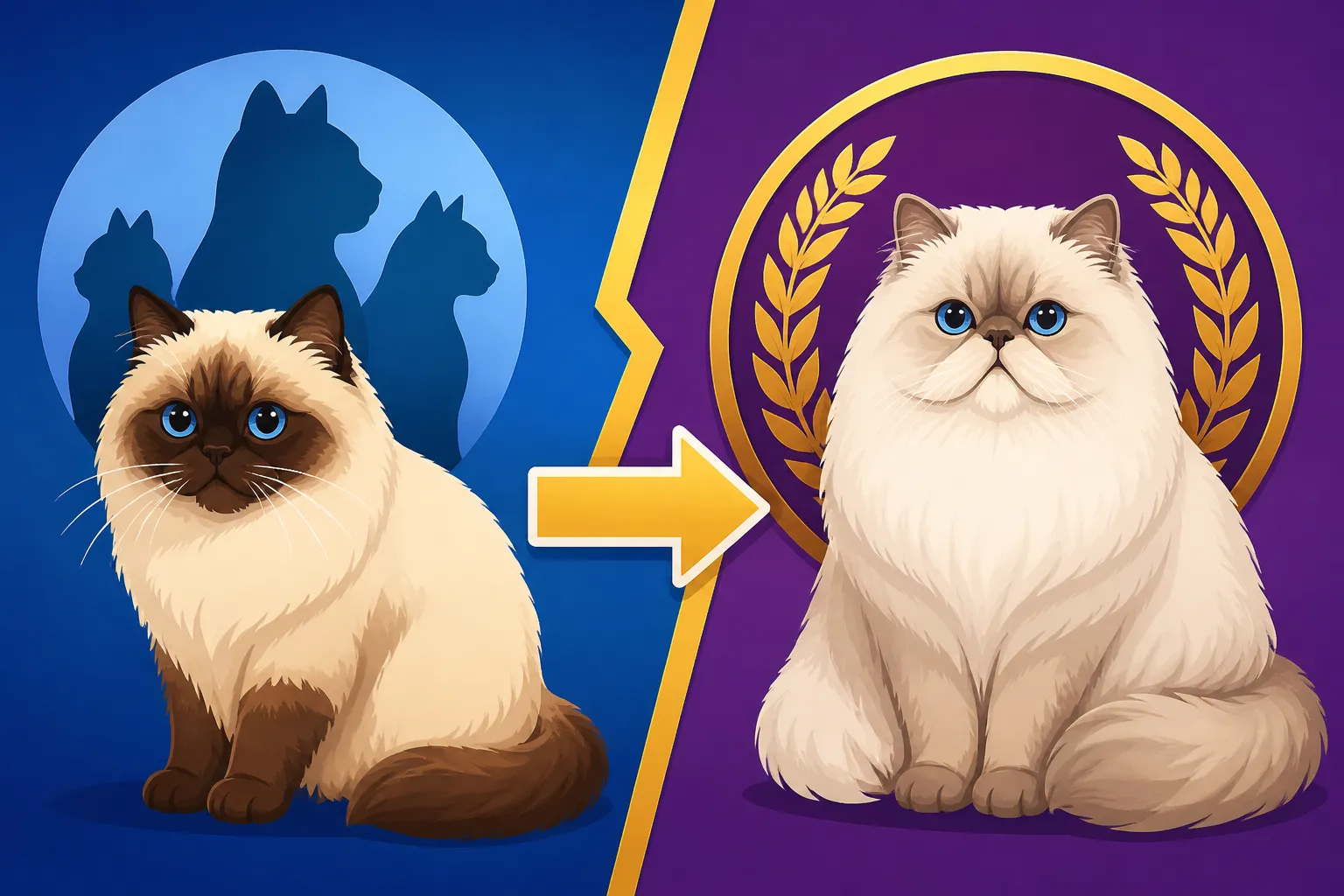
In 1984, the CFA officially folded the Himalayan into the Persian breed, designating it as the "Himalayan Division" of the Persian. The primary rationale behind this decision, as articulated by the CFA, was that the Himalayan's physical type had become virtually identical to that of the Persian, with the only consistent difference being the colorpoint pattern and accompanying blue eyes. From a structural standpoint, the ideal Himalayan conformation—the cobby body, short legs, broad head, small ears, and long flowing coat—was indistinguishable from the ideal Persian. The argument was, why should two cats that are structurally the same be considered separate breeds simply due to color? CFA believed that recognizing them as separate breeds created unnecessary confusion and diluted the integrity of the breed standards.
Many felt that maintaining separate breed status for the Himalayan was redundant when the desired "type" (the overall physical characteristics) was so clearly Persian. This decision sought to unify the breed standard and streamline the judging process, ensuring that all cats with this particular body and head structure were evaluated against a single, consistent set of criteria. It was an attempt by CFA to tidy up their registry and clarify what they considered fundamental breed distinctions versus mere color variations. While logical from a certain administrative perspective, this move was, understandably, met with strong reactions from the dedicated Himalayan breeding community who had worked so hard to establish its independent identity.
Reclassifying the Himalayan as a Persian Division
So, what does it mean to be a "Persian Division" in the CFA? It's more than just paperwork; it dictates everything from how your cat is registered to how it competes in a show ring. Essentially, when you register a Himalayan with CFA today, its papers will list it as a "Persian" with a specific "Himalayan Division" designation. This means that a Himalayan cat, despite its unique name and appearance, is judged against the Persian standard in CFA shows. There isn't a separate "Himalayan Standard" per se; it's all under the umbrella of the Persian.
This reclassification meant that Himalayans now competed directly against solid-colored Persians, bi-colors, tabbies, and all other Persian variations for top honors within the Persian breed group. While they still had their own point color classes (like Seal Point, Blue Point, Flame Point, etc.), when it came to Best of Breed, Best in Show, and other overall awards, they were in direct competition with their non-pointed cousins. For an owner looking to simply enjoy their pet, this might seem like a minor administrative detail. But for a breeder or show enthusiast, it was a fundamental shift in how their beloved cats were recognized and celebrated. It meant that the distinctive beauty of the points was still appreciated, but the underlying structure and type had to be impeccable, adhering fully to the rigorous Persian standards. What a Colorpoint Division Means for a Himalayan helps explain this nuance.
Immediate Impacts on Himalayan Breeders and Owners
The 1984 decision by CFA to merge the Himalayan into the Persian breed was not a quiet administrative tweak. It sent ripples throughout the cat fancy, profoundly impacting breeders, exhibitors, and even everyday pet owners. The immediate aftermath was a period of adjustment, confusion, and sometimes, passionate debate.
Shifting Show Ring Dynamics
For breeders and exhibitors who had dedicated their lives to showing Himalayans, the shift was immediate and dramatic. Suddenly, their "Himalayans" were now competing as "Persians." This meant they were judged against the Persian standard in every aspect, from head shape and eye placement to body type and coat texture. While Himalayans had always shared many traits with Persians, the subtle nuances and judging emphasis could now feel different. Cats that might have excelled as a Himalayan could find themselves at a disadvantage when competing directly against a solid Persian that was bred purely for the traditional Persian aesthetic, without the specific point color considerations.
Judges, too, had to adapt. They were now evaluating a broader spectrum of cats under one standard. This meant that a Himalayan's beautiful points, once a cornerstone of its separate breed identity, became just one of many color variations within the Persian class. It put immense pressure on Himalayan breeders to ensure their cats not only displayed correct points and blue eyes but also possessed impeccable Persian type to stand a chance in the highly competitive show ring. The unique appearance of the Himalayan, while still admired, no longer granted it a separate playing field, forcing an even higher standard of perfection in its Persian qualities.
Paperwork and Pedigree Adjustments
Perhaps one of the most tangible and lasting impacts of the 1984 decision was on the paperwork itself. Before 1984, a Himalayan kitten's registration certificate would clearly state "Himalayan" as its breed. After the merger, all CFA-registered Himalayans were listed as "Persian," with the "Himalayan Division" or "Colorpoint Persian" appended. For new owners, this often led to confusion. They might have fallen in love with a "Himalayan," only to receive papers that said "Persian." This disconnect created a need for breeders to educate prospective buyers thoroughly about the history and the nuances of CFA registration.
Furthermore, pedigrees began to reflect this change. A Himalayan's pedigree would show its lineage as part of the Persian breed, even if all ancestors were distinctly Himalayan in appearance. This required breeders to be diligent in tracking not just the Persian qualities but also the presence of the colorpoint gene within their lines. What Your Himalayan's Certificate Actually Says and How to Read the Breed Line on a Himalayan Pedigree are excellent resources for understanding these documents. This change certainly solidified the genetic link between the two, but it also erased, in some official capacities, the distinct historical journey of the Himalayan as a standalone breed.
Breeder Reactions and the "Himalayan vs. Colorpoint Persian" Debate
The decision to merge the Himalayan into the Persian was, to put it mildly, controversial. Many long-time Himalayan breeders felt a deep sense of loss and frustration. They had dedicated their lives to developing and promoting the Himalayan as a unique breed, and this decision felt like a diminishment of their hard work and the cat's distinct identity. For them, the Himalayan was not just a Persian with points; it possessed a unique blend of temperament and history that warranted its own classification. The "Himalayan vs. Colorpoint Persian" debate became a passionate, sometimes heated, discussion within the cat fancy community.
Some breeders, particularly those who prioritized the extreme Persian type, adapted more readily, embracing the "Colorpoint Persian" moniker and focusing on producing Himalayans that could compete seamlessly within the broader Persian categories. Others, however, felt betrayed and sought alternatives. This divide even led some breeders to switch their affiliations to other registries that maintained the Himalayan as a separate breed, or to focus on promoting the "Doll Face" Himalayan, which often has a less extreme facial structure than the show-type Persian. Why the 1984 Decision Still Confuses Himalayan Buyers highlights the ongoing nature of this historical point of contention, demonstrating how deeply personal these breed identities can become for those who cherish them.
The Enduring Legacy of the 1984 Decision
The CFA's decision in 1984 wasn't just a momentary ripple; it created an enduring legacy that continues to shape the perception, breeding, and ownership experience of the Himalayan cat today. This single administrative move solidified a complex identity for the breed, one that still requires explanation and understanding.
Continued Confusion for New Owners
Even decades later, the 1984 merger remains a source of confusion for many prospective and new Himalayan owners. When someone falls in love with the iconic look of a Himalayan – those striking blue eyes, the dramatic points, and the luxurious coat – they expect to adopt a cat with that distinct name. Imagine their surprise when a breeder or registry refers to their beloved pet as a "Persian" or a "Colorpoint Persian." This terminology can be genuinely disorienting, making it hard to research their cat's specific needs or even to confidently articulate what kind of cat they own.
The internet, while a treasure trove of information, can sometimes exacerbate this confusion, with articles and forums using both "Himalayan" and "Colorpoint Persian" interchangeably or without proper context. This means that responsible breeders and knowledgeable owners often find themselves playing the role of historian and educator, explaining the nuanced history to every new inquiry. It's a testament to the cat's beauty that people are willing to navigate this historical quirk, but it certainly adds an extra layer of complexity to owning one of these magnificent felines.
How Other Registries Responded
While CFA made its definitive move, not all cat registries followed suit. This divergence in classification created a fascinating split in how the Himalayan is recognized globally. The International Cat Association (TICA), for instance, continues to register the Himalayan as a distinct breed of its own. This means that if you have a Himalayan registered with TICA, its papers will unequivocally state "Himalayan," and it will compete in shows as a Himalayan, judged against its own breed standard. This provides an alternative for breeders and owners who prefer to maintain the breed's separate identity.
The existence of these differing approaches means that the Himalayan's status depends entirely on which registry you're looking at. For international show circuits or breeders who work with multiple registries, this can require careful navigation. TICA Still Registers the Himalayan as a Breed of Its Own is a helpful resource for understanding this contrasting perspective. This fractured recognition contributes to the ongoing debate and highlights that the "correct" way to classify the Himalayan is still, in some circles, a matter of opinion and historical precedent.
| Registry | Himalayan Classification | Show Competition |
|---|---|---|
| CFA | Persian (Himalayan Division / Colorpoint Persian) | Competes within Persian breed for Best of Breed |
| TICA | Himalayan (Separate Breed) | Competes as its own breed for Best of Breed |
The Impact on Breed Standards and Development
The 1984 decision undeniably had a profound impact on the direction of Himalayan breeding, especially within CFA. By classifying Himalayans as a division of Persians, CFA effectively pushed breeders to prioritize "Persian type" even more vehemently. To succeed in the show ring, a Himalayan couldn't just have beautiful points; it had to be an excellent Persian in every other aspect. This often meant a continued emphasis on the extreme Peke-face profile, cobby body, and plush coat that defined the show Persian. Breeders worked diligently to ensure their Himalayans met the rigorous What the Persian Standard Asks of a Himalayan, striving for that perfect balance of Persian structure with the distinctive point coloration.
This integration meant that the genetic pool for Himalayans and solid Persians became even more intertwined, with outcrossing between the two types being a common and accepted practice. This strategy aimed to continuously refine the Persian characteristics in the Himalayan lines, ensuring they remained competitive. While this approach fostered strong genetic health and consistent type in many lines, it also meant that the debate over "Doll Face or Peke Face Is the Himalayan Buyer's Real Decision" continued to be a significant consideration for breeders and buyers alike. Ultimately, the merger reinforced the Himalayan's identity as a Persian variant, guiding its development firmly along the established Persian trajectory.
Navigating the Modern World as a Himalayan Owner
So, what does all this history mean for you, the modern Himalayan owner or aspiring enthusiast? It means approaching your cat's identity with a little extra knowledge and understanding. While the official classifications can be a bit of a bureaucratic maze, the love and care for these magnificent felines remain universal.
What Your Himalayan's Papers Will (and Won't) Say Today
When you acquire a purebred Himalayan kitten from a reputable breeder, especially one registered with CFA, its official paperwork will likely reflect the 1984 decision. Your registration certificate and pedigree will typically state "Persian," followed by "Himalayan Division" or sometimes "Colorpoint Persian." This is perfectly normal and expected, so don't be alarmed if you see this. It doesn't mean your cat isn't a true Himalayan; it simply reflects the organizational structure of the registering body. Understanding this nuance will save you a lot of potential confusion and allow you to confidently speak about your cat's official designation.
If your cat is registered with a different association, such as TICA, the papers will most likely state "Himalayan." This difference in documentation is a direct result of the divergent paths taken by the various cat registries. It's crucial to always ask your breeder which registry they use and how your kitten will be listed, so you know exactly what to expect. Regardless of what the paperwork says, the distinct charm and personality of your Himalayan will shine through, and that's what truly matters in your home. How TICA Registers a Himalayan Today offers a great overview for those exploring options beyond CFA.
Finding a Reputable Breeder Who Understands the History
Given the complex history, finding a reputable Himalayan breeder who is transparent and knowledgeable about the breed's classification is paramount. A good breeder won't shy away from discussing the CFA/Persian merger or explaining why their pedigrees might say "Persian." In fact, they should be eager to educate you, walking you through the nuances of registration, show standards, and the genetic heritage of their lines. They should be able to explain how the Why a Himalayan Is a Persian With the Point Gene impacts their breeding program.
When you're searching for a kitten, ask prospective breeders about their affiliation with cat registries, how their cats are registered, and what terminology they use. A responsible breeder will prioritize your understanding and will be upfront about all aspects of the Himalayan's identity. They'll show you health certificates, discuss genetic testing for common Himalayan conditions, and generally provide a wealth of information. Avoid any breeder who seems vague or dismissive about these important historical and registration details, as transparency is a hallmark of ethical breeding practices.
Advocating for Your "Persian with Points"
Ultimately, while the official designation might be "Persian (Himalayan Division)," most enthusiasts and pet owners will continue to lovingly refer to these cats as Himalayans. It's the name that captures their unique essence and history, and it's deeply ingrained in popular culture. As an owner, you become an advocate for the breed, helping to educate friends, family, and even veterinary staff who might not be familiar with the historical context. When someone asks about your gorgeous cat, you can proudly say, "This is my Himalayan!" and if they inquire further, you now have the knowledge to explain the fascinating journey of its official recognition.
Embrace the conversation! You can explain that while technically considered a Colorpoint Persian by CFA, the Himalayan carries a distinct lineage and has its own passionate community. This dual identity makes the Himalayan even more interesting, a true testament to selective breeding and the enduring appeal of its unique beauty. Whether you purchase from a breeder who registers with CFA or TICA, what truly matters is the health, temperament, and happiness of your "Persian with points." And for their daily needs, products you can find at places like Chewy are designed for long-haired breeds, regardless of their official registry designation, making it easy to care for that luxurious coat. Just remember, a happy cat is a well-cared-for cat, and that's what our community is all about.
Disclaimer
This article is for general informational purposes only and does not constitute professional advice. Laws, prices and regulations vary by location and change over time. Consult a qualified professional for guidance on your specific situation.