What Keeler and Cobb Were Studying When They Made the Himalayan
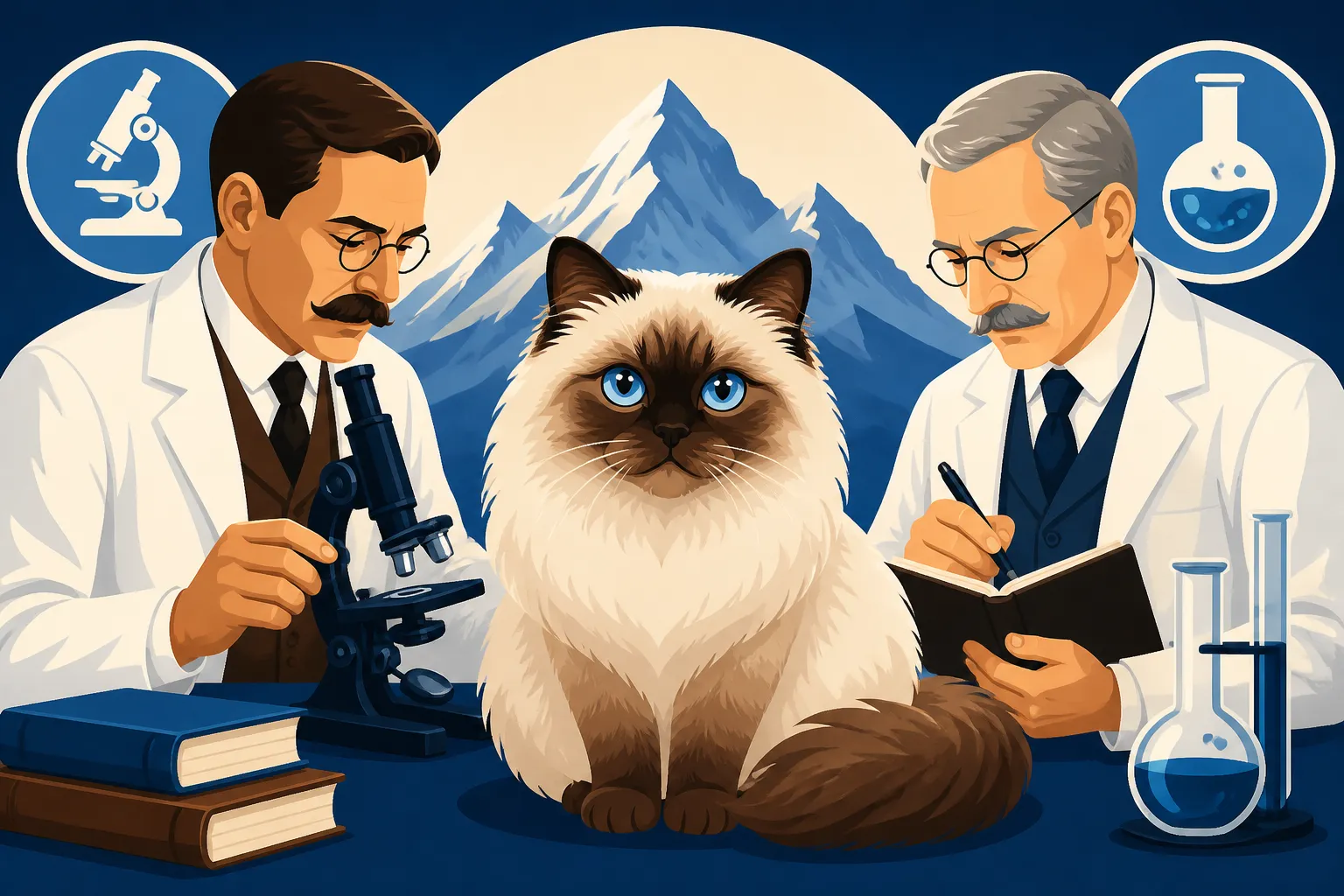
Many people adore the Himalayan cat for its striking colorpoint pattern and luxurious coat, but few realize that this beloved breed wasn't simply 'bred' into existence in the traditional sense. Instead, the Himalayan cat emerged from a focused scientific endeavor, a deliberate experiment in genetics aimed at understanding how certain traits, particularly coat color, are inherited. Researchers Clyde Keeler and Virginia Cobb were at the forefront of this fascinating project, meticulously working to unlock the secrets of feline heredity. This guide will delve into the specific scientific questions they were tackling and how their rigorous research ultimately gave the world the magnificent Himalayan.
The Genesis of the Himalayan: Beyond Just "Breeding Cats"
When we talk about the creation of the Himalayan cat by Clyde Keeler and Virginia Cobb, it's crucial to understand that they weren't initially setting out to establish a new cat breed for cat shows. Their work was rooted deeply in the scientific advancements of the early 20th century, particularly in the burgeoning field of genetics. This wasn't a hobbyist's pursuit of a pretty new feline; it was a rigorous, controlled experiment driven by specific hypotheses about inheritance.
The Scientific Drive for Understanding Heredity
The early 1900s saw a massive explosion in genetic research, building upon Mendel's rediscovered laws of inheritance. Scientists were keen to apply these principles to a wide array of organisms, from fruit flies to mice, and eventually, to domesticated animals like cats. There was a profound curiosity about how traits were passed down through generations, how dominant and recessive genes interacted, and how these genetic blueprints manifested in an animal's physical characteristics, or phenotype. Keeler and Cobb were part of this larger scientific movement, contributing to the foundational understanding of genetics that we now take for granted. They were dissecting the very fabric of life, one furry creature at a time. The scientific community was hungry for observable, measurable data on genetic transmission, and the Siamese and Persian cat offered a unique canvas for their investigations.
The Choice of Siamese and Persian for Genetic Study
The selection of the Siamese and Persian breeds for their study was no accident; it was a deliberate choice based on their distinct and well-established characteristics. The Siamese cat was renowned for its striking colorpoint pattern – pale body, dark extremities – and its relatively short, sleek coat. This pattern was a known genetic anomaly, a mutation that scientists suspected was tied to temperature. On the other hand, the Persian cat was known for its long, flowing coat and a wide variety of solid and tabby colors, but crucially, it lacked the colorpoint gene. By crossing these two distinct breeds, Keeler and Cobb created a "living laboratory" where they could observe how these contrasting traits combined, expressed, and were inherited. Why Harvard Crossed a Persian With a Siamese to Make the Himalayan delves deeper into the reasoning behind this specific cross. It wasn't about making a "pretty" cat; it was about isolating and understanding the genetic mechanisms at play.
Initial Hypotheses and Research Questions
Keeler and Cobb's primary hypothesis centered on understanding the inheritance of the Siamese colorpoint pattern, particularly its presumed temperature-sensitive nature, and how it would interact with the longhair gene of the Persian. They wanted to determine if the colorpoint trait was a simple recessive gene, how it expressed itself when combined with a non-pointed gene, and specifically, if they could combine the long coat of the Persian with the colorpoint pattern of the Siamese. This involved meticulous tracking of coat color, length, and other phenotypic traits across multiple generations of offspring. They weren't just observing; they were asking very specific questions: Could a cat with a long, flowing Persian coat also inherit the distinctive Siamese "points"? If so, how would that gene express itself, and how predictably could it be passed on? This foundational work in the 1930s, primarily at Harvard, was groundbreaking. The Himalayan Was Made at Harvard in the 1930s provides more context on the historical setting of this significant research.
Clyde Keeler's Vision: Decoding the Siamese Pattern
Clyde Keeler was a prominent geneticist whose work significantly advanced our understanding of mammalian inheritance. His involvement in the Himalayan project was driven by a deep scientific curiosity, particularly regarding the mechanisms behind coat color and pattern. He wasn't just observing cats; he was trying to unravel the very code that dictated their appearance.
Keeler's Background in Mammalian Genetics
Clyde Keeler was a geneticist with a robust background, particularly focused on mammalian genetics. His previous work often involved laboratory animals like mice, where he meticulously studied genetic mutations and their phenotypic expressions. This experience provided him with a rigorous scientific methodology, an understanding of statistical analysis in genetics, and the patience required for multi-generational breeding studies. He approached the cat project with the same scientific discipline he applied to his mouse colonies, viewing each cat as a data point in a complex genetic equation. His work contributed broadly to the understanding of genetic principles, moving beyond theoretical models to observable, living systems. This academic rigor ensured the study wasn't merely selective breeding but a genuine scientific investigation.
The Search for the "Albino Allele" Equivalent
One of Keeler's key interests lay in the nature of albinism and partial albinism. The Siamese pattern, with its striking contrast between a pale body and dark extremities, fascinated him because it seemed to represent a form of localized albinism, or what scientists sometimes refer to as a "temperature-sensitive albino allele." He hypothesized that a specific gene (part of the C-series of alleles, responsible for full color, dilute, or various forms of albinism) was responsible for this unique pattern. He sought to prove that this gene expressed itself differently depending on external factors, specifically temperature. This meant that the pigment-producing enzymes were only active in cooler parts of the body, leading to the darker points on the ears, nose, paws, and tail, while the warmer core remained pale. This pursuit was not just about cat colors; it was about understanding fundamental biological processes of gene expression and environmental interaction. You can find many scientific papers on this topic, and even some specialty pet food retailers like Chewy often carry products designed with a deep understanding of feline genetics and biology.
Establishing Controlled Breeding Protocols
To accurately test his hypotheses, Keeler established stringent, controlled breeding protocols. This wasn't a casual backyard breeding operation; it was a meticulously planned scientific experiment. He ensured that the lineage of each cat was thoroughly documented, preventing any accidental pairings or unknown genetic contributions. He needed to be absolutely certain of the parentage to accurately track the inheritance patterns of the longhair and colorpoint genes. This involved keeping detailed records, maintaining a stable environment for the cats, and carefully selecting which individuals to breed in each successive generation. Such control was essential to isolate the specific genes he was studying and draw reliable conclusions about their mode of inheritance. The 1936 Paper That Started the Himalayan chronicles the detailed methodology and initial findings from this pioneering work.
Virginia Cobb's Meticulous Work: Bringing Theory to Life
While Clyde Keeler provided the overarching genetic framework and theoretical direction, Virginia Cobb was the indispensable partner who brought the practical, day-to-day management and meticulous observation skills necessary to execute such a complex breeding program. Without her dedication, Keeler's theories might have remained just that – theories.
Cobb's Expertise in Animal Husbandry and Documentation
Virginia Cobb's role was absolutely critical to the success of the Himalayan project. She possessed extensive expertise in animal husbandry, a skill set essential for managing a healthy, productive colony of research cats. This involved everything from ensuring proper nutrition and hygiene to overseeing the breeding schedule and kitten care. But perhaps even more crucial was her meticulous approach to documentation. Every birth, every litter, every physical characteristic of each kitten – from coat length and colorpoint development to health observations – was carefully recorded. This comprehensive data collection was the backbone of the scientific study, providing the empirical evidence needed to support or refute Keeler's genetic hypotheses. Without such detailed records, the study would have lacked scientific validity. Just as a good pet owner keeps track of their cat's health on a platform like Chewy, Cobb tracked every detail for scientific posterity.
The Challenges of Maintaining a Research Colony
Maintaining a large colony of breeding cats for scientific research presented numerous practical challenges. Beyond the basic needs of food and shelter, there was the constant vigilance required to prevent illness, manage potential behavioral issues in a multi-cat environment, and ensure the genetic integrity of the lines. Research animals need specific, controlled conditions to minimize confounding variables, meaning temperature and diet had to be consistent. Imagine the sheer volume of work involved in tracking each cat's individual development, especially when observing something as subtle as the gradual darkening of points in kittens. This was a long-term commitment, spanning many generations of cats, requiring immense patience and dedicated care. What the Himalayan Experiment Was Trying to Prove elaborates on the intricate goals that necessitated such a demanding research environment.
Observing and Recording Phenotypic Expression
Cobb's observational skills were paramount, especially when it came to tracking the phenotypic expression of the desired traits. She watched the kittens as they developed, noting precisely when their "points" began to show, how dark they became, and whether they displayed the long hair of the Persian or the short hair of the Siamese. This was particularly vital for understanding the temperature-sensitive nature of the colorpoint gene. Kittens are born nearly white, and their points darken as they are exposed to cooler temperatures. Cobb would have been meticulously recording these changes, providing invaluable data on how genes translated into observable traits over time. Her careful notes formed the empirical basis for understanding how these genetic characteristics manifested and were passed down, confirming the scientists' hypotheses about the unique inheritance pattern. This direct observation was the bridge between theoretical genetics and tangible results.
The Core Discovery: Temperature-Sensitive Pigmentation
The most profound scientific discovery stemming from Keeler and Cobb's work was the confirmation of the temperature-sensitive nature of the gene responsible for the Himalayan's distinctive colorpoint pattern. This wasn't just a curiosity; it was a significant contribution to understanding gene expression and environmental interaction.
How Temperature Influences Pigment Expression
The brilliant insight that came from the Keeler and Cobb experiment was how powerfully environment can influence gene expression. They demonstrated that the specific enzyme responsible for producing pigment in the Himalayan cat's fur (melanin) is only active within a certain temperature range. When the cat's body temperature is warmer, like in the core of its body, this enzyme becomes inactive, leading to the production of little to no pigment, resulting in the pale body color. Conversely, in the cooler extremities – the ears, nose, paws, and tail – the enzyme remains active, allowing melanin to be produced, which gives these areas their characteristic darker "points." This wasn't just speculation; it was empirically proven through careful observation and breeding. This discovery fundamentally changed how we understood genetics, moving beyond simple dominant/recessive models to a more nuanced view of gene-environment interactions. How Temperature Decides a Himalayan's Point Color explores this phenomenon in more detail.
Explaining the "Points" Phenomenon
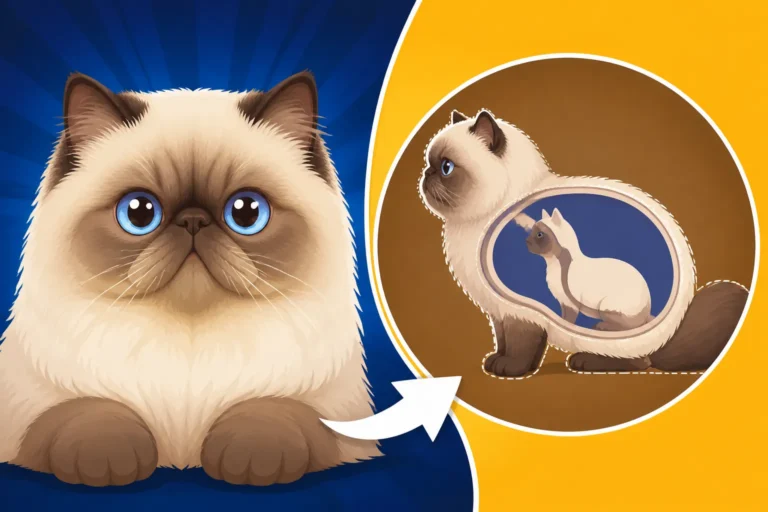
The "points" that define the Himalayan cat are a direct result of this temperature-sensitive enzyme. Every Himalayan cat carries two copies of this particular recessive gene (the "cs" allele, often called the Siamese or Himalayan allele). If a cat has even one copy of the dominant full-color gene ("C"), it will express full color regardless of temperature. But with two copies of the "cs" gene, the temperature-sensitivity comes into play. Kittens are born almost entirely white because they are kept warm inside the mother's womb. Only after birth, as their extremities cool, do their points gradually begin to darken. This is why you see such a profound change in a Himalayan kitten's appearance from birth to a few weeks old. This phenotypic expression is a perfect, living example of how genetics and external conditions collaboratively sculpt an organism's traits.
The Genetic Inheritance of Colorpoint
The genetic inheritance of the colorpoint pattern in Himalayans is a classic example of a recessive trait. For a cat to display the colorpoint pattern, it must inherit two copies of the "cs" gene – one from each parent. If a cat inherits only one "cs" gene and one "C" (full color) gene, it will be a full-colored cat but will be a "carrier" of the colorpoint gene, meaning it can pass it on to its offspring. This understanding allowed Keeler and Cobb to predict the outcomes of their crosses with remarkable accuracy. They could breed a colorpoint Siamese with a solid Persian, and depending on whether the Persian carried the recessive gene, predict the likelihood of producing kittens with points in subsequent generations. Why a Himalayan Needs Two Copies of the Point Gene further explains this crucial genetic principle. This foundational work laid the groundwork for breeders to eventually, decades later, establish the Himalayan as a recognized and cherished breed, moving it from the laboratory to homes around the world.
From Scientific Project to Beloved Breed: The Himalayan's Evolution
Keeler and Cobb's initial scientific venture paved the way for the Himalayan to become a recognized and cherished breed. Their research wasn't just a footnote in genetic history; it fundamentally changed the landscape of feline breeding and our understanding of cat genetics.
The Publication and Dissemination of Findings
The groundbreaking work of Keeler and Cobb was documented and published in scientific journals, sharing their findings with the wider academic community. This dissemination was vital, as it allowed other geneticists and animal researchers to build upon their discoveries. The detailed accounts of their breeding protocols, observations, and conclusions provided concrete evidence for the temperature-sensitive nature of the colorpoint gene and its interaction with the longhair gene. These publications were not mere summaries; they were exhaustive scientific papers laying out the entire journey from hypothesis to confirmed results, inviting peer review and further investigation. It's a testament to their thoroughness that these papers remain significant historical documents in the field of genetics. Which Journal Carried the First Himalayan Paper offers more insight into this initial publication.
The Transition from Laboratory Subject to Recognized Cat
While Keeler and Cobb's primary goal was scientific understanding, the striking beauty of the cats they produced quickly caught the attention of cat fanciers. The "Siamese-Persian," as it was initially known, was a stunning combination: the luxurious coat of a Persian with the captivating blue eyes and distinctive points of a Siamese. It wasn't long before breeders outside the scientific community took up the mantle, aiming to refine and standardize these unique cats into a formal breed. This transition from a scientific experiment to a beloved companion animal is a fascinating aspect of the Himalayan's history. It illustrates how scientific inquiry, even when not initially intended for pet breeding, can lead to entirely new expressions of companion animals. This journey involved dedicated breeders, meticulous record-keeping, and generations of selective breeding to solidify the breed's characteristics, something that still happens today with responsible breeders and even companies like Chewy who support pet health and lineage.
Enduring Impact on Feline Genetics and Breeding
The legacy of Keeler and Cobb's research extends far beyond the creation of the Himalayan breed itself. Their work provided irrefutable proof of temperature-sensitive gene expression in mammals, a concept that has since been observed in other species (like the Himalayan rabbit, for which the cat breed is named!). It also offered clear insights into the inheritance of coat length and color, which has been invaluable to feline geneticists and breeders alike. Today, anyone breeding colorpoint cats or understanding the genetics behind them owes a debt to these pioneering scientists. The How the Himalayan Changed Persian Breeding article explains how this scientific discovery influenced breeding practices for not just Himalayans but also their parent breeds, demonstrating a ripple effect throughout the cat fancy. Their experiment truly cemented the Himalayan's place not just in our hearts, but in the annals of genetic science.
| Characteristic / Study Point | Keeler's Focus (Genetic Theory) | Cobb's Focus (Practical Application) | Outcome for Himalayan Breed |
|---|---|---|---|
| Primary Goal | Understanding gene inheritance, especially colorpoint trait and temperature sensitivity. | Managing breeding, meticulous documentation of phenotypes. | Scientific validation of temperature-sensitive gene. |
| Key Question | How are specific traits like colorpoint and longhair inherited? | How do these genetic traits manifest physically across generations? | Combination of Persian longhair and Siamese colorpoint. |
| Methodology | Hypothesis formulation, genetic crosses, statistical analysis. | Animal husbandry, detailed record-keeping, observation. | Reproducible genetic outcome for the breed standard. |
| Contribution | Theoretical framework for feline coat color genetics. | Empirical data and practical demonstration of gene expression. | A distinct breed showcasing specific genetic principles. |
| Impact on Science | Confirmed temperature-sensitive enzyme activity in mammals. | Provided concrete evidence for genetic theories in a living organism. | Expanded knowledge in mammalian coat color genetics. |
| Impact on Breed | Basis for understanding Himalayan's unique appearance. | Established early breeding lines and observed trait consistency. | The foundation for the Himalayan cat as a recognized breed. |
This table highlights the distinct yet complementary roles that Keeler and Cobb played in this significant scientific and eventual breed development journey.
Disclaimer
This article is for general informational purposes only and does not constitute professional advice. Laws, prices and regulations vary by location and change over time. Consult a qualified professional for guidance on your specific situation.