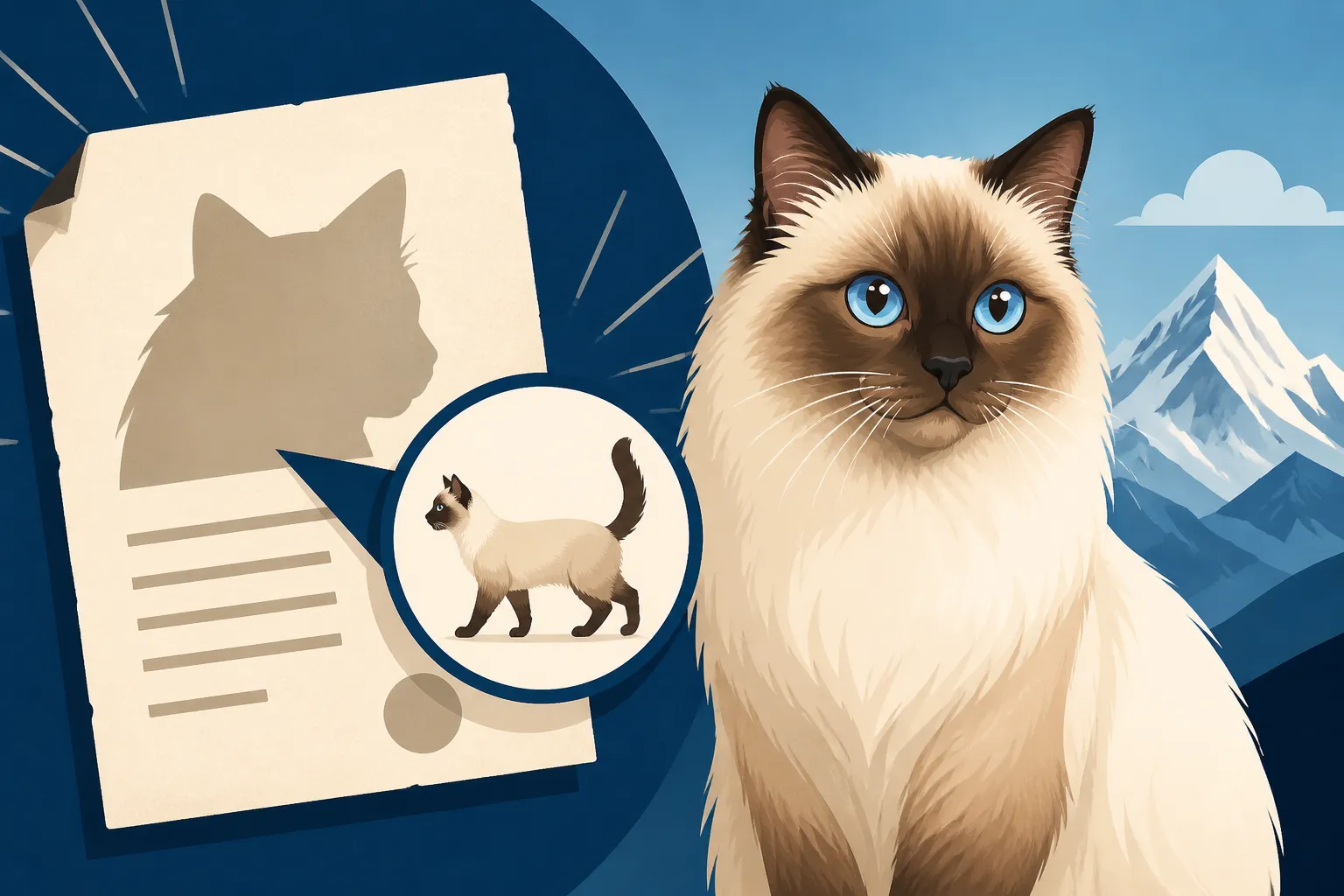
What the 1936 Paper Said About the Himalayan Cross
Have you ever gazed into the striking blue eyes of a Himalayan cat and wondered about their origins? It’s easy to assume this magnificent breed simply appeared, fully formed and fabulous. But the truth is far more intriguing, rooted not in ancient lineages but in a dedicated scientific endeavor. While many people admire the Himalayan's beauty, few realize its very existence can be traced back to a specific scientific paper published in 1936, a document that truly laid the groundwork for this unique and beloved feline.
The Genesis of a Scientific Marvel: Harvard's Early Crosses
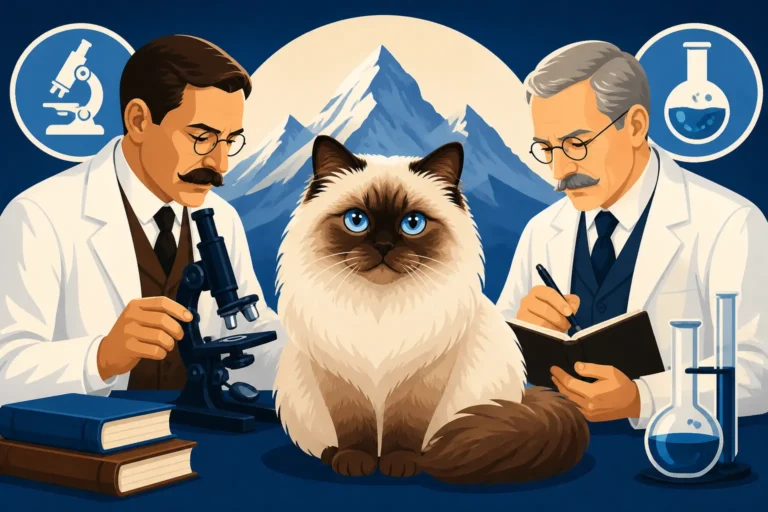
Before the Himalayan was a recognized breed gracing show halls and laps, it was the subject of meticulous scientific inquiry. The story begins in the hallowed halls of Harvard University, a place not typically associated with the creation of cat breeds, but rather with groundbreaking genetic research. This wasn't about simply making a pretty cat; it was about understanding the fundamental laws of inheritance.
The Researchers and Their Vision
The pivotal figures in this early work were Clyde Keeler and Virginia Cobb. Keeler, a geneticist, and Cobb, a cat breeder with a keen scientific mind, collaborated on an ambitious project. Their goal wasn't to "create" a new pet breed in the way a modern cattery might envision it. Instead, they were driven by pure scientific curiosity, seeking to unravel the mysteries of coat color inheritance. They were particularly interested in a specific pattern seen in other animals—the "Himalayan pattern," characterized by darker points (ears, face, paws, tail) and a lighter body. This pattern, also known as colorpoint, was already known in rabbits and mice, and they wanted to understand its genetic expression in cats. You can read more about the scientists in Clyde Keeler, Virginia Cobb and the First Himalayan.
The challenge lay in the fact that this colorpoint gene wasn't present in the solid-colored Persians or the self-colored Siamese in a way that was fully understood. Their hypothesis was that by carefully crossing these two distinct breeds, they could observe and record how the colorpoint trait was inherited across generations. This painstaking work of selective breeding and careful documentation formed the bedrock of what would eventually become the Himalayan. It was an exercise in patience and precise record-keeping, building a genetic roadmap from the ground up.
The Purpose of the Cross
So, why did they specifically choose to cross a Persian with a Siamese? It wasn't arbitrary. The Siamese cat was known for its striking colorpoint pattern and its distinct body type, while the Persian brought the long, luxurious coat and a cobby body structure. Keeler and Cobb aimed to combine these traits to study the genetic mechanisms at play. They suspected the colorpoint gene was recessive and temperature-sensitive, meaning its expression was influenced by the cat's body temperature, leading to darker fur on cooler extremities.
Their experiment sought to prove these genetic principles definitively within the feline species. It was a rigorous scientific endeavor, designed to observe how many generations it would take for the specific traits to manifest consistently and how they were passed down from parents to offspring. This methodical approach provided the empirical data necessary to publish their findings and contribute significantly to the burgeoning field of mammalian genetics. Why the Cross That Made the Himalayan Was Attempted further delves into these motivations.
Unraveling the Mystery of Colorpoint Genetics
The research undertaken by Keeler and Cobb was groundbreaking because it offered empirical evidence for the genetic inheritance of the colorpoint pattern in cats. Until then, while breeders had observed patterns, the underlying genetic mechanisms were less understood. This paper shed light on the specifics.
The "Himalayan" Pattern and Its Genetic Basis
The term "Himalayan" for this pattern actually pre-dates the cat breed itself. It refers to a specific genetic mutation that causes pigment to be produced only in the cooler parts of the body. Think of the Himalayan rabbit – pale body, dark ears, nose, and feet. This same genetic principle applies to the cat. Keeler and Cobb used this known phenomenon to predict how the traits would combine when crossing a solidly colored cat (Persian) with a colorpointed cat (Siamese).
Their work demonstrated that the gene responsible for the colorpoint pattern is a recessive allele. This meant that a cat needed two copies of the gene (one from each parent) to display the characteristic points. If a cat inherited only one copy, it would be a "carrier" and look like a solid-colored cat, but it could pass the gene on to its offspring. This understanding was crucial for predicting breeding outcomes and for the future development of the breed. We discuss the origin of the name in The Himalayan Is Named After a Rabbit.
Early Observations from the Initial Crosses
The first generation of kittens from a purebred Persian and a purebred Siamese cross were not Himalayans as we know them today. They were all solid-colored, short-haired cats, but they carried the recessive colorpoint gene from their Siamese parent and the longhair gene from their Persian parent. These initial "F1" (first filial) generation cats were the key to the next step. When these F1 cats were bred back to each other, or to either parent breed, that's when the magic happened.
It was in the subsequent generations that the long-haired, colorpointed kittens began to appear – the very first "Himalayan" cats. This confirmed their hypothesis: both the long coat and the colorpoint pattern were recessive traits. This observation was meticulously recorded in the 1936 paper, detailing the ratios of solid to pointed and short-haired to long-haired kittens, providing solid scientific data for geneticists and laying the foundation for future breeders. Understanding this intricate genetic dance helps explain What the Himalayan Experiment Was Trying to Prove.
What the 1936 Paper Actually Revealed
The 1936 paper, often referenced simply as the "Keeler-Cobb paper," was not a breed standard or a pet adoption guide. It was a scientific treatise, rich with genetic crosses and statistical analysis. Its primary contribution was a clear demonstration of how specific traits—namely the long coat and the colorpoint pattern—were inherited in domestic cats.
Key Findings on Trait Inheritance
The paper methodically laid out the results of their breeding program. They showed that when a purebred Siamese (short-haired, colorpoint) was bred to a purebred Persian (long-haired, solid color), all the first-generation offspring were short-haired and solid-colored, yet carried the genes for both long hair and colorpoint. This is a classic example of recessive inheritance, where the dominant traits (short hair, solid color) mask the recessive ones.
The real breakthrough came in the second generation (F2) when these F1 hybrids were bred together. This is where the long-haired, colorpoint cats — the first true Himalayans — made their appearance. The paper meticulously documented the Mendelian ratios of these traits, providing undeniable evidence for the recessive nature of both the longhair gene and the colorpoint gene. This was powerful proof that these traits followed predictable genetic laws, just like traits in peas or fruit flies. The exact details are laid out in The 1936 Paper That Started the Himalayan.
| Trait Examined | Parent 1 (Siamese) | Parent 2 (Persian) | F1 Generation (All) | F2 Generation (Expected Ratio) |
|---|---|---|---|---|
| Coat Length | Short Hair | Long Hair | Short Hair (Long Hair Carrier) | 3 Short : 1 Long |
| Coat Color/Pattern | Colorpoint | Solid Color | Solid Color (Colorpoint Carrier) | 3 Solid : 1 Colorpoint |
| Overall Appearance | Pointed, Short Hair | Solid, Long Hair | Solid, Short Hair | Mix, including Long-Haired Colorpoint |
This table illustrates the power of genetic recombination that Keeler and Cobb observed, showing how the "hidden" recessive genes could resurface in later generations. This understanding proved invaluable for subsequent efforts to establish the Himalayan as a distinct breed.
Incidental Observations on Physical Structure
While the primary focus was on coat genetics, the researchers certainly would have observed the physical characteristics of their feline subjects. The Persian parent contributed not only the long coat but also its distinctive brachycephalic (flattened) facial structure. Though not the main subject of the 1936 paper, these physical traits, including the shorter jaw and the broader, rounder head shape, were inherently part of the Persian lineage passed down to the hybrid kittens.
These early observations, even if secondary to the main genetic study, indirectly highlighted the challenges and unique care needs that would eventually become synonymous with the Himalayan breed. The flat face, for example, is intrinsically linked to potential issues like tear staining and breathing difficulties, something that informed breeders today pay close attention to, sourcing their specialized grooming tools and flat-faced cat bowls from places like Chewy to ensure their cats are comfortable. Understanding how the physical traits manifest is critical, especially as Why a Flatter Face Shows More on a Pale Himalayan explains.
The Enduring Legacy of a Scientific Breakthrough
The 1936 paper was a scientific achievement, but its influence extended far beyond the academic journals. It provided the blueprint for what would become one of the most beloved cat breeds in the world, influencing breeders for decades to come.
From Lab to Living Room: The Breed's Journey
It’s important to remember that Keeler and Cobb didn't set out to "design" a pet cat. Their work was pure science. However, the publication of their findings and the undeniable charm of these new long-haired, colorpoint cats quickly captured the imagination of breeders. It took many more years and dedicated breeding efforts by enthusiasts like Marguerita Goforth in the US and the British Himalayan Cat Society in the UK to transform these scientific hybrids into a recognized, pedigreed breed.
The paper showed how to combine the traits, giving future breeders a clear genetic roadmap. It explained the genetic mechanics needed to consistently produce kittens with the desired characteristics, saving years of trial and error. This foundational understanding allowed breeders to then focus on refining the breed's appearance, temperament, and health, eventually leading to its acceptance by major cat registries. The journey from initial cross to established breed involved many steps and generations, as detailed in How Many Generations the First Himalayan Took.
Influencing Modern Cat Breeding and Genetics
The impact of the 1936 paper wasn't limited to the Himalayan cat alone. Its clear demonstration of recessive inheritance for both long hair and the colorpoint pattern provided invaluable insights for the broader field of cat genetics. This scientific precedent helped researchers and breeders understand how other traits might be inherited, leading to more informed breeding practices across many different cat breeds. It solidified the understanding of how a Persian can carry the Siamese colorpoint gene, hidden, only to express itself when paired correctly.
This early work paved the way for a deeper understanding of feline genetics, making it possible for future breeders to achieve specific outcomes with greater predictability. It's why today's responsible breeders often perform genetic tests on their breeding cats and meticulously track pedigrees, ensuring they understand the genetic makeup of their lines. This commitment to genetic knowledge ensures healthier, more predictable litters, with many breeders relying on reputable sources like Chewy for the high-quality food and supplies needed to support healthy queens and growing kittens, emphasizing the connection between scientific understanding and practical animal care. Ultimately, the paper provided concrete evidence for What the Himalayan Proved About Coat Genetics, a legacy that continues to shape the world of purebred cats.
Disclaimer
This article is for general informational purposes only and does not constitute professional advice. Laws, prices and regulations vary by location and change over time. Consult a qualified professional for guidance on your specific situation.