Why a Toddler and a Himalayan Need Watching
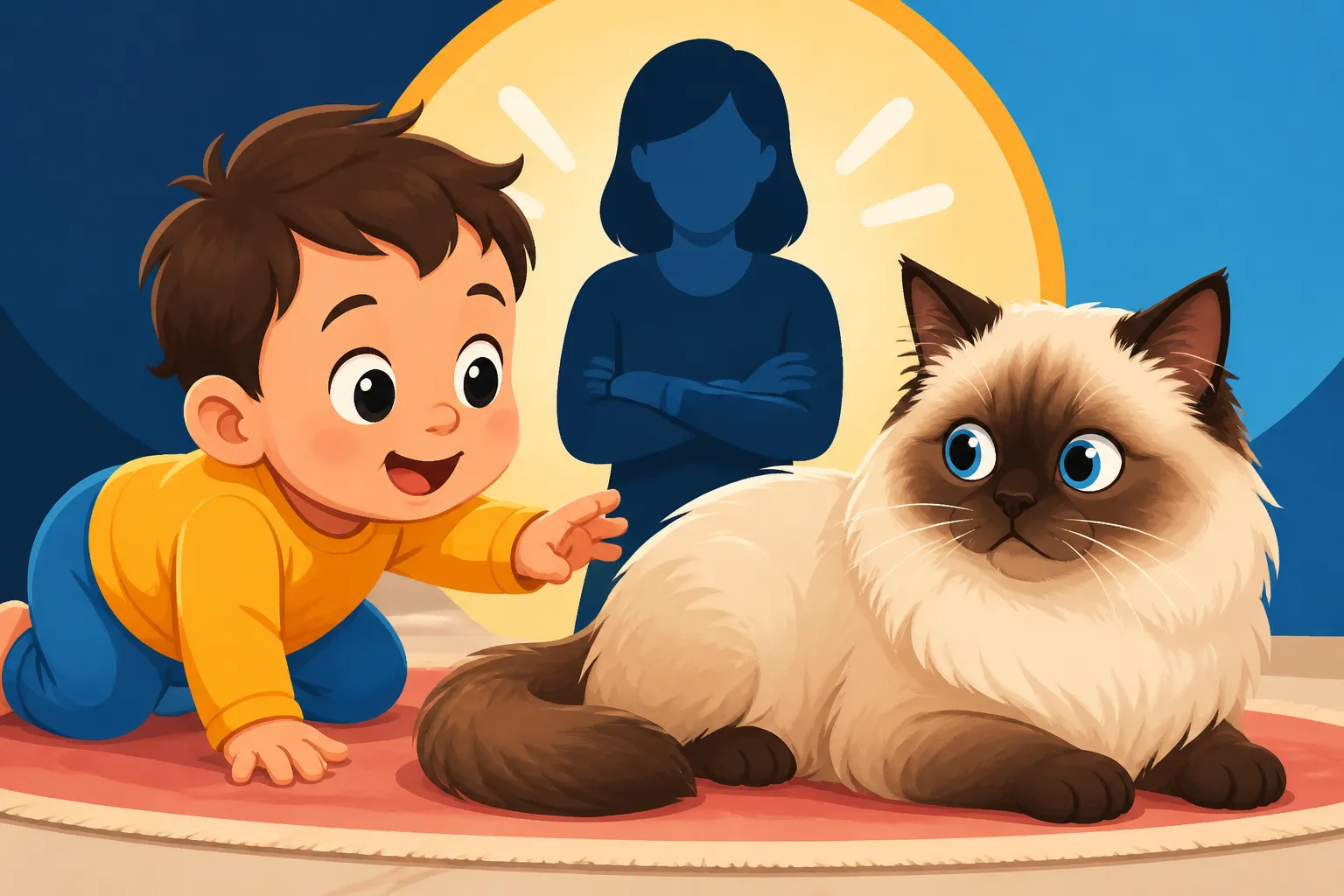
A toddler may love the Himalayan cat’s plush coat and round face, but a quick grab, loud squeal, or blocked escape route can turn a sweet moment stressful for both of them. The safest approach is to supervise every interaction, give the cat places to retreat, and teach simple, repeatable rules—while remembering that a young child cannot reliably follow them alone.
Why toddlers and Himalayan cats need close supervision
A gentle reputation does not make a cat toddler-proof
Himalayans are often described as affectionate, calm companion cats. That can make them seem like an easy match for a young child, especially when the cat settles quietly on the sofa. But breed tendencies are not guarantees. Individual cats differ, and even a patient cat can become frightened or uncomfortable when handled roughly, cornered, or disturbed while resting.
Toddlers are still learning how to control their hands, voices, and movements. A child may intend to pet gently and then grab a handful of fur when the cat walks away. They may hug tightly, reach toward the cat’s face, or follow it under a table. These behaviors are normal for a young child, but they can feel threatening to a cat.
A Himalayan may try to move away rather than immediately scratch or bite. That quieter response can be easy to miss, particularly if a child keeps following. Watch for a turning head, flattened ears, a stiff body, a twitching tail, or an attempt to hide. A cat that is sitting still is not necessarily enjoying the interaction. For more on how this breed may respond when overwhelmed, see Why a Himalayan Walks Away Rather Than Scratch.
The cat needs a real escape route
A Himalayan should be able to leave an interaction without having to pass through the toddler’s arms or climb somewhere difficult to reach. Set up a child-free room or a quiet area with the cat’s bed, water, litter box, and a comfortable resting place. Use a door, gate, or another reliable barrier when an adult cannot supervise.
Escape routes matter even when the cat seems relaxed. A cat that has been sleeping may startle when a child suddenly runs over. If the cat can retreat to a high-sided bed, a protected room, or a quiet spot behind a barrier, it has a way to create distance before it feels trapped. Make sure the toddler cannot reach into the retreat area.
Supervision means an adult stays close enough to intervene—not simply being somewhere else in the room. If you need to answer the door, cook, or take a call, separate the child and cat first. A few minutes of unsupervised access can be enough for a toddler to pull fur or for a startled cat to scratch. A calm household routine helps, too; How a Himalayan Reacts When Its Routine Breaks explains why unexpected changes can unsettle some cats.
How to make everyday interactions safer
Teach a few rules that a toddler can understand
Long explanations are hard for toddlers to remember, so keep the rules short and consistent. “Gentle hands,” “pet the back,” and “let the cat go” are more useful than a long lecture about feline body language. Demonstrate what gentle means by guiding the child to stroke once or twice along the cat’s back with an open hand, then pause.
Avoid letting a toddler pick up a Himalayan. The breed’s compact, heavy-bodied build and long coat can make it awkward for a small child to hold securely. A slipping cat may panic, twist, or scratch to get free. If the cat is on a lap, let an adult support it and make sure the cat can leave whenever it chooses. For practical handling guidance, read Teaching a Child to Hold a Cobby Himalayan Properly.
Keep children away from the cat’s face, ears, paws, tail, and belly. These are sensitive areas, and a toddler may reach for them without recognizing a warning. Do not encourage chasing, kissing, squeezing, dressing up, or pretending to ride the cat. If the cat walks away, the interaction is over; the child should not follow.
Choose calm moments and short visits
Interactions are more likely to go well when the cat is awake, settled, and free to leave. Don’t wake the cat for a child to pet, disturb it while eating, or let a toddler climb beside it in a hiding place. Start with brief, quiet visits and end them while both child and cat are still calm.
You can make petting a small, adult-led activity. Sit beside the child, invite the cat to approach, and help the child offer a hand for the cat to sniff. If the cat stays nearby, guide one gentle stroke along its back. If it turns away, stiffens, or leaves, calmly redirect the child to a toy or book instead of trying to bring the cat back.
Play can be a safer way to share space, provided an adult controls the toy. Use a wand toy so the child can watch the cat chase the toy without grabbing the animal. Keep string and small toy parts put away after play, since they can pose a hazard if chewed or swallowed. If you’re comparing cat toys through Chewy or another retailer, look closely at the product’s size, construction, and age-appropriate safety guidance rather than choosing by appearance alone.
What the Himalayan’s needs mean for a family with a toddler
Grooming and face care should stay adult-led
A Himalayan’s long coat needs regular care, and its face may need gentle cleaning as part of the cat’s routine. These tasks involve close contact and can be uncomfortable if a cat is not used to them. A toddler should not be responsible for combing, trimming mats, cleaning around the eyes, or holding the cat still. An adult should handle the routine and stop if the cat becomes distressed.
You can involve a child in a safe, indirect way. For example, the toddler might place a clean towel on a table while an adult prepares the grooming area, or watch from a comfortable distance. Keep combs, scissors, wipes, and grooming products out of reach. If the cat has a painful mat or resists handling, don’t ask a child to help pull at it. A professional groomer or veterinarian can advise on the safest next step.
The same principle applies to face care. A child should not touch the cat’s eyes or nose, even if they want to “help.” For adult care routines and kitten acclimation, see Starting Face Wiping With a Himalayan Kitten and Why a Himalayan’s Face Must Be Wiped Every Day. If you’re shopping for grooming supplies through Chewy, check that the item is intended for cats and follow its directions; keep anything used for grooming stored where a curious child cannot reach it.
Make the home workable for both of them
Create separate zones for the toddler’s toys and the cat’s essentials. Keep the litter box behind a barrier or in a room the child cannot enter, and wash hands after an adult helps with litter care. Store cat food, treats, medications, and cleaning products securely. Don’t let a toddler put their hands into the food bowl or treat container.
A child-free resting spot is especially valuable in a busy home. It should be somewhere the cat can reach easily and where the toddler cannot corner it. If the cat prefers a chair or a particular room, protect that space instead of encouraging the child to approach whenever the cat settles there. A Himalayan’s comfort often depends on having predictable places to rest and a routine that is not constantly interrupted.
Provide play and enrichment that do not depend on the child handling the cat. A scratching post, safe toys, and quiet resting places can help the cat use its energy and settle. If you’re browsing Chewy or another shop for these basics, measure the available space first and choose items that can be secured or placed out of the toddler’s path. For households considering whether this breed’s temperament and care needs fit their family, Who the Himalayan Actually Suits and Why a Himalayan Suits a Family With Older Children offer useful context.
| Situation | Safer adult response |
|---|---|
| The toddler wants to pet the cat | Stay beside the child, invite the cat to approach, and guide one gentle stroke on the back |
| The cat walks away | End the interaction and redirect the toddler; do not follow or bring the cat back |
| The cat is sleeping or eating | Keep the child at a distance and let the cat rest or finish its meal undisturbed |
| The cat hides or enters its safe area | Keep the child out and allow the cat to come out on its own |
| The cat hisses, swats, or growls | Separate them calmly and give the cat space; do not punish or force contact |
| An adult cannot supervise | Put a secure barrier between the toddler and cat |
How to recognize stress and respond safely
Notice signs before the cat reacts
A hiss, growl, or swipe can feel sudden, but a cat may show quieter signs of discomfort first. Look for ears turned sideways or flattened, a tense crouch, a rapidly flicking tail, wide eyes, skin twitching, or repeated attempts to move away. Some cats freeze rather than flee. A still cat may be tolerating the moment, not asking for more attention.
When you notice these signs, calmly move the toddler away and let the cat retreat. Don’t scold the cat for communicating, and don’t make the child approach again to “make friends.” The goal is to show the cat that it can get space without escalating the interaction. Over time, that can help prevent fear from building.
If the cat starts avoiding a room, hiding more often, eating differently, or reacting more sharply than usual, consider whether the household routine or handling has changed. Persistent behavior changes can also have a health cause, so contact a veterinarian if the change concerns you. A cat in pain may be less tolerant of touch than usual.
Know what to do after a scratch or bite
Separate the child and cat without grabbing or cornering the animal. Attend to the child’s injury and contact a healthcare professional for advice, especially for a bite, a deep scratch, an injury near the eye, or a wound that looks infected. Follow local medical guidance about wound care. Do not let a toddler handle the cat while the injury is being assessed.
Afterward, review what happened without blaming either the child or cat. Was the cat asleep? Did the child reach toward its face? Was there a clear route to leave? Adjust the setup and supervision accordingly. Young children learn through repetition, so a simple reminder before each interaction—“soft hand, back only, stop when the cat moves”—can help, but it does not replace adult oversight.
A Himalayan and a toddler can share a home comfortably when adults manage the environment and take responsibility for every close interaction. The cat needs choice and protected space; the child needs simple boundaries repeated patiently. The safest assumption is that a toddler is too young to be left alone with any cat, no matter how gentle that cat usually seems.
Disclaimer
This article is for general informational purposes only and does not constitute professional advice. Laws, prices and regulations vary by location and change over time. Consult a qualified professional for guidance on your specific situation.