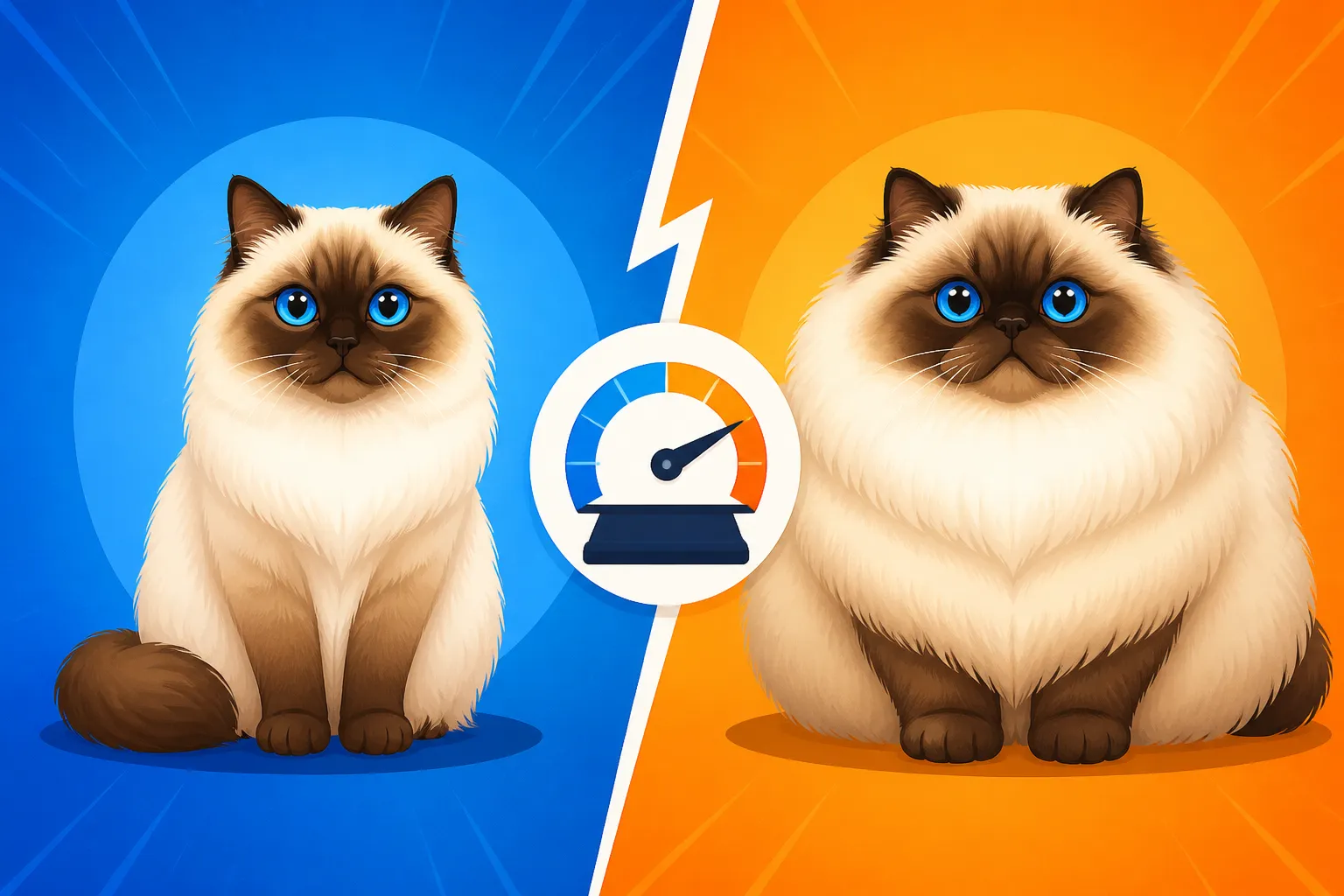
Why a Persian Coat Makes a Himalayan Look Heavier
A Himalayan can look surprisingly broad even when its body condition is healthy. The Persian-style coat adds a cloud of long fur around a naturally compact frame, making the cat’s outline a poor guide to its actual size. This guide explains why the coat creates that heavier appearance and how to assess your cat without mistaking fluff for excess weight.
Why a Himalayan’s coat changes its outline
Long fur adds visual volume, not body weight
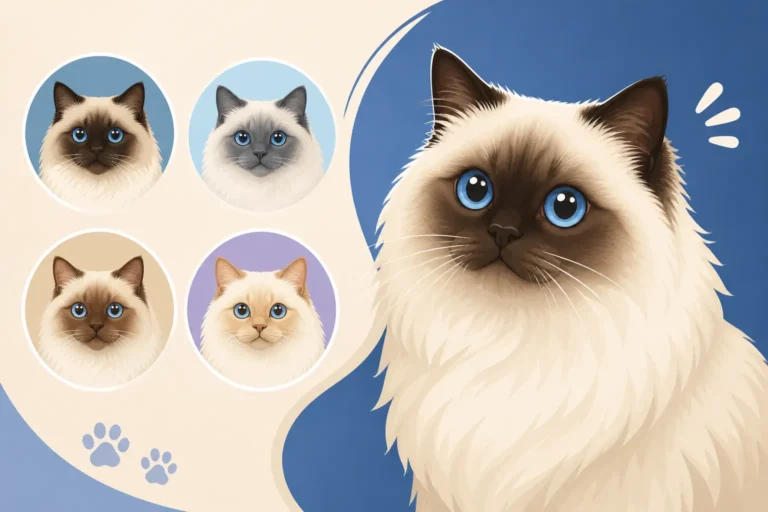
Himalayans have a dense, long coat that falls away from the body and creates a full silhouette. The fur around the chest, sides, belly, and hindquarters can make a cat appear wider than it is. A thick ruff may resemble a broad chest, while long belly fur can hang low enough to suggest a rounded abdomen.
That visual effect is especially strong when a Himalayan is standing still or lying in a relaxed position. Fur spreads across the floor or cushions, and the cat’s actual body shape disappears beneath it. In a photo, a pale coat can make the outline seem even larger because there is little contrast between the cat and a light background.
The coat itself does not tell you how much the cat weighs or whether it is carrying excess fat. A Himalayan may look substantial because of its hair, even when its body condition is appropriate. That is one reason breed descriptions often focus on a compact, sturdy build rather than judging a cat by its fluffy outline. Why the Himalayan Is Described as Cobby
A compact frame can look wider beneath a full coat
The coat is only part of the picture. Himalayans have a Persian-influenced body type that is typically compact and solid rather than long and slender. Their shorter legs and broad-looking body can make them seem more heavily built than a leggier cat of the same weight.
Long fur exaggerates that basic shape. It softens the edges around the shoulders and hips, and the thick undercoat can make the body look barrel-shaped from the side. Even a cat with a visible waist may appear square when viewed through a full coat.
This is why comparisons between breeds can be misleading. A Himalayan may look larger than a shorthaired cat standing beside it, while being similar in actual body size. The coat changes what your eyes register; it does not replace a hands-on body-condition check. Why a Persian Coat Makes a Himalayan Look Heavier
How to tell coat volume from excess weight
Feel for the ribs instead of judging the silhouette
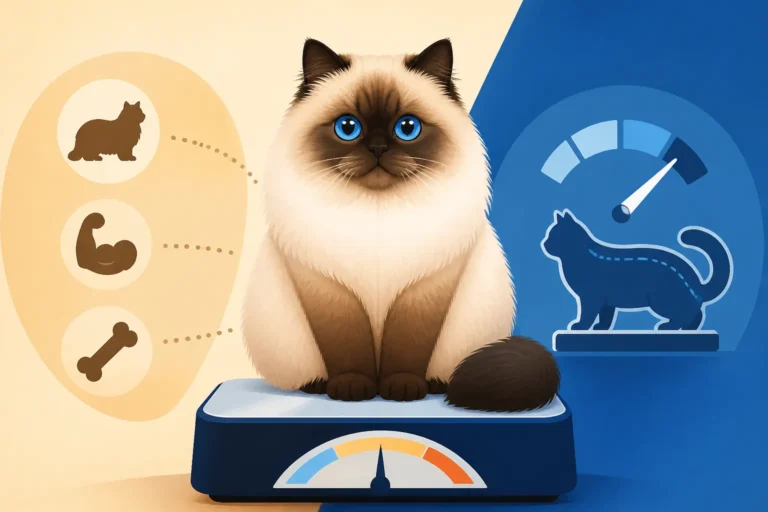
A coat can hide the features you would usually look for on a shorthaired cat. Instead of relying on a visible waist or sharply defined body outline, gently run your hands over your Himalayan’s sides. You should be able to feel the ribs with light pressure, though they should not feel prominently exposed.
If you have to press firmly or work through a thick layer of fur to locate the ribs, that may be worth discussing with your veterinarian. It does not prove that your cat is overweight; coat density, posture, and your cat’s individual build all affect what you feel. The goal is to use touch as one useful clue, not as a diagnosis.
You can also feel along the spine and hips without pushing hard. These areas should not feel sharply prominent, but they should be possible to locate beneath the coat. If you’re unsure, ask your veterinary team to show you how they assess body condition during an appointment. Once you have felt your cat’s normal contours, it becomes easier to notice a change over time. How to Feel a Himalayan’s Spine Through Its Ruff
Look for changes over time, not one fluffy day
A Himalayan’s appearance can shift with grooming, shedding, bathing, and the way the coat is sitting. A freshly combed cat may look fuller because the fur has been lifted away from the body. A damp or flattened coat may reveal more of the outline. Neither look, on its own, establishes whether your cat has gained or lost body fat.
Regular weighing gives you a clearer trend than photos alone. Use the same scale when practical, and record the date and result. If weighing at home is difficult, your veterinary clinic can track your cat’s weight at routine visits. What matters most is whether the number and body condition are changing in a way that concerns your vet—not whether your cat looks bigger than another cat.
Pay attention to everyday changes too. A cat that becomes less active, has trouble reaching its back or hindquarters, or seems less comfortable moving around may need a check-up. Those signs can have more than one cause, so avoid assuming that weight is the only explanation. How Heavy a Full Grown Himalayan Gets
| What you notice | What it may mean | A useful next step |
|---|---|---|
| A broad, fluffy outline but ribs are easy to feel with light pressure | Coat volume may be creating much of the appearance | Keep tracking weight and body condition |
| Ribs are difficult to feel beneath the coat | Body fat, coat density, or both may be affecting the check | Ask your vet to assess body condition |
| A new change in weight or shape | A change in food intake, activity, health, or coat may be involved | Record the change and discuss it with your vet |
| Difficulty grooming or moving comfortably | Possible excess weight, discomfort, matting, or another health issue | Arrange a veterinary assessment |
Ask your veterinarian to show you what to feel for
A veterinary team can assess your cat’s body condition by combining touch, visual examination, weight history, and knowledge of the cat’s build. This is particularly helpful for longhaired cats, because the coat can obscure the waist and abdominal outline. Ask the vet to demonstrate where to feel for ribs and how much pressure to use.
If your cat’s body condition is changing, share details that help put the change in context. Mention whether the food or feeding routine has changed, whether activity has dropped, and whether grooming has become harder. Even small observations—such as no longer jumping onto a familiar chair—can help your vet decide what to examine.
A body-condition score is more useful when it is interpreted alongside your individual cat’s history. A single number on the scale does not explain whether a cat is healthy for its frame. Your vet can help you establish a baseline and tell you when a change deserves attention. How to Find a Himalayan’s Ribs Through a Persian Coat
Grooming makes the body easier to assess
Combing helps you feel the cat beneath the coat
Regular combing is important for keeping a Himalayan’s coat free of tangles, but it also gives you a chance to notice changes. As you work through the coat, you can feel the body more clearly around the chest, sides, belly, and legs. A comb does not measure weight, yet routine grooming can make it easier to spot a new mat, a sensitive area, or a change in your cat’s shape.
Use a gentle approach and work in short sections rather than pulling at knots. If a mat is tight against the skin, do not try to cut it out with scissors; a cat’s skin can be drawn up into the mat and injured. A groomer or veterinarian can advise on safe removal, especially when mats are extensive or your cat is uncomfortable.
Whether you buy grooming supplies locally or through a retailer such as Chewy, focus on tools that suit your cat’s coat and that you can use safely. A comb that reaches through the coat without scraping the skin is more helpful than a brush that only smooths the surface. Your groomer or veterinary team can show you a technique for reaching the undercoat. The Daily Comb a Himalayan Cannot Skip
Mats can hide the body and make the coat look bulkier
A tangled coat can sit unevenly, forming thick patches that distort the cat’s outline. Mats often develop where fur rubs together, including the armpits, belly, and areas behind the legs. They can pull on the skin and make grooming uncomfortable, so a lumpy or unusually bulky appearance should not be dismissed as harmless fluff.
If the coat has become difficult to manage, consider whether your grooming routine needs adjusting. Some cats tolerate a brief daily session better than one long session after several days. Choose a quiet spot, pause when your cat becomes tense, and reward calm cooperation. The aim is steady maintenance, not forcing the cat through a painful tangle.
Chewy is one place owners may look for combs and basic grooming supplies, but tool choice should be guided by the cat’s coat and tolerance, not by appearance or advertising. If you’re not sure what will work, ask a professional groomer to demonstrate options before buying. A well-maintained coat is easier to part and feel through than one with compacted tangles. Why a Himalayan Mats Faster Than a Ragdoll
Feeding and monitoring without guessing
Let your cat’s body condition guide food decisions
A fluffy appearance alone is not a good reason to cut back on food. Sudden or unplanned dietary changes can make it harder to tell what is happening, and a cat’s nutritional needs depend on factors such as age, activity, health, and current body condition. If you suspect weight gain, discuss the concern with your veterinarian before changing portions substantially.
It can help to measure meals consistently rather than estimating by eye. Keep notes about treats and other extras too, since small additions can be easy to overlook. If more than one person feeds the cat, agree on who is responsible for each meal so that portions do not accidentally add up.
For a Himalayan with a shortened muzzle, bowl shape can also affect how comfortably it eats. A wide, shallow dish may be easier for some flat-faced cats to use than a deep bowl. When shopping for food dishes or feeding supplies, including through retailers such as Chewy, check that the bowl is stable, easy to clean, and comfortable for your cat to reach. Feeding a Himalayan That Cannot Reach Into a Deep Bowl
Notice practical signs alongside the number on the scale
Your cat’s weight is only one piece of the picture. Watch whether your Himalayan moves comfortably, reaches its usual resting spots, and can groom the areas it normally cleans. A cat that stops grooming its hindquarters may be dealing with excess weight, pain, dental problems, coat tangles, or another issue. A vet can help distinguish among those possibilities.
Keep a simple record of weight, grooming observations, and any changes in appetite or activity. You do not need to weigh your cat constantly; regular, consistent checks are more useful than frequent measurements taken under different conditions. If the scale shows a clear trend, or your cat looks or behaves noticeably different, arrange a veterinary check rather than trying to interpret the change from appearance alone.
Chewy may be a convenient source for everyday supplies, but a retailer cannot assess whether your individual cat’s body condition is healthy. Use product choices to support a routine—such as measured feeding or regular combing—and rely on your veterinary team for personal health guidance. Why a Himalayan Budget Is Mostly Comb and Cotton
Disclaimer
This article is for general informational purposes only and does not constitute professional advice. Laws, prices and regulations vary by location and change over time. Consult a qualified professional for guidance on your specific situation.