Whether a Lynx Point Himalayan Is Recognized
A lynx point Himalayan can look as though someone added fine stripes to the usual dark mask, ears, legs, and tail—but that pattern can leave buyers unsure whether they’re looking at a recognized color or a mix-up in the paperwork. This guide explains what “lynx point” means, how it fits Himalayan standards, and what to check on a kitten’s registration records.
What lynx point means on a Himalayan
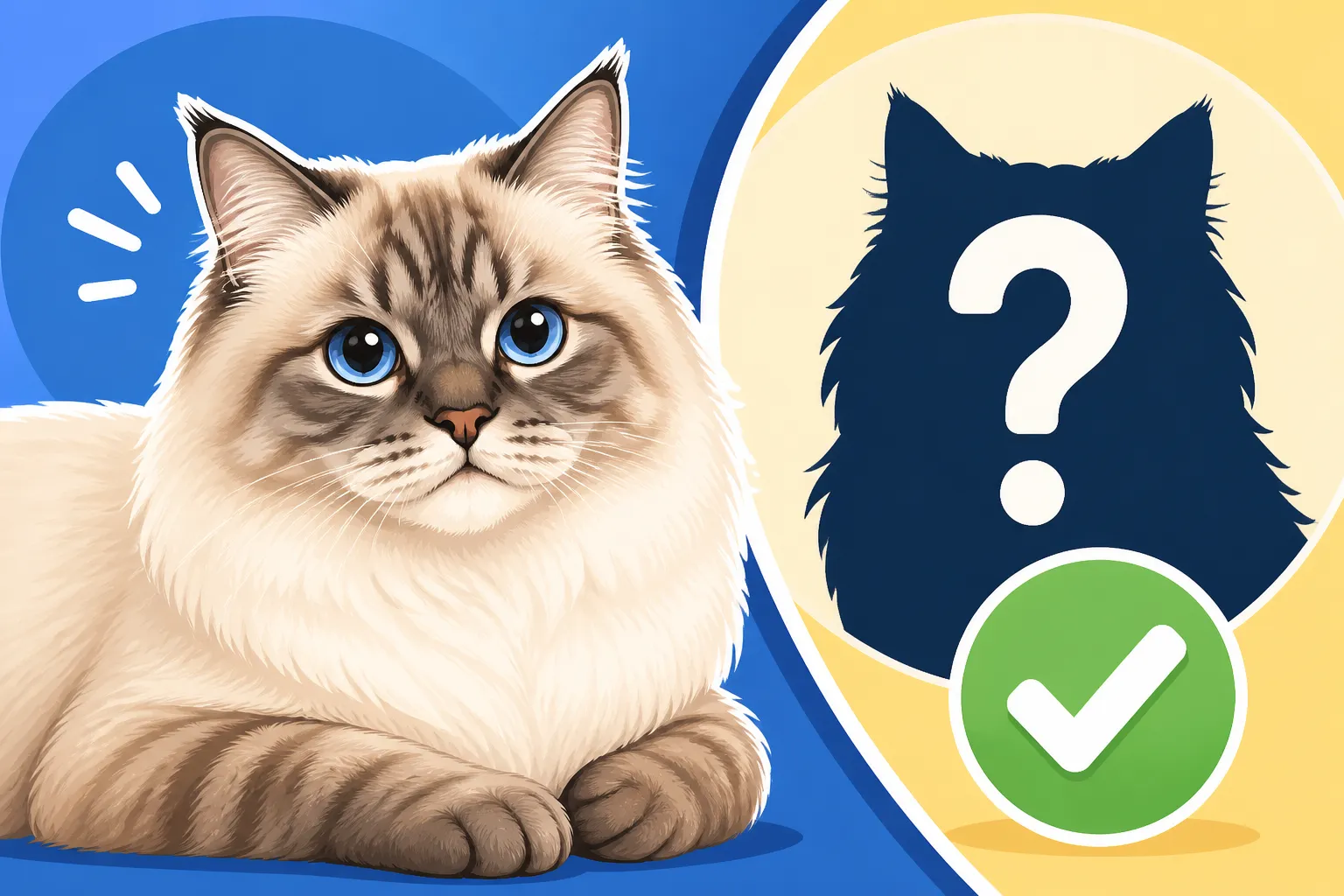
A lynx point Himalayan has the breed’s familiar colorpoint pattern, with tabby markings visible in the darker areas. The word “lynx” refers to those markings, not to a separate breed or a cross with a wild cat. You may see stripes or bars on the face and legs, along with an “M” shaped marking on the forehead. The ears and tail can also show tabby patterning.
The body is generally much paler than the points. Depending on the individual cat’s coloring and age, the contrast may be easy to see or quite subtle. The face, ears, paws, and tail carry the color and markings; the torso is typically a lighter shade. Himalayan cats are also expected to have blue eyes, whether their points are solid-colored or lynx patterned.
Lynx point is best understood as a pattern within the colorpoint family. It does not turn a Himalayan into a different breed. A seal lynx point and a blue lynx point, for example, have different point colors, but both can have tabby markings on their points. That’s why breeders and registries may describe a cat with both a point color and a pattern designation.
For the broader list of colors and patterns, see Which Himalayan Point Colors the Standard Lists for a Himalayan and How Many Himalayan Point Colors Exist. The details matter because a color name in everyday conversation may not match the exact wording used on a registration record.
How the markings differ from solid points
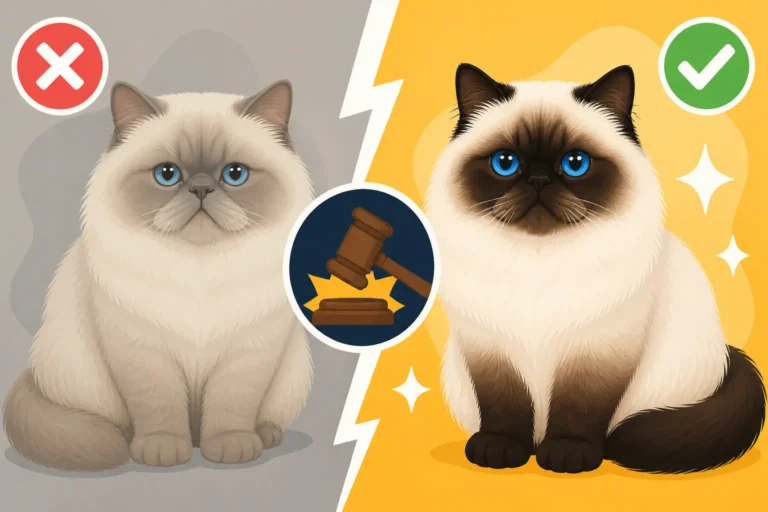
A solid-point Himalayan has darker areas that look comparatively even in color. A lynx point has visible tabby features within those areas. On the face, look for lines around the eyes and cheeks and markings on the forehead. The legs may have stripes or rings, while the tail can show bands. The amount of contrast varies, so one cat’s markings may look bold while another’s appear faint.
A kitten’s pattern can be especially difficult to judge. Himalayan kittens are born very pale, and their points develop as they grow. Tabby markings may not be obvious right away, particularly in soft lighting or in a photograph. A breeder may describe a young kitten as a lynx point based on its developing pattern, but the markings can become clearer as its coat matures.
This is one reason a casual label on an online listing is not the same thing as formal recognition. A photo may show a pointed cat with stripes, but it cannot tell you which registry recorded the kitten, how its color is listed, or whether its papers identify it as a Himalayan, Persian, or a colorpoint Persian.
Why a lynx point still has the Himalayan look
The lynx pattern changes the appearance of the points, not the basic breed characteristics. A Himalayan still has the long coat, sturdy build, and Persian-influenced head associated with the breed. Its points remain darker than its body, and its eyes should be blue. The tabby markings add detail to the colored areas rather than replacing the colorpoint pattern.
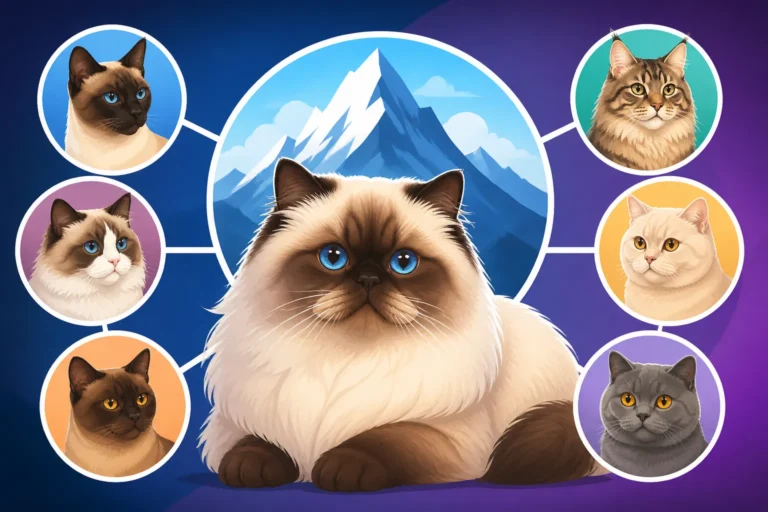
If you’re comparing a lynx point Himalayan with another pointed longhair, consider the whole cat rather than relying on stripes alone. Body shape, coat, eye color, pedigree, and registration all help clarify what you’re seeing. Why a Ragdoll Is Longer and a Himalayan Rounder gives more context for a common comparison, while How to Tell a Himalayan From a Persian explains why registration and appearance can sometimes seem to overlap.
Is a lynx point Himalayan recognized
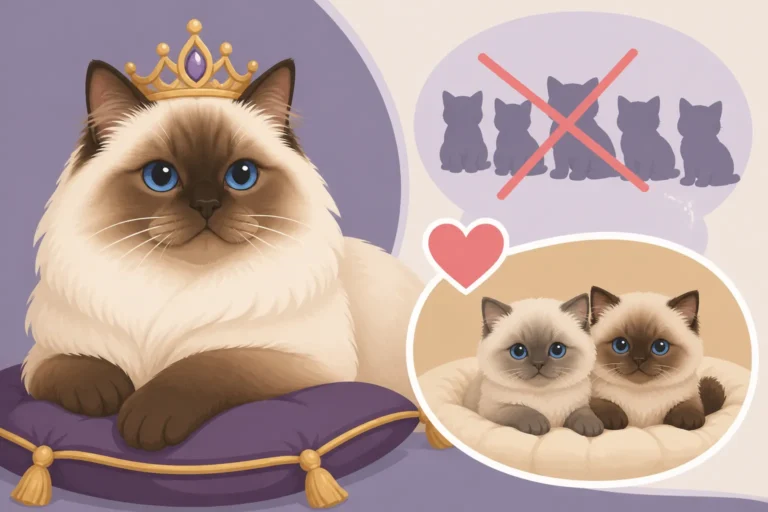
Generally, yes: lynx point is a recognized color pattern for Himalayans in major cat-registry contexts. However, registries do not all organize or name the breed in the same way. One organization may treat the Himalayan as a distinct breed, while another may register it within the Persian breed or a Persian colorpoint division. The cat can be recognized as a Himalayan in ordinary breed language even when its certificate uses different wording.
That distinction often causes confusion for new owners. A breeder may advertise a “lynx point Himalayan,” while the official record identifies the cat as a Persian with colorpoint markings. That wording does not automatically mean the breeder misrepresented the animal. It may reflect the rules and terminology of the registry that issued the papers.
Recognition also does not mean every registry uses an identical show classification or color name. If a cat is intended for showing or breeding, ask the breeder which registry the kitten is registered with and check that organization’s current breed and color standards. For a pet buyer, the most useful question is often not “Does every registry call this cat a Himalayan?” but “Do the papers accurately describe this kitten under the registry named on them?”
| What you are checking | What to look for | Why it matters |
|---|---|---|
| Breed wording | Himalayan, Persian, or a colorpoint Persian designation | Registry terminology varies |
| Color or pattern | A lynx or tabby-point description, where recorded | Confirms how the registry identifies the markings |
| Registration body | The name of the organization issuing the record | Standards and classification systems differ |
| Pedigree details | The kitten’s registered parents and ancestry | Helps verify the recorded line |
| Eye and coat description | Blue eyes and a pale body with colored points | Fits the typical Himalayan colorpoint appearance |
For more about the naming difference, read How TICA Registers a Himalayan Today and Whether a CFA Himalayan Is Registered as a Persian. Those registry distinctions explain why a Himalayan’s paperwork may not use the same breed label as the breeder’s advertisement. What a Himalayan’s Certificate Actually Says is also useful if you’re trying to interpret the wording on an actual record.
How to identify a lynx point Himalayan
Start by looking at the pattern on the points rather than judging the whole coat by one photograph. Check the forehead, cheeks, legs, and tail for stripes or bars. Look for a pale body coat and darker point areas. Then consider the cat’s eye color and overall build. These clues can help you understand the description, but appearance alone cannot prove a cat’s pedigree or registration status.
Lighting can make markings look stronger or weaker than they are. A warm indoor bulb may make a pale coat appear creamier, while a low-resolution photo can blur facial stripes into a solid-looking mask. A kitten’s coat is still developing, too. If you’re choosing between kittens, ask the breeder for clear, natural-light photos from several angles and for the color and pattern listed in the kitten’s registration details, if those details are available.
It helps to separate three questions: Is the cat visually a lynx point? Is it recorded as a Himalayan or within a Persian colorpoint category? Is the breeder’s description supported by the paperwork? The answer to the first may be apparent from the coat. The second depends on the registry. The third requires checking the documents, not just the listing title.
The point pattern is judged within the broader colorpoint appearance. For details about how judges assess points and contrast, see How a Himalayan’s Points Are Judged and Why a Himalayan’s Body Coat Should Stay Light. A lynx point can be attractive and recognizable without every marking being equally dark or sharply defined in every cat.
What to ask a breeder
Ask which registry the kitten is recorded with and what exact breed and color wording appears on the paperwork. If the kitten is not yet registered, ask how the breeder expects the color and pattern to be recorded and when the documents will be provided. A responsible breeder should be comfortable explaining the distinction between their everyday description and the registry’s formal terminology.
You can also ask to see the parents’ registration details and a pedigree, especially if the kitten is being sold as a pedigreed Himalayan. Keep in mind that a pedigree documents ancestry; it does not, by itself, guarantee health or prove that every feature meets a show standard. If the seller’s explanation is vague, inconsistent, or changes when you ask for records, take time to verify the details before making a decision.
A breeder’s photos are helpful but limited. They can show a kitten’s appearance, yet a video or photograph cannot verify registration or provide a full assessment of breathing, eyes, teeth, coat condition, or general health. If you’re still learning the breed’s features, What a Himalayan Buyer Should Ask About Registration offers a useful checklist for asking clear questions without getting lost in unfamiliar registry terms.
Why lynx point kittens can be hard to label
Himalayan kittens start out very pale because the colorpoint pattern develops with age and temperature-sensitive pigmentation. Their cooler body areas gradually show more color than their warmer torso. The points deepen over time, and the pattern may become easier to distinguish as the coat grows. This is why an especially young kitten may not yet show the finished look people expect from an adult lynx point.
The markings can also vary across the face and body. One kitten may have an obvious forehead “M” and strong leg bars, while another has softer lines that are harder to see through a long coat. Coat length and grooming affect what’s visible. A parted coat or a clear close-up may reveal markings that disappear in a full-body picture.
Color descriptions can be further complicated by age, season, and coat changes. A Himalayan’s points may darken as the cat matures, and temperature can influence the appearance of point color. If you’re comparing kitten photos with pictures of adult relatives, expect some differences rather than assuming the kitten’s coat will remain exactly as it looks on the day you meet it. Why Every Himalayan Kitten Is Born Almost White and How a Himalayan’s Point Color Is Recorded explain these changes and the role of formal color descriptions.
What a lynx point is not
A lynx point is not simply any Himalayan with a few dark streaks in its coat. The term refers to tabby patterning associated with the colored points. Random coat shading, shadows, or a temporary change in how the fur lies are not enough to establish a formal color description.
It is also not a guarantee that a kitten will have a particular show-quality pattern. Recognition means the pattern is included within a registry’s acceptable classifications; it does not mean every individual cat will have identical stripe placement, contrast, or point shade. A pet can be a lynx point without being destined for the show ring.
Finally, the label does not tell you whether the cat is healthy or whether its breeder has completed appropriate health checks. If you’re considering a kitten, treat coat color as one part of the conversation. Ask about veterinary care, the parents’ health history, and the documents that accompany the kitten. The coat may be the first thing that catches your eye, but it shouldn’t be the only thing you verify.
Practical care for a pale, longhaired coat
Lynx point markings do not require a special grooming routine beyond the care needed for a Himalayan’s long coat. Regular combing helps prevent tangles and mats, particularly in areas where the coat rubs together, such as beneath the legs and around the ruff. Gentle face cleaning may also be part of daily care, depending on the individual cat’s tear production and facial structure.
Choose grooming tools and face-care products with your cat’s comfort and safety in mind. A wide-toothed metal comb can help you check through the coat without relying only on a surface brush. For products such as combs, cotton pads, or cat-safe wipes, some owners browse Chewy alongside local pet stores; whatever the source, check that a product is suitable for cats and avoid using anything close to the eyes unless it is specifically intended for that area.
If the coat mats, do not tug hard or try to cut close to the skin with household scissors. A mat can pull painfully, and long fur can hide how close it sits to the skin. Ask a veterinarian or experienced groomer for help if a tangle is tight, extensive, or painful to touch. Chewy may be one place to compare basic grooming supplies, but a product cannot replace professional help when a mat is already tight against the skin.
For food and water dishes, look for shapes the cat can reach and use comfortably. A shallow, wide dish may be easier for a flat-faced cat than a deep, narrow bowl. Chewy carries pet feeding supplies, but the important thing is fit: watch whether your cat can eat without struggling, pushing food out, or soaking its ruff. If eating seems uncomfortable, discuss it with a veterinarian rather than assuming a different bowl will solve the problem.
A lynx point Himalayan is therefore a recognized and familiar color-patterned Himalayan, though the formal breed label and color wording depend on the registry. Check the markings, ask for the paperwork, and judge the cat as an individual—not by its point pattern alone.
Disclaimer
This article is for general informational purposes only and does not constitute professional advice. Laws, prices and regulations vary by location and change over time. Consult a qualified professional for guidance on your specific situation.