Why a Poor Contrast Himalayan Loses Points
A Himalayan can have a beautiful coat and still lose ground in the show ring if its dark points do not stand out clearly from its pale body. That can be frustrating when the color looks striking at home. This guide explains what judges mean by contrast, why it varies, and what owners can realistically do to protect it.
What point contrast means in a Himalayan
Points need to look distinct from the body coat
A Himalayan’s colorpoint pattern places darker color on the cooler parts of the body, including the face, ears, legs, feet, and tail. The torso is usually much paler. Judges assess how clearly those darker areas stand apart from the body coat, rather than simply asking whether the cat has attractive coloring.
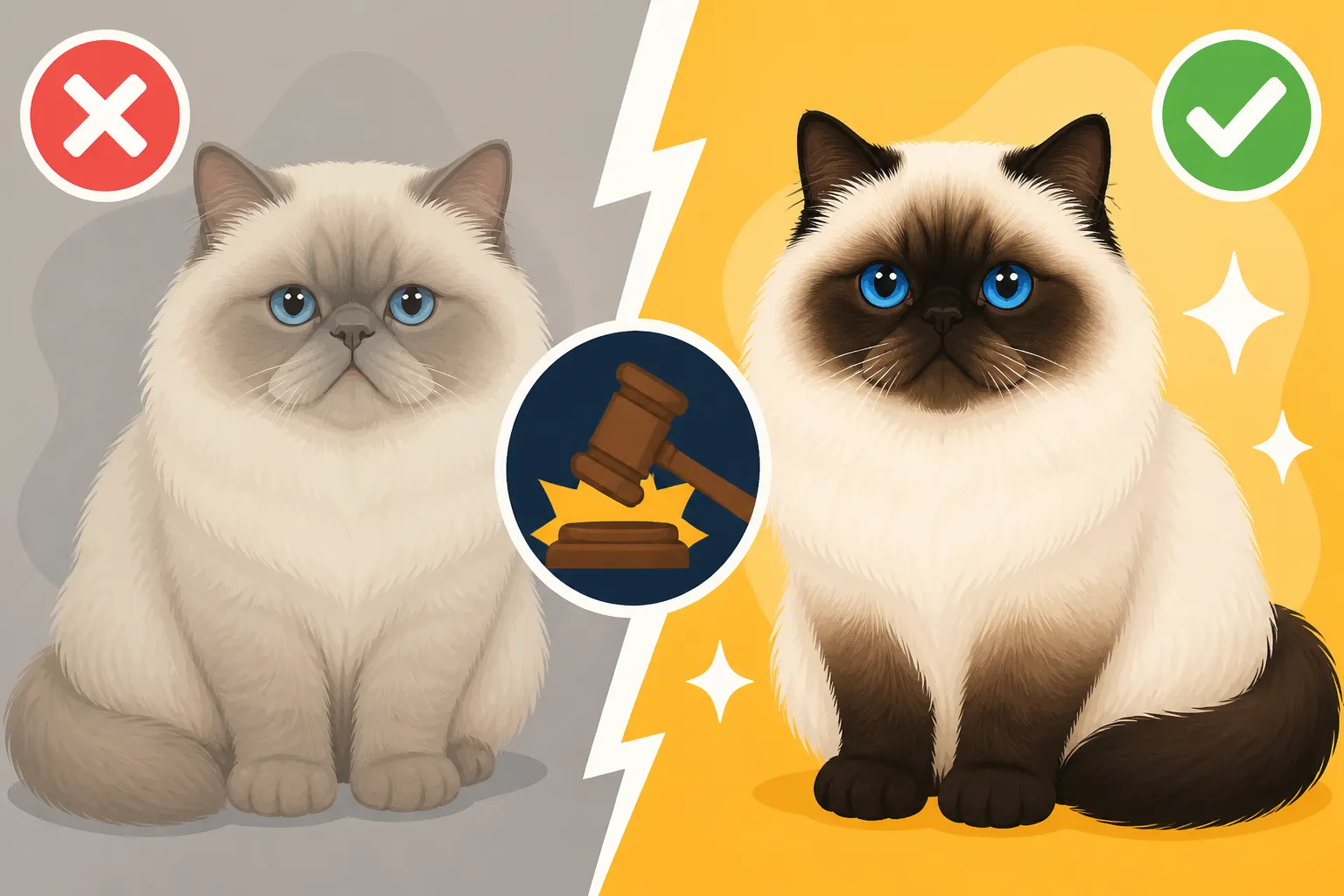
A well-contrasted Himalayan has points that are easy to distinguish from its lighter body. The boundary does not need to look like a perfectly drawn line; coat length and texture naturally soften it. But when the body coat darkens or the points appear too faint, the overall pattern can look less defined. That can make it harder for the judge to see the cat’s colorpoint markings at a glance.
Contrast is not the only feature considered in a show. A cat’s type, coat, condition, and other standard-related qualities also matter. A less dramatic pattern does not mean a Himalayan is unhealthy, poorly cared for, or less lovable as a companion. It means that one aspect of its appearance may not match the show ideal as strongly.
For a closer look at the pattern itself, see How a Himalayan’s Points Are Judged. The ideal appearance also depends on keeping the main body coat pale enough to distinguish it from the points, as described in Why a Himalayan’s Body Coat Should Stay Light.
Contrast is different from having very dark points
It is easy to assume that darker points always mean better contrast. In practice, contrast depends on the relationship between the points and the body coat. Dark points on a pale body can look sharply defined. The same points against a darker or discolored body may seem less distinct, even though the point color itself has not faded.
The reverse can happen too. If the body coat is very pale but the points are unusually light or visually muted, the pattern may still lack the clear separation a judge is looking for. The key is not darkness in isolation; it is how clearly the whole pattern reads.
Point color also varies among Himalayans. A seal point, blue point, flame point, or another recognized color will not look identical, and judges consider the cat’s color within the relevant standard. A softer-looking color is not automatically a poor example of contrast. The question is whether the markings are distinct and appropriate for that cat’s color variety.
This is why comparing two Himalayans from different point-color groups can be misleading. A photo may make one cat look more dramatic because of lighting or camera settings, not because its coat would necessarily be judged more favorably. For background on how temperature and the point pattern interact, read How Temperature Decides a Himalayan’s Point Color.
Why a Himalayan may have less contrast
Age and changing coat color can alter the pattern
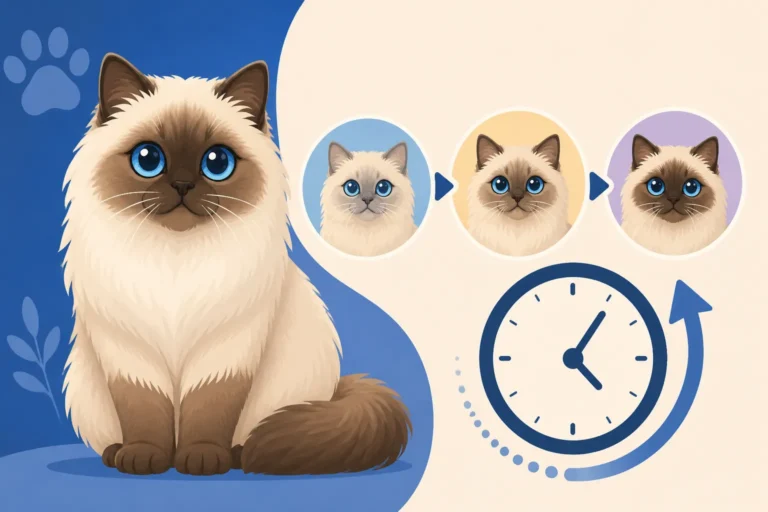
Himalayan kittens are born very pale, and their points develop as they grow. Their appearance can change substantially during kittenhood and adolescence, so a young cat’s early coloring may not predict exactly how the finished coat will look. Points can take years to settle fully, and the body coat may gradually become less bright as the cat matures.
Age does not affect every Himalayan in exactly the same way. A cat may retain strong contrast, while another’s body coat darkens or becomes less clearly separated from its points. That gradual shift can be especially noticeable to owners who remember the cat’s bright kitten coat. It is one reason show photos from different ages are not always useful for direct comparison. See How Many Years a Himalayan’s Points Take to Finish for more on the timeline.
Aging can also bring changes to coat condition. The fur may become more prone to staining, and an older cat may have a harder time grooming all the areas that need attention. Discoloration is not the same thing as a change to the underlying point pattern, but it can affect how pale the body appears. Why a Himalayan’s Pale Coat Discolors With Age explains some of the everyday factors that can affect that appearance.
Temperature, coat care, and lighting all affect what you see
The colorpoint pattern is temperature-sensitive. Cooler areas of a Himalayan’s body tend to develop darker fur, while warmer areas tend to remain paler. A cool environment can therefore contribute to broader darkening, including on parts of the body that owners expect to stay light. This does not mean that every color change is caused by the room temperature, but it is one reason the coat may look different across seasons or living situations.
The coat can also appear less contrasted when it is dirty, stained, or matted. A pale torso that looks yellowed or grayish may no longer stand apart as clearly from the points. Regular, gentle grooming helps keep the coat clean and separated, but grooming cannot change the cat’s inherited color pattern or make a naturally darker body coat genetically pale.
Lighting and photography add another layer. Warm indoor bulbs can make a cream coat look more yellow, while shadows may make pale points or body fur appear darker. Phone cameras often adjust exposure automatically, which can flatten the difference between light and dark areas. When comparing show images or evaluating a cat at home, look at the coat in even natural light if possible.
If a Himalayan’s coat darkens noticeably across the body, Why a Himalayan in a Cold House Darkens All Over offers relevant context. Coat care can help with surface cleanliness, but it should not be treated as a way to force a color change.
| What you notice | Possible explanation | What to do |
|---|---|---|
| The body coat looks darker than it did as a kitten | Normal maturation, temperature-related changes, or both | Compare the coat over time in similar lighting |
| The pale fur looks yellowed or dull | Staining, residue, or coat-care challenges | Check grooming habits and ask a veterinarian about persistent skin or coat changes |
| The points look faint in photos | Lighting, exposure, or camera processing | Assess the coat in even natural light |
| The body coat and points seem less distinct in person | Natural coloring, age-related change, or coat discoloration | Ask an experienced breed judge or knowledgeable breeder for an in-person assessment |
How judges assess a poorly contrasted coat
A judge looks at the overall pattern in context
A judge evaluates the cat in person, where coat texture, color distribution, and the relationship between points and body are easier to assess than in a single photograph. The aim is to judge the cat against the applicable standard, not to reward whichever Himalayan looks darkest in a snapshot.
A poorly contrasted coat may make the colorpoint pattern less clear. For example, if the torso is noticeably darkened, the face mask and tail may not stand out as strongly. If points are pale or indistinct, the markings may also be harder to appreciate. Either way, the visual effect can be a less crisp overall pattern.
The amount of attention given to contrast depends on the standard and the show context. Standards and registry terminology can differ, so a cat’s evaluation should be understood in relation to the rules under which it is being judged. A breeder or exhibitor who plans to show should review the relevant standard and ask a qualified judge or mentor how color is assessed in that particular setting.
Most importantly, losing points for contrast does not necessarily mean the cat has a serious fault. It is a judgment about show presentation and the standard, not a medical diagnosis. For more detail on the judging principle, see How Judges Score a Himalayan’s Point Contrast.
A color issue is not automatically a care failure
Owners sometimes feel blamed when a judge comments on a coat that lacks contrast. But not every factor is within an owner’s control. Genetics and the natural development of the colorpoint pattern have a major role, and the coat may change as the cat matures. A clean, well-groomed Himalayan can still have a pattern that is less sharply defined than the show ideal.
Care does matter where it affects the coat’s visible condition. Gentle, regular combing can reduce mats and remove loose fur. Keeping the face and coat clean can help prevent surface staining from distracting from the pattern. These steps support coat presentation; they do not alter inherited color or guarantee a better show result.
If you are choosing grooming supplies, a steel comb and other suitable tools may be available through retailers such as Chewy. Choose tools appropriate for a long coat, use them carefully, and stop if your cat seems uncomfortable. Grooming should not involve harsh scrubbing or products intended to bleach, dye, or otherwise disguise the coat.
If a coat suddenly changes color, becomes patchy, or develops skin irritation, do not assume it is simply a show-contrast issue. A veterinarian can help determine whether there is a health concern. This is especially important if the change comes with itching, hair loss, odor, sores, or a change in the cat’s usual grooming behavior.
What owners can realistically do
Keep the coat clean without trying to recolor it
A consistent grooming routine is more useful than an occasional intensive session. Comb through the coat gently, paying attention to areas where long fur can tangle or collect debris. If your Himalayan resists grooming, short, calm sessions are usually less stressful than trying to complete every area at once.
A clean coat may look brighter and more even, but it cannot erase a natural shift in pigmentation. Avoid using whitening products, hair dye, or strong cleaning agents to create a sharper contrast. These can irritate the skin, and cosmetic alteration is not a substitute for the coat’s natural pattern. If stains persist despite routine care, ask your veterinarian what is safe for your cat’s skin and coat.
Retailers such as Chewy may carry combs, grooming supplies, and cat-safe cleaning products, but product labels and intended use matter. Do not use a product near the eyes or face unless it is specifically appropriate for that area. If you are unsure, get guidance from your veterinarian or an experienced professional groomer familiar with long-haired cats.
Set fair expectations for a pet or show prospect
If you are buying a Himalayan primarily as a companion, contrast is one part of appearance, not a measure of affection, temperament, or quality of life. A cat with a softer pattern can still be a wonderful fit for a home. It is reasonable to enjoy the coat without expecting it to remain exactly as it looked in kitten photos.
If you are considering a show prospect, ask the breeder how the kitten’s color is expected to develop and whether you can see relatives at different ages. Remember that young kittens are still changing, and their eventual pattern cannot be guaranteed from a photograph. A clear, unedited view of the cat’s coat and its parents can be more useful than heavily processed images. You can also ask how the breeder records the color, as explained in How a Himalayan’s Point Color Is Recorded.
The starting color can be especially deceptive because kittens are born nearly white and acquire their points over time. What Color a Himalayan Kitten Is at Birth provides useful context for why an early photo may not show the finished pattern. Even with careful selection and good care, a particular contrast level cannot be promised.
For day-to-day care, Chewy can be one place to look for ordinary grooming necessities, but the retailer does not determine how a cat’s coat will develop. Focus on safe coat maintenance, honest expectations, and the cat’s comfort. If showing is your goal, seek advice from someone familiar with the standard and judging process rather than trying to change the coat yourself.
Disclaimer
This article is for general informational purposes only and does not constitute professional advice. Laws, prices and regulations vary by location and change over time. Consult a qualified professional for guidance on your specific situation.