How Full a Himalayan’s Ruff Should Be
A Himalayan’s impressive neck ruff can look smaller after a bath, less dramatic in summer, or uneven during a shed, leaving owners wondering whether the coat is healthy or simply not full enough. This guide explains what a well-developed ruff should look like, why fullness varies, and how to care for it without confusing puffiness with good coat condition.
What a Full Himalayan Ruff Should Look Like
Fullness is about shape, not just volume
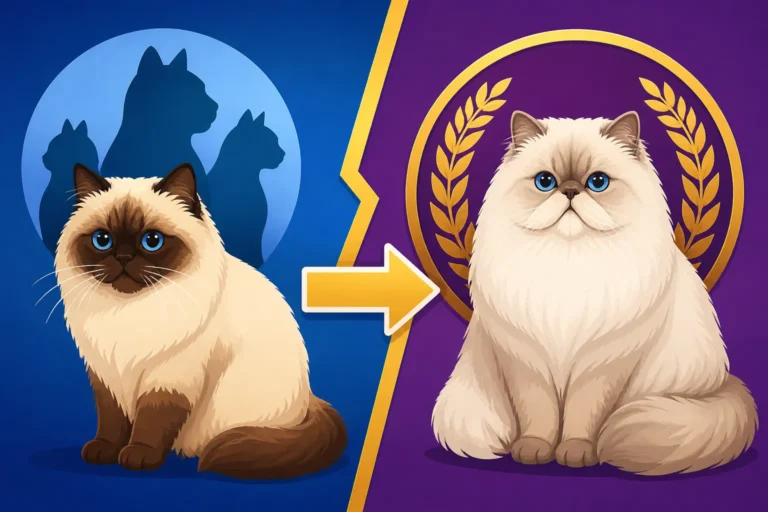
A Himalayan’s ruff is the long coat around the neck and chest. A well-developed one frames the head and flows into the body coat, giving the cat a soft, rounded outline. It should look generous in proportion to the cat, but there is no single ruff size that every Himalayan must meet. Age, sex, season, coat condition, and individual build all affect how substantial it appears.
A big ruff is not automatically a better ruff. Coat that is clean, separated, and comfortable matters more than a neck that looks like an oversized cloud. Dense fur can hide tangles close to the skin, so a visually impressive collar may still need careful combing. Conversely, a healthy cat with a modest-looking ruff is not necessarily missing coat; the hair may be in a seasonal shed or still developing.
If you are comparing a pet with a show photograph, remember that presentation changes what you see. A cat may be freshly groomed, photographed at a flattering angle, or at a point in the year when its coat is especially full. For show-specific coat expectations, see What a Himalayan’s Coat Should Feel Like in the Ring. The useful home question is not “Is the ruff as huge as that one?” but “Is my cat’s coat comfortable, clean, and in keeping with its own normal pattern?”
The ruff develops over time
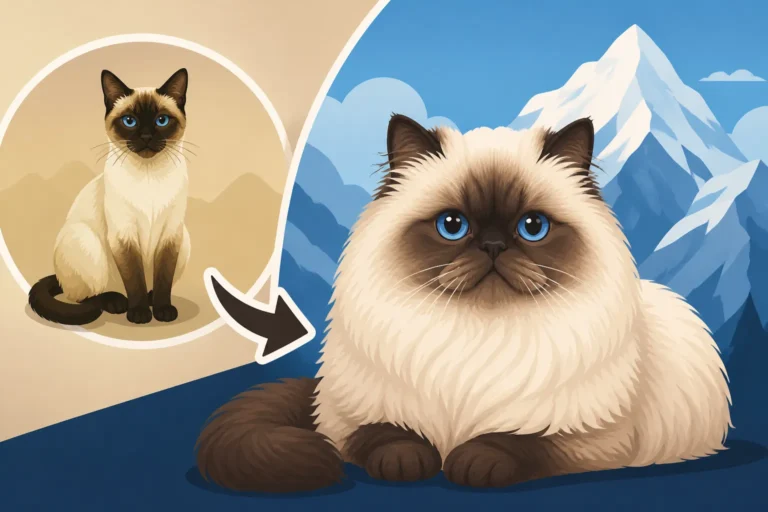
A kitten does not arrive with an adult Himalayan’s finished collar. The coat grows and changes as the cat matures, and the neck furnishings may become more noticeable gradually. A young cat with a shorter or less dramatic ruff may simply be at an earlier stage of coat development. The rest of the coat can change too, so it helps to assess the ruff alongside the cat’s overall body coat rather than judging one area in isolation.
Even adult cats can look different from one season to another. Shedding, indoor temperature, and ordinary changes in coat condition can make the ruff seem less abundant for a while. A cat that has recently been clipped or had a patch shaved may also look uneven as the hair grows back. Because Himalayan point color is temperature-sensitive, regrowing coat can sometimes appear darker; that change in shade does not by itself mean the hair is growing poorly. For more on development, see How Long a Himalayan’s Coat Actually Grows and How a Shaved Patch Regrows Darker on a Himalayan.
It is more useful to track your own cat than to compare it with a different Himalayan. A monthly photo taken from the same angle can help you notice whether the ruff is gradually changing, shedding evenly, or developing a persistent thin area. If the coat changes suddenly, or you notice bare skin, irritation, or discomfort, contact your veterinarian rather than assuming it is a normal seasonal variation.
Why Himalayan Ruff Fullness Varies
Age, season, and individual coat differences
Some Himalayans naturally carry a more abundant neck coat than others. Their body shape, hair texture, and the way the coat lies all affect whether the ruff looks especially pronounced. A thick undercoat can add visual bulk, while long guard hairs may make the coat look more flowing than round. For a better sense of what lies beneath the visible hair, read How Much Undercoat a Himalayan Carries Under Its Points.
Seasonal shedding can make a familiar ruff look flatter or less even. Loose hair may be coming away faster than the coat is being replaced, and a cat may look noticeably different during that period. Regular combing helps remove shed hair, but it cannot prevent every seasonal change. The goal is to keep the coat free of tangles and check that the skin beneath looks healthy.
Age also changes what is reasonable to expect. A kitten’s ruff is still developing, while an older cat may have a different coat texture or may groom less effectively because of mobility or dental problems. If an older Himalayan suddenly stops keeping its face or chest clean, or develops mats it previously managed, consider that a possible health or comfort issue—not simply a cosmetic change.
Grooming and health affect the appearance
A ruff can look less full when it is dirty, clumped, or tangled because the hairs no longer fall separately. Mats pull coat together and can conceal the skin underneath. They may also tug when your cat moves, making grooming uncomfortable. In that situation, adding more brushing force can make the problem worse; work gently and ask a professional groomer or veterinarian for help with tight mats.
A consistently sparse patch, thinning on both sides, broken hairs, redness, flaking, or repeated scratching deserves attention. Possible causes range from overgrooming and parasites to skin irritation or other health concerns. Coat changes can also accompany a broader illness. A fuller-looking ruff is not a substitute for a healthy cat, and a coat problem should not be treated with supplements or topical products before the underlying cause is understood.
Nutrition matters as part of general coat health, but no food can guarantee a particular ruff shape. If your cat’s coat has changed, review the timing, grooming routine, appetite, weight, and other symptoms with your veterinarian. For questions about pale fur and age-related color changes, see Why a Himalayan’s Pale Coat Discolors With Age.
How to Check and Care for the Ruff
A practical way to assess the coat
Check the ruff in good light when your cat is calm. Part the hair gently with your fingers in a few places, especially under the chin, at the chest, and where the neck meets the shoulders. Look for skin that appears comfortable, without wetness, redness, scabs, or a strong unpleasant odor. Do not judge the coat only by how much hair you can see from across the room.
Use a comb to check whether the hair separates down toward the skin. A brush can smooth the surface while missing tangles underneath, so a comb is useful for finding knots early. Move in small sections and stop if your cat becomes distressed or the comb catches. Avoid pulling at a tight knot; the skin beneath a mat can be drawn up with it, making a quick tug painful.
Keep a simple record if you are unsure whether the ruff is changing. Note when you first noticed the difference, whether it followed a shed or grooming appointment, and whether your cat has other changes such as reduced appetite, more scratching, or less self-grooming. Those details help your veterinarian distinguish a normal coat cycle from a problem that needs treatment.
| What you notice | What it may mean | A sensible next step |
|---|---|---|
| Ruff looks flatter during shedding | Seasonal coat change or loose undercoat | Comb gently and monitor the overall coat |
| Coat looks bulky but separates easily | Naturally dense, healthy coat | Keep up the regular grooming routine |
| Hair clumps or comb catches close to the skin | Tangles or developing mats | Work gently; seek grooming help if mats are tight |
| A new bare or thinning patch appears | Skin or coat problem that needs assessment | Arrange veterinary advice |
| Ruff becomes dirty or matted because grooming has stopped | Discomfort, mobility trouble, or illness may be involved | Check for other changes and contact your veterinarian |
Keep the routine gentle and consistent
The best way to preserve a Himalayan’s ruff is to prevent tangles rather than trying to restore fullness after mats form. Comb in short, manageable sessions and work section by section. A cat that has never learned to tolerate grooming may do better with a few calm minutes at a time, paired with praise or a small reward. For the specific technique, see Working a Comb Through a Himalayan’s Ruff and How Often a Himalayan Must Be Combed.
Pay particular attention to places where friction and movement can knot the coat, including beneath the chin and around the chest. If the ruff is very dense, part the hair so you can reach the undercoat instead of only smoothing the top. A slicker brush may help with surface grooming, but it should not replace checking the coat with a comb. The aim is not to make every hair stand out; it is to keep the coat comfortable and free of hidden tangles.
If you shop for grooming supplies at Chewy, compare the tool’s size, tooth spacing, and intended use with your cat’s coat rather than choosing by appearance alone. A comb that is too fine may snag, while one that is too coarse may pass over smaller knots. Chewy listings can help you compare product descriptions, but stop using any tool that pulls at the skin or makes your cat fearful. For an established mat, a groomer or veterinary team may be safer than trying to cut it out at home.
Bathing is not a shortcut to a fuller ruff. A bath can help when the coat is dirty, but the fur needs to be rinsed and dried thoroughly so it does not remain damp close to the skin. If you are selecting shampoo or drying supplies through Chewy, check that products are intended for cats and follow the label. Avoid getting shampoo near the eyes, and do not use human products unless your veterinarian specifically advises you to.
When a Ruff Change Needs More Than Grooming
Sudden changes deserve a closer look
A slow, even change during shedding is different from a sudden bald patch or a ruff that becomes greasy, wet, or matted in a short time. Take note if your cat begins scratching more, avoids being touched around the neck, or stops grooming areas it used to keep tidy. Cats can hide discomfort, so a change in routine may be more revealing than the appearance of the coat alone.
Watch for signs that the problem extends beyond the ruff: changes in appetite or weight, low energy, unusual thirst, or difficulty moving comfortably. These signs do not identify a specific cause, but they are useful information for a veterinarian. Bring your notes and, if possible, photographs showing how the coat has changed over time.
A ruff that repeatedly mats despite careful grooming may also need a different plan. Your cat could be uncomfortable with the comb, unable to reach the area, or dealing with a coat or skin issue that makes tangling worse. A professional groomer can show you a safer technique, while a veterinarian can investigate pain, skin problems, or other health changes. More brushing is not always the answer.
Keep appearance in perspective
Himalayans are known for a long, abundant coat, but the exact look of the ruff varies from cat to cat. A naturally full collar can be beautiful, yet it should never come at the cost of comfort. Soft, clean fur that can be gently combed through is a more reassuring sign than sheer volume.
If you are choosing a kitten, ask how the breeder introduces kittens to combing and face care, and look at the coat close to the skin as well as from a distance. A kitten’s current ruff cannot reliably predict its finished adult appearance, but early handling habits can make lifelong grooming more manageable. For broader breed traits and expectations, Why a Himalayan Is Judged as a Persian in CFA and Why the Himalayan Is Described as Cobby offer related context about how the breed is assessed.
Most of all, learn what is normal for your own cat. A ruff that looks slightly less dramatic after a shed may be perfectly ordinary; a patch that appears suddenly or a cat that no longer tolerates grooming needs a closer look. Consistent, gentle care and attention to changes will do more for your Himalayan’s wellbeing than chasing a particular amount of fluff.
Disclaimer
This article is for general informational purposes only and does not constitute professional advice. Laws, prices and regulations vary by location and change over time. Consult a qualified professional for guidance on your specific situation.