Which Decade the First Himalayan Cross Was Made
It's quite common to wonder about the origins of our beloved Himalayan cats. Many assume they've been around forever, a natural wonder of the feline world, but the truth is far more intriguing. Unlike some breeds that arose spontaneously from regional populations, the Himalayan was a deliberate creation, a testament to scientific curiosity and the dedication of early breeders. If you've ever felt a little lost in the historical accounts or unsure when these stunning felines first graced the cat fancy, you're certainly not alone. This guide is here to untangle the threads of history and pinpoint the exact decade when the first crucial crosses were made, leading to the beautiful Himalayan we cherish today.
Unraveling the Himalayan's Beginnings: Which Decade Saw the First Cross?
Let's get straight to the heart of the matter because this is often where the most confusion lies. The first documented and intentional crosses that would eventually lead to our beloved Himalayan breed actually occurred in the 1930s. This wasn't some accidental backyard mating; it was a focused, scientific endeavor, primarily led by Dr. Clyde Keeler and Virginia Cobb, whose work at Harvard University became foundational. Before this pivotal decade, the idea of a long-haired cat with the striking Siamese point pattern was largely theoretical.
Imagine a world where the two distinct beauties – the regal, long-haired Persian and the sleek, vocal Siamese – existed almost entirely separately in the pedigree cat world. The thought of combining their most iconic traits was revolutionary. The 1930s marked the era when this groundbreaking concept moved from thought to experimental reality. It was in this decade that researchers began the meticulous process of cross-breeding, aiming to understand genetic inheritance and, in doing so, inadvertently laid the cornerstone for a new and cherished cat breed. Understanding this specific timeframe helps us appreciate the deliberate nature of the Himalayan's development, moving it beyond mere chance to a carefully planned genetic project.
The Scientific Curiosity That Sparked a Breed
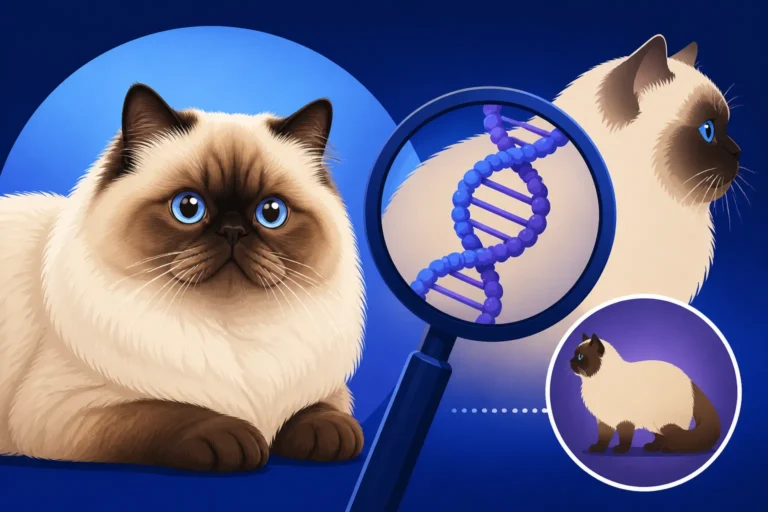
The motivation behind these initial crosses wasn't simply to create a new pretty cat, though that certainly became a wonderful side effect! In the 1930s, the world of genetics was still relatively young, and scientists were keen to understand how specific traits were inherited. Dr. Clyde Keeler and Virginia Cobb, working at Harvard, were particularly interested in the inheritance patterns of the Siamese colorpoint trait. They wanted to see if this recessive gene, responsible for the dark points on a paler body, could be successfully introduced and consistently reproduced in a long-haired cat, specifically the Persian. This scientific pursuit is why The Himalayan Was Made at Harvard in the 1930s.
Their work was detailed and methodical, focusing on observing how the genes combined over successive generations. They weren't just throwing two cats together; they were carefully tracking pedigrees, documenting outcomes, and learning about the intricacies of feline genetics. This early research was groundbreaking, not just for the Himalayan but for the broader understanding of coat color genetics in cats. Without this dedicated scientific exploration, the Himalayan might never have existed as we know it. It highlights how sometimes, the greatest advancements in breeding come from a place of pure scientific inquiry.
The Persian and Siamese: Unlikely Partners
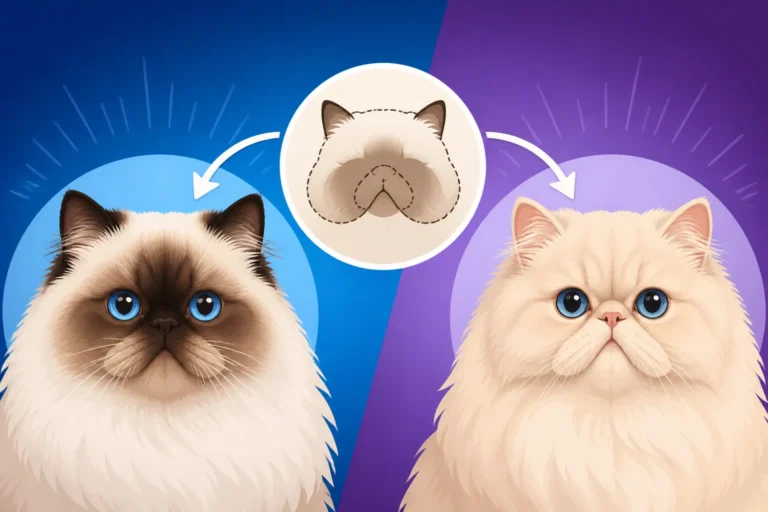
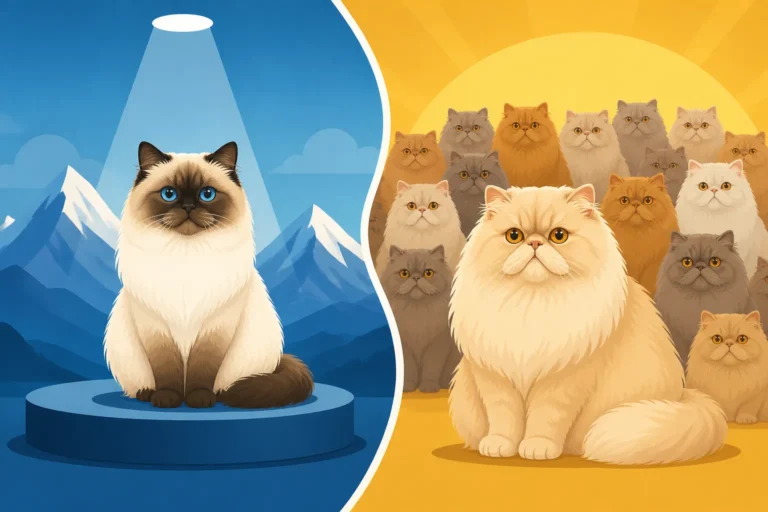
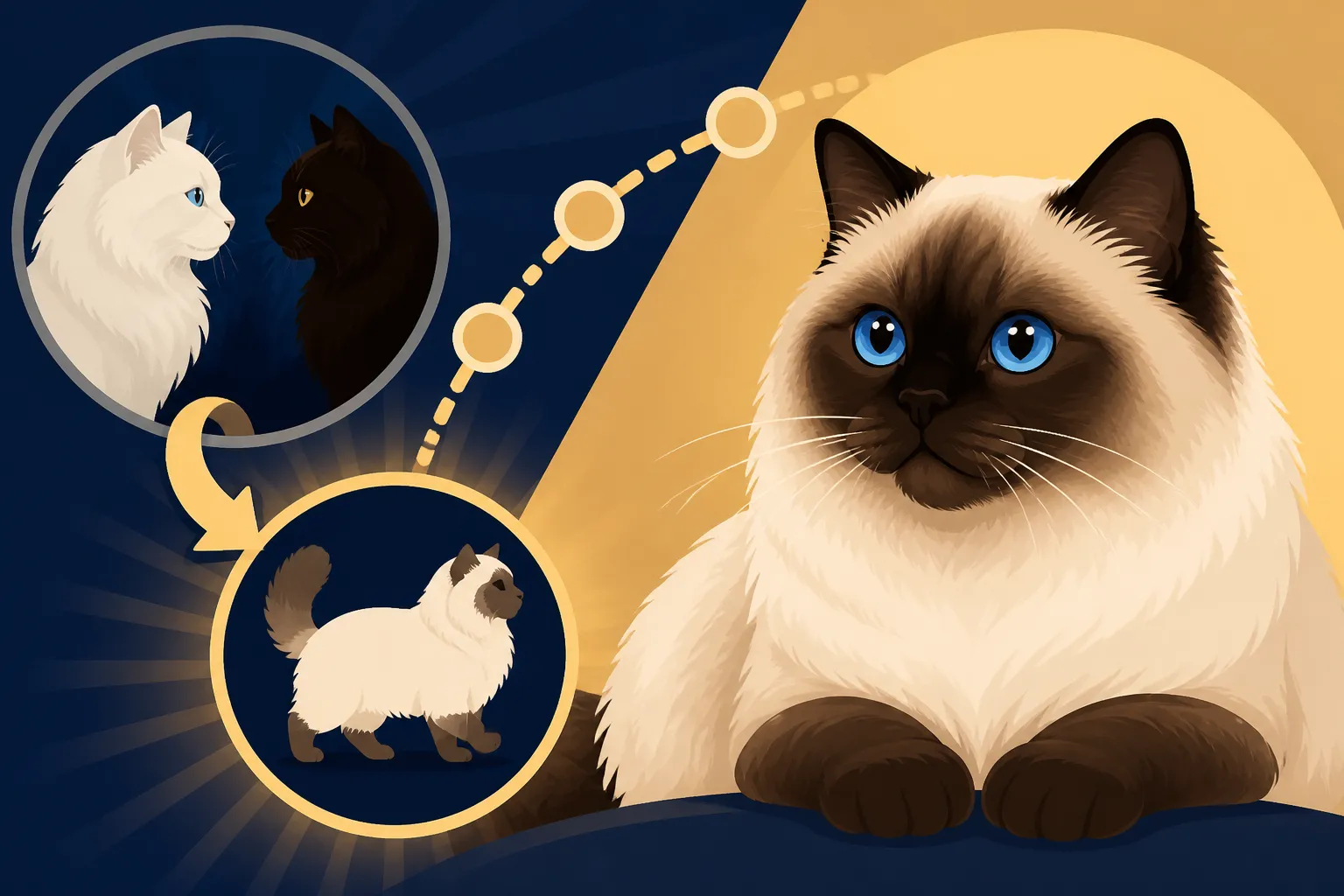
The choice of the Persian and Siamese for this experimental cross was anything but random. The Persian offered its luxurious long coat and stocky, "cobby" body type, which were highly desirable traits. Meanwhile, the Siamese brought the stunning, temperature-sensitive colorpoint gene, along with its intense blue eyes and more vocal personality. The challenge was to combine these elements in a stable, reproducible way, retaining the best of both worlds. It was a complex genetic puzzle, as both breeds had distinct characteristics that needed careful management.
Think about it: merging the substantial bone structure and profuse coat of a Persian with the elegant, pointed coloring of a Siamese. It wasn't a quick fix; it involved multiple generations of careful selection and backcrossing to solidify the desired traits. The initial kittens from these crosses weren't immediately recognized as "Himalayans" in the way we understand them today. They were simply part of an ongoing experiment. This early work laid the foundation for breeders decades later to refine the look, ensuring that the point coloration was clear and distinct, and that the beautiful blue eyes were a consistent feature. This specific blend of heritage explains why Every Himalayan Inherits Two Disease Lists, Not One, carrying traits and predispositions from both its parent breeds.
From Experimental Crosses to a Recognizable Line
While the initial crosses happened in the 1930s, the journey from scientific experiment to established cat breed was a much longer road. After Keeler and Cobb's foundational work, it took passionate breeders to take up the mantle. These individuals saw the potential in these early experimental cats and dedicated themselves to developing a consistent type. They continued the meticulous breeding, aiming to achieve a specific look: a Persian body and coat with Siamese points and blue eyes.
This wasn't an overnight success story. It required decades of careful selective breeding, patience, and a keen eye for genetics. Breeders had to navigate the complexities of recessive genes and ensure that desirable traits were preserved while less desirable ones were bred out. The early breeding programs often involved outcrossing back to purebred Persians to maintain type and robust health. Eventually, the efforts of breeders like Marguerita Goforth in the United States, who dedicated significant time to refining the breed, truly propelled the Himalayan towards formal recognition in the mid-20th century. Her unwavering commitment was critical to the breed's eventual acceptance by cat registries, as explored in Marguerita Goforth and the Himalayan's 1957 Recognition.
The Journey to Formal Recognition
The path to formal recognition by major cat associations was a rigorous one. Breeders had to present enough cats with consistent traits, demonstrating that the Himalayan was indeed a distinct and reproducible breed. This involved showing cats, garnering support from other breeders, and meeting strict criteria set by the registries. It was a long process that spanned several decades beyond the initial 1930s crosses.
The name "Himalayan" itself, eventually chosen for the breed, was actually inspired by another animal: the Himalayan rabbit, which also exhibits the distinctive colorpoint pattern. This naming choice is fascinating and is a detail that many cat enthusiasts often miss, but it perfectly encapsulates the visual hallmark of the breed. You can learn more about this connection in The Himalayan Is Named After a Rabbit. Eventually, their efforts paid off, and the Himalayan was recognized by various associations, though its classification sometimes varied. For instance, in some registries, it was recognized as a distinct breed, while in others, it became a color division of the Persian. This dual recognition history can sometimes be a source of confusion for new owners researching their cat's lineage and papers.
Here’s a simplified timeline of the Himalayan's early development:
| Decade | Key Events | Significance |
|---|---|---|
| 1930s | First intentional Persian x Siamese crosses at Harvard. | Birth of the Himalayan concept; genetic research begins. |
| 1940s | Continued experimental breeding, refining initial crosses. | Stabilizing desired traits; more consistent litters. |
| 1950s | Dedicated breeders, like Marguerita Goforth, intensify efforts. | Development of a recognizable breed type; push for recognition. |
| 1957 | The Himalayan achieves championship status with CFA. | Formal acceptance into the cat fancy. |
The Lasting Legacy of the Himalayan's Early Days
The foresight and scientific curiosity of those working in the 1930s didn't just create a single breed; it opened up a whole new world of possibilities in cat breeding. The Himalayan's success in blending the long coat of the Persian with the colorpoints of the Siamese proved that such intentional crosses could yield stunning results. This fundamentally changed how many breeders approached developing new variations or even entirely new breeds. It demonstrated the power of understanding genetics to shape the physical appearance of our feline companions.
The early work on the Himalayan provided invaluable lessons in genetic inheritance, particularly regarding recessive genes and the expression of coat colors. This knowledge has since been applied to the development of numerous other breeds that feature colorpoint patterns or unique combinations of traits. In essence, the Himalayan paved the way for many of the beautiful, carefully crafted breeds we see and admire today. It’s a fascinating look at how selective breeding and a deep understanding of genetics, particularly how genes like the point gene operate, can create an entirely new visual identity within an established breed. What the Himalayan Proved About Coat Genetics touches on these profound implications.
How the Himalayan Changed Cat Breeding
The creation of the Himalayan had a ripple effect throughout the cat fancy. For Persian breeders, it introduced a new, striking coloration, which led to the "Colorpoint Persian" division in some registries. This meant that the gene pool could expand, bringing in new characteristics while still adhering to the established Persian body type. For those interested in the Siamese, it showed how their distinctive coloring could be carried into a completely different physical form. It truly was a bridge between two worlds.
Today, when we look at our gorgeous Himalayans, whether they are draped elegantly over a sofa or playfully batting at a toy from Chewy, we're seeing the culmination of decades of careful work that began with those pioneering crosses in the 1930s. Their enduring popularity is a testament to the vision of those early researchers and breeders. Even seemingly small details, like Why a Himalayan's Required Blue Eyes Carry No Penalty, are deeply rooted in this foundational genetic work and the subsequent development of breed standards. The original goal might have been scientific, but the legacy is a loving companion that has brought joy to countless homes. When you consider the practicalities of caring for these beautiful cats, from finding the right food to selecting the best grooming tools, reliable suppliers like Chewy make it easier than ever to maintain their magnificent coats and ensure their well-being. The dedication to their care continues the legacy of precision and attention that marked their very inception.
The Influence on Modern Breeds
The genetic blueprint established by the Himalayan crosses didn't stay confined to one breed. The concept of creating a colorpoint variant of a well-established long-haired breed proved immensely popular. It inspired breeders to explore similar combinations, leading to the development or refinement of other pointed longhair breeds. The very idea of intentionally combining traits from two distinct parent breeds to create a "hybrid vigor" and a new aesthetic was solidified by the Himalayan's early success.
For owners, understanding this history provides a deeper appreciation for their cat's unique characteristics. It explains why a Himalayan often combines the calm, lap-loving nature of a Persian with a touch of the vocal expressiveness and playful spirit of a Siamese. You'll often find discussions about What the Siamese Side Gave a Himalayan Besides Points when delving into their personalities. These aren't just pretty cats; they are living pieces of feline history, carrying the genetic legacy of a bold scientific experiment from the 1930s. And for those looking to ensure their Himalayan receives the best care, browsing for high-quality, breed-appropriate food and enrichment items on platforms like Chewy is a natural extension of that historical dedication to their well-being.
Disclaimer
This article is for general informational purposes only and does not constitute professional advice. Laws, prices and regulations vary by location and change over time. Consult a qualified professional for guidance on your specific situation.