Why to Ask a Himalayan Breeder for Photos in Profile
It's incredibly easy to fall head over heels for an adorable Himalayan kitten from a picture, but what many prospective owners don't realize is that a simple head-on photo can hide a world of potential health challenges. The unique facial structure of these beautiful cats, inherited from their Persian lineage, has a profound impact on their daily lives, and without a clear view of their profile, you're missing critical information. This guide will walk you through exactly why those profile photos are so vital and what details they can reveal about your future feline companion's well-being.
Why Profile Photos Are Non-Negotiable for Himalayan Owners
When you're looking at a fluffy, sweet-faced Himalayan kitten, the instinct is often to focus on their big, round eyes and lovely point coloration. You might see a cute little button nose and assume everything is fine. However, the front view of a cat's face, especially a brachycephalic breed like the Himalayan, can be incredibly deceptive. It simply doesn't tell the full story of their breathing passages, tear ducts, and jaw alignment. A profile photo, on the other hand, pulls back the curtain on these crucial anatomical details.
Think of it this way: you wouldn't buy a car without looking under the hood, would you? The same principle applies here. A Himalayan's profile view allows you to see the actual structure of their skull, the depth of their nose, and how their jaw aligns. This isn't just about aesthetics; it's about their quality of life. A cat with an extremely flattened face might look adorable, but that same extreme flatness can predispose them to a lifetime of respiratory issues, dental problems, and eye irritation that can lead to constant discomfort and costly vet visits. Asking for profile photos isn't being overly cautious; it's being a responsible, informed pet parent, ensuring your new family member has the best possible start and a comfortable life. It’s about understanding the reality behind What a Doll Face Himalayan's Profile Measures versus What a Peke Face Himalayan's Profile Measures.
Unveiling Hidden Breathing Challenges
The most critical reason to demand profile photos is to assess the cat's potential for Brachycephalic Airway Obstruction Syndrome (BAOS). This isn't something you can see from the front. An extremely flat face often comes with stenotic nares (narrow nostrils), an elongated soft palate, and even hypoplastic trachea (narrow windpipe). These conditions significantly restrict airflow, making it difficult for the cat to breathe normally. In a profile picture, you can clearly see the depth of the nose leather and the opening of the nostrils.
Imagine your cat struggling to breathe every single day, even when just lounging. It's heartbreaking to witness. These cats might snore loudly, even when awake, pant during minimal activity, and be highly susceptible to overheating. During playtime, you might notice How Soon a Himalayan Kitten Runs Out of Breath or Why a Himalayan Snores Louder Than Its Siamese Ancestors. This isn't just an inconvenience; it's a serious health concern that can require expensive surgical interventions to correct. A good breeder will understand your concern and be transparent about their kittens' profiles, often providing multiple angles without prompting.
Gauging Eye and Tear Duct Health
Himalayans are known for their striking blue eyes, but their facial structure can make them prone to certain eye issues. An overly flat face can lead to shallow eye sockets, which leaves their eyes more exposed and vulnerable to injury or irritation. More commonly, it can also cause entropion, where the eyelids roll inward, allowing eyelashes to constantly rub against the cornea. Additionally, the folds around a very flat nose can block or compress tear ducts, leading to chronic tear staining and potential skin infections in the damp folds.
A profile photo allows you to see how prominent the eyes are and the angle of the tear ducts relative to the nose. You want to see clear, open eyes with no excessive watering or visible irritation around the nose and eye area. Persistent tear staining, especially in a cream-bodied Himalayan, can be a sign of these underlying structural issues that will require daily cleaning and potentially veterinary intervention. This daily routine of face wiping is a standing expense and time commitment, as highlighted in Why the Eye Routine Is a Standing Himalayan Expense.
Understanding the Nuances of Himalayan Facial Structure
The Himalayan cat, while adored for its plush coat and gentle nature, has a spectrum of facial structures. Historically, and even today, you'll find variations ranging from the "doll face" to the "peke face." Understanding these differences from a profile view is paramount to predicting your cat's health trajectory and daily care needs. The extreme flattening, often seen in show lines, is what can lead to significant health challenges, whereas a more moderate profile generally correlates with fewer issues.
Doll Face Versus Peke Face: A Critical Distinction
The terms "doll face" and "peke face" refer to the extent of a Himalayan's facial flattening, a trait inherited from its Persian ancestry. A "doll face" Himalayan has a more traditional, visible nose and a slightly longer muzzle, offering a gentler, less extreme profile. Their eyes are still large and round, but they don't appear as prominent or exposed. This structure typically allows for better airflow through the nostrils and reduces the likelihood of tear duct blockages.
On the other end of the spectrum is the "peke face" or "ultra type" Himalayan, characterized by an extremely flat face where the nose is very short, almost recessed, and sits directly between the eyes. While some find this appearance striking, it's often associated with significant health problems. The shortening of the muzzle impacts the entire skull structure, leading to narrow nostrils, a crowded jaw, and shallow eye sockets. It's a key factor in Why Show Himalayans Drifted Toward the Flatter Face. A profile photo is the only way to truly differentiate between these types and assess the degree of brachycephaly.
| Feature | Doll Face Himalayan (More Moderate) | Peke Face Himalayan (More Extreme) |
|---|---|---|
| Nose | Clearly visible, extends slightly beyond the eyes, with a defined bridge. | Very short, often recessed, almost level with the eyes. No discernible bridge. |
| Muzzle | Noticeably present, allowing for better breathing and tooth alignment. | Extremely short, almost absent. |
| Eyes | Large and round, but well-seated within the skull. | Very large, prominent, and can appear bulgy or exposed. |
| Breathing | Generally clearer airways, less prone to snoring or panting. | Prone to stenotic nares and elongated soft palate, leading to labored breathing. |
| Tear Stains | Less common or easily managed due to better tear duct drainage. | Frequent and often severe, due to blocked tear ducts and facial folds. |
| Dental | Better jaw alignment, though still requires routine dental care. | Often severely crowded teeth, malocclusions, requiring earlier and more frequent dental intervention. |
| Overall Health | Generally fewer brachycephalic-related health complications. | Higher risk of respiratory, eye, and dental problems throughout life. |
The Impact on Feeding and Hydration
A severely flattened face doesn't just affect breathing and eyes; it also dramatically changes how a cat eats and drinks. A Himalayan with an extreme peke face often struggles to pick up kibble from standard bowls because their short jaw and recessed nose make it difficult to scoop food without pushing it around. They might eat using their paws, or push food out of the bowl entirely.
This often means needing specialized shallow, wide bowls, or even tilted bowls, to make mealtime less of a struggle. Fresh cat food's soft texture might be easier for a flat-faced cat to manage. For kibble, exploring options on Chewy for flatter, larger kibble shapes or specialized brachycephalic cat food can be crucial. From a profile photo, you can gauge the degree of jaw shortening and how easily the cat's mouth might meet a bowl. It’s also important to consider Which Bowl Shape a Flat Faced Himalayan Can Use to ensure they can eat comfortably.
What to Look For in a Profile Photo
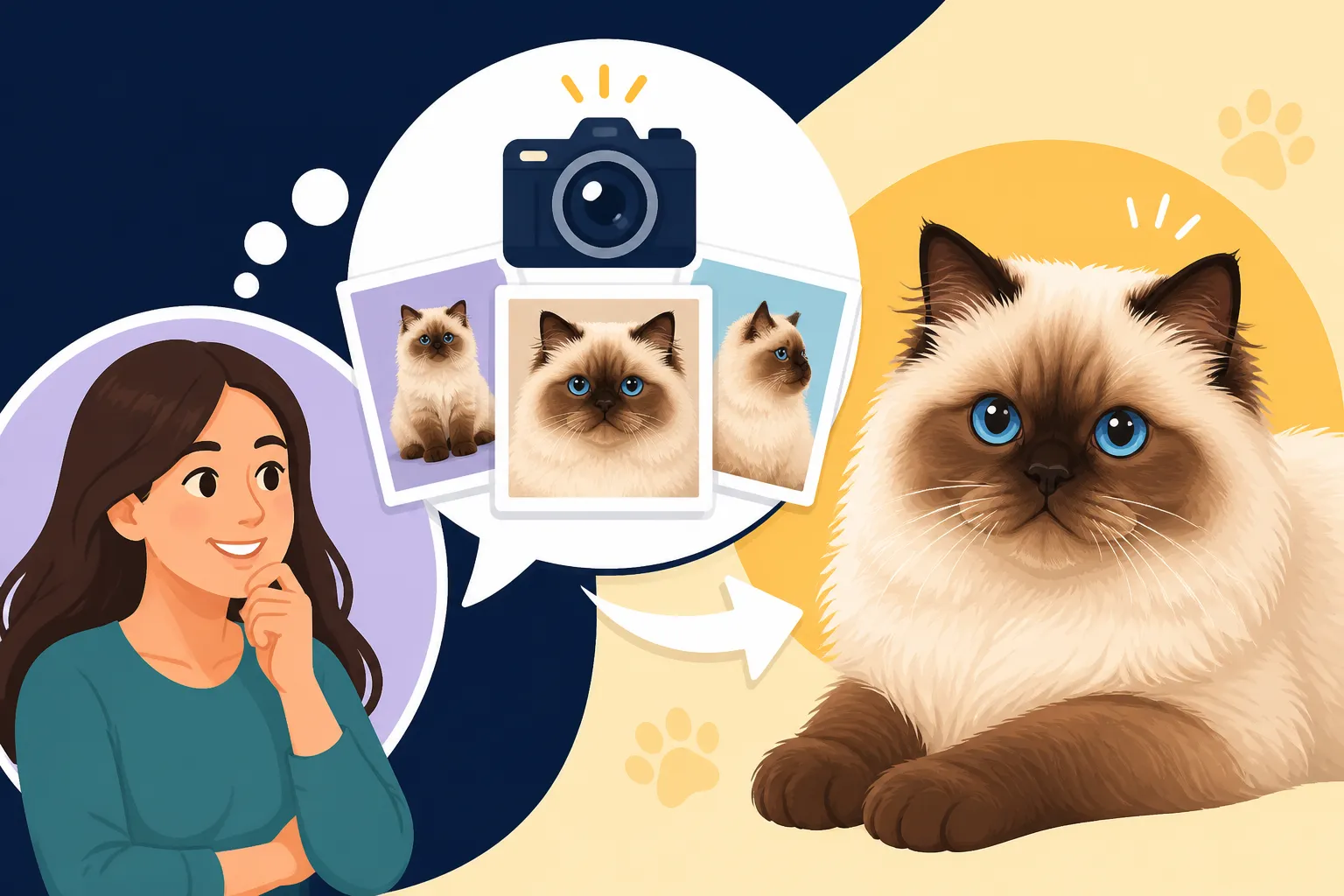
Once you've requested those all-important profile photos, knowing what to scrutinize can make all the difference. It's not just about getting the picture; it's about interpreting what you see. Don't be afraid to ask for multiple angles, perhaps one with the kitten looking straight ahead and another with their head slightly tilted. A good breeder will be happy to accommodate these requests, understanding your diligence.
Evaluating the Nose and Nostrils
This is perhaps the most crucial area to examine. In a clear profile shot, you should be able to see a distinct nose leather that extends slightly forward, not one that appears flattened into the face. Look for nostrils that are open and wide, allowing for clear passage of air. If the nostrils appear pinched, narrow slits, or almost invisible from the side, it's a red flag. This indicates stenotic nares, a common component of BAOS that severely restricts breathing.
The depth of the "stop" – the indentation between the eyes and the nose – is also telling. A doll face will have a gentle, noticeable stop, whereas a peke face will have an abrupt, deep stop that pushes the nose back into the face. While a certain degree of "flatness" is characteristic of the breed, an extreme absence of a visible nose bridge is what you want to avoid. Pay attention to How a Vet Grades a Himalayan's Nostrils as this provides insight into the severity.
Assessing Eye Prominence and Tear Tracks
From the side, evaluate how much the eyes protrude from the face. While Himalayans have characteristically large, round eyes, they should still be relatively well-seated in their sockets. If the eyes appear to bulge significantly or seem overly exposed, it could indicate shallow eye sockets, which make them more vulnerable to injury or dryness.
Also, examine the area around the inner corner of the eyes and down the side of the nose for any signs of chronic tear staining. While some staining can be normal, especially on lighter coats, excessive or rust-colored staining can suggest blocked tear ducts or an eyelid conformation that isn't allowing tears to drain properly. Why a Himalayan's Tears Run Onto Its Ruff is a common issue linked to these structural challenges, indicating a need for consistent care.
Jaw and Bite Alignment
The extreme shortening of the muzzle in peke-faced Himalayans can lead to a crowded mouth and dental problems. In a profile picture, observe the alignment of the upper and lower jaws. While it might be hard to see the teeth clearly, an extremely undershot jaw (where the lower jaw protrudes significantly) or a very compressed appearance can indicate a crowded mouth. This can cause teeth to grow at awkward angles, lead to premature tooth decay, and necessitate frequent professional dental cleanings under anesthesia. This is a common concern, as How a Shortened Jaw Crowds a Himalayan's Teeth can lead to a lifetime of specialized dental care. These issues can be incredibly painful for the cat and expensive for the owner.
Beyond the Photo: Further Questions for Your Breeder
Even with perfect profile photos, an informed conversation with your breeder is essential. The photos are a starting point, but they don't replace the wealth of information a responsible breeder can provide. Don't hesitate to ask specific questions that delve deeper into the health and lineage of their cats.
Health Guarantees and Veterinary Records
A reputable breeder will not only provide clear profile photos but also be upfront about the health of their breeding stock. Ask about health guarantees, specifically if they cover conditions related to brachycephalic syndrome, and how long such guarantees last. It’s important to understand Which Two Certificates a Himalayan Breeder Owes You and How to Read a Himalayan's PKD Certificate.
Request to see veterinary records for the parents, particularly evidence of health screenings for common Himalayan issues like Polycystic Kidney Disease (PKD) and Progressive Retinal Atrophy (PRA). While these aren't directly linked to facial structure, they are crucial genetic conditions to rule out. A good breeder will also have their kittens thoroughly checked by a vet before placement, including an assessment of their breathing and general facial conformation. This ensures that any obvious issues are identified early. Consider asking What Testing a Himalayan for PKD and the Eyes Costs to understand the breeder's investment in health.
Asking About Parents' Profiles and Offspring History
It's not just about the kitten you're looking at; the parents' facial structures are highly indicative of what their offspring will inherit. Ask to see profile photos of both the sire and dam. If a breeder has been breeding Himalayans for some time, they should be able to discuss the general health and longevity of their previous litters. Have any past kittens required surgery for breathing issues? Have they experienced chronic eye problems?
A breeder who is genuinely committed to the welfare of their cats will be able to share this information openly. They might even discuss how they choose breeding pairs to try and mitigate extreme features. This shows a dedication to health over simply achieving a certain "look."
Inquiring About Daily Care Routines
Understanding the daily care needs associated with facial structure can help you prepare. Ask the breeder about their routine for cleaning the kittens' faces, wiping tear stains, and checking their breathing. Their answers can give you insight into the typical daily demands these kittens will place on their future owners.
For instance, if the breeder already performs daily face wipes and mentions needing special shallow bowls, it's a good indicator that the kitten you're considering may have ongoing needs. This helps you factor in the time and potential costs for specialized supplies, perhaps sourced from Chewy, or the cost of pet insurance like Healthy Paws, which might help cover unexpected vet bills related to brachycephalic conditions. Knowing these routine needs upfront allows you to commit fully and be prepared for What a Year of Wiping a Himalayan's Face Costs.
Conclusion: Making an Informed Choice for a Lifetime of Happiness
Choosing a Himalayan cat is a commitment to a beautiful, loving companion, but it also comes with a responsibility to understand their unique needs. By insisting on profile photos from a breeder, you're not being overly picky; you're being a proactive and caring potential owner. These pictures offer invaluable clues about a kitten's long-term health, particularly concerning their breathing, eyes, and dental alignment.
A responsible breeder, one who prioritizes the well-being of their cats above all else, will welcome your questions and readily provide the information you need, including clear, multi-angle profile photos. They understand that an informed owner is a happy owner, and that a healthy kitten is the greatest joy. Take the time, do your research, and don't let a cute face from the front obscure potential challenges that only a profile view can reveal. Your future Himalayan — and your wallet — will thank you for it.
Disclaimer
This article is for general informational purposes only and does not constitute professional advice. Laws, prices and regulations vary by location and change over time. Consult a qualified professional for guidance on your specific situation.