Why a Shaved Patch Grows Back Dark on a Himalayan
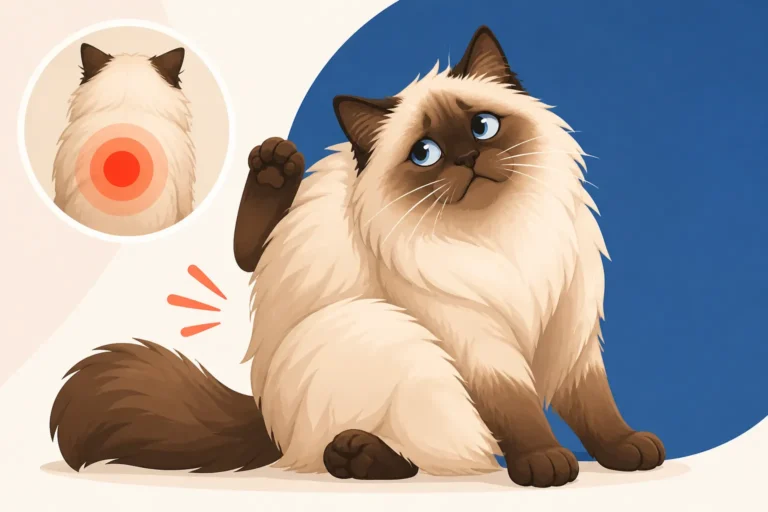
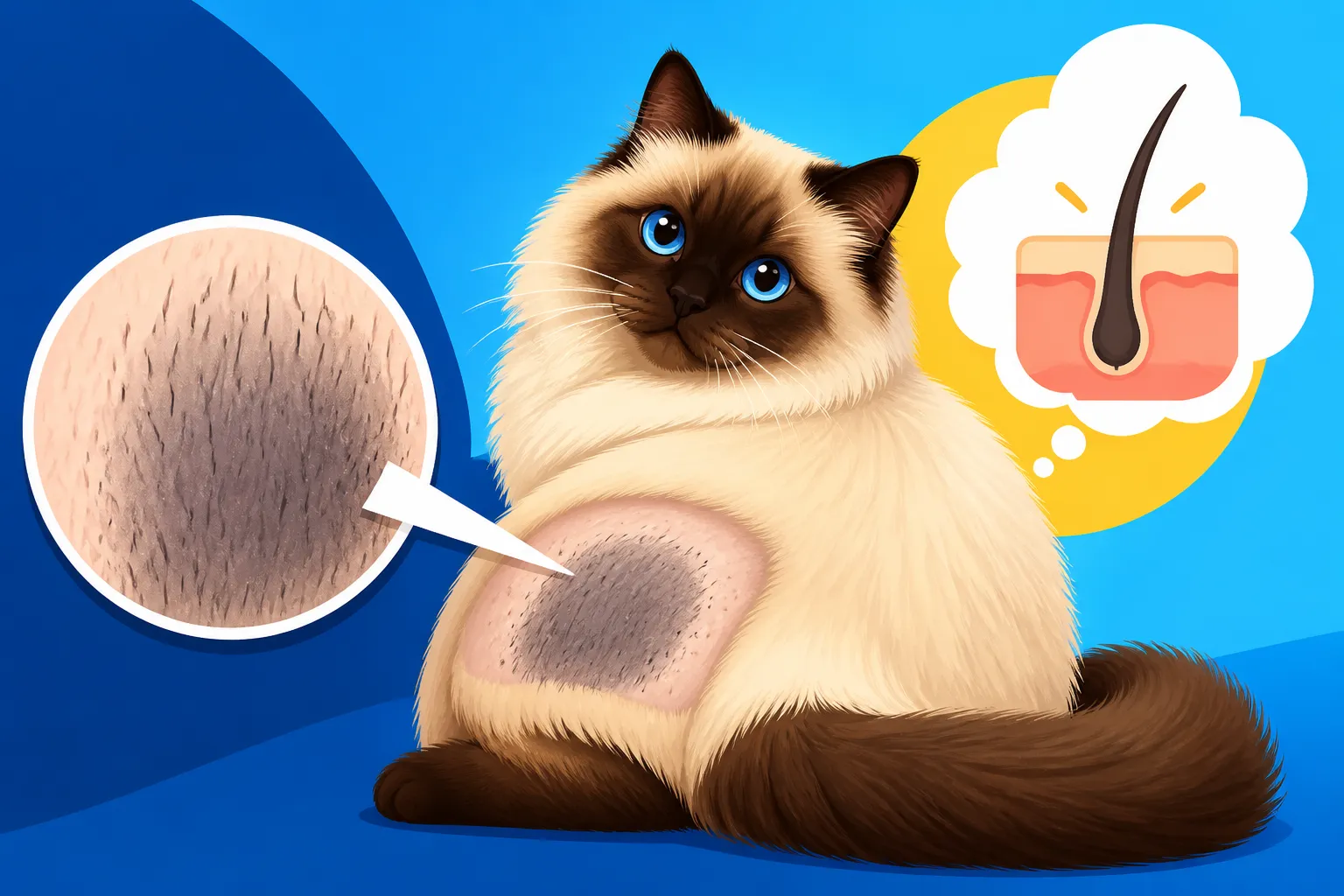
If you’ve ever had to shave a patch of fur on your beloved Himalayan cat, perhaps for a blood test at the vet or to remove a stubborn mat, you might have noticed something quite peculiar: that patch often grows back significantly darker than the surrounding fur. It’s a common experience that can leave many Himalayan owners scratching their heads, wondering if something is wrong. Rest assured, this guide will delve deep into the fascinating genetics and physiological reasons behind why a shaved patch on your Himalayan returns with a richer, deeper hue, and what it means for their unique coat.
The Genetic Blueprint Behind the Himalayan's Color-Point Coat
The Himalayan cat, with its stunning blue eyes and striking color points, carries a truly unique genetic trait. This isn't just a random splash of color; it's a carefully orchestrated biological process driven by temperature, inherited directly from their Siamese ancestors. Understanding this fundamental mechanism is key to unlocking the mystery of the dark regrowth.
The Temperature-Sensitive Tyrosinase Enzyme
At the heart of the Himalayan's distinctive coat pattern lies a special gene that codes for a temperature-sensitive enzyme called tyrosinase. This enzyme is crucial for producing melanin, the pigment responsible for fur color. But here’s the clever bit: this particular tyrosinase enzyme only functions effectively within a specific, cooler temperature range. If the body temperature is too warm, the enzyme becomes inactive, and no pigment is produced. It’s a genetic marvel, truly.
Think of it like this: your Himalayan’s body is a canvas, and this enzyme is the artist, but the artist only paints when it’s chilly enough. In warmer areas of the body, it simply takes a nap. This inherited trait is what gives all pointed breeds, including the Himalayan, their unique look. It’s why all Himalayan kittens are born almost white, because they’re kept warm and cozy in their mother's womb, and only start developing their points as they are exposed to the cooler outside world. If you're curious about the specifics, we've got a whole article on Which Gene Makes a Himalayan Pointed.
Why Points Develop on Extremities
So, if the enzyme only works in cooler temperatures, where are the coolest parts of a cat’s body? Their extremities, of course! This is why you see the darkest pigmentation on your Himalayan’s ears, nose, paws, and tail – these are the areas that are furthest from the core body heat and therefore naturally cooler. The rest of their body, which is kept warmer by their internal temperature, typically remains a much paler shade, forming a beautiful contrast.
It’s a magnificent display of nature's design, perfectly tailored to create those iconic "points" that we all adore. The subtle gradations in color, from a deep seal point to a delicate lilac point, are all a direct result of how this enzyme interacts with local body temperature. Even tiny variations in external temperature can subtly shift the shade of a point, which is why show cats are often kept in precisely controlled environments.
How Internal Body Temperature Influences Coat Color
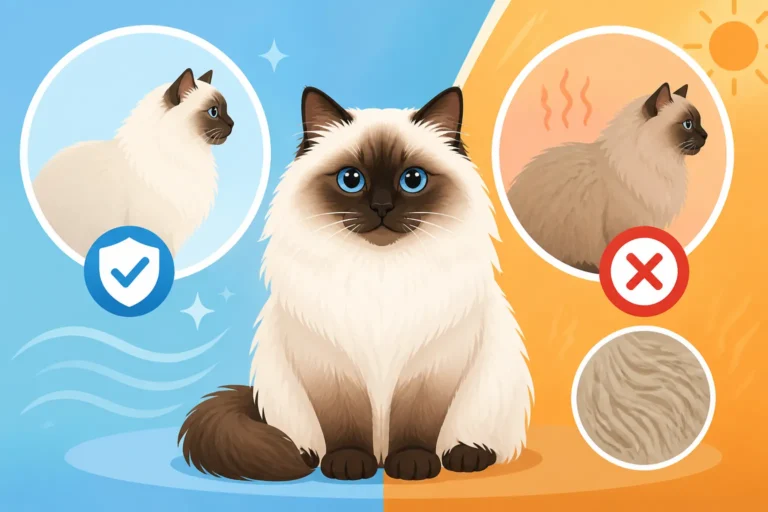
The core body temperature of a cat is generally around 100-102.5 degrees Fahrenheit (37.8-39.2 degrees Celsius). At this temperature, the tyrosinase enzyme is largely inactive, which is why the main body of a Himalayan cat, such as its torso and belly, remains a light cream, fawn, or even white, depending on their specific genetic background. However, if any part of the body experiences prolonged cooling, even slightly, the enzyme can spring into action.
Consider a Himalayan who loves to nap near a drafty window in winter. Over time, that slightly cooler ambient temperature could lead to a subtle darkening of their body fur, making their points seem less contrasted. Conversely, a cat living in a consistently warmer climate might have points that appear a bit lighter overall. It's a delicate balance, and your cat's environment plays a role in their overall color presentation. We dive into this more in How Temperature Decides a Himalayan's Point Color.
The Unexpected Effect of a Shave
Now that we understand the temperature-sensitive nature of the Himalayan's coat, the mystery of the dark regrowth starts to unravel. Shaving isn't just removing hair; it's fundamentally altering the thermal insulation of that specific area, tricking the body into thinking it's a cooler extremity.
Localized Cooling of the Shaved Skin
When a patch of fur is shaved off, you’re not just taking away hair; you’re removing a significant layer of insulation. A Himalayan's coat is incredibly dense, designed to keep them warm. Without that protective layer of fur, the exposed skin is suddenly much more vulnerable to the ambient temperature of its surroundings. It cools down, sometimes quite dramatically, bringing that skin area into the ideal temperature range for the tyrosinase enzyme to become active.
Imagine bundling up in a thick winter coat, then suddenly having a patch of that coat removed. You'd feel the cold immediately on that exposed skin. Your Himalayan experiences a similar localized cooling effect. Even if your house is a comfortable 70 degrees Fahrenheit, that shaved skin is now radiating heat directly into the air, causing its surface temperature to drop below what it was when it was covered by a thick Persian coat.
Increased Blood Flow to the Area for Healing
Beyond just the lack of insulation, the act of shaving itself can contribute to the darkening. Any time skin is irritated, whether by a cut, a scrape, or the close shave of clippers, the body's natural response is to send increased blood flow to the area. This surge of blood is rich in nutrients and cells necessary for healing. While initially, this might warm the area slightly, as the skin begins its recovery process and the blood flow normalizes, the newly exposed and recovering skin continues to experience less insulation.
As the healing progresses and new, tiny hairs begin to emerge, this delicate new growth doesn't offer the same insulating properties as the mature, dense coat. This means the skin in that area continues to run at a slightly lower temperature than the surrounding fur-covered skin, creating a perfect microclimate for pigment production.
The Enzyme Kicks In
With the skin in the shaved area now consistently cooler, the temperature-sensitive tyrosinase enzyme, which was previously dormant in that warmer, insulated part of the body, awakens and begins its work. It starts producing melanin, the pigment, in the newly growing hair follicles. This results in the new fur coming in darker than the original fur in that spot. It's not a flaw or a problem; it's simply the gene doing what it's designed to do under these new, cooler conditions.
This is why the darkening often isn't immediate. The skin needs to cool, and the new hair needs to grow enough to hold that pigment. The more consistently cool the area remains, the more pigment will be laid down. It's a fascinating display of how genetic expression can be dynamically influenced by environmental factors, even on a small, localized scale on your own cat. We have a detailed look at this specific phenomenon in How a Shaved Patch Regrows Darker on a Himalayan.
Understanding the Regrowth Process
Witnessing the regrowth can sometimes be a journey of observation, as the shaved patch doesn't just magically turn dark overnight. There's a gradual, nuanced process at play, influenced by various factors.
Initial Fuzz and Gradual Darkening
When the first hairs start to peek through on a shaved patch, they might appear quite light, even a pale fuzz. This is because these initial, fine hairs are just beginning to develop, and the pigment hasn't fully taken hold. However, as these hairs mature and thicken, and as the underlying skin remains exposed and slightly cooler over a longer period, the tyrosinase enzyme continues its work, laying down more and more pigment.
Over weeks and months, you'll notice the patch progressively darkening, often settling into a shade that matches one of your cat's established "points" or even a shade darker than any of their existing points. It’s a slow transformation, so patience is truly required as you observe your cat's coat returning to its former glory, albeit with a temporary darker spot.
Factors Affecting the Intensity of Darkening
The degree to which a shaved patch darkens isn't uniform; several factors can influence its intensity. For instance, the ambient temperature of your home plays a significant role. If your house is kept cooler, the shaved patch might become even darker than if your cat lives in a consistently warm environment. Similarly, the size and depth of the shave can affect it. A larger, deeper shave might expose more skin to cooling and therefore lead to a more pronounced darkening effect.
Even your cat's individual genetics, beyond just the point gene, can play a part. Some Himalayans might have a more robust pigment response to cooling than others. Activity levels can also contribute; a very active cat might generate more body heat, slightly warming even a shaved area, whereas a more sedentary cat might experience more profound cooling in the shaved patch.
Temporary vs. Permanent Darkening
For most Himalayans, the darkening of a shaved patch is a temporary phenomenon. As the fur grows back to its full length and thickness, the insulating layer is restored, and the skin beneath gradually returns to its original, warmer temperature. Once that happens, the tyrosinase enzyme in that area will slow its pigment production, and the new hairs growing in will revert to the paler body color. However, this blending process can take a significant amount of time – often many months, sometimes even over a year, depending on the individual cat and the area.
In some rare cases, particularly with very deep shaves or certain individual cats, a faint shadow or slightly darker patch might persist long-term, even after the fur has fully grown back. This isn't usually cause for concern but rather a testament to the powerful influence of the temperature-sensitive gene. It's simply the body remembering that cooler period. This is often seen after major surgeries or extensive mat removal where large areas were shaved.
Common Scenarios Leading to Shaved Patches
While we might wish our Himalayans never needed a shave, there are several practical reasons why a patch of their beautiful fur might need to be removed, leading to this interesting regrowth phenomenon.
Medical Procedures and IV Sites
One of the most frequent reasons a Himalayan cat ends up with a shaved patch is for medical reasons. Routine blood tests, vaccinations, or the insertion of an intravenous (IV) catheter for fluids or medication often require a small area on their leg to be shaved. This allows the veterinary staff to clearly see the vein and ensure a sterile procedure. These small, typically rectangular or circular patches are often the first place owners notice the darker regrowth.
Even more extensive procedures, like spaying, neutering, or other surgeries, will necessitate shaving a larger area. For instance, an abdominal surgery would involve shaving the entire belly. Owners are often surprised when, weeks later, the once-white belly fur starts growing back in a striking dark brown or black, like a brand new point. This change is entirely natural and expected given the skin's prolonged exposure to cooler air post-op. We delve into this specific impact in Why a Himalayan's Coat Changes Color After Surgery.
Matted Fur Removal
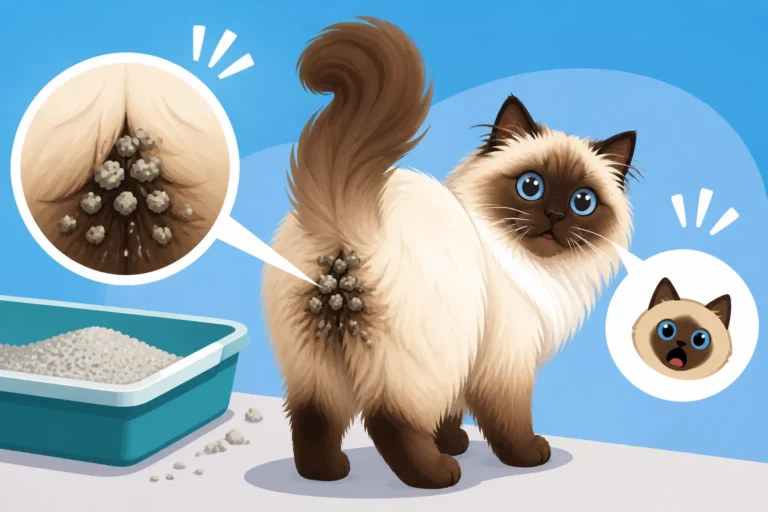
The glorious, long, dense coat of a Himalayan is a thing of beauty, but it's also prone to matting if not meticulously groomed. Mats are essentially clumps of tangled fur that can become incredibly tight and pull on the skin, causing pain, skin irritation, and even infections. When mats become severe or are too close to the skin to be gently brushed out, shaving them off is often the only humane option.
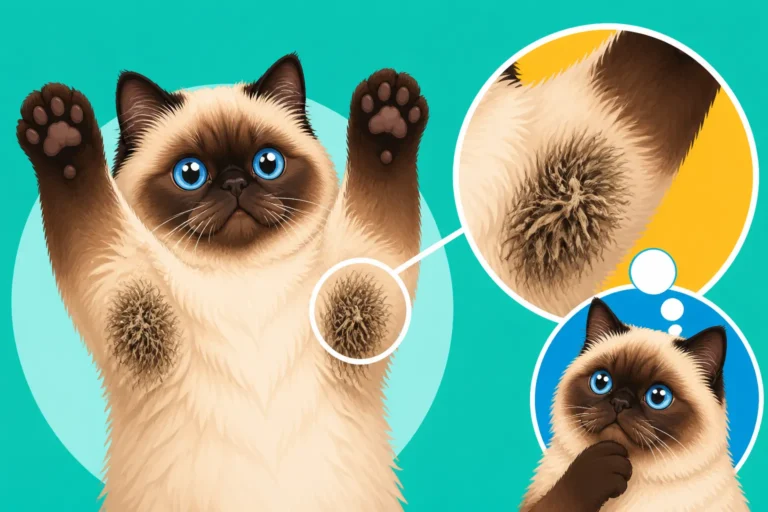
This is a common reason for larger shaved areas, particularly under the armpits, behind the ears, on the belly, or in the "britches" area around their hindquarters. When these mats are shaved away, the underlying skin is suddenly exposed, creating those ideal cool conditions for darker fur regrowth. It can be quite a shock to see your beautiful cream-bodied cat sporting a dark patch where a mat used to be, but it’s a sign of a healthier, happier cat free from painful tangles. Unfortunately, missing even one day can lead to trouble, as explained in Why a Missed Day Costs a Himalayan a Mat.
Therapeutic Shaving for Skin Issues
Occasionally, a veterinarian might recommend shaving a specific area to treat a skin condition. This could be for anything from hot spots, ringworm, or bacterial infections to allow for better air circulation, easier application of topical medications, or to simply get a clearer view of the affected skin. The fur, in this instance, is removed to facilitate healing.
Once the skin issue resolves and the fur begins its journey of regrowth, the exposed area, having been cooler due to the lack of insulation, will predictably return with darker pigment. While the temporary dark patch might be a cosmetic concern for some owners, the health of the cat and the resolution of the skin condition are always the priority. The darker fur is just a temporary side effect of the healing process.
Managing the Appearance and Health of Regrowing Patches
While the dark regrowth is a natural process, there are ways you can support your Himalayan through this phase, ensuring their comfort and the healthy return of their magnificent coat.
Patience is a Virtue
The most important "management strategy" when dealing with a shaved patch on your Himalayan is simply patience. The fur will grow back, and over time, the color will blend. This isn't an overnight process. Cat fur, especially the dense, long coat of a Himalayan, takes months to fully regenerate. Small patches might take 3-6 months to blend, while larger areas from extensive mat removal or surgery could take 9-18 months to truly return to their original color and length.
During this time, resist the urge to re-shave or try to "fix" the color. It's a natural phenomenon, and interfering further could prolong the process or even irritate the sensitive skin. Embrace the temporary darker spot as a little badge of honor, a reminder of your cat's health journey or your diligence in managing their coat.
Gentle Grooming for the New Fur
As the new fur begins to grow in, it’s crucial to maintain gentle but consistent grooming in the affected area. The new growth might be soft and fine initially, but as it lengthens, it can be just as prone to tangles and mats as the rest of their coat, especially if it's coming in thicker and slightly curlier than the surrounding mature fur. Use a soft-bristled brush or a wide-toothed steel comb (you can find excellent ones on Chewy) to carefully work through the new growth daily.
The goal is to prevent any new mats from forming while allowing the coat to thicken and blend naturally. Be extra gentle, as the skin underneath might still be sensitive from the shave or healing from whatever condition necessitated the shave. A regular, gentle routine will encourage healthy growth and minimize future issues.
Maintaining Consistent Indoor Temperature
While you can't prevent the darkening entirely, maintaining a consistent, comfortably warm indoor temperature might subtly influence the intensity of the dark regrowth over a very long period. If your home fluctuates dramatically between warm and cool, the shaved skin will experience those temperature shifts more acutely, potentially leading to a darker pigment deposition.
Keeping your home at a steady, comfortable temperature (avoiding extremes of cold) can help ensure that as the fur slowly grows back, the skin gradually returns to its warmer core temperature. This can encourage the tyrosinase enzyme to become less active over time, allowing the paler, original color to eventually return. While not a quick fix, it's a supportive environmental factor. For more on this, check out Whether a Himalayan Kept Warm Stays Paler.
Preventing the Need for Shaving
Prevention is always better than cure, especially when it comes to maintaining your Himalayan's glorious coat and avoiding the need for shaving. A proactive approach to care can save you and your cat a lot of trouble.
The Importance of Daily Grooming
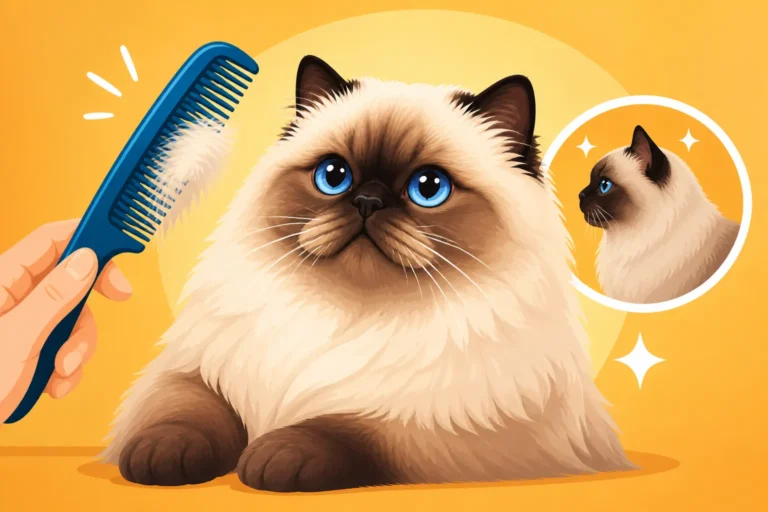
For a Himalayan, daily grooming isn't a luxury; it's an absolute necessity. Their long, fine, dense double coat is prone to matting faster than many other long-haired breeds. Just one missed day can see small tangles escalate into stubborn mats, particularly in high-friction areas like the armpits, behind the ears, and in the "britches." A daily session with a good quality steel comb and slicker brush is paramount to preventing these painful knots.
This routine not only keeps their coat healthy and mat-free, reducing the chances of needing a shave, but it also allows you to bond with your cat and check for any skin issues or changes that might require veterinary attention. Consistency is key here. Make it a positive experience with treats and praise, starting from a young age. The effort invested daily saves far more heartache and potential vet bills down the line. We can't stress this enough – The Daily Comb a Himalayan Cannot Skip is non-negotiable for these cats. It's also worth considering What Daily Combing Costs a Himalayan Owner in Time to understand the commitment.
Regular Vet Check-ups for Early Detection
Routine veterinary check-ups are vital for early detection of any health issues that might, directly or indirectly, lead to the need for shaving. For example, persistent skin allergies or infections, lumps, or unexpected weight changes could all require diagnostic tests or interventions that involve shaving. Regular vet visits ensure that any underlying health problems are identified and addressed promptly before they become severe enough to necessitate significant fur removal.
Your vet can also offer advice on coat care, diet, and general well-being tailored to your Himalayan's specific needs. Catching issues like fleas, fungal infections, or even early signs of kidney problems (which can affect coat quality) early on can prevent more drastic measures. Many pet owners find useful preventative care products, from specialized shampoos to supplements, on Amazon or Chewy.
Nutritional Support for a Healthy Coat
A healthy coat truly begins from the inside out. Providing your Himalayan with a high-quality, balanced diet rich in essential fatty acids and proteins is crucial for maintaining coat health, strength, and elasticity, which can help reduce matting. Look for cat foods that list real meat as the first ingredient and contain Omega-3 and Omega-6 fatty acids.
These nutrients nourish the skin and hair follicles, leading to a softer, more resilient coat that is less likely to break, tangle, and form mats. A well-nourished coat is also generally healthier and can better withstand the minor stresses that can lead to shedding and potential matting. It's worth researching What Protein Level a Himalayan's Coat Needs for optimal fur quality.
The Himalayan's Unique Thermoregulation and Coat Structure
To fully appreciate the 'why' behind the dark regrowth, it helps to understand the full picture of your Himalayan's physical attributes, particularly their magnificent coat and how their body manages heat.
The Double Coat Dilemma
The Himalayan cat possesses a luxurious double coat, inherited from its Persian lineage. This consists of a soft, dense undercoat that provides superior insulation, and longer, coarser guard hairs that protect against dirt and moisture. While stunning, this combination is a matting magnet and also plays a critical role in their thermoregulation. The undercoat acts like a down jacket, trapping a layer of warm air close to the body, making it difficult for the skin underneath to cool down.
This dual-layer system means that when a patch of fur is shaved, not just one, but two layers of insulation are removed, exposing the skin much more dramatically than if a single-coated breed were shaved. This makes the cooling effect even more pronounced, directly leading to a stronger pigment response from the temperature-sensitive gene. For more on the specifics of their fur, see How Much Undercoat a Himalayan Carries Under Its Points.
Challenges in Cooling Down
The very design that makes the Himalayan's coat so beautiful also presents a challenge when it comes to keeping cool. Their dense double coat, combined with their characteristic brachycephalic (flat) face, makes them highly susceptible to overheating. Their flattened facial structure often leads to narrowed nostrils and sometimes an elongated soft palate, making panting (their primary way of dissipating heat) less efficient.
Consequently, while a full-body shave might seem like a logical way to cool them down in summer, it's rarely a recommended solution by veterinarians, as it compromises their natural insulation and can expose sensitive skin to sunburn. A localized shave, however, causes a very specific, isolated cooling effect on the skin, as discussed earlier. This is why Why a Himalayan Overheats Twice as Fast as a Siamese is such an important topic for owners to understand.
Point Color as a Thermal Map
Ultimately, your Himalayan's color pattern isn't just aesthetically pleasing; it's a living, breathing thermal map of their body. The darker points literally indicate the cooler areas, while the paler body shows where their core warmth keeps the pigment-producing enzyme at bay. The shaved patch that grows back dark is simply another manifestation of this natural biological process. It’s the skin’s inherent response to being unexpectedly cooled, a testament to the powerful genetic instructions carried within every single hair follicle.
Understanding this allows you to view the temporary dark patch not as an anomaly, but as a fascinating, observable demonstration of feline genetics in action. It’s a beautiful quirk of the breed, reminding us of the intricate details of their unique heritage.
| Feature | Natural Point Development | Shaved Patch Regrowth |
|---|---|---|
| Trigger | In utero warmth, then gradual cooling post-birth | Sudden localized exposure to ambient temperature |
| Location | Ears, mask, paws, tail (extremities) | Any shaved area (e.g., surgical site, mat removal) |
| Appearance (Initial) | Kittens born nearly white, points develop gradually | Exposed skin is visible, then light fuzz |
| Appearance (Mature) | Distinct, consistent dark points on extremities | Initially light, gradually darkens to match points (or darker) |
| Timeline to Full Color | Weeks to months for kittens, years for full depth | Months to over a year for blending |
| Insulation Level | High on body, lower on extremities | Significantly reduced in shaved area |
| Enzyme Activity | Active in cooler extremities, inactive in warm body | Becomes active in newly cooled, shaved area |
| Permanence | Permanent, deepens with age | Temporary, blends back to original color over time |
Disclaimer
This article is for general informational purposes only and does not constitute professional advice. Laws, prices and regulations vary by location and change over time. Consult a qualified professional for guidance on your specific situation.