How Much Smaller a Himalayan Queen Finishes
A Himalayan queen is usually smaller and lighter than a male, but “smaller” does not mean delicate or tiny. Her Persian-influenced build is broad, low-set, and sturdy, while a long coat can make her look bigger than she is. This guide explains what adult size to expect, how to tell healthy weight from fluff, and when a change in size deserves attention.
How large does a Himalayan queen usually get
Typical adult weight and build
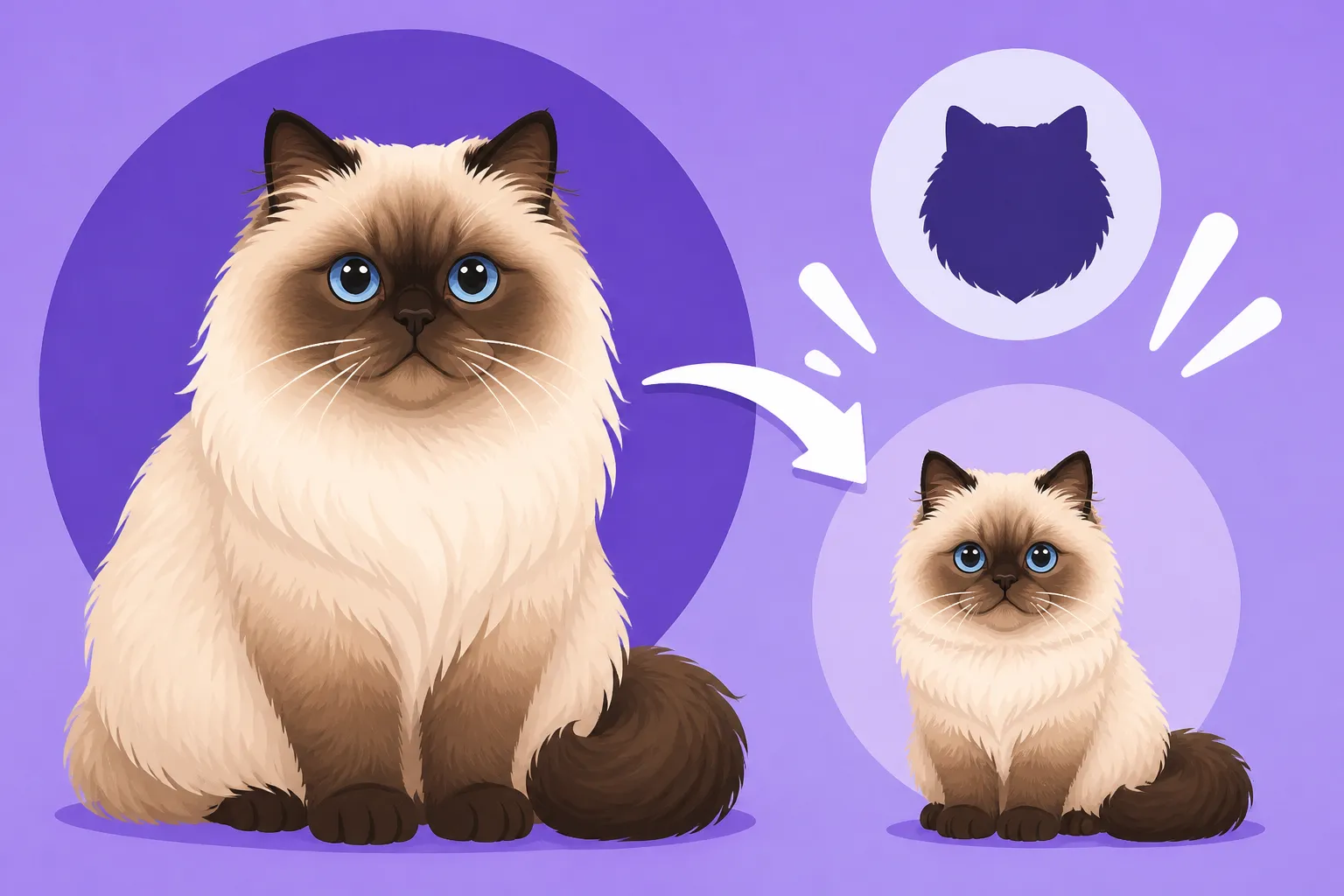
Many adult female Himalayans fall roughly in the 7-to-12-pound range, though individual cats can be lighter or heavier and still be healthy. Males are often larger, but sex alone cannot predict an individual cat’s adult size. Genetics, frame, diet, activity, and overall health all matter.
A queen’s shape is often more useful than a number on the scale. Himalayans are generally cobby: compact, broad-bodied cats with short, sturdy legs. A healthy female may look solid and substantial without being overweight. Her thick ruff, fluffy sides, and long coat can add a surprising amount of visual bulk.
It helps to separate weight from height and length. A Himalayan may stand low to the ground and have a compact outline, yet weigh more than you expect because of her dense body and coat. For more context on the breed’s proportions, see Why the Himalayan Is Described as Cobby and How Heavy a Full Grown Himalayan Gets.
Why queens are often smaller than males
The difference between female and male cats is a tendency, not a rule. A queen from large parents may outweigh a smaller male, and two female littermates can finish at noticeably different sizes. Breeders may use “queen” to mean an adult female intended for breeding, but the word does not describe a special size category.
A cat’s frame is largely inherited. If a queen’s parents and close relatives are compact, she may stay on the smaller side of the breed’s usual range. If her family tends to be larger, she may finish bigger. Neutering and spaying can also affect appetite and weight, so a cat’s body condition matters more than whether she matches a single breed-average figure.
| What you are comparing | What to expect |
|---|---|
| Adult female versus adult male | Females are often smaller, but individual cats overlap |
| Weight versus appearance | A full coat can make a healthy cat look heavier |
| Frame versus body fat | A broad, cobby frame can be normal; excess fat is a separate concern |
| One queen versus another | Littermates may finish at different sizes |
| Kitten size versus adult size | A small kitten’s size alone does not reliably predict her final build |
When a Himalayan queen reaches adult size
Growth happens gradually
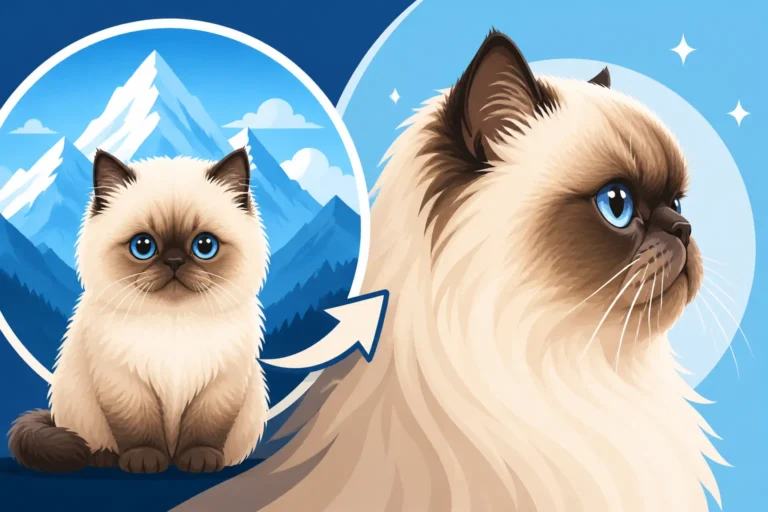
A Himalayan kitten does not suddenly reach her finished size when she stops looking small. Growth and development take place over time, and some cats continue to fill out after they have gained most of their height and length. Coat development can also change the way the cat looks from one season or age to another.
For that reason, a young queen may seem to “get bigger” even when her frame has changed very little. A fuller ruff, thicker britches, and a more developed adult coat can make her look broader. If you are comparing kitten photos with adult ones, try to compare body shape and weight records rather than coat volume alone.
Himalayans also vary in when their points and coat mature. Those color and coat changes are separate from skeletal growth, so a darker face or fuller coat does not mean the cat has suddenly gained healthy body mass. The guide How Long a Himalayan Takes to Finish Its Coat and Points explains why appearance can keep changing as the cat matures.
Track the individual, not just the breed
If you bring home a kitten, ask the breeder for her weight history and the weights of her parents if available. A sequence of measurements is more helpful than a single number. Your veterinarian can also record her weight at routine visits and assess whether she is growing at a suitable pace for her own frame.
At home, use the same scale and similar conditions when you weigh her. A bathroom scale can be hard to read accurately for a small change, so a pet or infant scale may be more practical. If you shop for one through a retailer such as Chewy, check that the platform is stable and large enough for your cat to stand comfortably. Keep the scale in a quiet spot and pair weigh-ins with a treat or gentle praise.
Do not try to make a kitten grow faster by feeding extra food, or restrict her food because she looks round in a photograph. Young cats have changing nutritional needs, and sudden diet changes can cause problems. Ask your veterinarian about an appropriate feeding plan, especially if her growth seems unusually slow or fast.
How to tell healthy size from excess weight
Use body condition along with the scale
A scale tells you how much your cat weighs, but it cannot tell you whether that weight is appropriate for her frame. A thick Persian-type coat can hide the waist and make it difficult to judge body shape by sight. Gently feel along her sides: you should generally be able to feel her ribs under a light covering, without pressing hard or having them sharply visible.
Look down at her from above when she is standing. Even under a long coat, there may be a subtle waist behind the ribs. From the side, her abdomen should not hang heavily, though a natural loose flap of skin can be normal in cats. These checks are only a guide; your vet can assess body condition more reliably during an exam. For practical advice on assessing a fluffy cat, see Finding a Himalayan’s Waist Under a Persian Ruff.
A queen who has gained weight may also find grooming harder. She might struggle to reach her back, hindquarters, or britches, allowing tangles to build up. That change can be easy to miss if the coat is already difficult to inspect. Why an Overweight Himalayan Cannot Clean Its Own Points covers the connection between body condition and self-grooming.
Coat care can disguise a change
When you handle a Himalayan, part the coat and feel the body rather than judging by the outer silhouette. Check the chest, ribs, spine, hips, and base of the tail gently. A cat can look enormous because of a full ruff and still have a healthy body condition; another may have a smooth-looking coat but carry excess weight around the abdomen.
Regular grooming is useful for more than preventing mats. A calm combing session gives you a chance to notice changes in shape, skin, or comfort. If a queen suddenly resists being touched in one area, or you find a lump or sore hidden beneath the coat, arrange a veterinary check rather than assuming it is a grooming issue.
Some owners use retailers such as Chewy to compare grooming combs or a suitable pet scale, but the tool matters less than using it consistently and gently. A comb should reach through the coat without scraping the skin. If your cat becomes distressed, stop and try shorter sessions rather than turning weighing or grooming into a struggle.
When a change in size needs attention
Watch for unexpected weight gain or loss
A gradual change may reflect altered activity, a different feeding routine, or the effects of spaying. A sudden or unexplained change is more concerning. If your cat is eating normally but losing weight, drinking much more, vomiting, or seeming unusually tired, contact a veterinarian. Weight change can be one clue among several, and it is not possible to diagnose the cause from appearance alone.
Weight gain deserves attention too, particularly if it happens steadily despite no clear change in food or activity. A veterinarian can check body condition and help set a safe feeding approach. Avoid putting a cat on a restrictive diet without professional guidance; overly rapid weight loss can be dangerous.
Keep a simple record of weight, appetite, activity, and grooming. For example, if a queen’s weight rises over several months and she also stops reaching her hindquarters to wash, that pattern is more informative than a single weigh-in. Share the record with your vet so you can discuss what has changed and when.
Consider health, age, and daily routine
A smaller adult queen is not automatically unhealthy, just as a larger queen is not automatically overweight. The important questions are whether she has maintained her usual weight, eats and drinks normally, moves comfortably, and keeps herself clean. A change from her own baseline often matters more than how she compares with another Himalayan.
Make weighing part of a low-pressure routine. You might place the scale near her usual resting area, let her investigate it, and reward calm behavior. If you use Chewy or another retailer to look for a low-entry litter box or grooming supplies, choose items that suit her actual mobility and size rather than buying based on a generic “average” cat. A well-fitted setup can make everyday care easier as she grows older.
If your queen is still young, ask your vet when to check her weight and how often to repeat it. If she is an adult or senior, routine weight monitoring can help catch subtle changes earlier. Her finished size is one part of the picture; comfort, steady condition, and normal behavior are better signs that she is doing well.
Disclaimer
This article is for general informational purposes only and does not constitute professional advice. Laws, prices and regulations vary by location and change over time. Consult a qualified professional for guidance on your specific situation.