When Britain Produced Its First Himalayan
Many cat lovers are familiar with the gorgeous Himalayan cat, with their striking blue eyes, luxurious long coats, and distinctive color points. But a question that often comes up, especially for those who delve into the breed's fascinating history, is precisely when and how this beloved breed first made its mark across the pond in Britain. It's not always a straightforward answer, and the journey of the Himalayan to British shores is a story woven with dedication, international collaboration, and a little bit of breed politics, which we'll explore in detail here.
The Early Whispers: Precursors and American Foundations
Before we dive into the specific British timeline, it's crucial to understand that the Himalayan didn't just spontaneously appear in the UK. Its origins are firmly rooted in scientific curiosity and breeding experiments conducted in the United States. The initial goal, believe it or not, wasn't to create a new breed of cat, but rather to study inheritance patterns for coat color.
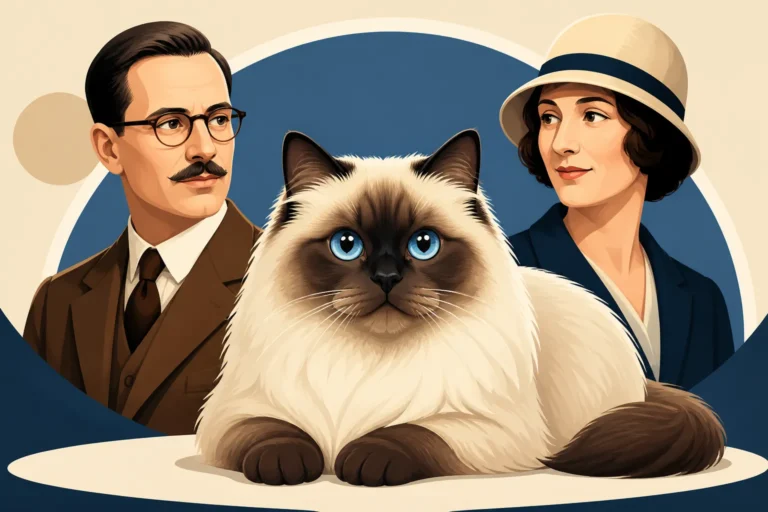
Researchers like Clyde Keeler and Virginia Cobb at Harvard University in the 1930s embarked on a groundbreaking project. They crossed Siamese cats, known for their distinctive pointed pattern and vocal nature, with solid-colored Persians, famed for their long, flowing coats and placid temperament. Imagine the dedication required for such a long-term project! Their work was meticulous, tracking genetic traits over several generations. This foundational work in the US laid the genetic blueprint for what would become the Himalayan. You can read more about The Himalayan Was Made at Harvard in the 1930s and Clyde Keeler, Virginia Cobb and the First Himalayan for a deeper dive into these initial efforts. The scientific paper that documented these early crosses, The 1936 Paper That Started the Himalayan, is a testament to the methodical approach that ultimately gave us this beautiful breed.
At this point, these cats weren't widely known as "Himalayans." They were often referred to simply as "Siamese-Persians" or "Colorpoint Persians," describing their genetic heritage rather than a formal breed name. This distinction is important, as it speaks to the gradual evolution of the breed's identity.
The Genetic Blueprint Arrives
The initial American efforts, particularly the work of breeders like Marguerita Goforth in the 1950s who refined the breed and pushed for recognition, really set the stage. Goforth's dedication was instrumental in solidifying the Himalayan's type and advocating for its place in the cat fancy. While her direct influence was in North America, the news and eventually the cats themselves, would travel.
The core genetic combination that creates a Himalayan is relatively simple: a long-haired cat carrying the colorpoint gene. This gene is responsible for the dark "points" on the ears, face, paws, and tail, and the striking blue eyes. Without these early American efforts to consistently produce these traits and document their inheritance, the British journey would have been far more challenging, or perhaps never even begun. The breed, in its essence, is a Persian carrying the recessive gene for the Siamese pattern, a truly unique combination that makes it distinct.
British Pioneers and the First Crosses
The appeal of a long-haired, blue-eyed cat with Siamese-like points was undeniable, and it wasn't long before British cat enthusiasts and breeders expressed keen interest. They had been following the developments from across the Atlantic, eager to replicate the success and introduce this stunning new variety to the British cat scene.
The first deliberate attempts to create these "colorpoint longhairs" in Britain began in the early 1950s. This wasn't a matter of simply importing an already established breed en masse, as breed standards and formal recognition were still in development. Instead, British breeders often started from scratch, or with genetic material from existing Persian and Siamese lines, mirroring the original American crosses.
Key Figures in the British Development
One of the most significant figures in establishing the Himalayan in Britain was Brian Stirling-Webb. He is widely credited as Who Continued the Himalayan Work in Britain. Stirling-Webb, much like the American pioneers, meticulously worked to cross Persian and Siamese cats. His dedication, record-keeping, and understanding of genetics were paramount. He wasn't just breeding; he was carefully selecting for the desired traits: the Persian coat, the cobby body, and the Siamese points and blue eyes.
The early British efforts were characterized by:
- Careful Selection: Breeders had to choose Persians with excellent type (body, coat quality, head structure) and Siamese with strong, clear points and intense blue eye color.
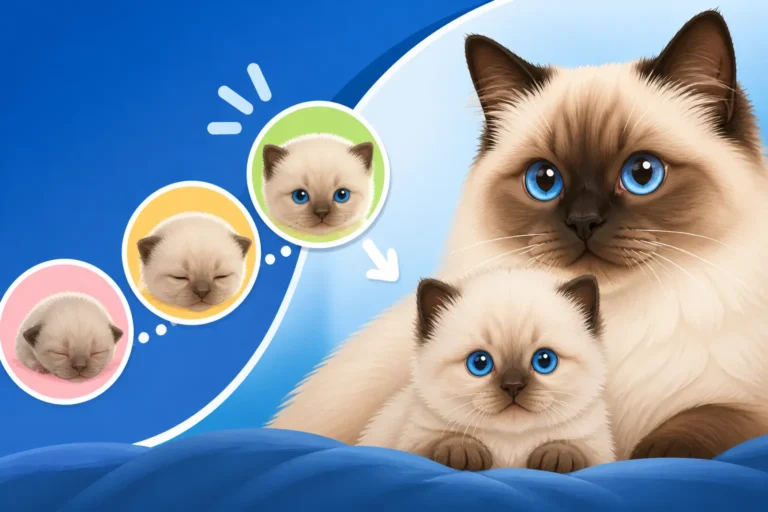
- Patience: Breeding for recessive genes and establishing consistent type takes many generations. It wasn't a quick process. Kittens are born almost white, with their points gradually developing over weeks and months, making early assessment of colorpoint quality a waiting game.
- Documentation: Keeping accurate pedigrees and health records was vital to track the inheritance of desired traits and avoid genetic pitfalls. This meticulous work is what builds a solid foundation for any new breed.
These early British breeders were driven by a passion for the beauty of these cats and a vision for their future in the UK cat fancy. They navigated the challenges of limited genetic pools and the sometimes-slow process of achieving consistent results, knowing they were building something truly special.
The Journey to British Recognition and Naming Conventions
The formal recognition of any new breed by cat registries is a lengthy process, requiring consistent type, sufficient numbers, and often, political navigation. In Britain, the journey for the Himalayan, or rather, the Colorpoint Persian as it became known there, followed a distinct path.
Initially, these cats were indeed referred to as "Siamese-Persians" or simply "pointed Persians" by those in the know. But as their numbers grew and their type became more consistent, there was a need for a formal name.
What Britain Called the Himalayan
This is where things get a little interesting and highlight the nuances of global cat fancy. While the breed gained widespread recognition as the "Himalayan" in North America, Britain adopted a different nomenclature. In the UK, the breed was established and is still primarily known as the Colorpoint Longhair, or sometimes the Colorpoint Persian. This naming convention stuck, and you'll find it on official pedigrees and in show rings across Britain. You can delve more into What Britain Called the Himalayan Before 1955 to understand this historical context.
The table below illustrates the key differences in naming conventions:
| Aspect | North America (e.g., CFA, TICA) | Great Britain (e.g., GCCF) |
|---|---|---|
| Breed Name | Himalayan | Colorpoint Longhair / Colorpoint Persian |
| Status within Persian | Division of Persian (CFA), Separate Breed (TICA) | A specific "colorpoint" section within the Persian Group |
| Primary Goal | Establish Himalayan as a distinct breed/division | Establish the colorpoint pattern within Persian type |
| Focus | Distinct breed identity | Persian type with specific color genetics |
This difference in naming and classification highlights the varying philosophical approaches of cat registries. In the UK, the emphasis was often on maintaining the core Persian type while introducing a new color pattern, rather than creating an entirely new breed. This is why Why Britain Will Not Use the Name Himalayan is a fascinating piece of breed history.
Formal Recognition in the UK
Formal recognition in Britain came through the Governing Council of the Cat Fancy (GCCF), the primary registry in the UK. The exact year for full championship status for the Colorpoint Longhair (Himalayan) was in 1955. This was a huge milestone, signifying that the breed had achieved sufficient numbers, consistent type, and adherence to a written standard, allowing them to compete for championship titles in shows.
This moment in 1955 solidified the breed's place in the British cat fancy. It meant that years of diligent breeding, careful selection, and dedicated record-keeping had paid off. Breeders like Brian Stirling-Webb saw their efforts culminate in the acceptance of these beautiful cats into the mainstream. It paved the way for more breeders to get involved and for the public to become more widely aware of this stunning, long-haired cat with its captivating blue eyes and contrasted points.
The Himalayan's Enduring Legacy in Britain
Even with its different name, the cat we know as the Himalayan, or Colorpoint Longhair, has carved out a beloved place in British households and among cat fanciers. Its unique blend of the Persian's serene disposition and lush coat with the Siamese's striking color pattern and engaging personality makes it a truly special companion.
The legacy extends beyond just its aesthetic appeal. The diligent work of those early British breeders ensured a strong genetic foundation for the breed in the UK, focusing on health and temperament alongside type. Today, British Colorpoint Longhairs are celebrated for their quality and continue to be popular, embodying the perseverance and passion of their early pioneers.
Modern British Colorpoint Longhairs
Today, if you're looking for a Himalayan in the UK, you'll be asking for a Colorpoint Longhair. Breeders continue to adhere to the GCCF standard, which emphasizes the Persian type – the round head, small ears, cobby body, and luxurious coat – combined with the precise colorpoint pattern and deep blue eyes.
The dedication to preserving these traits means that when you see a Colorpoint Longhair in Britain, you're seeing a direct descendant of those meticulous crosses from the 1950s. Whether you call them Himalayans or Colorpoint Longhairs, their charm and beauty are universally appreciated. Their care needs are largely similar to their American counterparts, requiring daily grooming to maintain that magnificent coat and regular attention to their adorable, but sometimes teary, faces. You can read more about How Long a Himalayan Lives Against Its Persian Half for insights into their lifespan.
The story of the Himalayan in Britain is a beautiful example of how a breed can evolve and adapt across different cultures and cat fancy traditions, always maintaining its core allure. It’s a testament to the enduring appeal of these magnificent felines.
Disclaimer
This article is for general informational purposes only and does not constitute professional advice. Laws, prices and regulations vary by location and change over time. Consult a qualified professional for guidance on your specific situation.