What Britain Called the Himalayan
If you've ever found yourself scratching your head trying to figure out why a "Himalayan" cat in the UK often goes by another name, you're certainly not alone. It's a source of confusion for many aspiring owners and even experienced cat enthusiasts. This guide will unravel the fascinating historical and administrative reasons behind why this beloved breed is known differently across the pond, helping you understand the terminology you'll encounter.
The Historical Naming Conundrum in Britain
The journey of the Himalayan cat, with its striking Siamese points and plush Persian coat, is a tale woven across continents. While the breed's origins are firmly rooted in American scientific experimentation, its reception and subsequent naming in Great Britain took a distinctly different path. This divergence has led to the enduring terminology unique to the UK cat fancy.
Early Days: Before the Himalayan Name Took Hold
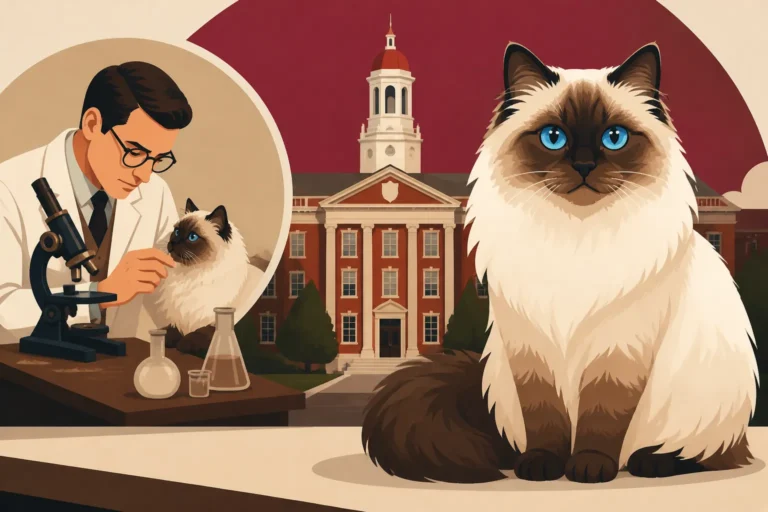
Back in the 1930s, when the initial experimental crosses between Persians and Siamese were taking place in the United States, there wasn't a formal, universally accepted name for these beautiful new cats. They were often referred to simply as "Siamese-Persian crosses" or "colorpoint Persians" by those involved in the early stages. The goal, primarily driven by researchers like Clyde Keeler and Virginia Cobb at Harvard, was to understand coat genetics, specifically how the Siamese point coloration worked within a longhaired breed. These early endeavors were more about scientific inquiry than establishing a new show breed, though the charm of these cats quickly captured hearts. The Himalayan Was Made at Harvard in the 1930s
When these cats eventually made their way to Britain, breeders and enthusiasts there also started their own lines, often independently, building upon similar crosses. Figures like Brian Sterling-Webb played a significant role in developing the breed in the UK. They too saw the appeal of a longhaired cat with the striking coloration of a Siamese. However, rather than creating an entirely new breed designation, the British cat fancy tended to integrate these new variations into existing categories, which fundamentally shaped the naming conventions that followed. It was less about declaring a brand new cat and more about recognizing a new pattern on a familiar canvas.
The 'Colorpoint Persian' Emerges as the Standard
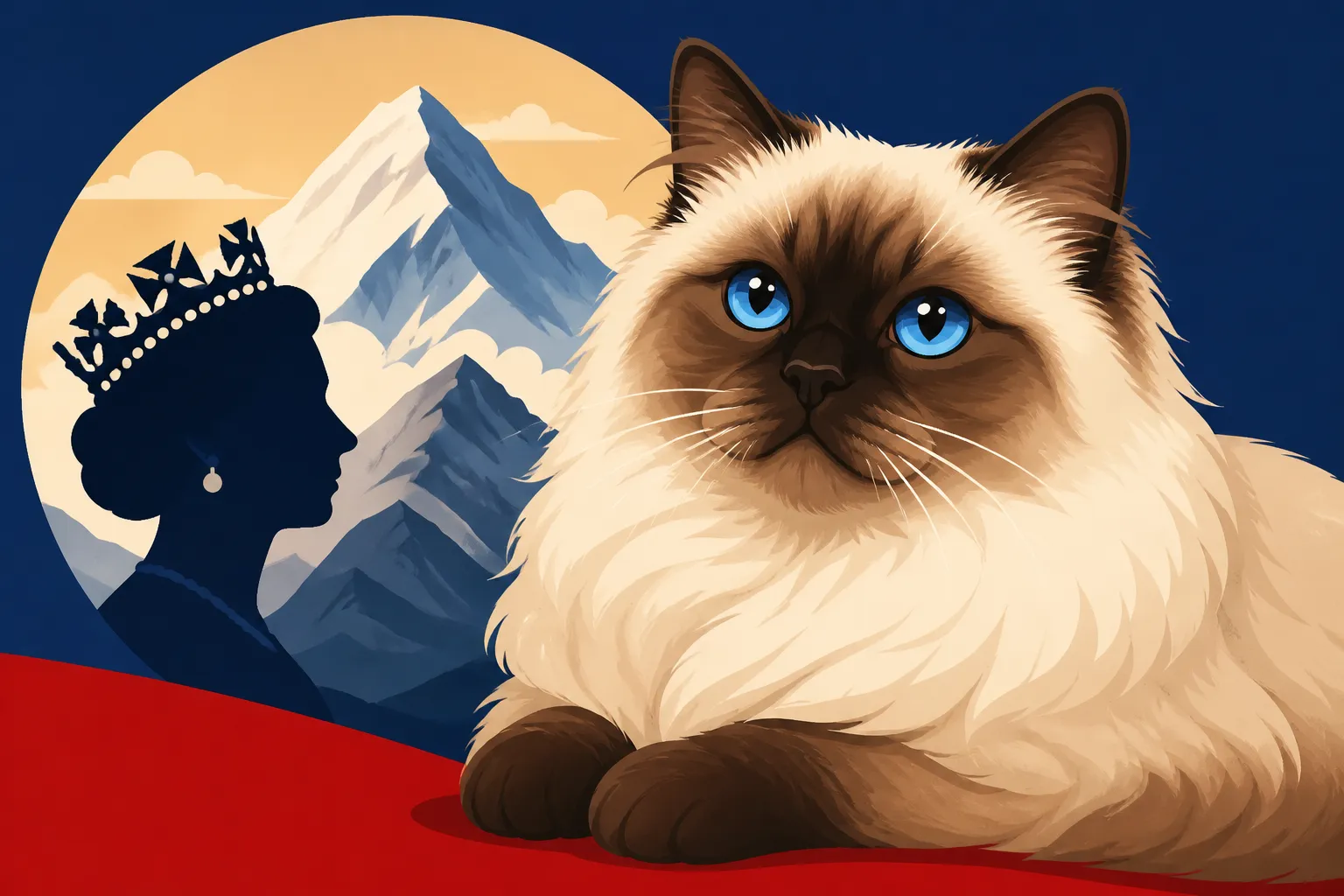
In Britain, the dominant cat registry, the Governing Council of the Cat Fancy (GCCF), ultimately decided to classify these cats not as a separate breed called "Himalayan," but as a specific division within the established Persian breed. This was a crucial decision that cemented the official name "Colorpoint Persian." The rationale was straightforward: these cats possessed the body type, coat length, and overall conformation of a Persian, with the only significant difference being their point coloration, a trait inherited from the Siamese ancestors.
Imagine being a Persian breeder in the UK during that time. You have a long-standing, prestigious breed with a clear standard. When these new cats arrive, they look and feel like your Persians, but they have these incredible dark points, like chocolate-brown ears and a tail. It made logical sense to view them as a "colorpoint" version of the Persian, rather than an entirely new entity. This approach emphasized the Persian heritage and maintained the integrity of the established breed structure. This integration meant that the standard for these "Colorpoint Persians" was essentially the Persian standard, with specific allowances for the point coloration and blue eyes.
Why the Name "Himalayan" Was Often Avoided
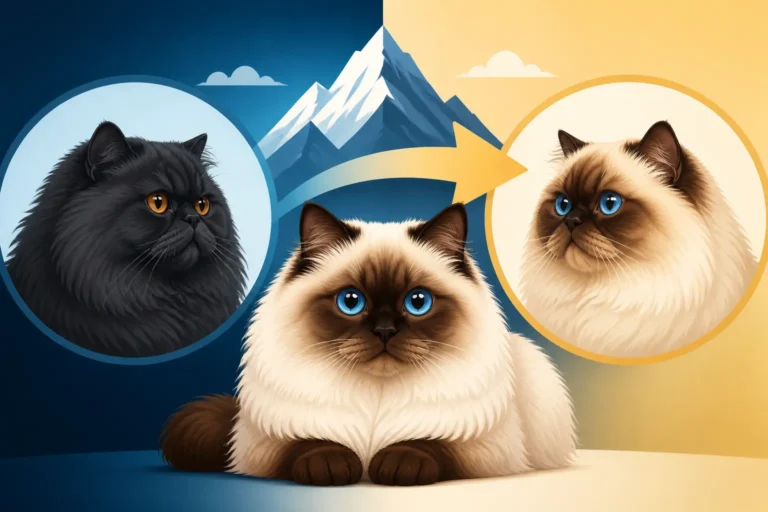
The name "Himalayan" itself, while charming and evocative (it was named after the Himalayan rabbit, which shares the same color pattern), gained traction primarily in North America. In the UK, the cat fancy often takes a more traditional and, some might say, conservative approach to breed recognition and naming. The term "Colorpoint Persian" offered a precise, descriptive name that immediately conveyed the cat's genetic makeup and its place within the Persian family. It highlighted the distinct feature – the color points – while firmly anchoring it to the familiar Persian lineage. What Britain Called the Himalayan Before 1955
Using "Colorpoint Persian" avoided any perceived dilution of the Persian breed's identity or the creation of what might have been seen as a redundant new breed. For UK breeders, it was important to acknowledge the Siamese influence on the color, but not to grant it full "new breed" status that might overshadow the Persian type. This linguistic distinction isn't just a matter of semantics; it reflects a differing philosophy in how breeds are classified and understood, placing a greater emphasis on physical type and lineage within existing frameworks. If you were looking to register or show your beautiful pointed longhair in the UK, you'd be doing so under the banner of a Colorpoint Persian, not a Himalayan.
British Registry Practices and Nomenclature
Understanding how cat registries operate is key to grasping why names vary. In the UK, the Governing Council of the Cat Fancy (GCCF) sets the rules, and their approach to the Himalayan's classification has been consistent for decades, solidifying "Colorpoint Persian" as the official term.
The Governing Council of the Cat Fancy GCCF's Role
The GCCF is the primary governing body for cat breeds in the United Kingdom. It oversees breed standards, registrations, and cat shows, wielding significant influence over how breeds are named and classified. When the pointed longhaired cats started gaining popularity, the GCCF made the pivotal decision to categorize them as Colorpoint Persians. This wasn't a casual choice; it was a deliberate move to maintain a structured and consistent approach to breed recognition. The GCCF saw these cats as Persians first and foremost, with the addition of a specific color pattern, rather than a distinct breed on their own.
This decision meant that a cat that might be called a "Himalayan" by an American breeder would be registered, exhibited, and known officially as a "Colorpoint Persian" within the British cat fancy system. This distinction is crucial for anyone engaging with the official cat world in the UK, from participating in shows to understanding pedigrees. If you look up breed standards on the GCCF website, you won't find "Himalayan" listed as a separate breed; instead, you'll find "Colorpoint Persian" under the Persian section, complete with its own detailed description of accepted colors and traits.
Registration Under the Persian Umbrella
When you register a cat with the GCCF that possesses the Himalayan characteristics – the long, flowing Persian coat, the cobby body, and the striking blue eyes with point coloration – it will be registered as a Colorpoint Persian. This means its pedigree will explicitly state "Persian (Colorpoint)" or similar, placing it firmly within the Persian family tree. This is a stark contrast to how organizations like The International Cat Association (TICA) might register them, often recognizing "Himalayan" as a distinct breed. How TICA Registers a Himalayan Today
For breeders, this means adherence to the Persian standard in almost every aspect, with the specific genetic markers for colorpoint being the defining variant. If you were to buy a kitten from a reputable breeder in the UK, its official GCCF paperwork would reflect this "Colorpoint Persian" designation. It's not just a fancy name; it's a legal and historical classification that dictates how the cat is formally recognized throughout its life within the UK. This also applies to any discussions about breeding, where you might hear conversations about "Persian breeding with colorpoint genetics" rather than "Himalayan breeding."
Impact on Pedigrees and Show Standards
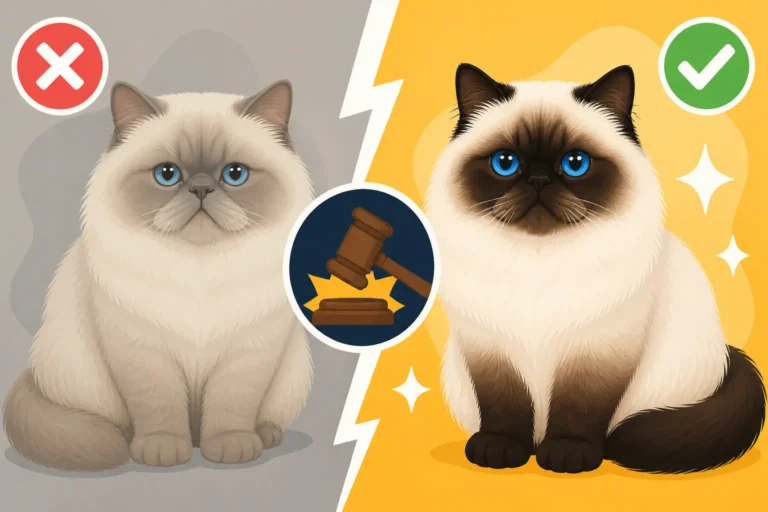
The "Colorpoint Persian" nomenclature has significant implications for both pedigrees and show standards in the UK. For a pedigree, it means tracing lineage through Persian lines, even if those lines carry the colorpoint gene. You wouldn't see "Himalayan" ancestors listed as a separate breed on a GCCF pedigree; rather, you'd see a history of Persians, some of whom may have been colorpoints themselves, or carriers of the gene. A CFA Himalayan Is a Persian on Its Own Paperwork
In the show ring, a Colorpoint Persian competes within the Persian category. Judges evaluate them based on the comprehensive Persian standard, which includes criteria for head shape, eye placement, body type, coat quality, and temperament. The only additional consideration is the colorpoint pattern itself – the depth and contrast of the points, and the required blue eye color. This contrasts with some other registries where Himalayans might compete in their own specific classes. This means that a Colorpoint Persian must meet the rigorous demands of the Persian breed standard first, and then perfectly display its unique color pattern. Any deviation from the classic Persian structure, even if it might be tolerated in a loosely defined "Himalayan" breed elsewhere, would be a fault in a UK show.
| Feature | UK Official Name (GCCF) | US Official Name (CFA) | Common Usage (UK) |
|---|---|---|---|
| Breed Status | Division of Persian | Division of Persian | Often "Himalayan" |
| Primary Naming | Colorpoint Persian | Himalayan | Colorpoint Persian |
| Registration | As "Persian (Colorpoint)" | As "Himalayan" | Varied |
| Show Category | Persian | Persian (Himalayan Div.) | Persian |
| Focus in Standard | Persian Type + Colorpoint | Persian Type + Colorpoint | Varies by context |
Beyond the Official Name: Common Usage and Confusion
While the GCCF's official stance is clear, common parlance doesn't always strictly adhere to formal classifications. This can create a real disconnect for prospective owners, especially when they encounter conflicting terminology online or from different sources.
How Breeders and Owners Refer to Them
Despite the official "Colorpoint Persian" designation by the GCCF, it's not uncommon to hear British breeders and owners affectionately refer to their cats as "Himalayans." This informal usage often stems from the historical recognition of the name in North America and its widespread adoption in popular culture. When chatting at a cat show or discussing their cats with friends, many will use "Himalayan" as a shorthand, especially if they are familiar with the breed's origins or simply prefer the name. It rolls off the tongue a bit easier than "Colorpoint Persian," let's be honest!
However, when it comes to official matters – pedigrees, show entries, or discussions with veterinary professionals who are well-versed in breed standards – the term "Colorpoint Persian" will almost always be used. It's a bit like knowing your friend "Dave" is officially named "David" on his passport. You might call him Dave day-to-day, but for anything formal, it's David. This duality can be a source of confusion for newcomers, who might arrive at a British cattery asking for a "Himalayan" and be gently corrected or informed that what they are looking for is, in fact, a Colorpoint Persian.
Public Perception and Retailer Terminology
Outside of the formal cat fancy, the general public in the UK often knows these cats by the name "Himalayan." This is largely due to the breed's strong presence and recognition in American media, literature, and even films. If you ask someone on the street to describe a "Himalayan cat," they'll likely picture the familiar longhaired, blue-eyed, pointed feline. This general recognition means that many online pet retailers and even local pet shops, including larger stores like those you might find on Chewy or other online platforms, may use "Himalayan" as a common descriptor when selling products or discussing the breed, even within the UK.
For example, you might find cat food specifically marketed for "long-haired breeds" or "Persian/Himalayan cats" on a British version of an online store. They cater to what people search for and recognize, rather than strictly adhering to official breed registry nomenclature. This creates a fascinating blend of official and colloquial terms, where "Colorpoint Persian" holds weight in formal settings, but "Himalayan" resonates more broadly with the public consciousness. It highlights the power of a popular, catchy name to transcend formal classifications, even in a region with a very specific official term.
The Enduring Legacy of the "Himalayan" Identity
Despite the official British classification, the name "Himalayan" carries a strong historical and cultural weight that continues to endure. It's the name by which the breed was largely introduced to the world, stemming from those pioneering breeding programs and the initial breed club formations in the US. Even when registered as Colorpoint Persians, the breeders and owners often feel a connection to that original "Himalayan" identity, recognizing the unique heritage of a cat that combines the best traits of two distinct breeds. Who Continued the Himalayan Work in Britain
This enduring legacy means that articles, books, and online resources (outside of very specific UK cat fancy circles) will frequently refer to them as Himalayans, no matter where in the world the content originates. It speaks to the global nature of cat breeding and ownership, where information and cultural influence flow freely across borders, sometimes creating delightful linguistic quirks like this one. So, while you might fill out official forms with "Colorpoint Persian," it's perfectly normal, and often understood, to refer to your beautiful cat as a Himalayan in everyday conversation. It's a testament to the breed's unique appeal that its original, somewhat more poetic name, has persisted even where official bodies opted for something more descriptive. Why Britain Will Not Use the Name Himalayan
Disclaimer
This article is for general informational purposes only and does not constitute professional advice. Laws, prices and regulations vary by location and change over time. Consult a qualified professional for guidance on your specific situation.