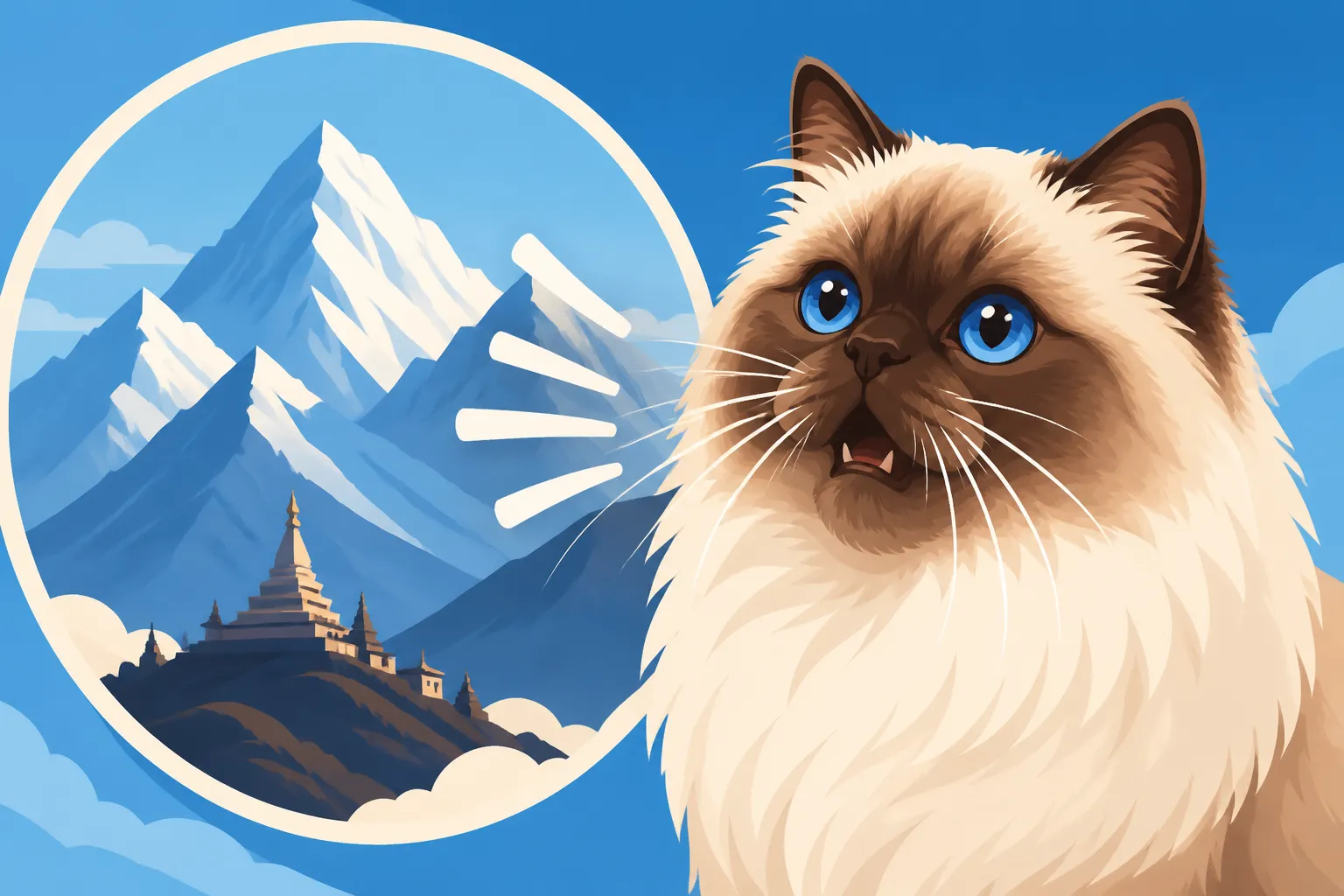
Where the Himalayan’s Voice Came From
One of the most charming, and sometimes surprising, aspects of living with a Himalayan cat is their unique vocal repertoire. Many new Himalayan parents assume, given their Persian lineage, that these beautiful felines will be mostly silent companions. However, you might quickly find yourself in a lively conversation, leaving you to wonder where on earth this talkative trait emerged. This comprehensive guide will delve into the fascinating genetic history behind your Himalayan's voice, exploring the distinct influences of its Siamese and Persian ancestors to explain why your fluffy friend has so much to say (or not say!).
The Foundational Blend: Siamese Chatter Meets Persian Poise
The Himalayan cat, with its stunning color points and luxuriant coat, is a magnificent hybrid, a deliberate creation blending two vastly different feline temperaments and physical traits. It wasn't an accidental coupling but a scientific endeavor, initially conceived to combine the stunning colorpoint pattern of the Siamese with the longhaired, cobby body type of the Persian. When you consider the origins, it becomes clear why their vocal habits are such a fascinating blend.
The Harvard Experiment and Early Crosses
The story of the Himalayan's voice truly begins in the 1930s at Harvard University, where researchers Clyde Keeler and Virginia Cobb embarked on a genetic experiment. They weren't setting out to create a new pet breed, but rather to study the inheritance of certain traits, including the colorpoint gene. To achieve this, they crossed a Siamese cat with a Persian. This foundational pairing, documented in The 1936 Paper That Started the Himalayan, brought together two cats from opposite ends of the feline vocal spectrum. The Siamese, renowned for its strong, often insistent voice, met the Persian, typically known for its quiet, dignified demeanor. The question was, which voice would prevail?
A Deliberate Hybrid of Temperament and Sound
The initial crosses, and the subsequent efforts by dedicated breeders like Marguerita Goforth, were meticulous. They aimed to retain the best of both worlds: the Persian's opulent coat and gentle nature, combined with the Siamese's striking blue eyes and distinctive coloring. What often gets overlooked in this quest for physical beauty is the inherent blending of behavioral traits, including vocalization. Breeders were essentially mixing a very vocal cat with a largely quiet one, and the resulting Himalayan inherited a spectrum of sounds unique to its mixed heritage. This genetic cocktail meant that while the look was predominantly Persian, the underlying "software" for communication held strong echoes of the Siamese. You can read more about this fascinating origin in Why Harvard Crossed a Persian With a Siamese to Make the Himalayan.
The Siamese Contribution: A Legacy of Vocal Expression
There's no denying that the Siamese cat is one of the most vocally expressive breeds in the feline world. Their distinctive "meezer" caterwauls are legendary, and this powerful vocal heritage certainly left its mark on the Himalayan.
The Loud and Clear Heritage
Siamese cats are famous for their incredibly diverse and often loud vocalizations. They don't just meow; they yowl, chirp, trill, and "talk" in long, complex sentences to their human companions. This isn't just random noise; it's a deeply ingrained part of their communication style. They are highly intelligent and often use their voices to express needs, demand attention, or simply engage in conversation. This intense vocal communication is a key characteristic that breeders hoped to temper, but not entirely eliminate, in the Himalayan. It's safe to say that The Himalayan Kept the Siamese Voice and Lost the Volume, but the tendency to vocalize is still very much there.
Think about a Siamese trying to get your attention – it's often a full-bodied performance, complete with demanding eye contact and a penetrating yowl that seems to ask, "Why are you not paying attention to me?" This isn't usually the case with a Himalayan, but that underlying urge to communicate vocally, to engage and express itself through sound, comes directly from that Siamese side of the family. It's a fundamental part of how they interact with their world, even if their volume knob is turned down a notch or two.
Intelligence Reflected in Vocalization
The Siamese influence also means that Himalayans, while not always as overtly demanding, tend to be quite intelligent and perceptive. Their vocalizations aren't just instinctive; they're often deliberate and context-dependent. A Himalayan might use a specific type of chirp to call you to the kitchen, a softer meow for affection, or a more insistent, albeit still muted, sound when something is amiss. This nuanced vocal repertoire reflects the Siamese intelligence, a trait that encourages them to use their voice as a primary tool for interaction and problem-solving.
This can be particularly evident when they want something specific. Many Himalayan owners will tell you that their cats don't just meow; they have a "food meow," a "play meow," or even a "let me in the bathroom" meow. This isn't just charming; it's a testament to their cognitive abilities and their learned understanding of how to use their voice effectively to get what they want from their humans. You might notice your Himalayan waiting patiently for a moment, then issuing a soft, questioning "mrow?" when they see you looking at them, a clear invitation for interaction.
The Persian Influence: Quieter Demeanor and Expressive Silences
On the other side of the genetic ledger is the Persian, a breed celebrated for its calm, dignified, and notably quiet nature. The Persian contribution plays a crucial role in shaping the Himalayan's overall vocal profile, providing a counterbalance to the Siamese's chattiness.
The Regal Silence
Persian cats are, by and large, a placid and serene breed. They are known for their sweet dispositions and their tendency to express themselves more through gentle head-nuzzles, slow blinks, and body language rather than loud vocalizations. A typical Persian might offer a soft purr or a small "mew" to greet you, but lengthy conversations are generally not their style. This quiet nature is deeply embedded in the Himalayan's personality, tempering the Siamese's more boisterous tendencies.
It's this Persian influence that prevents many Himalayans from being as intensely vocal as a purebred Siamese. While they can talk, they often choose not to, preferring to communicate through subtler cues. You might find your Himalayan silently observing you, perhaps moving closer and rubbing against your leg, rather than demanding attention with a loud meow. This quiet confidence is a hallmark of their Persian ancestry and contributes to their reputation as wonderfully tranquil companions. They often communicate their desires with an elegant patience that can be surprisingly effective.
Non-Vocal Cues and Affection
Because of their Persian lineage, Himalayans are often very adept at communicating non-vocally. A look, a tail twitch, a slow eye blink, or a gentle nudge can convey a wealth of information. They are masters of the "silent request," often simply sitting by their food bowl or by the door they wish to enter, trusting that their human will eventually understand their subtle cues. This is a common frustration for new owners who might expect more overt signals from their pet.
For example, if your Himalayan is sitting by an empty food bowl, silently staring at you, that's often its Persian side doing the talking. It's expecting you to pick up on the cue, rather than launching into a full-blown vocal protest. This makes understanding your Himalayan's body language absolutely crucial. They might rub against your legs while you're on a walk to the kitchen, or gaze intently at a favorite toy, signaling their desire for playtime without uttering a sound. If you've been wondering How a Himalayan Asks Without Raising Its Voice, this is largely it—a quiet, insistent presence.
The Himalayan's Unique Voice: A Muted Melody
So, what happens when you blend the Siamese's talkativeness with the Persian's quiet dignity? You get the Himalayan's unique voice: a charming, often softer, and sometimes surprisingly conversational vocal style that is distinctly its own. It's not the relentless yowl of a Siamese, nor the near-silence of many Persians. It's something in between, a muted melody that owners quickly come to adore.
The "Talkative" Persian
Many Himalayan owners lovingly refer to their cats as "talkative Persians" – and it's a pretty accurate description. They possess the capacity for conversation, sometimes engaging in long strings of chirps, trills, and soft meows, particularly with their favorite person. However, the sheer volume and piercing quality of the Siamese yowl is typically absent. Instead, you'll hear a more moderate, often melodic range of sounds. How Much More a Himalayan Talks Than a Persian is quite noticeable once you live with one; they definitely have more to say.
This can manifest in a morning greeting that consists of several soft "mrows" as they follow you to the kitchen, or a series of inquisitive chirps as they investigate a new object. It's a pleasant, engaging form of communication that enriches the bond between cat and owner without being overwhelming. They might even have a unique "song" they sing when they're particularly happy or anticipating something good, like mealtime.
Tonal Range and Contextual Communication
The Himalayan's vocal range, while not as loud, can be quite varied. They use different tones, pitches, and lengths of vocalization to convey different messages. A high-pitched, short meow might mean "hello," while a lower, drawn-out sound could indicate boredom or a desire for attention. Understanding these nuances is key to communicating effectively with your Himalayan. Many owners find themselves having full-blown conversations, complete with questions and answers, with their expressive Himalayans.
For instance, a sudden, sharp mrrp! might be your Himalayan's way of telling you they've spotted a bug, whereas a contented purr followed by a soft trill is their way of saying, "I'm happy right here with you." It's truly amazing What Is Left of the Siamese Voice in a Himalayan in terms of expressiveness, even if the raw volume has been significantly reduced. They might also let out a little "chirp" when they jump off a piece of furniture, almost as if announcing their landing. You can often tell exactly what your cat is feeling just by the sound of their voice, which is a testament to their vocal expressiveness.
Understanding Your Himalayan's Vocalizations
Deciphering your Himalayan's unique language is part of the joy of living with them. While they may not be as loud as their Siamese ancestors, their vocalizations are still packed with meaning. Paying attention to the context, tone, and frequency of their sounds can help you better understand their needs and desires.
Common Sounds and Their Meanings
Himalayans employ a variety of sounds to communicate. Here’s a quick guide to some common vocalizations you might hear:
- Meow/Mrow: This is the classic cat sound. For a Himalayan, it's often softer than other breeds. It can be a greeting, a request for food or attention, or an expression of curiosity. The specific tone and length will tell you a lot. A soft, rising "mrow?" might be an inquiry, while a more insistent "MEOW!" could mean "I'm hungry!"
- Chirp/Trill: These are usually happy, conversational sounds, often used when greeting you or observing something interesting, like a bird outside the window. They can also be a gentle way to get your attention without demanding it. When they do a small, soft chirp, it often means "come here," or "look what I found!" What a Himalayan Is Saying When It Chirps is often an invitation to interact.
- Purr: The universal sign of feline contentment. Himalayans purr deeply and readily when they're happy, being petted, or feeling relaxed. A purr can also be a self-soothing mechanism if they are stressed, so context is important.
- Hiss/Growl: These are warning signs. A hiss indicates fear, discomfort, or a feeling of being threatened. A growl usually signifies anger or aggression. These are rare in a well-socialized Himalayan but important to recognize.
- Yowl/Howl: While rarer and softer than in a Siamese, a sustained, louder vocalization can indicate distress, pain, or confusion. If your Himalayan suddenly starts yowling, especially if it's unusual for them, it warrants immediate investigation. This is often a signal that something is seriously wrong and it's their loudest cry for help.
Interpreting Volume and Context
The volume of your Himalayan's voice, though generally moderate, still carries weight. A very soft, almost whispered meow might be a gentle plea, while a slightly louder, more drawn-out meow indicates a more pressing need. Beyond volume, context is everything. Your cat meowing at the door means something different than it meowing while you're petting it on the sofa. Why a Himalayan Is Quieter Than Its Siamese Ancestors doesn't mean they don't have powerful messages to convey; it just means you have to listen more closely.
Consider the time of day, your cat's body language, and recent events. Is it mealtime? Has someone just arrived home? Is your cat trying to tell you the water bowl is empty or that they want to play? Observing these patterns will help you create a mental dictionary of your Himalayan's vocal cues. For example, Whether a Himalayan Wakes You for Its Meal can often be discerned by the specific type of meow they use and how persistently they employ it. They might start with soft chirps and escalate to more direct meows if their initial attempts go unnoticed.
Here’s a small table to help summarize some common Himalayan vocalizations and their likely interpretations:
| Vocalization | Typical Volume | Common Context | Possible Meaning |
|---|---|---|---|
| Soft Meow | Low | Greeting, gentle request | "Hello," "Pet me," "I'm here" |
| Insistent Meow | Moderate | Direct request | "Feed me," "Play with me," "Open the door" |
| Chirp/Trill | Low to Moderate | Happy, observant, inviting | "Look at this," "Come here," "I'm content" |
| Purr | Variable (often deep) | Affection, relaxation, self-soothing | "I'm happy," "I feel safe," (sometimes "I'm a bit anxious, comfort me") |
| Yowl/Howl | Moderate to Loud (for a Himmie) | Distress, pain, confusion, mating call | "I'm hurt," "I'm lost," "I need help urgently" |
| Hiss/Growl | Variable | Fear, anger, threat | "Stay away," "I'm scared," "Leave me alone" |
Encouraging and Managing Your Himalayan's Voice
Since Himalayans often lean towards being more vocal than their Persian relatives, it’s important to understand how to respond to their communications and how to manage their vocalizations effectively. This ensures a happy coexistence where both you and your feline friend understand each other.
Responding Appropriately to Vocalizations
How you respond to your Himalayan's voice shapes their communication habits. If you consistently reward loud, persistent meows, your cat will learn that this is an effective way to get what they want. Conversely, if you ignore all vocalizations, your cat might become frustrated or stop communicating altogether. The key is to find a balance. Acknowledge appropriate vocalizations (like a polite "mrow" for attention) with a gentle stroke or a soft word, but try to avoid rewarding excessive or demanding meows immediately.
For instance, if your Himalayan is yapping at you incessantly for food, wait for a brief pause in their vocalization before providing their meal. This teaches them that quiet moments, not loud demands, get results. If they're just giving you a soft greeting, respond in kind! Engage in a little "conversation" with them. Remember, Why a Himalayan Talks More Than the Persian It Descends From is because of that Siamese gene; they want to interact, so ignoring them completely isn't the answer.
Enriching the Environment to Reduce Unwanted Noise
Sometimes, excessive vocalization stems from boredom, loneliness, or anxiety. Ensuring your Himalayan's environment is enriching can significantly reduce unwanted noise. Provide plenty of interactive toys, scratching posts, and cozy resting spots. Regular play sessions, particularly with wand toys or laser pointers (available on Amazon, for example, along with many other interactive cat toys), can help burn off excess energy and provide mental stimulation, which in turn can reduce vocalization driven by boredom.
Consider their basic needs, too. A cat that's meowing for food might just need a puzzle feeder to make mealtime more engaging. A cat that's meowing for attention might simply need more dedicated playtime or cuddle sessions. Sometimes, a flat-faced Himalayan might be vocalizing due to discomfort with certain types of food bowls. Elevated, wide, shallow bowls (many options found on Amazon) can make eating more comfortable, potentially reducing frustration-related meows. You might also want to explore options like a cat water fountain; some Himalayans will vocalize at a still water bowl if they prefer running water, and a good fountain can be a worthwhile investment, often found with great reviews on Amazon. Providing a comfortable, stimulating, and stress-free environment, along with consistent, calm responses, will help your Himalayan develop a healthy and harmonious vocalization pattern. How Often a Himalayan Uses the Voice It Inherited really depends on how stimulated and content they are in their daily life.
Disclaimer
This article is for general informational purposes only and does not constitute professional advice. Laws, prices and regulations vary by location and change over time. Consult a qualified professional for guidance on your specific situation.