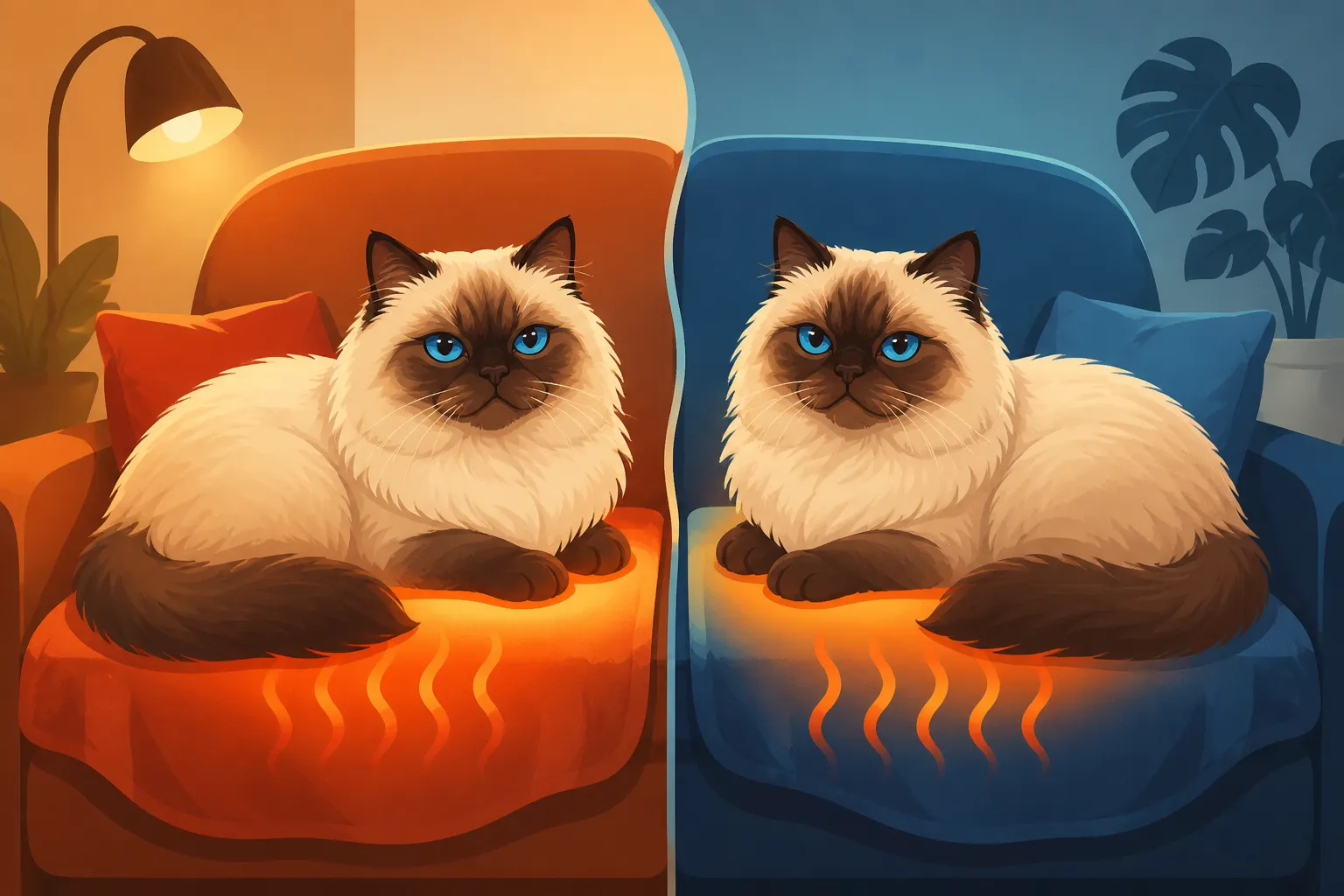
How Two Himalayans Divide the Warm Spots
Living with one Himalayan is a truly delightful experience, full of quiet companionship and fluffy charm. But bring a second one into your home, and suddenly those cozy spots around the house become a fascinating, sometimes comical, game of feline musical chairs. You might find yourself wondering why one cat always claims the sunny patch while the other settles for the slightly less toasty armchair, or if there's an unspoken agreement on who gets the prime real estate. This guide will dive deep into the intriguing dynamics of how two Himalayans navigate and divide the most coveted warm spots in your home, helping you understand their preferences and create an environment of blissful, cozy coexistence.
The Irresistible Lure of Warmth for Himalayans
It’s no secret that Himalayans adore warmth. You'll often find them stretched out in a sunbeam, curled up on a warm blanket, or seeking out any source of gentle heat. This isn't just a quirk; it's deeply ingrained in their physiology and ancestry. Understanding why they crave warmth so intensely is the first step to appreciating their drive to secure the best warm spots.
Why Their Persian Ancestry Makes Them Heat Seekers
Himalayans, as many of us know, are essentially Persian cats with the beautiful colorpoint pattern of a Siamese. This strong Persian heritage means they share much of the Persian's physical makeup, including that wonderfully dense, long coat. While this coat is stunning to behold and incredibly soft to pet, it actually works against them when it comes to regulating their body temperature. Imagine wearing a heavy fur coat all the time – you’d be seeking out cool breezes when it’s warm and luxuriating in cozy heat when it's chilly.
Their metabolism might also play a role. Himalayans aren't typically known for being high-energy, acrobatic cats. They tend to be more sedate, enjoying long naps and gentle play sessions. A lower activity level means they might generate less internal body heat compared to a more active breed. Therefore, they naturally gravitate towards external heat sources to maintain their comfortable body temperature. It's not laziness; it's just good thermal management from their perspective! You might notice how often a Himalayan spends its day, and indeed, How Many Hours a Day a Himalayan Is Actually Awake is usually fewer than you'd think, contributing to their need for warmth.
The Double-Edged Sword of a Luxurious Coat and Heat
That magnificent, flowing coat, while a hallmark of the breed, can be a bit of a mixed blessing when it comes to temperature control. It provides fantastic insulation, keeping them warm in cooler environments. However, it also makes them incredibly prone to overheating. This is why you'll often hear that a Himalayan Why a Himalayan Overheats Twice as Fast as a Siamese and really struggles in higher temperatures. They can't shed heat efficiently, especially from their body core, because of that thick insulating layer. This paradoxical situation means they are always looking for just the right amount of warmth – enough to feel cozy, but not so much that they become uncomfortable.
When a room is chilly, that coat makes them excellent at retaining heat from a warm spot, like a heating vent or a sunbeam. But when they are too warm, that same coat traps heat in, making them seek cooler spots, sometimes even Why a Himalayan Sits Where the Floor Is Coldest in the house. It's a delicate balance, and their constant shifting from one cozy nook to another is often an attempt to find that perfect thermal sweet spot.
Behavioral Cues: How a Himalayan Communicates its Need for Warmth
Our Himmies are not always loud communicators, but they certainly have ways of letting us know their comfort levels. When they're seeking warmth, you might observe a few key behaviors. They'll often stretch out, exposing more of their body to the heat source, or roll onto their back to soak it all in. A Himalayan might also knead intensely on a warm blanket or a sun-drenched cushion, a primal behavior often associated with comfort and contentment.
If they're feeling a bit chilly, they'll curl up tightly, tucking their paws and tail close to their body to minimize heat loss. They might even burrow under blankets or seek out your lap – not just for affection, but often for the lovely warmth you provide. You know that delightful feeling when a Himalayan decides to join you on the sofa? Part of that is certainly companionship, but a good portion is often them enjoying your body heat. Sometimes, a Himalayan will even settle right on your chest, truly maximizing the warmth exchange. Why a Himalayan Sleeps on Your Chest isn't just for snuggles, after all! Observing these subtle cues can give you a better understanding of their individual thermal preferences and help you anticipate their needs.
Navigating the Warm Spot Hierarchy in a Multi-Himalayan Home
When you have more than one Himalayan, those prime sunbeams and heated beds instantly become valuable commodities. It's rare to see them in an all-out brawl over a spot, but there’s definitely an unspoken social order that dictates who gets what, where, and when.
The Unspoken Rules of Prime Real Estate
Cats are creatures of habit, and Himalayans are no exception. They often establish a routine for claiming their preferred warm spots. In a multi-cat household, this can lead to a fascinating, almost ritualistic, division of territory. The highest-ranking cat, often the oldest, most confident, or simply the one with the strongest personality, will usually claim the absolute best spots. This might be the coveted patch of sun that hits the living room rug at 10 AM, or the heated cat bed nestled by the window.
The other Himalayan will then adapt, finding the next best option. This might be a slightly less intense sunbeam, a different heated bed, or perhaps a spot on the sofa next to a human (the ultimate heat source!). It’s not usually about aggressive confrontation; rather, it’s a series of subtle signals, a shared understanding that avoids direct conflict. A low growl, a flick of an ear, or simply a prolonged stare can communicate "this spot is mine" quite effectively. You’ll rarely see a physical fight over these spots, as Himalayans tend to be quite placid, but the implication of who owns the spot is very clear.
Personality Plays a Part: Assertive vs. Reserved Himalayans
Just like people, every Himalayan has its own unique personality, and this plays a significant role in how they divide up the warm spots. You might have one who is naturally more assertive, confidently walking up to a coveted spot and claiming it without hesitation. This cat might be the "first dibs" kind, always getting to the best sun puddle or heat vent first.
On the other hand, a more reserved Himalayan might be content to wait their turn or seek out alternative, less contested warm zones. They might prefer a quieter, less exposed spot, even if it's not quite as warm. Perhaps they're happy with the warmth from a blanket on an armchair, rather than vying for the sunniest patch. It’s also possible for a more timid Himalayan to simply defer to a more dominant companion. This dynamic often means that even if a spot opens up, the more reserved cat might still hesitate before taking it, waiting for explicit permission or a clear sign that the dominant cat has truly abandoned it. This is a subtle dance, but one that cat owners quickly learn to recognize. You might even find that Why a Himalayan Gives Way to a Faster Cat when it comes to general movement and agility translates into giving way on coveted spots too.
When Sharing is Caring (or a Compromise)
Sometimes, Himalayans do share. This isn't always because they're feeling particularly generous; it can often be a strategic compromise. If a spot is large enough, or if the warmth source is particularly appealing, they might decide that co-occupancy is better than no occupancy. You might see them curled up side-by-side on a heated cat mat, or sharing a particularly inviting blanket on the sofa.
This sharing often comes with an unspoken boundary. Each cat will maintain a certain personal space, a fluffy bubble of "mine" even within the shared area. They might orient their bodies away from each other slightly, or ensure there's a small gap between them. True cuddling, where they're genuinely intertwined for warmth and affection, is a sign of a very strong bond and high comfort levels between the two. These moments are precious and indicate a genuine acceptance and trust, showing that the warm spot is big enough for both their bodies and their affections. However, it's worth noting that if the spot is too warm, you might observe that The Temperature a Himalayan Starts to Struggle At can lead to a temporary cessation of sharing, as each seeks their own personal escape from the heat.
Strategically Creating Warm Havens for Harmony
Understanding their innate desire for warmth and their natural social dynamics is excellent, but how do we, as their loving human companions, ensure everyone gets their fair share of cozy? It's all about strategic placement and thoughtful additions to your home.
The Art of Multiple Heat Sources
The simplest way to alleviate competition is to provide more attractive options. One sunbeam can only hold so many Himalayans comfortably. By creating several distinct warm zones, you encourage harmonious living. Think about investing in a few different types of warm spots:
- Heated Beds/Mats: These are game-changers, especially in colder climates or during winter. You can find excellent options on platforms like Amazon, from soft, bolster-style heated beds to flat, self-warming mats that reflect body heat. Placing these in different rooms or even different corners of the same room gives each cat a dedicated, always-warm spot. Look for ones with low wattage and safety certifications.
- Sunbeam Alternatives: If your home doesn't get much direct sunlight, or if the sunbeams are inconsistent, consider radiant heat sources. Small, safe space heaters (always with safety features like tip-over shut-off) placed in a room can warm a general area. Ensure they are out of reach and supervised. Cats shouldn't be too close, but the ambient warmth will be appreciated.
- Window Perches with Blankets: Even if a window doesn't get direct sun, a comfortable perch draped with a thick, soft blanket can become a beloved spot. The window offers an appealing view, and the blanket provides the insulation they crave.
- Radiator Beds: If you have radiators, there are fantastic beds that hook directly onto them, providing a suspended, ultra-cozy napping spot. These are usually elevated, which some cats adore.
The key is variety and quantity. Don't just provide one amazing heated bed; aim for at least as many premium warm spots as you have cats, plus a few extra "good" spots. This reduces the pressure on any single location.
Utilizing Vertical Space (Even for a Ground-Dweller)
While Himalayans aren't typically known for their daring leaps or gravity-defying climbs – in fact, Why a Himalayan Stays on the Floor and the Sofa is a pretty accurate description – they still appreciate elevated spots for security and warmth. Heat rises, after all! A low-to-medium height cat tree with plush platforms, particularly if placed near a window or a heat source, can become a highly coveted warm spot.
Consider a multi-level cat tree where one cat can claim the lower, cozier cubby, while the other enjoys the slightly higher platform. Even a sturdy, wide cat condo from Amazon that offers enclosed, private spaces can be a hit. The enclosure itself can trap body heat, making it extra snug. Remember, due to their cobby build and sometimes restricted breathing, a cat tree that is Why a Himalayan's Cat Tree Should Be Waist High at Most is ideal. You want platforms that are easy to access without strenuous jumping, and wide enough for their full, fluffy bodies.
Smart Products to Keep Everyone Cozy
Beyond the basics, there are some clever products that can enhance the warmth quotient for your Himalayans and promote peaceful cohabitation.
| Warm Spot Type | Description | Pros for Himalayans | Cons for Himalayans |
|---|---|---|---|
| Electric Heated Bed | Soft bed with internal heating element. | Consistent, reliable warmth; various styles available. | Electricity usage; potential for wires/chewing. |
| Self-Warming Mat | Uses reflective material to radiate body heat back to the cat. | No electricity needed; portable; safe. | Less intense warmth than electric; less plush. |
| Window Perch | Shelf that attaches to a windowsill, often with a soft cover. | Great for sunbathing; good view; off-floor warmth. | Dependent on sunlight; can be drafts; might not be soft enough. |
| Radiator Bed | Suspended bed that hooks onto a radiator. | Utilizes existing heat source; elevated comfort. | Only works with radiators; limited placement. |
| Cat Cubby/Cave Bed | Enclosed bed, often with a plush lining. | Traps body heat; provides security and privacy. | Can be too warm in summer; harder to clean. |
| Thick Fleece Blanket | Simple, soft blanket, usually placed on a sofa or chair. | Versatile; easy to wash; very soft. | No active heat source; can get pulled off. |
- Orthopedic Memory Foam Beds: While not actively heated, these beds offer superior insulation and comfort, which helps a cat retain its own body heat. Many come with soft, removable covers that can be washed. You can find excellent, plush options on Amazon that offer a deep, secure feeling your Himmies will adore.
- Snuggle Safe Heat Pads: These microwaveable discs provide hours of warmth and are perfect for tucking under a blanket or into a pet carrier. They're a fantastic, wire-free option for adding a quick burst of heat to a favorite spot without long-term commitment.
- Insulated Pet Houses (Indoor): For a cat that loves a den, a small, insulated indoor pet house can be incredibly cozy. The enclosed space helps trap warmth, and you can add a blanket or a self-warming mat inside for extra comfort.
- Warmest Spots as the Sun Moves: Remember how Why a Himalayan Moves Rooms as the Sun Does? Pay attention to the sun's path throughout the day and place beds or blankets in the spots that get the most natural light and warmth at different times. This rotating system allows them to follow the sun.
Observing, Adapting, and Maintaining Peace
Even with the best intentions and the most thoughtful setup, your Himalayans will still communicate their preferences. The final piece of the puzzle is to be an observant and adaptable owner, willing to adjust to their ever-evolving needs and dynamics.
Reading Their Signals: Who Needs What, Where, and When
Just as we discussed their subtle cues for seeking warmth, pay attention to their reactions to the warm spots you provide. Does one cat consistently choose the same bed, while the other seems to rotate through all the others? Does one prefer an enclosed space, while the other likes to stretch out openly? These preferences are key.
If you notice one cat always trying to get into a spot but being subtly deterred by the other, that’s a signal you need more options. If a cat is panting or seems restless in a particular warm spot, it might be Why Heat Reaches a Himalayan Before Any Other Cat, and that spot is actually too warm for them. In such cases, having a cooler alternative nearby is crucial. This careful observation will tell you if your current setup is truly meeting their needs or if adjustments are necessary. Sometimes, it’s not about the warmth itself, but the location of the warmth – perhaps one cat values a spot with a better view, or one that feels more secure.
Routine and Consistency: The Pillars of Feline Contentment
Himalayans thrive on routine. A consistent feeding schedule, regular playtimes, and predictable availability of resources all contribute to a sense of security and contentment. This extends to their warm spots too. If certain heated beds are always on during cooler months, or if a particular blanket is always available in a specific spot, they will learn to expect it.
Consistency helps establish their "territory" for comfort without conflict. If they know there will always be a cozy spot available, the perceived scarcity decreases, reducing the likelihood of squabbles. If you move furniture around frequently, it can disrupt their established warm spots and create anxiety. Try to keep their favorite areas stable. How Long a Himalayan Takes to Accept a Change can be quite a while, so stability is key for their peace of mind.
The Unexpected Cold Spot Seeker (Rare, but it Happens!)
While the overwhelming majority of Himalayans are drawn to warmth, you might occasionally encounter an individual who defies expectations. Perhaps they prefer a cooler, unheated spot, or will even seek out a cooling mat on a warm day. Whether a Cooling Mat Reaches a Himalayan's Skin is a valid concern, but many still appreciate the surface. This is rare, but it highlights the importance of individual observation.
A cat might seek cooler areas if they are naturally warmer, have a slightly different coat density, or are simply experiencing a warmer ambient temperature. If your Himalayan seems to prefer cooler spots, ensure they have access to them. Don't force them into a heated bed if they're constantly moving away from it. Providing a range of options, from actively heated to simply well-insulated or even cool and tiled areas, ensures that all your Himalayans, regardless of their individual quirks, can find their ideal comfort zone.
Disclaimer
This article is for general informational purposes only and does not constitute professional advice. Laws, prices and regulations vary by location and change over time. Consult a qualified professional for guidance on your specific situation.