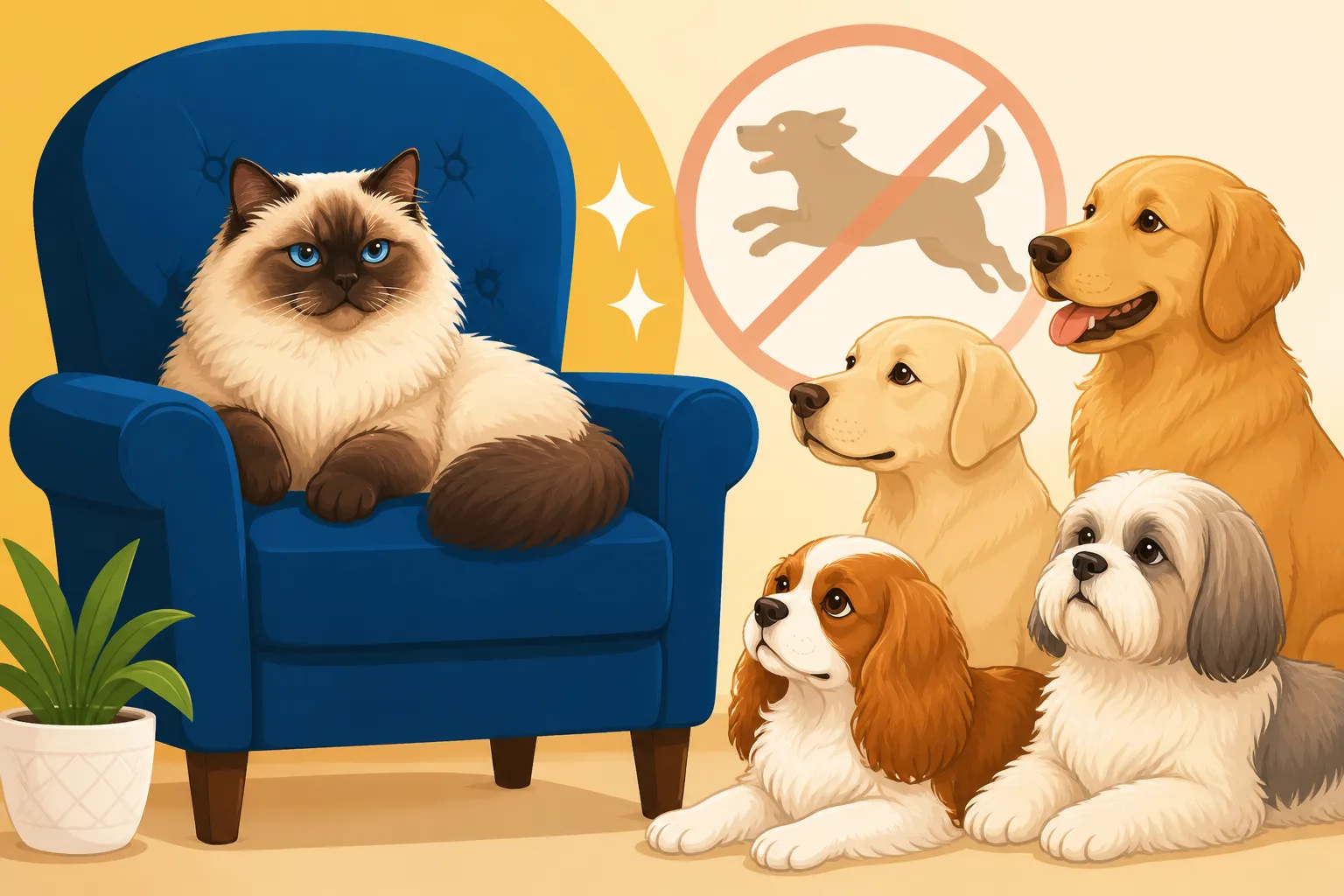
Which Dogs Will Not Chase a Himalayan Off Its Chair
Bringing a new dog into a home where a serene, established Himalayan cat reigns supreme can be a nerve-wracking experience. Many of us have heard tales of cats being endlessly harassed or chased, turning their peaceful sanctuary into a chaotic battleground. This guide aims to ease those worries by exploring which dog breeds are most likely to respect your Himalayan's personal space and share a tranquil home.
Understanding the Himalayan's Temperament and Needs
Before we even begin to think about what kind of dog might be a good fit, it's absolutely crucial to understand the unique personality and physical attributes of our beloved Himalayans. They aren't just any cat; they have specific needs and a particular way of interacting with their world that a prospective canine companion needs to complement.
The Himalayan's Serene, Sedentary Nature
Let's be real: Himalayans are, by and large, creatures of comfort and habit. They aren't typically the type of cat that's going to scale your curtains or tear through the house in a blur of fur. Instead, they cherish their chosen "chair" – be it a plush cat bed, a favorite armchair, or a specific sunbeam on the rug. This preference for a calm, predictable environment is deeply ingrained. They are often described as lap cats, enjoying quiet companionship and long naps. A Himalayan thrives on routine and peace. Any sudden, boisterous intrusion into their space can be incredibly upsetting for them, leading to stress, hiding, or even behavioral changes like avoiding their litter box. When you think about How Many Hours a Day a Himalayan Is Actually Awake, you'll quickly realize that a significant portion of their waking hours is spent in tranquil observation, not high-energy antics.
Why a Himalayan Doesn't Appreciate Being Chased
Imagine trying to relax, and suddenly a furry projectile comes hurtling towards you, full of exuberance and loud barks. That's often what a high-energy dog can feel like to a Himalayan. Beyond the psychological stress, their physical build also makes them ill-suited for prolonged chase scenes. Himalayans, with their cobby bodies, short legs, and luxuriously long coats, are not built for speed or sustained exertion. Their distinctive flat faces, which we adore, mean they can struggle with breathing during vigorous activity. If you've ever observed Why a Himalayan Pants After Five Minutes of Play, you'll understand why being pursued by a dog is not only unpleasant but can quickly become physically taxing and even dangerous for them. They simply cannot outrun or outmaneuver a persistent, energetic dog without considerable strain.
The Importance of a Himalayan's Routine and Safe Spaces
Consistency is key for a Himalayan. They are creatures of habit, finding security in their predictable daily rhythms – meal times, grooming sessions, and uninterrupted nap periods. A new dog, especially one that doesn't respect boundaries, can completely upend this delicate balance. Our Himalayans need to feel secure in their own territory, knowing they have safe havens where they can retreat without fear of being followed or cornered. This isn't just about physical safety; it's about their emotional well-being. A stressed Himalayan might stop eating, start over-grooming, or become withdrawn. Providing easily accessible vertical spaces, like cat trees or shelves, and ensuring multiple escape routes are always available, can significantly reduce their anxiety during the integration process.
Characteristics of a Dog Compatible with a Himalayan
So, we know what our Himalayan needs. Now, what kind of dog can truly fit into this picture without turning it upside down? It’s less about specific breeds and more about finding a dog with a particular set of traits that align with the Himalayan lifestyle.
Temperament Over Breed: What to Look For
When seeking a canine companion for your Himalayan, temperament is paramount, often outweighing breed. You want a dog that is naturally calm, laid-back, and possesses a low prey drive. A dog that is perpetually wound up, easily excitable, or prone to barking at every rustle might be adorable, but it's likely to be a nightmare for your sedate cat. Look for dogs described as "couch potatoes," "gentle giants" (who are often calm indoors), or those with a naturally mellow disposition. A dog that prefers to nap beside you rather than constantly demanding attention is a far better match. Quietness is also a huge plus; a dog that rarely barks will contribute to a more peaceful home, which a Himalayan deeply appreciates.
Size and Energy Levels: A Crucial Combination
While some larger breeds can be incredibly gentle, generally speaking, a dog with lower energy levels is going to be a better fit. This doesn't necessarily mean a tiny dog, but rather one that isn't constantly seeking vigorous play or a long run. An older dog, regardless of breed, often has a more settled demeanor and less inclination to chase. Similarly, a smaller dog that understands its place and isn't overly boisterous can also be a good candidate. The key is finding a dog whose natural activity level aligns with your Himalayan's preference for quiet lounging. A dog that's content to curl up on its own dog bed, perhaps a comfortable orthopedic one you found on Amazon, will likely be a much better roommate.
Consider these traits:
| Desirable Dog Traits for a Himalayan Household | Undesirable Dog Traits for a Himalayan Household |
|---|---|
| Temperament: Calm, mellow, gentle, patient | Temperament: High-strung, excitable, needy |
| Energy Level: Low to moderate, prefers lounging | Energy Level: High, requires constant activity |
| Prey Drive: Low, ignores small animals | Prey Drive: High, prone to chasing/herding |
| Vocalization: Quiet, infrequent barking | Vocalization: Barks frequently, loud |
| Training: Responds well to commands, respectful of boundaries | Training: Easily distracted, impulsive, stubborn |
| Age: Adult or senior often ideal | Age: Young puppy (unless exceptionally calm) |
Training and Socialization: Setting the Stage for Success
Even the calmest dog needs proper training and socialization to ensure a harmonious household. A dog that understands basic commands like "sit," "stay," and "leave it" is far easier to manage during initial introductions. Early positive exposure to cats, if possible, can also be incredibly beneficial. A dog that has learned from a young age that cats are not toys to be chased, but fellow family members to be respected, will have a distinct advantage. This isn't just about preventing chasing; it's about teaching mutual respect. If you're adopting an adult dog, inquire about their history with cats. A rescue organization will often be very upfront about a dog's known behavior around felines, which can save you a lot of heartache.
Dog Breeds Known for Calmness and Low Prey Drive
While every dog is an individual, certain breeds generally exhibit traits that make them more suitable companions for a Himalayan. These aren't guarantees, but they offer a good starting point for your search.
The Gentle Giants and Their Mellow Ways
It might seem counterintuitive to suggest large dogs for a small, delicate cat, but many "giant" breeds are renowned for their calm, almost lazy, indoor temperaments.
- Greyhounds: Despite their racing background, retired Greyhounds are famous couch potatoes. They love to sprint for a few minutes, then spend the rest of the day napping. Their sight hound instincts mean they might notice movement, but many learn quickly to ignore an indoor cat, especially if introduced properly. They typically have a gentle disposition and are not prone to excessive barking or boisterous play indoors.
- Great Danes: These magnificent dogs are often called "gentle giants" for a reason. While massive, they are typically quite placid and enjoy nothing more than lounging on the sofa with their families. They can be very aware of their size and surprisingly delicate around smaller creatures. Their low energy requirements once past puppyhood make them excellent indoor companions.
- Newfoundlands: Known for their sweet, patient, and protective nature, Newfoundlands are natural caregivers. They have a deep sense of calm and are often very tolerant of other pets. Their thick coats mean they prefer cooler environments, and they aren't prone to frantic, high-energy bursts indoors. They're more likely to offer a comforting presence than a chaotic chase.
- Basset Hounds: With their famously droopy ears and melancholic expression, Basset Hounds are the epitome of low-key. Their short legs and love for sniffing out trails mean they're not built for speed or prolonged chasing. They're generally very good-natured, calm, and devoted companions who prefer napping to high-octane play.
Lap Dogs and Companions: Small But Mighty in Calmness
When we think of small dogs, sometimes we imagine yappy, hyper little bundles. However, many smaller breeds are known for their gentle and sedate demeanors, making them good fits for a Himalayan.
- Cavalier King Charles Spaniels: These charming dogs are bred for companionship and are famous for their sweet, affectionate, and gentle nature. They love to cuddle and are usually content with moderate exercise, making them perfect lap dogs who are unlikely to bother a resting cat. They are typically good-natured and adaptable, making them easy to integrate into a multi-pet household.
- Shih Tzus: Like Himalayans, Shih Tzus were bred as companion animals, originally kept by royalty. They are generally calm, outgoing, and prefer to spend their days lounging beside their humans. While they need grooming, their energy levels are typically low, and they adapt well to indoor living. Just like our Himalayans need their face wipes, The Morning Face Routine Every Himalayan Needs, a Shih Tzu also often requires diligent facial care, making owners accustomed to such routines.
- Bichon Frise: Cheerful and affectionate, Bichons are known for their playful but gentle disposition. While they enjoy play, they are not typically hyperactive and are content to relax with their family. They are generally good with other pets and, with proper introductions, can coexist peacefully with a Himalayan.
- Greyhound (Italian, mini): While the standard Greyhound is a gentle giant, the Italian Greyhound offers similar low-key temperament in a smaller package. They are sighthounds, so prey drive needs to be managed, but they are incredibly sensitive and often prefer to cuddle indoors.
The Older, Wiser Canine: Rescues and Seniors
Sometimes, the best dog for your Himalayan isn't a particular breed at all, but a dog that has already lived a little and is past its boisterous puppy phase.
- Rescued Adult Dogs: Many shelters and rescues have wonderful adult dogs who have outgrown their puppy energy and are looking for a quiet home. Rescues often have foster programs where dogs live in a home setting, and foster parents can provide invaluable insight into a dog's temperament around cats. They can tell you if a dog is truly cat-friendly, or if they have too much prey drive for your laid-back Himalayan.
- Senior Dogs: An older dog is often the perfect match. They require less exercise, are generally calmer, and are usually content to nap for much of the day. They have a settled routine and are less likely to initiate chase games. Welcoming a senior dog into your home can be incredibly rewarding, offering a peaceful companion for both you and your Himalayan. Many of these older pups still love their soft beds, perhaps a comfy memory foam option from Amazon, and will happily share a quiet room with a cat.
- Dogs with Known Histories: Whether from a reputable breeder or a well-vetted rescue, choosing a dog whose history and temperament are known is always a smart move. Look for testimonials about their behavior around other animals, and don't hesitate to ask specific questions about their prey drive or how they react to a cat's sudden movements.
Introducing a Dog to Your Himalayan: Best Practices
Even with the most compatible dog, a successful introduction is paramount. Rushing things can cause stress, fear, and resentment, setting back the potential for a peaceful coexistence. Remember, your Himalayan’s well-being is the top priority.
Slow and Steady Wins the Race
Patience is your most important tool when introducing a dog to your Himalayan. Start with scent swapping before they even meet face-to-face. Let them get used to each other's smell by swapping blankets or toys. Then, introduce them through a barrier, such as a baby gate (many durable options are available on Amazon) or a glass door, allowing them to see and smell each other without direct contact. Keep these initial sessions short, positive, and always supervised.
Gradually increase the time they spend together, always making sure both animals feel safe and comfortable. Never force an interaction. Your Himalayan needs to feel like they are in control of the situation and can retreat if they feel overwhelmed. This slow approach helps prevent any traumatic incidents that could lead to a lasting fear of dogs. Remember How Long a Himalayan Takes to Accept a Change – they are not usually fans of rapid transitions!
Creating Designated Safe Zones for Both Pets
From day one, establish separate safe zones for both your dog and your Himalayan. For your Himalayan, this means places only they can access. This could be a room with a cat flap, high shelves, or cat trees where they can perch above dog level. Make sure these areas have their food, water, and litter box. Why a Himalayan Rarely Reaches a Counter means any vertical escape route needs to be considered for accessibility. For the dog, a comfy bed in a designated area or even a crate (if they are crate-trained) can serve as their safe space. These zones allow both animals to have "alone time" and decompress, reducing stress and preventing conflicts. These dedicated spaces help reinforce that while they might share a home, they also have their own secure territories.
Supervising Interactions and Positive Reinforcement
Every single interaction between your new dog and your Himalayan should be supervised, especially in the early stages. Use a leash for the dog during initial face-to-face meetings to maintain control and prevent chasing or overly enthusiastic greetings. Reward calm behavior from both animals with praise and treats. If your dog ignores your Himalayan, or if your Himalayan remains relaxed, offer positive reinforcement. If either animal shows signs of stress or aggression, gently separate them and try again later.
Consistency is key. Never leave them unsupervised until you are absolutely certain they have established a peaceful and respectful relationship. This can take weeks or even months. Remember, the goal isn't necessarily for them to become best friends who cuddle together, but for them to coexist peacefully, with your Himalayan feeling secure in its own home. Your dedication to careful, supervised introductions will pay off in the long run, creating a harmonious multi-pet household.
Disclaimer
This article is for general informational purposes only and does not constitute professional advice. Laws, prices and regulations vary by location and change over time. Consult a qualified professional for guidance on your specific situation.