How Much a Cobby Himalayan Gets in a Weighed Meal
It’s easy to look at our fluffy, serene Himalayan cats, lounging like royalty, and assume they’re perfectly content with a full bowl. But for many owners, the struggle is real: how do you know if you're actually giving them the right amount of food, especially when their calm demeanor might mask a creeping weight gain? This guide is going to dive deep into why a weighed meal is absolutely essential for your cobby Himalayan, helping you understand their unique needs and how to ensure they're eating precisely what keeps them healthy and happy.
Understanding Your Himalayan's Unique "Cobby" Build and Metabolism
Himalayans are truly distinct cats, and understanding their physical characteristics is the first step in properly managing their diet. Unlike some of their more athletic feline cousins, Himalayans have a "cobby" body type – that means they are short, stocky, and heavily boned, giving them a very rounded, solid appearance. While undeniably adorable, this build also comes with specific considerations for their caloric needs and weight management.
The Sedentary Lifestyle of a Lap Cat
Let's be honest, most Himalayans aren't going to be scaling your drapes or performing acrobatic feats from the top of your bookshelf. They are famously laid-back, preferring a warm lap or a sunny spot on the sofa to chasing laser pointers for extended periods. This wonderfully calm and affectionate nature, while a huge part of their charm, also means they simply don't burn as many calories as a more active cat breed.
Think about it: a Siamese might spend hours zooming around the house, burning off energy. Your Himalayan, on the other hand, is likely conserving that energy, giving you loving headbutts from their favorite armchair. This lower activity level directly translates to a lower daily caloric requirement. If you feed them the same amount as a high-energy cat, or even just "fill the bowl" without thought, those extra calories quickly turn into extra pounds. It's not a judgment on their personality; it's just a reality of their metabolism. How Many Calories an Adult Himalayan Burns a Day can be surprisingly low compared to what you might expect for a cat of their size.
Why Their Compact Frame Hides Weight Gain So Well
One of the trickiest things about a cobby Himalayan is how well their magnificent, dense coat and sturdy build can hide weight gain. You might not notice your cat is getting a little chunky until it's become quite significant. Their thick fur creates a beautiful, flowing silhouette, but it can also make it hard to visually assess their body condition. You can try to feel for their ribs, but even that can be a challenge with that luxurious Persian-derived coat. How to Find a Himalayan's Ribs Through a Persian Coat can be a surprisingly difficult task.
What might seem like a "fluffy" phase could actually be the start of obesity, which brings with it a host of health problems like diabetes, joint issues, and increased strain on their already unique respiratory system. It's a silent creep, often overlooked until their mobility is affected, or the vet points it out during a routine check-up. The frustration here is that you're trying your best, but their natural aesthetics work against early detection.
The Non-Negotiable Benefits of Weighed Meals
Moving away from guesswork and embracing weighed meals is one of the single most impactful things you can do for your Himalayan's long-term health. It’s not about being obsessive; it’s about providing precise care for a breed that truly benefits from it.
Preventing the Silent Creep of Obesity
As we just touched on, obesity is a serious concern for Himalayans. Because they are less active and their dense coats can hide extra pounds, it's incredibly easy for them to become overweight without you even realizing it. A weighed meal eliminates the guesswork that leads to overfeeding. A scoop that looks "full" to you might be significantly more caloric than what your cat actually needs, especially if the kibble size or density changes between bags or brands.
By weighing their food down to the gram or ounce, you ensure they're receiving a consistent, precise amount of calories every single day. This proactive approach helps prevent weight gain before it even starts, saving you and your cat from the heartache and expense of obesity-related health issues down the line. It's much easier to maintain a healthy weight than to embark on a weight loss journey for a cat who already struggles to be highly active. Why a Cobby Himalayan Gains on a Portion Another Cat Burns really highlights this exact problem.
Managing Specific Health Concerns Through Precision Feeding
For Himalayans, specific health considerations can make accurate feeding even more critical. Many Himalayans, due to their Persian lineage, are prone to Polycystic Kidney Disease (PKD) or may develop kidney issues as they age. For cats with kidney disease, managing protein and phosphorus levels in their diet is crucial, and precise portion control ensures they are receiving the correct therapeutic diet without excess. Similarly, if your Himalayan has diabetes, every calorie and carbohydrate matters, and a weighed meal becomes a cornerstone of their treatment plan.
Beyond internal conditions, dental health is a common problem. Himalayans often have crowded mouths due to their shortened jaws, making them prone to dental disease. While diet isn't the sole factor, avoiding obesity reduces overall inflammation in the body, which can indirectly support better oral health. Why a Himalayan Needs Dentals Earlier Than a Siamese is a stark reminder of their unique vulnerabilities. Furthermore, for cats on specialized diets, knowing the exact amount ensures the balance of nutrients is maintained as prescribed by your vet, which is almost impossible to achieve with imprecise scooping.
Building a Predictable Routine for a Content Cat
Cats, including Himalayans, are creatures of habit. They thrive on routine and predictability. Establishing a consistent feeding schedule with weighed portions not only benefits their physical health but also contributes significantly to their emotional well-being. A cat that knows when and how much to expect at meal times is generally a more settled and less anxious cat.
This routine can also help you monitor their appetite more accurately. If your Himalayan suddenly starts leaving food in their bowl, or demands more than usual, you’ll notice immediately because you have a baseline. This early detection can be invaluable for spotting potential health issues, as changes in appetite are often one of the first signs something is amiss. A predictable routine reduces stress for both you and your feline friend, fostering a stronger bond built on trust and consistent care.
Determining the Right Amount: It's More Than Just a Scoop
So, you're convinced that weighing meals is the way to go. Fantastic! But how do you actually figure out the right amount? This isn't just about grabbing any old kitchen scoop; it involves a bit of detective work and understanding your cat's individual needs.
Deciphering Food Labels and Caloric Density
Every bag or can of cat food comes with feeding guidelines, but these are just a starting point and are often based on "average" cats, not necessarily your particular cobby, chill Himalayan. The crucial piece of information you need from the label is the caloric density, usually expressed as kilocalories (kcal) per cup, per can, or per gram/ounce. This number tells you exactly how much energy is packed into a given volume or weight of food.
This caloric density varies wildly between brands and even different formulas within the same brand. Wet food, for instance, has a much higher water content than dry kibble, meaning you'll need to feed a larger volume of wet food to get the same number of calories. Similarly, premium, nutrient-dense kibble might have more calories per cup than a cheaper, filler-heavy option. You can see why a simple scoop is so misleading! Always check the "guaranteed analysis" and feeding guide on your chosen brand, whether it's a popular option from Chewy or a specialized formula.
The Role of Age, Activity, and Health in Portion Sizing
Beyond the food itself, your Himalayan's individual characteristics play a massive role in their caloric needs. A growing kitten needs significantly more calories to fuel their development than a sedentary adult. An elderly Himalayan, while less active, might have different nutritional requirements to support aging organs or muscle mass.
Here’s a breakdown of factors to consider:
- Age: Kittens need more; seniors might need adjustments based on health.
- Activity Level: As discussed, Himalayans are typically low-energy. If your cat is unusually playful (which some are!), they might need a tiny bit more, but this is rare.
- Reproductive Status: Intact cats (not spayed or neutered) generally burn more calories than spayed/neutered cats.
- Body Condition Score (BCS): This is where your vet comes in. They can assess your cat's current weight and body fat percentage, determining if your cat is ideal, underweight, or overweight. Your vet can then recommend a target weight and corresponding caloric intake.
- Health Conditions: Any underlying health issues, such as kidney disease, diabetes, or hyperthyroidism, will drastically alter their dietary needs and therefore their portion size.
This is not a "one-size-fits-all" equation. You must consult your veterinarian to get an accurate assessment of your Himalayan's ideal weight and daily caloric needs. They can provide a specific calorie target, which you can then translate into grams or ounces of your chosen food using the caloric density information.
The Indispensable Kitchen Scale
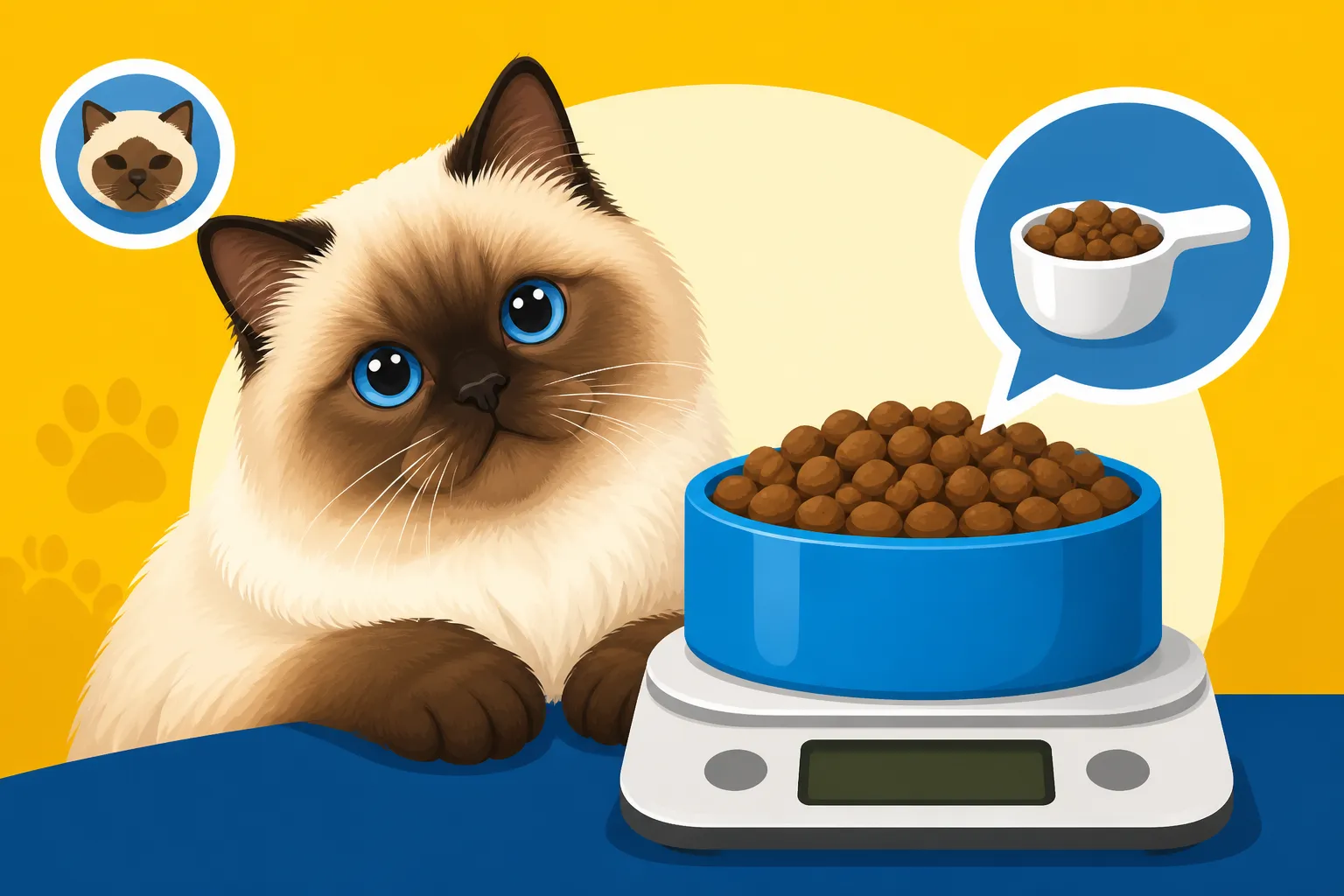
Once you have that magic number (daily calories) and the caloric density of your cat's food, the kitchen scale becomes your best friend. Forget measuring cups; they are notoriously inaccurate for kibble and utterly useless for wet food. A digital kitchen scale is precise, consistent, and surprisingly affordable. You can easily find reliable options on Amazon or at most kitchen supply stores.
To use it:
- Place your cat's empty bowl on the scale and "tare" it (zero it out).
- Add food until you reach the precise weight (in grams or ounces) that corresponds to your cat's caloric needs.
- Divide that total daily amount into two or three smaller meals throughout the day, as recommended by your vet.
Using a kitchen scale removes all the guesswork and ensures that your Himalayan is getting exactly the right amount of nutrition at every meal. It's a small investment that pays huge dividends in their health and well-being.
Practical Strategies for Consistent Feeding
Implementing weighed meals into your daily routine might seem like an extra step, but with the right tools and habits, it quickly becomes second nature. Consistency is key here, both for your cat's health and your own peace of mind.
Choosing the Right Food and Feeding Tools
The type of food you choose will influence how you weigh and present it. Many Himalayan owners opt for wet food, especially if their cat has a flatter “peke face” profile, as it can be easier to eat and provides much-needed hydration. If you choose a fresh food service, meals might already be pre-portioned, but it's always good to verify the weight yourself. For dry kibble, look for flatter, wider bowls that allow your Himalayan to eat without bending their whiskers too much or having difficulty reaching the food with their shortened jaw.
When it comes to the scale, choose one that is easy to clean, has a clear digital display, and can switch between grams and ounces. Many affordable digital kitchen scales fit this bill perfectly. Having dedicated feeding bowls that are also easy to clean is crucial, especially for wet food which can quickly spoil. Stainless steel or ceramic bowls are often preferred over plastic for hygiene and durability.
Here's a quick comparison of how different food types might weigh out for a theoretical 200-calorie meal:
| Food Type | Approx. Caloric Density (kcal/oz) | Weight for 200 kcal meal (approx.) | Notes |
|---|---|---|---|
| High-Quality Dry Kibble | 100-120 kcal/oz | 1.7 – 2 oz (48 – 57 g) | Smaller volume, very calorie dense. Requires precise weighing. |
| Pate Wet Food (Typical) | 25-40 kcal/oz | 5 – 8 oz (142 – 227 g) | Higher water content, larger volume for same calories. |
| Fresh/Raw Meal (Prepped) | 30-60 kcal/oz | 3.3 – 6.7 oz (94 – 190 g) | Varies greatly by recipe; often nutrient-rich. |
Note: These are approximations. Always refer to your specific food's packaging and your vet's advice.
As you can see, the weight can vary significantly for the same caloric intake depending on the food type. This table truly underscores why "a scoop" is never enough, and why consistent weighing is vital.
Monitoring Progress and Adjusting Portions
Feeding isn't a "set it and forget it" task. Your Himalayan's needs can change over time. Regularly monitor their weight – ideally weekly or bi-weekly at home, and certainly at every vet visit. If they are gaining weight, you might need to slightly reduce their daily caloric intake (e.g., by 5-10% in consultation with your vet) or increase their gentle play sessions. If they are losing weight, the opposite might be true. How Long a Himalayan Takes to Come Down a Pound can be a slow process, so consistency is truly your friend.
Pay attention to their body condition. Can you feel their ribs easily without seeing them? Do they have a slight tuck in their waist when viewed from above (even under all that fur)? Your vet can show you how to perform a body condition score check at home. Also, observe their energy levels and coat condition. These are all indicators of their overall health and whether their current diet is serving them well. Adjustments should always be made gradually and preferably with veterinary guidance to avoid upsetting their digestive system or creating nutritional deficiencies.
When to Seek Veterinary Guidance
While this guide provides a robust framework, your veterinarian is your most important partner in your Himalayan’s nutritional journey. Always consult them for:
- Initial caloric calculations: They can accurately assess your cat's ideal weight and health status to recommend a precise daily calorie target.
- Weight management plans: If your Himalayan is already overweight or obese, your vet can help formulate a safe and effective weight loss program.
- Dietary changes: Before switching to a new food, especially a therapeutic diet, always get your vet’s approval.
- Changes in appetite or behavior: If your Himalayan suddenly stops eating, eats significantly more, or shows any signs of discomfort or lethargy, it's time for a vet visit. These can be indicators of underlying health issues, some of which, like kidney problems, are common in the breed. Which Blood Values a Himalayan's Kidney History Demands often require regular monitoring as they age.
By partnering with your vet and committing to weighed meals, you are providing the highest level of care for your beloved Himalayan, helping them live their longest, healthiest, and happiest life in your home.
Disclaimer
This article is for general informational purposes only and does not constitute professional advice. Laws, prices and regulations vary by location and change over time. Consult a qualified professional for guidance on your specific situation.