What a Himalayan Gives Up Once Its Points Are Dark
Aging Himalayan cats experience darkening points caused by temperature-sensitive enzymes, signaling metabolic changes and senior care needs.
Change the room, not the cat.
Litter box avoidance, scratching and furniture, multi-cat tension and night activity — and the vertical space, play routines and feeding puzzles that solve more than correction does.
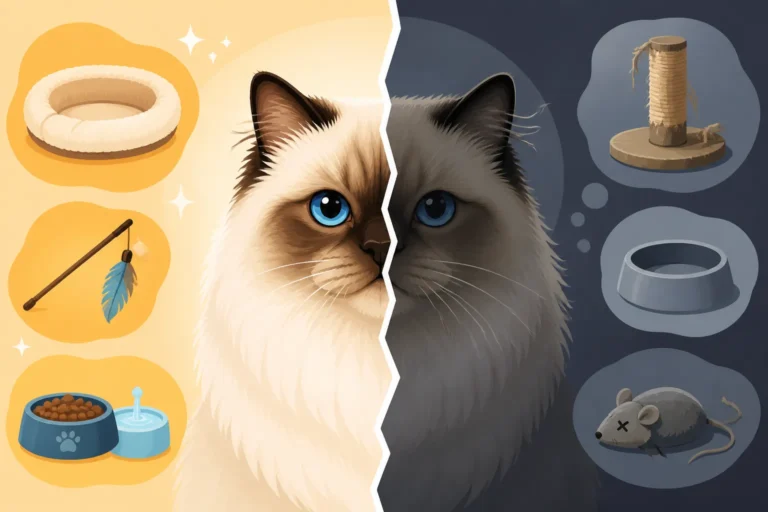
Aging Himalayan cats experience darkening points caused by temperature-sensitive enzymes, signaling metabolic changes and senior care needs.
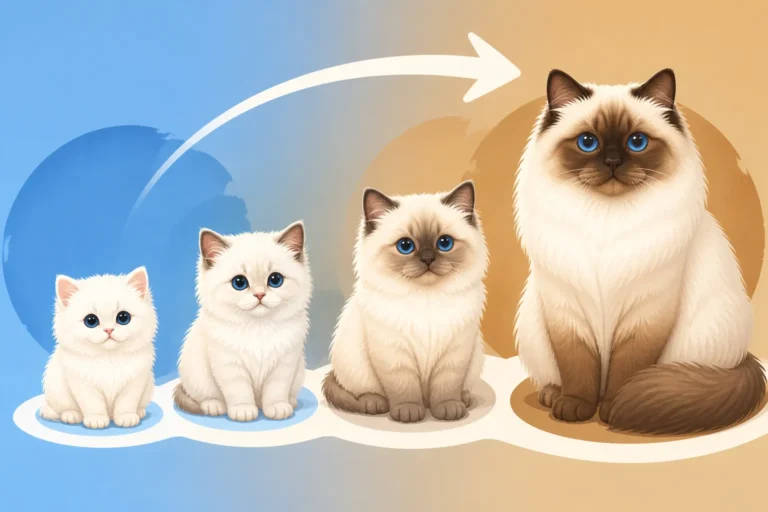
Himalayan kitten coat color changes from pure white at birth to dark points on the ears, paws, and tail due to a temperature sensitive gene.

Himalayan cats possess a delicate constitution, flat faces, and a sedentary nature that make outdoor environments dangerous.
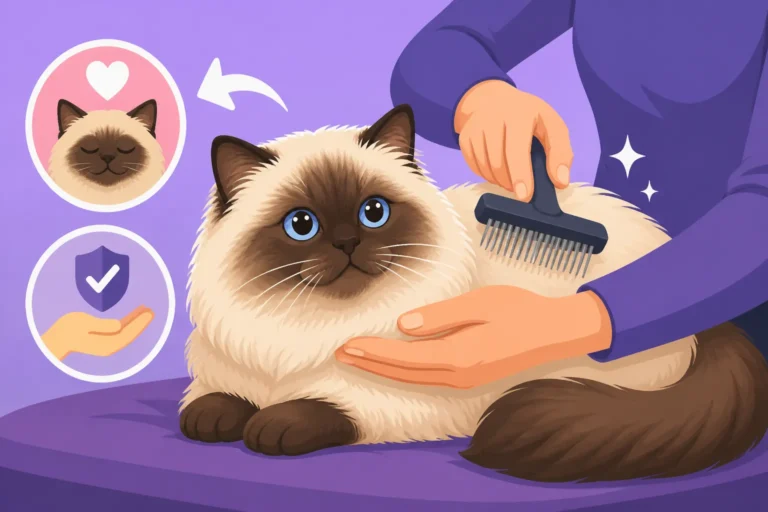
Himalayan cat grooming techniques and daily combing routines prevent painful mats and reduce hairballs for healthy felines.
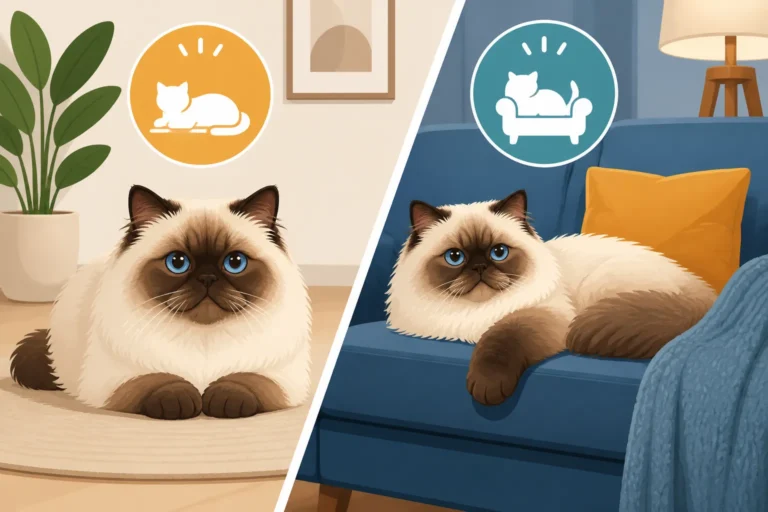
Himalayan cats prefer the ground floor, sofas, and low armchairs because their cobby build and short legs limit climbing.
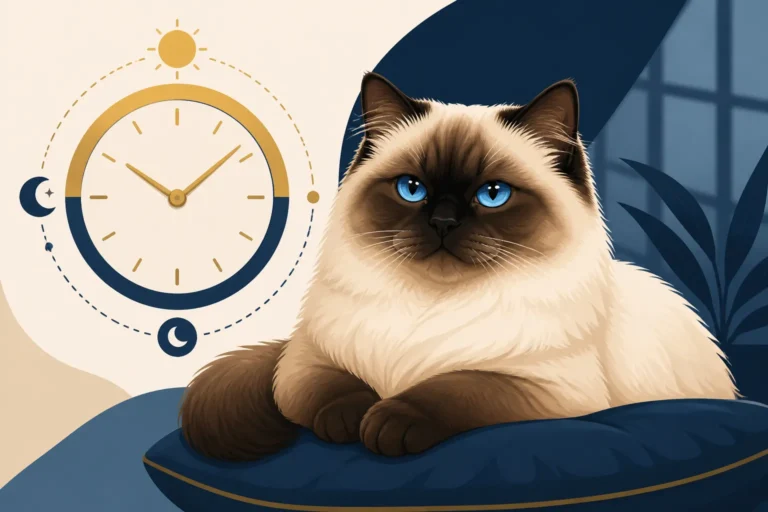
Himalayan cat behavior stems from ancestral Persian calmness combined with softened Siamese energy, creating a deliberate pace.
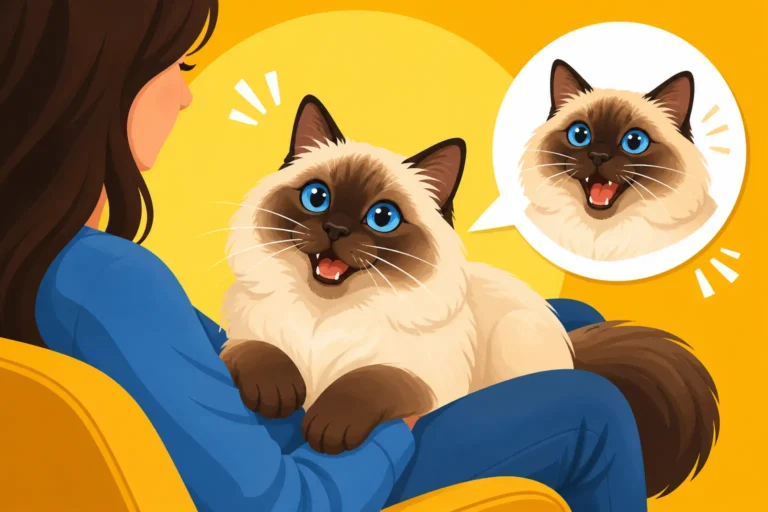
Himalayan cat vocalization blends quiet Persian calmness with talkative Siamese traits, creating a charmingly communicative lap pet.
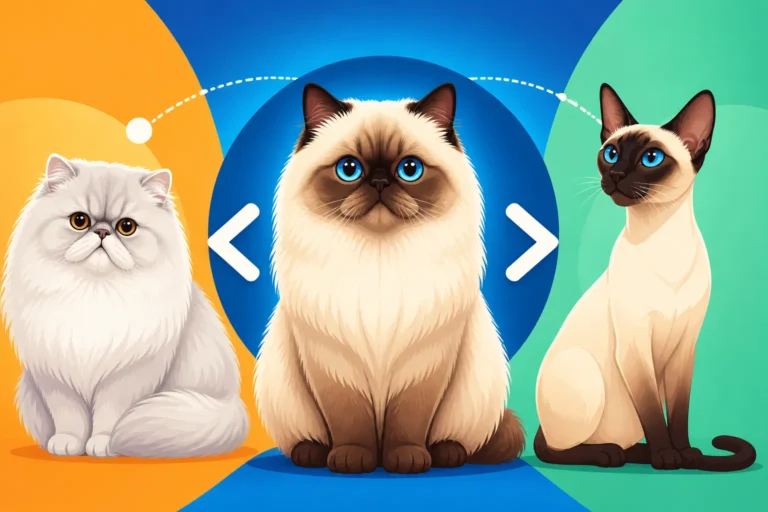
Himalayan cat energy levels blend Persian calmness with Siamese spirit, creating unique play needs and behavior patterns.
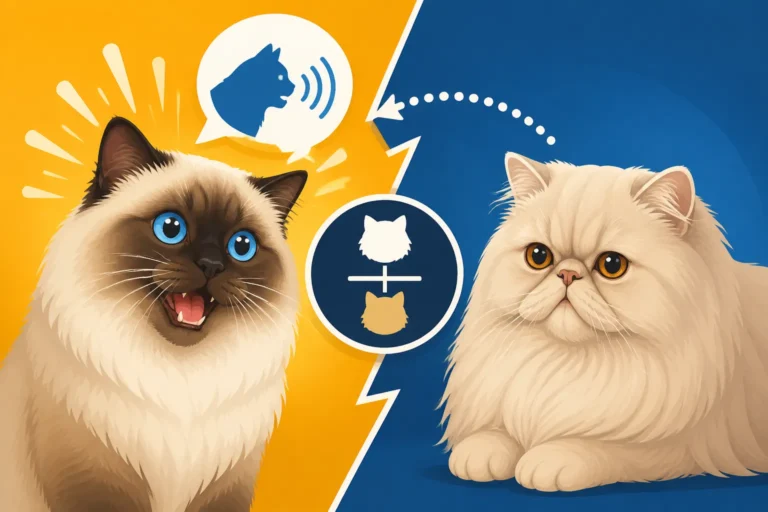
Himalayan cat vocalization stems from Siamese lineage, combining Persian calm with chatty Siamese genetics and heritage.

Himalayan cat vocalization genetics explain why this hybrid breed keeps Siamese communication traits while losing the loud volume.