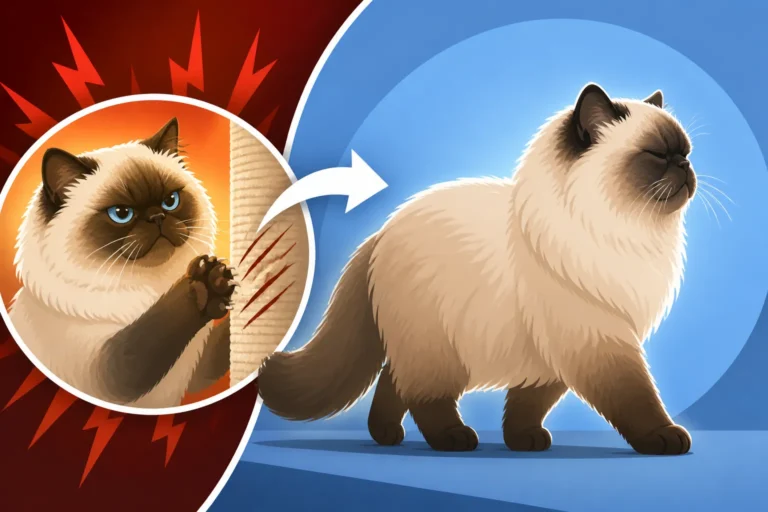
The Himalayan That Waits Beside an Empty Bowl
If you've ever owned a Himalayan, you've probably seen it: that patient, unblinking stare from beside an impeccably clean, yet conspicuously empty, food bowl. It's a classic Himalayan move, a subtle yet incredibly effective way your regal furball communicates that it's time for breakfast, dinner, or perhaps an unscheduled snack. This isn't just about hunger; it's about routine, comfort, and the unique way these magnificent cats express their needs without a single meow—well, usually.
The Subtle Art of Himalayan Communication
Himalayans are truly fascinating creatures, aren't they? They possess a quiet dignity that sets them apart, often making their communication methods a gentle puzzle for their human companions. When that food bowl is empty, they aren't usually going to yowl the house down like some other breeds might. Instead, they've perfected a more understated, yet undeniably potent, form of expression.
Why a Himalayan Doesn't Yowl Like a Siamese
It's true that the Himalayan has Siamese ancestry, which means they inherited that striking colorpoint pattern and those piercing blue eyes. But thankfully, for those of us who appreciate a quieter home, they didn't inherit the full vocal repertoire of their Siamese forebears! While a Siamese might issue a resounding complaint that echoes through the entire house, demanding attention with a powerful, almost operatic meow, your Himalayan has a much more reserved approach.
Their Persian lineage comes through strongly here, granting them a more placid and serene demeanor. Think of it less as a desperate plea and more as a polite, unwavering suggestion. They might offer a soft, almost questioning chirp, a gentle trill that's barely audible unless you're truly listening. It’s their way of saying, “Excuse me, darling, but there appears to be an oversight with my provisions.” This quiet nature means you, as their dedicated caretaker, need to be attuned to their subtle cues, because they won't always scream their demands from the rooftops. They truly embody the phrase "speak softly and carry a big stick"—or, in this case, a powerful, silent stare. You might find it interesting to learn more about The Himalayan Kept the Siamese Voice and Lost the Volume and Why a Himalayan Talks More Than the Persian It Descends From.
The Silent Stare and the Empty Bowl
Ah, the silent stare. It's an art form perfected by the Himalayan cat, especially when it comes to the grave injustice of an empty food bowl. Your Himalayan will likely position itself strategically near the bowl, perhaps sitting upright, tail neatly tucked, eyes wide and fixed directly on you, or sometimes, pointed accusingly at the empty dish itself. There’s no frantic pacing, no knocking things off shelves (unless they’re feeling particularly bold and know it gets a quick reaction!), just that intense, unwavering gaze.
It's a look that conveys a thousand words without a sound: "I am here. My bowl is not full. You know what must be done." This method works incredibly well because it's hard to ignore. When you catch your Himalayan's eye across the room, you can almost hear the unspoken expectation. Sometimes, they might even lead you to the kitchen, walking just ahead of you, pausing periodically to ensure you're still following the sacred path to the food cupboard. This quiet insistence is a hallmark of their personality, reflecting their inherent calmness and profound appreciation for a consistent routine. They are creatures of habit, and few habits are as important as their meal times.
Understanding the Himalayan's Fixed Routine
Himalayans, bless their hearts, are absolute sticklers for routine. They thrive on predictability, finding comfort and security in knowing when things will happen. Any deviation from their established schedule, especially concerning something as vital as mealtime, can lead to that polite, yet firm, empty-bowl protest.
The Importance of Mealtime Predictability
For a Himalayan, mealtime isn't just about filling their tummy; it's a foundational pillar of their day. They learn the rhythm of your household, the subtle cues that signal an impending meal—the sound of the cupboard opening, your footsteps heading to the kitchen, or even the setting sun. When these anticipated moments arrive, and the expected food is absent, it can be genuinely unsettling for them. They literally schedule their lives around these events! If you've ever been late with their dinner, you know that quiet disappointment, often manifested as a persistent presence by your feet or that piercing stare. This consistency is crucial for their overall well-being and sense of security within their home environment. Why a Himalayan Expects to Be Fed at the Same Hour really highlights this deep-seated need for predictability.
Imagine waking up every morning at 7 AM, expecting your coffee and toast, only to find the kitchen completely bare. You'd be a bit put out, right? That's precisely how your Himalayan feels. Their internal clock is incredibly precise, and any disruption, even if it's just by a few minutes, can throw them off. It's not manipulation; it's genuine expectation based on a lifetime of consistent experiences.
How a Full Bowl Signals Security
Beyond just satisfying hunger, a consistently full (or regularly replenished, depending on your feeding strategy) food bowl communicates a profound sense of security to your Himalayan. It tells them that their needs are being met, that their world is stable, and that their human caretaker is reliable. This can reduce anxiety and contribute to a more relaxed, contented cat. Himalayans, with their generally laid-back nature, benefit immensely from this peace of mind.
Because of their unique flat faces, the type of bowl you use also plays a significant role in their comfort and how easily they can eat. Wide, shallow bowls are often preferred over deep ones, as they prevent "whisker fatigue" and allow them to access their food without squishing their adorable little noses. You can find excellent options for such bowls on platforms like Amazon, specifically designed for brachycephalic breeds. Look for ceramic or stainless steel bowls that are wide and shallow, allowing your Himalayan to eat comfortably without having to strain or push food around excessively. This thoughtful consideration further enhances their sense of security and demonstrates that you understand their unique needs. It’s worth checking out Which Bowl Shape a Flat Faced Himalayan Can Use for more detailed guidance.
Actionable Steps for the Empty Bowl Situation
Okay, so you’ve noticed the stare, the quiet chirp, the subtle cues. Now, what's the best way to address it and ensure your Himalayan is happy, healthy, and well-fed? It's all about consistency and smart choices.
Establishing a Consistent Feeding Schedule
The most effective way to prevent the "empty bowl stare" is to establish and stick to a consistent feeding schedule. This means feeding your Himalayan at roughly the same times every day, seven days a week. For most adult Himalayans, two meals a day—morning and evening—work perfectly.
- Set a schedule and stick to it: If breakfast is at 7 AM and dinner at 6 PM, aim for those times as closely as possible. Your cat's internal clock will thank you.
- Automated feeders: If your schedule is unpredictable, or you simply want to ensure absolute consistency, an automated feeder can be a game-changer. These devices dispense food at programmed times, taking the guesswork out of feeding and removing the human error factor. Many reliable brands are available on Amazon, offering various features like portion control and even voice recording to call your cat to eat.
- Measuring portions: Himalayans have a cobby build and aren't typically high-energy cats, so precise portion control is key to preventing weight gain. Use a measuring cup to ensure they're getting the right amount of food for their age, weight, and activity level, rather than just eyeballing it. This ties into understanding How Many Calories an Adult Himalayan Burns a Day.
Assessing and Addressing Dietary Needs
Beyond when you feed them, what and how you feed them are equally important for a Himalayan's health and satisfaction.
- Appropriate food type: While dry kibble is convenient, many flat-faced breeds, including Himalayans, can benefit from wet food. It's often easier for them to scoop up with their shortened jaws, and the higher moisture content is excellent for hydration, especially if they are prone to kidney issues, which some Persian-derived breeds can be. If feeding kibble, ensure the pieces are small and easy for them to manage.
- Specialized bowls: As mentioned, wide, shallow bowls are best. If your Himalayan is still making a mess, or struggling, consider bowls specifically designed for brachycephalic cats. These often have a slight incline or a very shallow lip to make eating more comfortable. Search for "flat-faced cat bowl" on Amazon to see the variety of ergonomic options available.
- Monitor changes: Pay attention to any significant changes in your Himalayan's appetite or eating habits. If they suddenly become ravenous, or conversely, start turning their nose up at food they usually love, it's a good idea to consult your veterinarian. These can be subtle indicators of underlying health issues, from dental problems due to their crowded jaws to more systemic concerns.
Beyond the Bowl: Other Cues of Discontent
While the empty bowl is a clear signal of hunger or a demand for routine, Himalayans can communicate other needs and discomforts through equally subtle means. Being observant of their overall behavior is crucial for their well-being.
Changes in Play and Interaction
Himalayans are generally playful, but their play style is often more sedate than, say, a high-energy Siamese. They enjoy wand toys, chasing crinkle balls, and engaging in short bursts of activity, but they tire easily due to their brachycephalic (flat-faced) structure which can impact their breathing. If your normally engaged Himalayan suddenly shows a marked decrease in interest in play, or seems less interactive than usual, it could be a sign that something is amiss. Perhaps they're feeling unwell, or their environment has changed in a way that makes them uncomfortable.
They are creatures of comfort, and their moderate play drive means they often conserve energy. If a beloved wand toy lies untouched, or they don't respond to their usual games, it's worth investigating. This kind of behavioral shift can be as telling as an empty food bowl for a cat that values routine and comfort above all else. Remember, How Much More Play a Himalayan Wants Than a Persian is still not as much as a high-energy breed, but they do enjoy their quiet games.
Grooming Habits and Overall Well-being
A Himalayan's magnificent long coat requires diligent grooming, both from you and from the cat itself. If you notice your Himalayan isn't grooming itself as meticulously as usual, especially in hard-to-reach areas like its back or britches, it can be a red flag. This might indicate discomfort, pain, or even weight issues that prevent them from reaching certain spots. An overweight Himalayan, for instance, might struggle to clean its magnificent ruff or its backend, leading to mats and hygiene problems. Why an Overweight Himalayan Cannot Reach Its Britches highlights this common issue.
Similarly, an increased incidence of matting, or a dull, unkempt coat, can signal that your cat is feeling unwell. Himalayans typically take great pride in their appearance, so a decline in self-grooming is a significant indicator. Regular grooming sessions with you, using a good quality steel comb, are not just about keeping them beautiful; they're also an opportunity to bond and to check for any physical changes, lumps, or sore spots. If you notice any drastic or prolonged changes in their grooming habits, combined with other subtle cues, it's always best to consult your vet. Early detection of issues often leads to better outcomes, ensuring your quiet, dignified companion remains comfortable and healthy for many years to come. You should also be mindful of Why a Himalayan Needs Its Britches Trimmed to prevent hygiene issues that they can't manage themselves.
Disclaimer
This article is for general informational purposes only and does not constitute professional advice. Laws, prices and regulations vary by location and change over time. Consult a qualified professional for guidance on your specific situation.